
REVIEW · WORKSHOPS
Lisbon: Azulejos’ Design Create Your Own Tile Workshop
Make a Lisbon tile you can actually take home. This 2.5-hour workshop turns the city’s famous azulejo tradition into a relaxed, hands-on activity, even if your drawing skills stop at stick figures. I especially like the Formettes method, which uses simple shapes and patterns instead of demanding artistic training, and the fact that your finished 10-by-10-centimeter tile is ready before you leave.
The workshop takes place in an artist’s home, not a large production studio. That gives it a warm, personal feel, and instructor Agathe is praised for her patience, humor, and gentle guidance. The main consideration is that this is a design and transfer workshop rather than a traditional pottery class, so you will not be shaping clay or glazing a tile in a kiln.
In This Review
- Key points to know before you book
- Why this tile workshop fits Lisbon so well
- Entering the artist’s home at Bell Number 2
- A short introduction to Lisbon’s azulejos
- Building a design with the Formettes method
- Pencil, marker, and watercolor: what the 2.5 hours feel like
- How your drawing becomes a ceramic tile
- The finished souvenir and its practical value
- Who will enjoy this workshop most
- How the price compares with a regular souvenir
- Languages, group size, and booking flexibility
- Tips for getting a better tile
- Should you book the Lisbon azulejo workshop?
- FAQ
- How long does the azulejo workshop last?
- How much does the experience cost?
- What is the Formettes method?
- What steps do I follow to create the design?
- Do I receive the finished tile during the workshop?
- What is included in the price?
- Are extra tiles included?
- What languages are available?
- Can children join the workshop?
Key points to know before you book
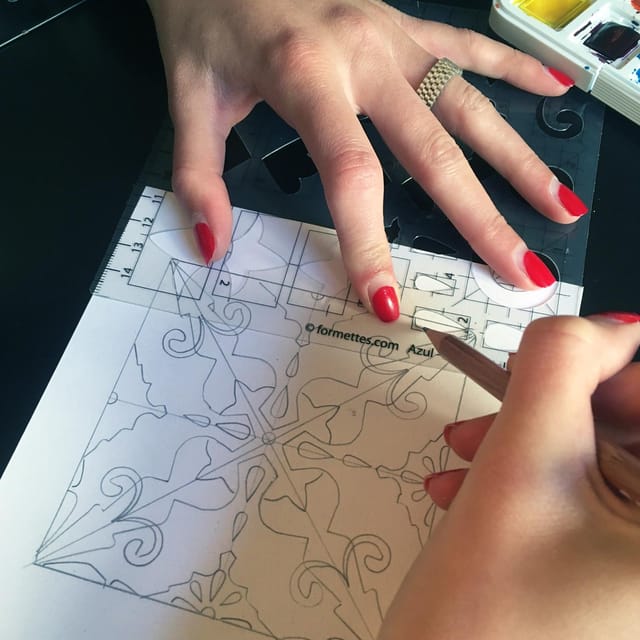
- The Formettes method is made for beginners: You use shapes and templates to build a pattern without needing to draw freehand.
- Your tile is ready the same day: A thermal press transfers your finished design onto a 10-by-10-centimeter ceramic tile.
- Agathe provides calm, personal instruction: She helps improve your design while leaving room for your own ideas.
- The setting is an artist’s home: Small groups and private bookings create a cozy atmosphere.
- Tea, coffee, and cookies are included: A small but welcome touch during the creative work.
- Extra tiles cost more: Additional personalized objects and extra tiles are not included in the $64 price.
Why this tile workshop fits Lisbon so well
Lisbon is full of azulejos. Blue and white panels cover church interiors, apartment facades, railway stations, and ordinary neighborhood buildings. You can spend hours admiring them, but looking is only half the fun. This workshop lets you respond to that visual tradition by making a small piece of your own.
The result is not a museum artifact, and you should not book it expecting a full ceramics course. Instead, it is a practical art activity with a strong Lisbon connection. You learn about azulejos, create a personal pattern, and leave with a ceramic keepsake that feels more meaningful than a tile picked from a souvenir shelf.
At $64 per person, the experience costs more than buying a decorative tile in a shop. The price includes 2.5 hours of instruction, all drawing and painting materials, refreshments, and the finished tile. For me, the value comes from the time spent making something personal, plus the rare convenience of carrying it home immediately instead of waiting for a firing or later collection.
A few more Lisbon options side by side
- Lisbon City Center Tour – The Unmissable Lisbon
★ 5.0 · 22,234 reviews - Lisbon: Sintra, Pena, Regaleira, Cabo da Roca & Cascais
★ 4.7 · 19,656 reviews - Lisbon: Jerónimos Monastery Entrance Ticket
★ 4.1 · 14,164 reviews
Entering the artist’s home at Bell Number 2
The meeting point is Bell Number 2. Since the activity takes place in an artist’s home, you should pay attention to the meeting instructions and arrive ready to identify the correct entrance.
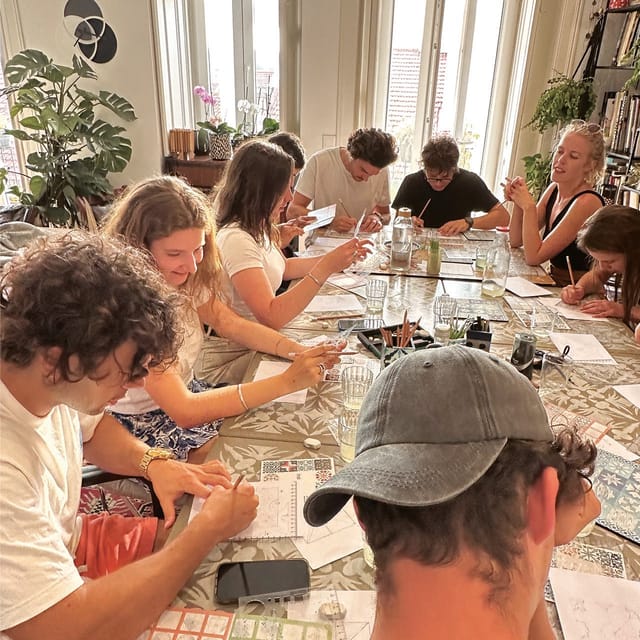
The home setting is an important part of the experience. A studio or classroom can feel formal, but a home creates a more intimate mood. Small groups have included only three, four, or six people, and private bookings are also available. That size matters because Agathe can move around the table, answer questions, and offer suggestions without turning the session into a lecture.
You will find materials ready for the design process, along with tea or coffee and cookies. These are modest refreshments, not a meal, but they help make the workshop feel like a creative visit rather than a timed tourist stop.
The atmosphere also suits solo participants. You do not need to arrive with a companion, and the relaxed format makes it easy to work quietly while meeting people from different countries. Couples, friends, and families with older children can also take part.
A short introduction to Lisbon’s azulejos
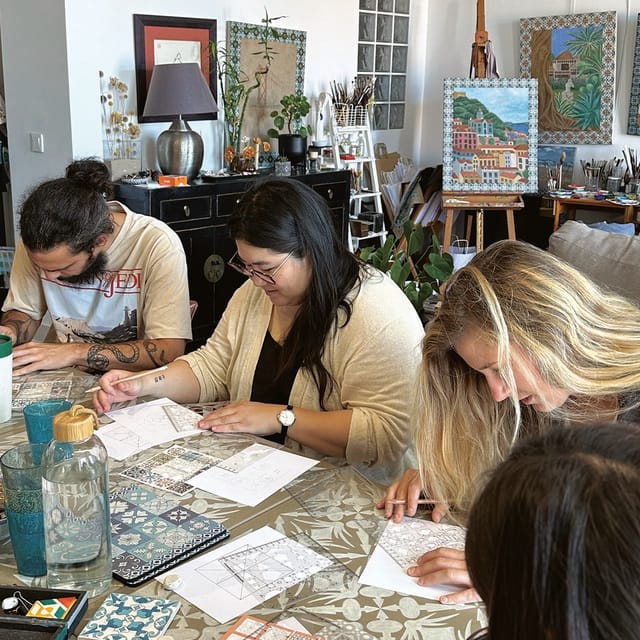
The session begins with a short presentation about azulejos and the design method. This introduction gives your artwork some context without taking up most of the afternoon.
That balance is useful. You learn why patterned tiles matter so much in Portuguese visual culture, then quickly move from looking at examples to making your own. If you want a long art-history lecture, this workshop will feel light. If you want enough background to understand what you are creating, the introduction should do the job.
The focus is on pattern, repetition, and the visual character of a tile. You are not expected to copy a famous panel. You can work with your own idea, use suggested forms, or combine traditional-looking shapes with something more personal.
Building a design with the Formettes method
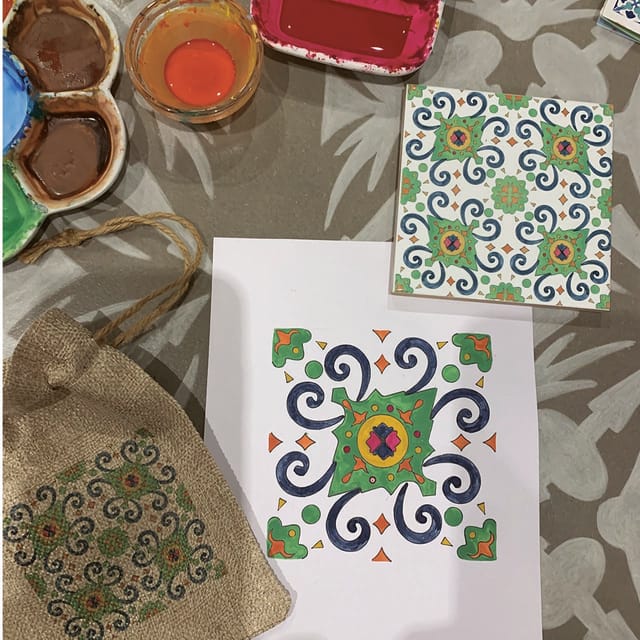
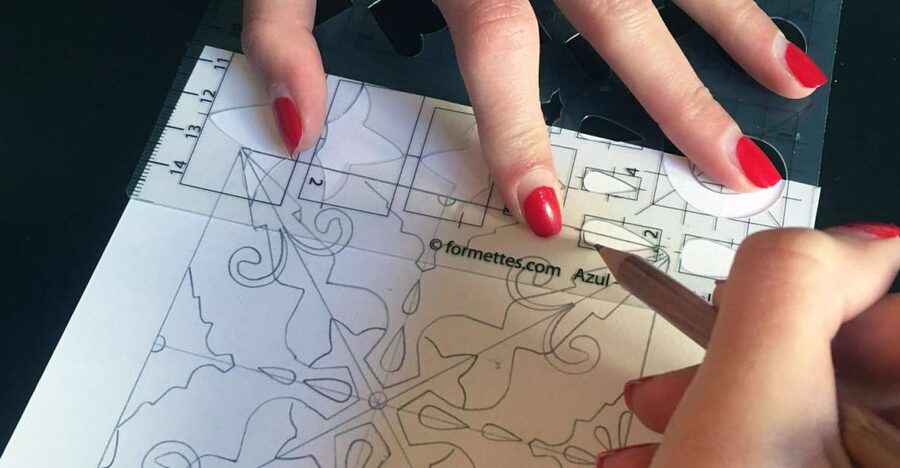
The Formettes tool is the heart of the class. It helps you create a pattern from basic shapes and repeated forms, so the blank page does not feel intimidating.
This is where the workshop earns its beginner-friendly reputation. You do not need previous drawing or painting experience. The method gives you a structure, but it does not force everyone into the same design. You can keep the pattern simple, add detail, or make it as traditional or modern as you like.
The process has three clear stages:
- First, you sketch your design in pencil.
- Next, you trace the drawing with a fine black marker and erase the pencil lines.
- Finally, you add color with watercolor.
Starting in pencil is forgiving. You can change the shape, adjust the spacing, and try again before committing to black ink. The marker gives the finished drawing a crisp outline, while the watercolor adds the color associated with the painted tile tradition.
You should not rush the design stage. A pattern that looks exciting on paper may need small changes before it works on a square tile. Agathe’s role is useful here. She can suggest adjustments that make the image clearer or more balanced, but you still control the creative choices.
That combination of help and freedom is one of the best features of the workshop. You get enough direction to avoid frustration, but not so much that every finished tile looks alike.
Same corner of the country, a different pace:
- Lisbon: History, Stories and Lifestyle Walking Tour
★ 4.8 · 10,902 reviews - Lisbon: Sunset Boat Party Cruise with DJ and Open Bar
★ 4.5 · 10,378 reviews - Lisbon: Pena Palace, Sintra, Cabo da Roca, & Cascais Daytrip
★ 4.7 · 9,981 reviews - Lisbon: Oceanário de Lisboa Entrance Ticket
★ 4.6 · 9,943 reviews
Pencil, marker, and watercolor: what the 2.5 hours feel like
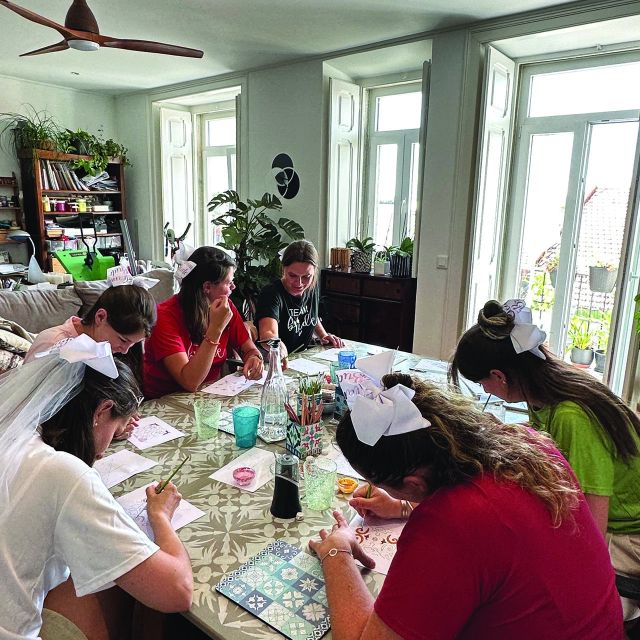
The work is creative, but it is also methodical. Pencil first, marker second, erasing third, watercolor last. The clear sequence helps keep the class calm and makes the activity suitable for people who normally feel uncertain around art materials.
The watercolor stage is especially pleasant because it allows some variation. You can choose your own colors and decide how boldly to fill each shape. The supplied information does not specify a fixed color palette, so the exact range available may vary, but the class is designed to let you make personal choices.
I would think of this as a relaxing workshop rather than a race to produce a perfect object. Several participants have described the activity as meditative, comfortable, and fun. That makes it a good change of pace after sightseeing, especially if you have spent the day walking Lisbon’s steep streets.
The instructor also gives you room to work. You can ask for help when you need it, but you are not expected to copy a demonstration line by line. If your first idea does not work, the pencil stage gives you a chance to revise it.
How your drawing becomes a ceramic tile
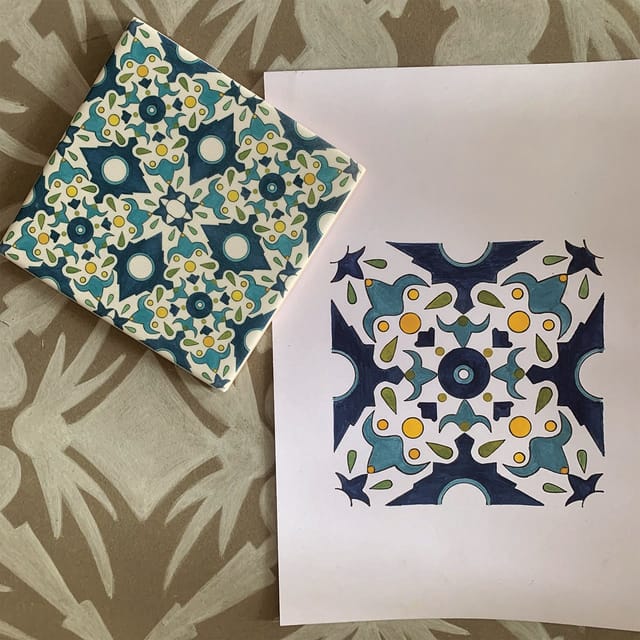
After you finish the artwork, the process changes from hand work to digital preparation. Each drawing is worked on in Photoshop, slightly corrected if needed, and multiplied to create the repeated design.
This step is worth understanding before you book. You are not painting directly onto a raw ceramic tile during the class. Instead, your paper design is prepared digitally and transferred to ceramic with a thermal press.
The process allows you to take the tile with you immediately. That is a major practical advantage for a short Lisbon visit. Traditional ceramic work often requires drying, firing, and a later pickup, which does not fit neatly into a holiday schedule. Here, the heat-pressed 10-by-10-centimeter tile is ready at the end of the session.
The digital correction is also reassuring if your lines are not perfect. Small changes can help the design look cleaner on the final tile. This does not remove the personal character of your work. It simply means the finished souvenir can look more polished than the original sketch.
You receive one ceramic tile. Extra personalized objects and additional tiles are not part of the base price, but one participant paid an additional €10 for another tile. Ask about the current extra-tile price when booking, since that amount is not guaranteed as a standard rate.
The finished souvenir and its practical value
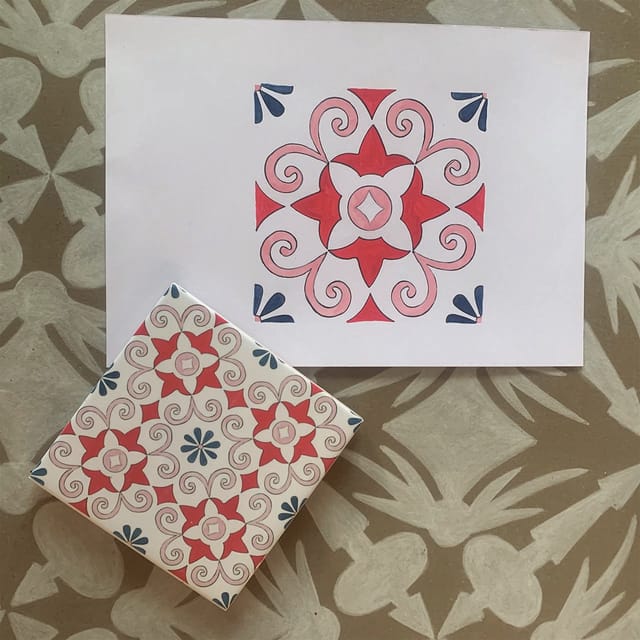
A 10-by-10-centimeter tile is small enough to pack without taking over your luggage. It can also serve as a simple reminder of Lisbon long after the trip, particularly because you designed the pattern yourself.
The tile is not just a product handed to you at the end. You remember the decisions behind it: the shape you started with, the colors you chose, and the moment the design became a finished object. That personal connection is what makes the workshop a stronger souvenir option than a generic decorative tile.
You should still pack it carefully. Ceramic can break, even when the item is small. The available information does not specify protective packaging, so bring a little space in your luggage and ask the instructor how the tile will be wrapped for transport.
If you are visiting Lisbon with a friend, making tiles together gives you a shared project without requiring the same artistic style. Solo participants can work independently and still enjoy the social setting. The activity has also suited mixed-age groups, including participants aged 12 to 70.
Who will enjoy this workshop most
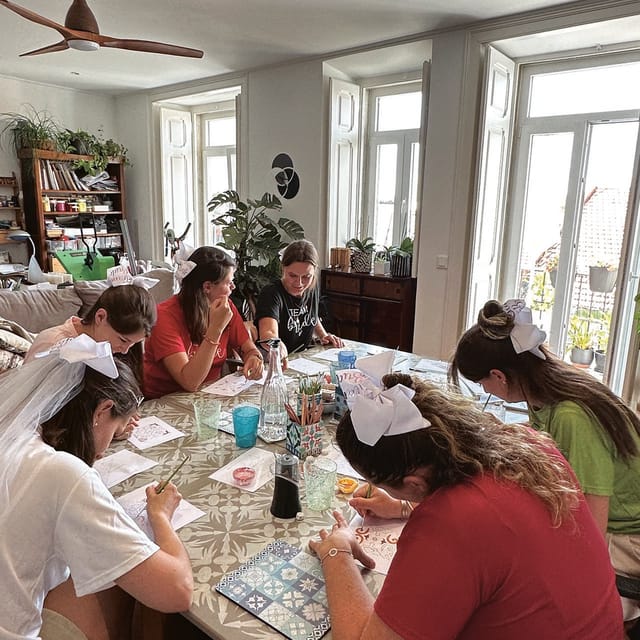
I would recommend this experience to several types of visitors:
- First-time artists: The Formettes method and step-by-step process remove much of the pressure.
- Couples and friends: You can create side by side while choosing entirely different designs.
- Solo visitors: The small-group format is comfortable and gives you an easy social activity.
- Families with older children: The minimum stated age is 10, though some participants have enjoyed it with children aged 12 and 14.
- Souvenir hunters: You leave with something personal, compact, and connected to Lisbon.
- Visitors who enjoy slow activities: The workshop provides a quiet break from crowded streets and constant sightseeing.
It may not suit young children under 10, people looking for wheel-thrown pottery, or anyone who wants to spend a full day working with clay and glazes. The class is about drawing, painting, digital preparation, and heat transfer.
How the price compares with a regular souvenir
At $64, this is not the cheapest way to bring home an azulejo. You can buy a ready-made tile for less. But comparing only the object misses the point.
You are paying for an instructor, materials, refreshments, a guided creative session, and the finished ceramic piece. You also avoid the uncertainty of producing something from scratch without help. Agathe’s patient instruction is a key part of the value, particularly if you want your design to look good but do not trust your own artistic instincts.
The same-day finish adds practical value. You do not have to return to a studio later, arrange shipping, or risk missing the collection date. For a short stay, that convenience may justify the higher price.
If you want more than one tile, budget for an extra charge. The base booking includes one 10-by-10-centimeter tile, not a set.
Languages, group size, and booking flexibility
Instruction is available in French, English, and Portuguese. That makes the workshop accessible to a wide range of visitors, though the exact language used in a particular session depends on the group and instructor.
Private and small-group options are available. A small group is probably the best choice if you want personal feedback without paying for a fully private class. Private booking makes more sense for a special occasion or a group that wants the room to itself.
The duration is 2.5 hours. Check the available starting times before booking so you can fit the session around meals, museum visits, or an evening plan. The schedule is long enough to allow real creative work, but short enough to fit into a busy Lisbon itinerary.
You can cancel up to 24 hours in advance for a full refund, and the reserve-now, pay-later option keeps you from paying at the time of booking. Bad-weather schedule changes have also been handled kindly, but confirm any change directly with the provider rather than assuming it is automatic.
Tips for getting a better tile
Give yourself a simple starting idea. A repeating flower, geometric shape, or border pattern is easier to manage than a complicated scene.
Use the pencil stage fully. Try more than one arrangement before tracing with the black marker. The final tile is square, so check that your design works within a compact frame.
Ask Agathe for advice before you commit to details. She can help make the pattern clearer and may suggest small changes that improve the final result.
Do not judge your artwork too early. The black outline and watercolor can make a simple sketch look much more finished. The Photoshop stage may also clean up minor imperfections before transfer.
If you love your design, ask about extra tiles before the session ends. One additional tile has been available for €10 in the past, but extra-object pricing can change.
Should you book the Lisbon azulejo workshop?
Book it if you want a personal souvenir, enjoy hands-on activities, or need a calm break from sightseeing. The workshop is especially good for beginners because the Formettes method gives you a clear way into the design process, while Agathe’s patient guidance keeps the mood encouraging rather than competitive.
Skip it if you want traditional clay work, kiln firing, or an advanced ceramics course. You are creating the artwork on paper, then having it transferred to a ceramic tile with a thermal press.
For most visitors, the strongest reasons to go are the welcoming home studio, the freedom to make your own pattern, and the fact that you leave with the tile the same day. At $64, it is a considered purchase, but it offers more than a souvenir shop stop. You spend time making something that carries a small piece of your Lisbon experience.
FAQ
How long does the azulejo workshop last?
The workshop lasts 2.5 hours.
How much does the experience cost?
The listed price is $64 per person.
What is the Formettes method?
Formettes is a drawing method and tool that helps you create an azulejo pattern without previous drawing experience or specific artistic training.
What steps do I follow to create the design?
You first draw in pencil, trace the lines with a fine black marker, erase the pencil marks, and then add color with watercolor.
Do I receive the finished tile during the workshop?
Yes. Your design is prepared in Photoshop and transferred to a 10-by-10-centimeter ceramic tile with a thermal press. You take the tile with you after the session.
What is included in the price?
The price includes the instructor, drawing and painting materials, tea or coffee, cookies, and one 10-by-10-centimeter tile.
Are extra tiles included?
No. Additional personalized objects and extra tiles are not included in the listed price.
What languages are available?
Instruction is available in French, English, and Portuguese.
Can children join the workshop?
Children under 10 are not suitable for this activity. Participants aged 12 and 14 have taken part successfully, and the workshop has also suited mixed-age groups.
Recently added in Lisbon
- Lisbon Cinematic Photoshoot with Top-Rated Photographer★ 5.0 · 76 reviews
- City Centre Run in Lisbon★ 5.0 · 164 reviews
- City of Neighborhoods Tour 1H 30M Private Tour by Tuk Tuk★ 5.0 · 38 reviews
- Central Lisbon E-Bike Tour★ 5.0 · 168 reviews
- Hands on Portuguese Cooking Class in Lisbon★ 5.0 · 136 reviews
- Lisbon Sailing Catamaran Public Cruise with drinks★ 5.0 · 304 reviews
- Lisbon City Tour by Tuk Tuk★ 4.5 · 137 reviews
- Romantic Private Sailboat in Lisbon for couples★ 5.0 · 38 reviews
Workshops, compared.
Pastel de Nata Cooking Class with Grandma’s Recipe
Read our review →
Pastel de Nata Cooking Class with Port Wine – Sé
Read our review →



Browse the lists this tour appears in