
REVIEW · HISTORICAL TOURS
Lisbon: History, Stories and Lifestyle Walking Tour
Lisbon makes you work for its best views. This three-hour tour gives you a useful first look at the city’s hills, old quarters, politics, churches, and daily life, with a local guide connecting the pieces instead of simply pointing at monuments. I especially like the tram ride and the stop for coffee and pastel de nata, two small touches that make the tour feel more like Lisbon and less like a march through a checklist. I also like the way it links Bairro Alto, Baixa, and Alfama into one clear story.
The main consideration is physical effort. Lisbon’s center is hilly, and the route includes slopes, narrow lanes, steps, and plenty of standing. The pace is generally relaxed, with regular stops, but wet weather or a tram problem can change the plan. Guides such as Paulo, Ricardo, Beatrice, Anna, and João have been praised for adapting calmly and making the history easy to follow.
In This Review
- Key points at a glance
- Why this tour works as a first look at Lisbon
- Bairro Alto and the story of a changing city
- São Pedro de Alcântara: one of the best early views
- São Roque Church and Lisbon’s ornate interior
- Carmo Church and the Carnation Revolution
- Santa Justa Elevator and the heart of Baixa
- The tram ride and the climb toward Portas do Sol
- Portas do Sol and Lisbon’s upper riverfront
- Alfama: fado, festivals, and old Lisbon
- Lisbon Cathedral and the final piece of the story
- How much walking and time should you allow?
- Guide quality and group atmosphere
- Is $29 a fair price?
- Who should book this Lisbon walk?
- Final verdict: book it early in your Lisbon stay
- FAQ
- How long does the Lisbon walking tour last?
- What areas of Lisbon does the tour visit?
- Is a tram ride included?
- Are coffee and cake included?
- Does the tour include hotel pickup and drop-off?
- Where does the tour meet?
- What languages are available?
- Can I book a private or small-group tour?
- Is the tour suitable for people who are not very fit?
- What happens if the tram is not running?
Key points at a glance
- A five-century-old starting point: Begin in Bairro Alto, where the guide explains how Lisbon changed after the earthquake of 1755.
- A fine city view early on: Miradouro São Pedro de Alcântara looks across Baixa toward the Tagus and the south bank.
- Churches with real political weight: São Roque and Carmo Church connect art, religion, disaster, and Portugal’s 1974 Carnation Revolution.
- A proper Lisbon tram ride: The tram section adds local character and helps you reach the upper Alfama area.
- The oldest quarter saved for the finale: Alfama’s lanes, fado connections, festivals, and river views lead to Lisbon Cathedral.
- Good value at $29: A live guide, tram trip, coffee, and cake are included in a three-hour orientation tour.
Why this tour works as a first look at Lisbon
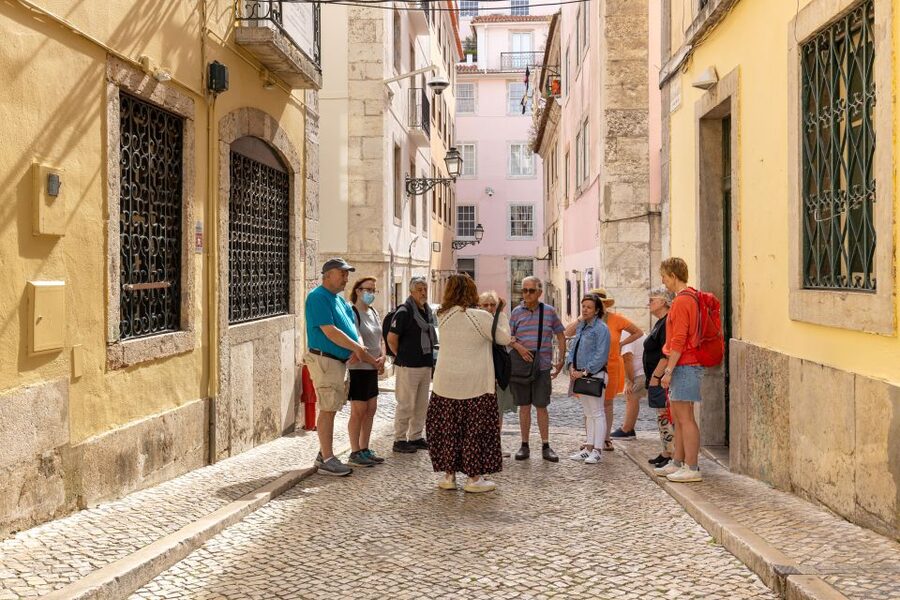
Lisbon can be confusing at first. Its center is spread over several hills, and the old districts do not fit neatly into a straight line. A map shows Bairro Alto, Baixa, and Alfama as nearby, but the slopes, stairways, and changing viewpoints make the city feel larger once you are on foot.
This tour gives you a framework. You learn how the city developed, see several major sights, ride an iconic tram, and finish in the quarter most closely linked with old Lisbon. I would consider it a good opening activity, especially if you have just arrived and want to get your bearings fast before choosing where to return on your own.
The guides are a major part of the value. Paulo has received praise for his storytelling and for sharing his memories of growing up in Lisbon around the 1974 revolution. Ricardo is often singled out for combining ancient history, recent politics, practical suggestions, and a warm manner. Beatrice, Anna, João, Lucia, and others have also been praised for clear explanations and an easy pace.
That range of guide feedback matters because a walking tour lives or dies by its guide. The planned route is strong, but the person leading it determines whether the earthquake, dictatorship, Moorish period, and church architecture become a string of dates or a story you can remember.
More History Tours in Lisbon
- Lisbon: Live Fado Show with Port Wine in Historic Center
★ 4.7 · 4,166 reviews - Lisbon: Fado Show with Wine in a Historic Venue
★ 4.8 · 1,294 reviews - Explore Lisbon by Tuk Tuk: History and Viewpoints
★ 5.0 · 840 reviews
Bairro Alto and the story of a changing city
The tour begins in Bairro Alto, a district dating from the 16th century. Today, many people associate it with evening bars and nightlife, but the neighborhood also helps explain how Lisbon expanded and rebuilt.
Your guide uses Bairro Alto to introduce the city’s development. After the 1755 earthquake, families from Baixa and other parts of the city moved into or helped renew this area. That detail gives you a useful reminder: Lisbon is not simply an old city preserved in place. It has repeatedly been reshaped by disaster, politics, faith, and changing patterns of daily life.
The opening section is less about checking off one major monument and more about learning how to read the streets. Look for the contrast between older lanes and later rebuilding. A good guide can show how the city’s districts fit together, which is exactly where Paulo, Ricardo, and Beatrice have made a strong impression.
You should expect to walk while listening, not stop for a long formal talk in one place. Wear shoes with a firm sole. Smooth paving, slopes, and uneven surfaces are part of Lisbon’s charm, but they are less charming in thin footwear.
São Pedro de Alcântara: one of the best early views
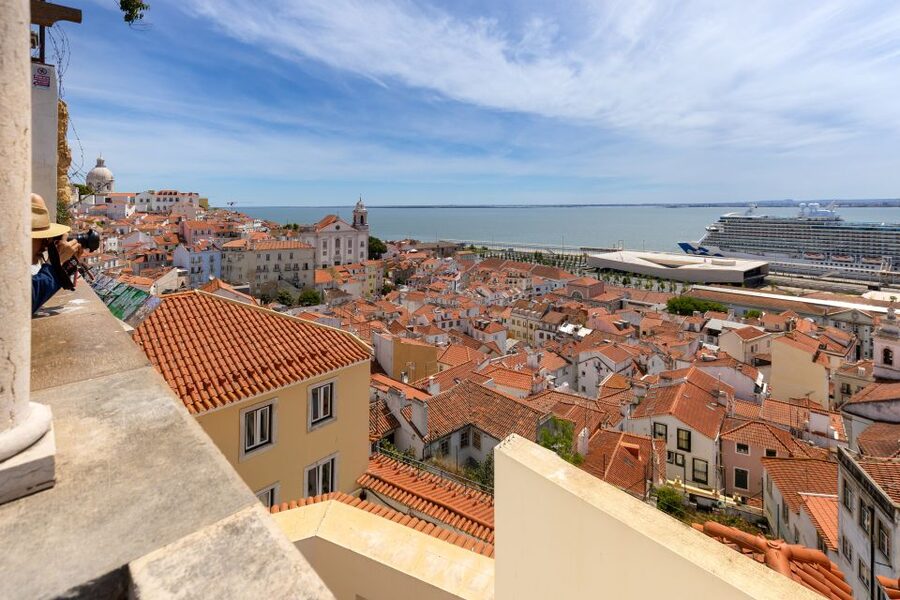
The garden at Miradouro São Pedro de Alcântara is one of the tour’s best pauses. From here, you look over Baixa and across toward the south bank of the Tagus River.
This viewpoint earns its place because it helps you understand Lisbon’s shape. You can see how the city drops toward the river, and you begin to grasp why moving around the center involves so many climbs and descents. It is also a natural photo stop, so you are not expected to keep walking without a break.
The view is especially useful early in your stay. After the tour, you will recognize Baixa from above and have a better sense of how the lower city relates to the hills. I like this kind of stop because it gives context rather than just a pretty picture.
Your guide may also point out the city’s major areas and explain their place in Lisbon’s story. Since the group stops often here, this section should work for people who want an informative tour without racing from one sight to another.
São Roque Church and Lisbon’s ornate interior
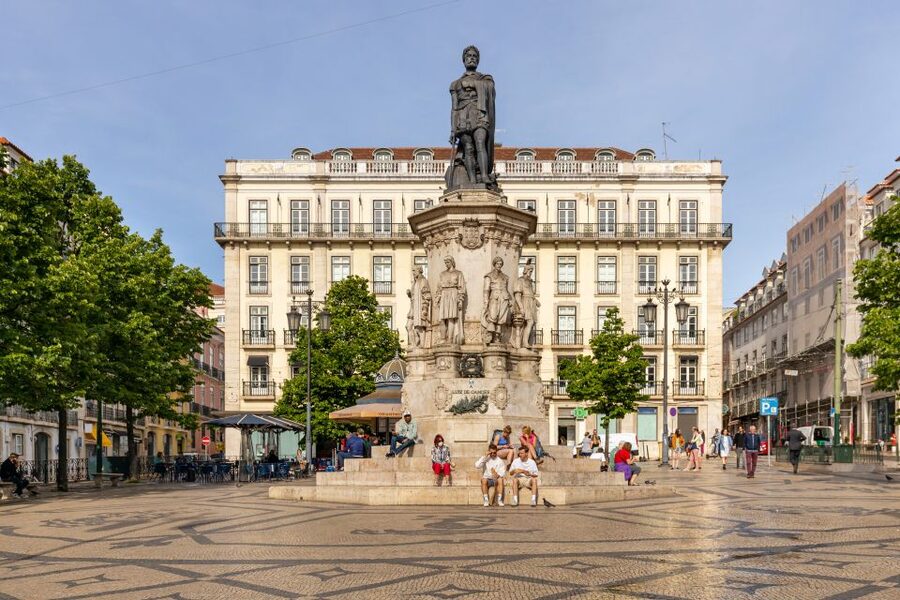
The next major stop is São Roque Church, built by the Jesuits. Its outside is notably plain, with an austere façade that gives little warning of the decoration inside.
The interior brings together gilding, tiles, and paintings in Mannerist and Baroque styles. It is a good lesson in how Lisbon’s churches can look restrained from the street and lavish once you step through the door. Listen closely to the explanation here, since the value is in understanding the contrast between the building’s exterior and its interior.
This is also a useful stop if you enjoy art but do not want a full museum visit. The tour gives you enough context to notice the main features, while the guide can explain why the Jesuits and church decoration mattered in Portugal.
The drawback is time. A three-hour route covers a lot, so you should not expect a slow, detailed examination of every painting or tile panel. If São Roque catches your eye, make a note to return later for a longer look.
More Walking Tours in Lisbon
- Best of Lisbon Small-Group Guided Walking Tour
★ 5.0 · 4,869 reviews - Lisbon: Food and Wine Small Group Walking Tour
★ 4.9 · 4,082 reviews - Best of Lisbon Walking Tour: Rossio, Chiado & Alfama
★ 4.9 · 2,700 reviews - Age of Discoveries Walking Tour in Belém
★ 5.0 · 1,513 reviews
Carmo Church and the Carnation Revolution
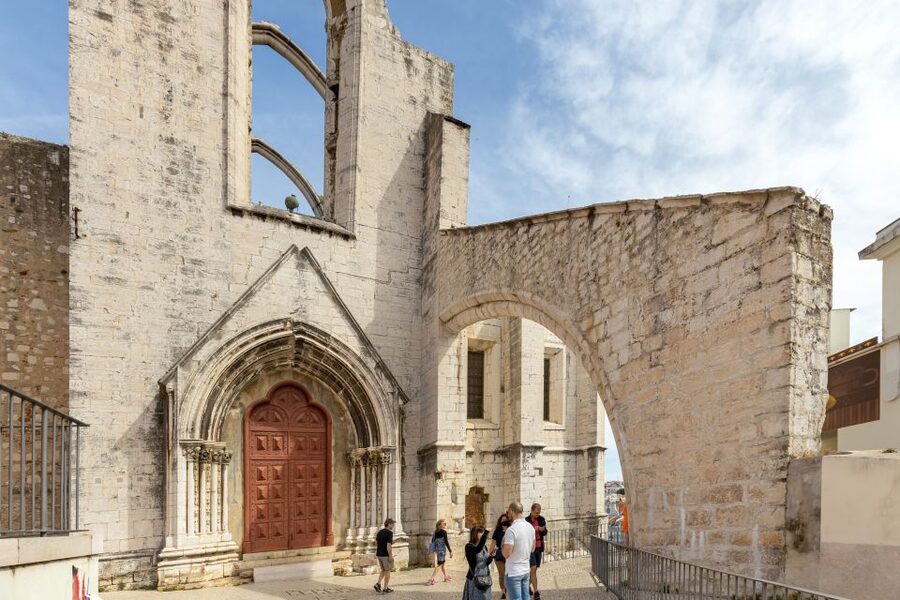
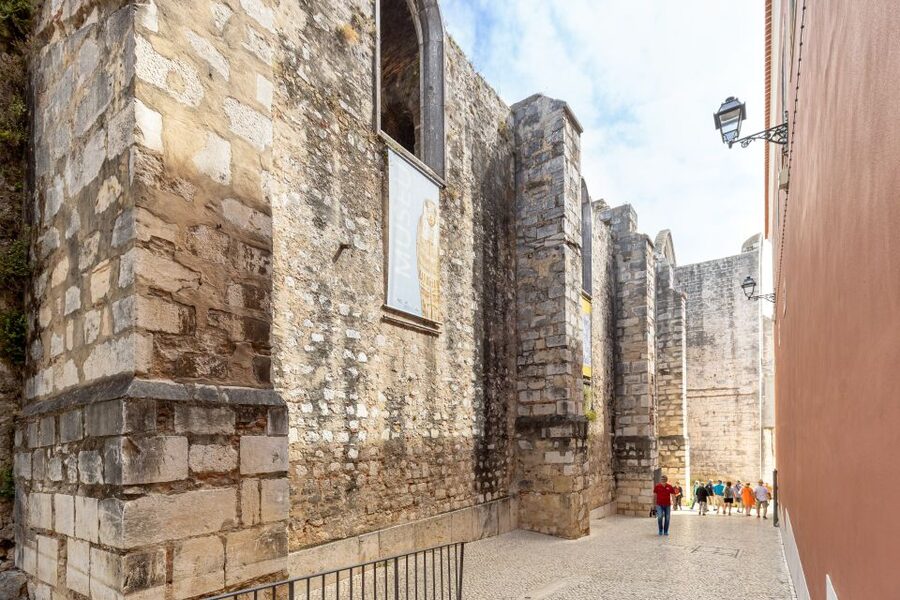
From Bairro Alto, the route heads down toward Carmo Convent and Church. The Gothic ruins are among Lisbon’s most memorable architectural sights, and their open roofline still shows the force of the 1755 earthquake.
Carmo is not only an architectural stop. It also has a direct link to modern Portuguese politics. The Carnation Revolution began here in 1974, ending almost five decades of dictatorship. That gives the tour a useful balance. You are not only hearing about medieval rulers, religious orders, and earthquakes. You are also learning how Portugal became the country you see today.
This was a highlight for several people on the tour, and I can understand why. The story is easy to picture, and a good guide can make the transition from ruined Gothic church to 20th-century political change feel natural rather than forced.
Paulo has been praised for offering a personal perspective on living through that period as a child in Lisbon. That kind of first-hand connection can add warmth to a subject that might otherwise remain abstract. Still, the exact depth of the discussion depends on the guide and the group’s questions.
Santa Justa Elevator and the heart of Baixa
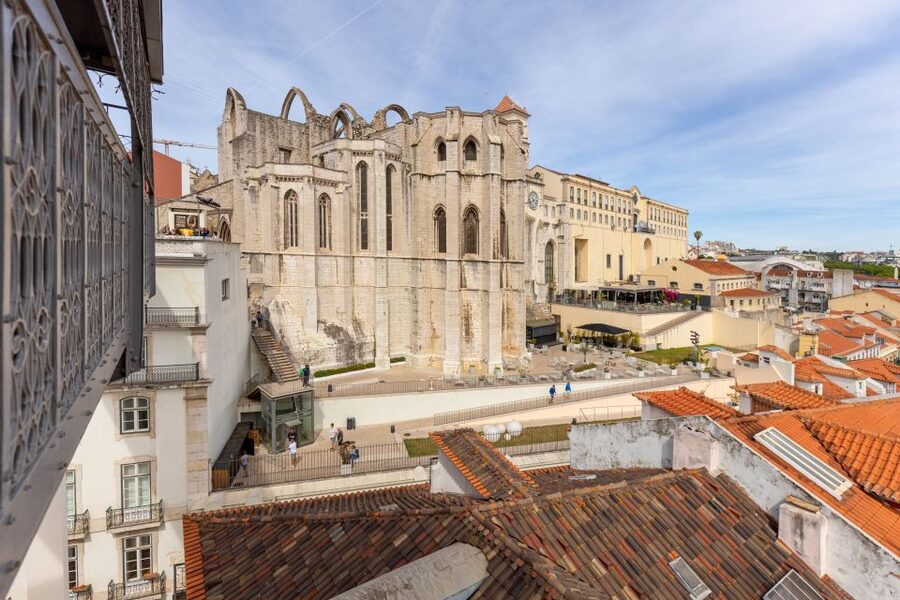
The Santa Justa Elevator is one of Lisbon’s most recognizable structures. Built in the Gothic Revival style, it rises above the surrounding streets and offers one of the city’s notable viewpoints.
The tour uses the elevator as a bridge into Baixa, the central lower district. You see how this part of Lisbon differs from the uphill neighborhoods, both in street pattern and in the way the city was rebuilt after the earthquake.
Do not assume the tour includes a ride on the Santa Justa Elevator. The listed tram trip is included, while the elevator is described as a sight and viewpoint. That distinction matters if you are planning your day around using it.
After this section, the tour includes a short break before continuing by tram. Coffee and cake are included, with the traditional pairing described in the tour and confirmed in the experience of several participants: a bica, or small espresso, and a pastel de nata. It is a modest refreshment, but it comes at the right moment, after several streets and hills.
The tram ride and the climb toward Portas do Sol
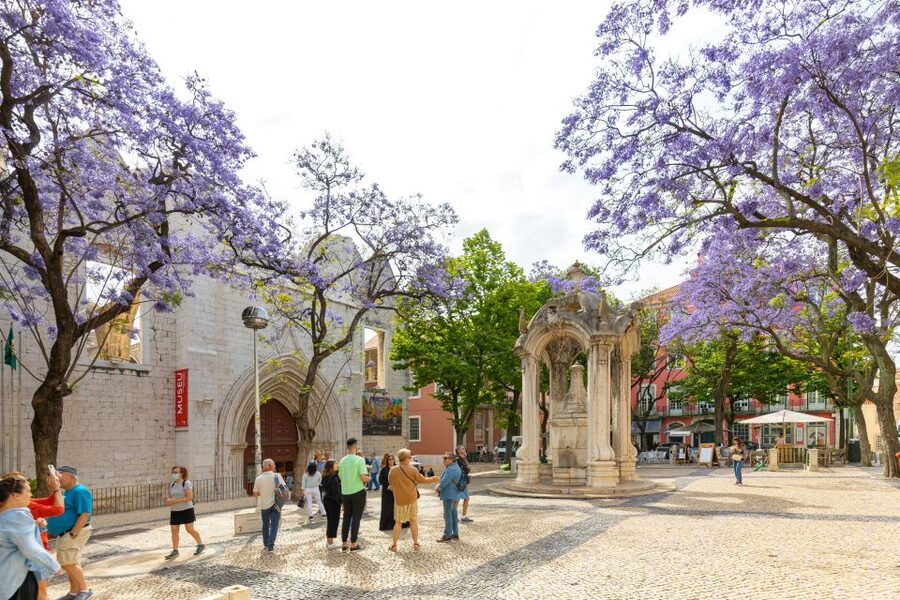
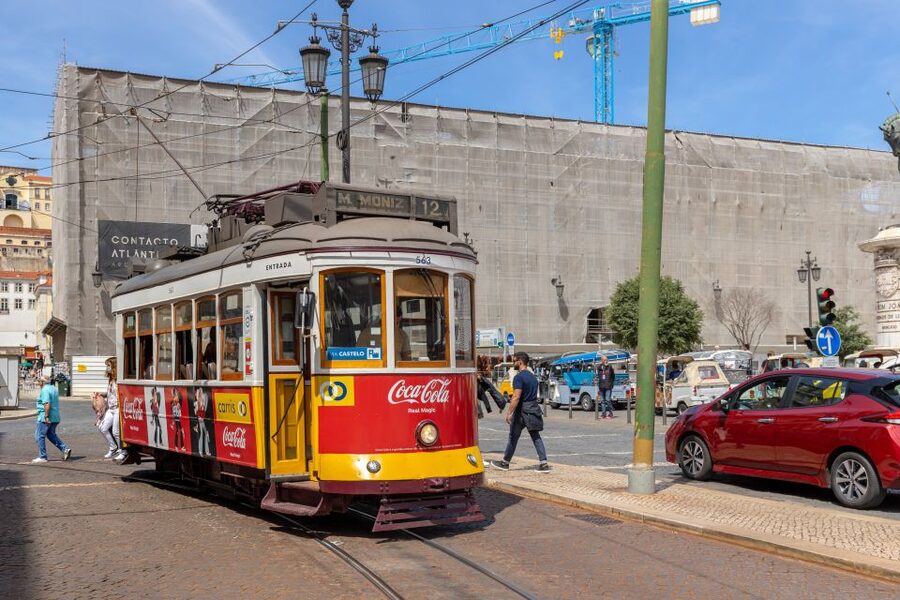
The tram ride is one of the tour’s most enjoyable practical features. You ride upward from the castle area toward Portas do Sol, adding a classic Lisbon transport experience to the walking route.
This matters because Lisbon’s trams are not merely decorative photo props. They are part of how the city’s steep neighborhoods connect. A short ride lets you experience the old network while saving your legs for the lanes of Alfama.
There is one important note: the tram is a working part of the city, so conditions can change. One guide, Anna, reportedly had to alter the route when a tram broke down and heavy rain arrived. Her calm adjustment turned a potential disappointment into a good tour, but you should still treat the tram ride as a planned feature rather than an absolute guarantee of a fixed route.
Crowding can also affect the ride. The tour information does not promise a private tram carriage or reserved seating. Keep your belongings secure and stay alert for the guide’s instructions when boarding and leaving.
Portas do Sol and Lisbon’s upper riverfront
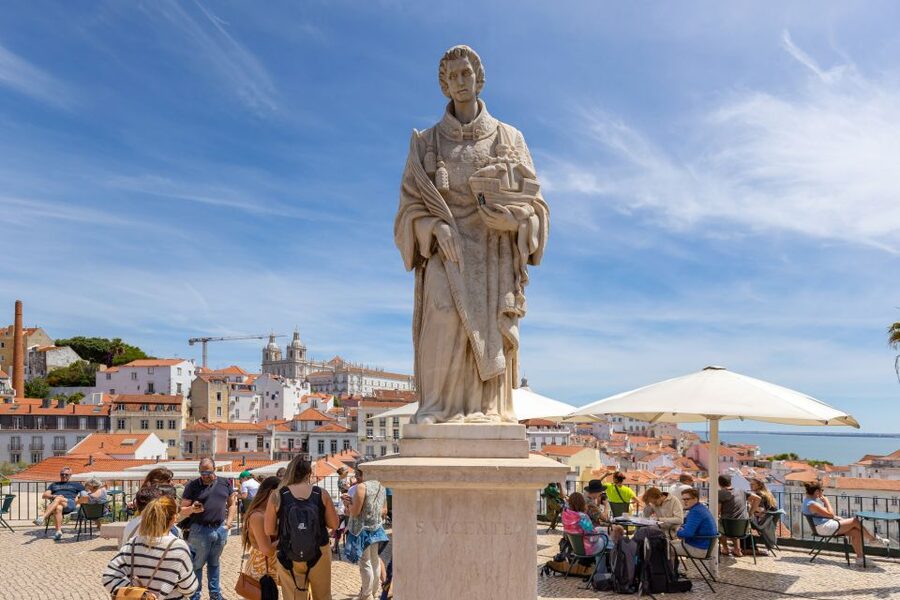
Portas do Sol opens up another broad view over Alfama and the Tagus. From this point, you can see several important buildings and get a sense of how the old quarter runs down toward the water.
The tour highlights the Monastery of São Vicente de Fora, the National Pantheon, and the spread of Alfama below. These sights are not treated as isolated stops. Together, they show how religion, burial traditions, royal power, and neighborhood life overlap in Lisbon.
This is a good place to pause and take photographs, but I would also use the stop to look at the route ahead. Alfama is made for wandering, with narrow lanes and changing angles. The broad view from Portas do Sol helps you understand the maze before you enter it.
Alfama: fado, festivals, and old Lisbon
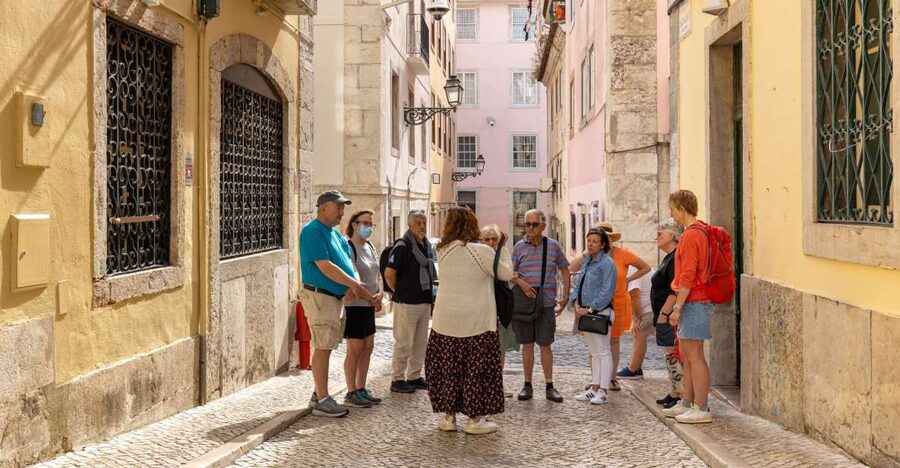
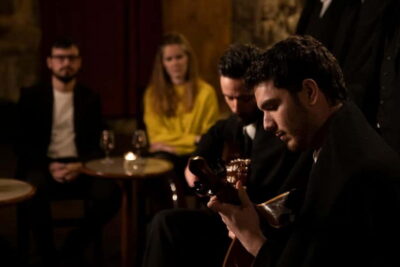
Alfama is the emotional center of the tour. It is one of Lisbon’s oldest and most traditional neighborhoods, known for narrow streets, fado houses, and festivals honoring the city’s saints.
The district feels different from Baixa. Instead of broad rebuilt streets, you get tight lanes and a more intimate sense of place. The tour gives you a guided introduction, but it cannot show every corner in three hours. I would return to Alfama later, especially if you want to hear fado or explore at a slower pace.
St. Anthony’s festival is an important part of Alfama’s identity. The guide’s explanation helps connect local celebrations with the neighborhood’s social life, rather than presenting them as colorful events with no context.
This part of the walk may be the most rewarding for people who want daily life and culture alongside monuments. It is also where the hills and uneven streets are most noticeable. The route has frequent stops, and one experience described it as manageable for people who are not especially fit, but you should still be honest about your comfort with uphill walking.
Lisbon Cathedral and the final piece of the story
The tour ends at Lisbon Cathedral, built in 1150, three years after the city was taken back from the Moors. Later changes gave the building a mixture of architectural styles, so it is best understood as a record of Lisbon’s long development rather than a perfectly uniform monument.
Ending here makes sense. You have moved through Bairro Alto, Baixa, and Alfama, and the cathedral brings together the city’s medieval Christian past, later alterations, and continuing religious importance.
The final stop also leaves you in a useful part of the city for further exploring. Since hotel pickup and drop-off are not included, plan to continue from the cathedral on your own or arrange your next stop in advance. The meeting point can vary depending on the option you book, so check the exact location before setting out.
How much walking and time should you allow?
The official duration is three hours, but you should leave a little extra time afterward. Ricardo and other guides have sometimes allowed the tour to run over so that the group did not feel rushed, especially when questions or weather slowed the route.
That is good for the experience but not ideal if you have a firm restaurant booking or timed attraction immediately afterward. I would leave a buffer of at least part of an hour.
The route includes hills, downhill stretches, narrow streets, and steps. You stop often for explanations, views, churches, photos, coffee, and cake, so it is not three hours of nonstop marching. Still, comfortable shoes and water are sensible.
Rain can change the feel of the day. One guide adapted well during pouring rain, but Lisbon’s hills become less pleasant when wet. A light waterproof layer will help, and you should avoid scheduling the tour right before an important timed activity.
Guide quality and group atmosphere
The strongest part of this experience is the guide. The highest praise goes to people who combine facts with humor, personal memories, and useful advice for the rest of your stay.
Paulo is associated with warm storytelling and personal insight into Lisbon’s recent past. Ricardo has been praised for historical detail, patience, local recommendations, and thoughtful adjustments, including finding a vegan savory snack for a vegetarian participant. Beatrice is known for energy, clear explanations, and care for older members of the group. Anna has been praised for adapting to both bad weather and a broken tram.
Group size can vary. Private and small-group options are available, while one regular departure had eight people and another had only three, creating an almost private feel. Smaller groups make it easier to hear, ask questions, and keep together in Alfama’s narrow lanes.
Guide names and assignments can change, so book this for the route and format rather than expecting one particular person. If you do get Paulo, Ricardo, Beatrice, Anna, or João, you can expect a guide with a strong reputation for making Lisbon understandable and personal.
Is $29 a fair price?
At $29 per person, the tour offers solid value. You receive three hours with a live guide, a walking route through several major districts, a tram trip, coffee, and cake.
The real value is not the pastry or the tram ticket alone. It is the connection between the places. You learn why Bairro Alto changed, how the earthquake shaped Baixa, why Carmo matters to modern Portugal, and how Alfama remains tied to fado and local festivals.
A self-guided day could cost less, especially if you already know the city and enjoy researching in advance. But you would need to organize the route, interpret the buildings, find the tram, and keep track of how the districts fit together. For a first visit, $29 is a reasonable price for that structure and human explanation.
Private or small-group options may offer more room for questions, but the available price can depend on the option selected. Check the booking choice carefully.
Who should book this Lisbon walk?
I would recommend it most strongly to first-time visitors, solo bookers, couples, and anyone who wants a broad introduction before exploring Lisbon independently.
It also suits people who enjoy history but do not want a lecture. The route covers the Moorish period, the 1755 earthquake, religious architecture, the Carnation Revolution, fado, festivals, and present-day Lisbon through stories tied to actual places.
You should think twice if you dislike hills, uneven streets, public transport, or group pacing. This is not a museum tour with benches at every stop. It is an active city walk, even with regular pauses.
The tour can work for people who are not especially fit because the pace is relaxed and there are many stops, but that should not be confused with a step-free route. Ask about the specific meeting point and route option if mobility is a concern.
Final verdict: book it early in your Lisbon stay
I would book this tour near the beginning of a Lisbon visit. It gives you the city’s basic structure, a useful dose of history, a tram ride, a viewpoint, a church interior, Alfama lanes, and a small Portuguese coffee break in one well-packed morning or afternoon.
The main risk is that hills, rain, crowds, or a tram disruption can alter the plan. The strongest guides handle those problems well, and the tour’s relaxed style leaves room for adjustment.
Book it if you want a smart, human introduction to Lisbon for $29. Skip it only if you already know the central districts well or prefer exploring entirely at your own pace.
FAQ
How long does the Lisbon walking tour last?
The tour duration is three hours. It can sometimes run a little longer if the guide allows extra time for questions or route changes.
What areas of Lisbon does the tour visit?
The route includes Bairro Alto, Miradouro São Pedro de Alcântara, Baixa, the Carmo area, Santa Justa Elevator, Portas do Sol, Alfama, and Lisbon Cathedral.
Is a tram ride included?
Yes. A tram trip is included as part of the tour. The route is described as going upward from the castle area toward Portas do Sol.
Are coffee and cake included?
Yes. Coffee and cake are included. The experience commonly includes a bica, or espresso, and a pastel de nata.
Does the tour include hotel pickup and drop-off?
No. Hotel pickup and drop-off are not included.
Where does the tour meet?
The meeting point can vary depending on the option booked. Check the exact meeting details for your selected option.
What languages are available?
Live guides are available in Portuguese, Spanish, Italian, German, French, and English.
Can I book a private or small-group tour?
Yes. Private and small-group options are available.
Is the tour suitable for people who are not very fit?
The route has regular stops and a relaxed pace, and it may suit people who are not especially fit. However, Lisbon’s hills, narrow lanes, and steps mean this is not a flat or step-free walk.
What happens if the tram is not running?
The route may be adjusted if the tram breaks down or conditions such as heavy rain interfere with the planned ride. The guide can adapt the experience, but the exact replacement plan is not specified.
Recently added in Lisbon
- Lisbon Cinematic Photoshoot with Top-Rated Photographer★ 5.0 · 76 reviews
- City Centre Run in Lisbon★ 5.0 · 164 reviews
- City of Neighborhoods Tour 1H 30M Private Tour by Tuk Tuk★ 5.0 · 38 reviews
- Central Lisbon E-Bike Tour★ 5.0 · 168 reviews
- Hands on Portuguese Cooking Class in Lisbon★ 5.0 · 136 reviews
- Lisbon City Tour by Tuk Tuk★ 4.5 · 137 reviews
- Lisbon Sailing Catamaran Public Cruise with drinks★ 5.0 · 304 reviews
- Romantic Private Sailboat in Lisbon for couples★ 5.0 · 38 reviews
Historical Tours, compared.

Douro Valley: Historical Sites, Wine Experience, Lunch & Cruise
Read our review →
Live Fado Show with Port Wine in Historic Center
Read our review →


Explore Lisbon by Tuk Tuk: History and Viewpoints
Read our review →Browse the lists this tour appears in