
REVIEW · COOKING CLASSES
Lisbon: Pasteis de Nata Baking Class
Custard tarts make excellent souvenirs. This two-hour class in Lisbon’s pastry quarter gives you hands-on practice making pastéis de nata from scratch, including the flaky pastry, rather than simply eating another tart at a bakery. I like the small maximum of eight people, and I like that chef Miguel keeps the session relaxed, patient, and social. The main consideration is the price: at $76 per person, you are paying for instruction and an experience, not just a plate of inexpensive pastries.
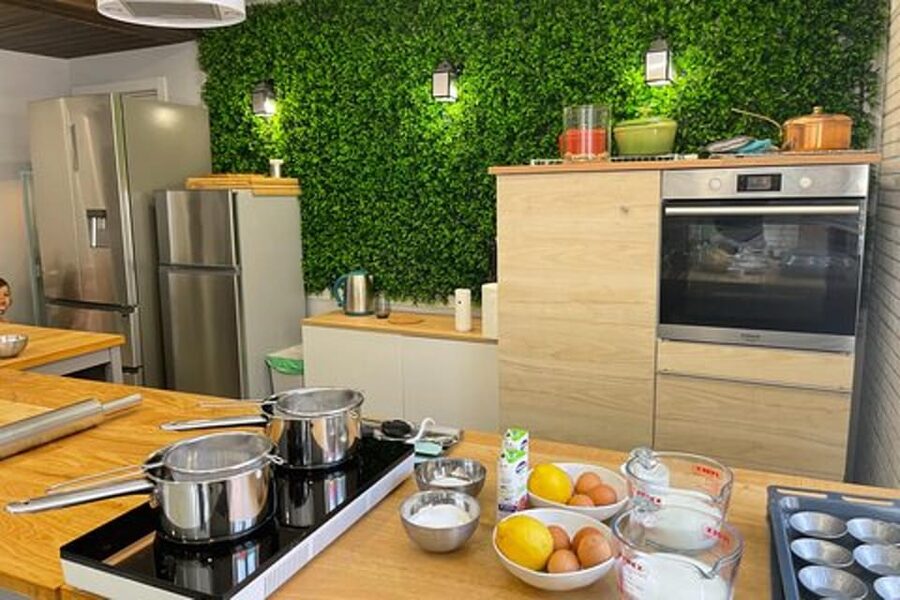
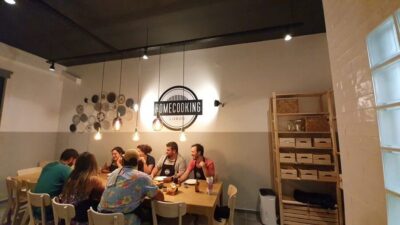
The class takes place in a clean kitchen studio hidden inside a private yard, reached through a green gate. You can choose a morning or afternoon start, which makes it easy to fit around sightseeing. The two-hour length is another plus, though anyone hoping for a full Portuguese cooking course will find this focused almost entirely on one famous sweet.
In This Review
- Quick Take: What Makes This Class Worth Your Time
- Finding the Green Gate in Lisbon
- Starting From Flour, Dough, and Custard
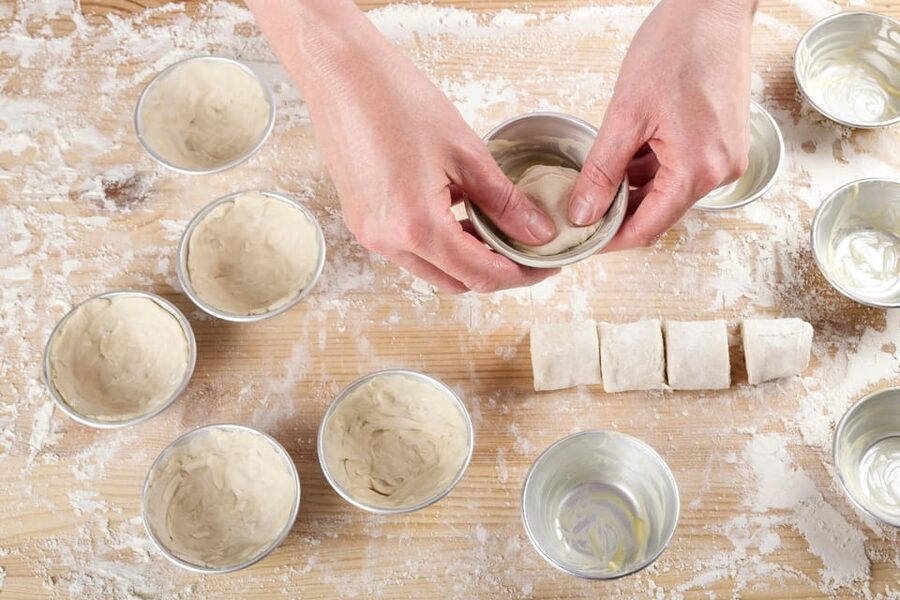
- Shaping the Tart Shells
- Filling, Baking, and the Best Part of the Class
- How Miguel Shapes the Experience
- Is $76 a Fair Price?
- Morning or Afternoon: Choosing Your Slot
- Who Will Enjoy This Baking Class Most?
- The Drawbacks to Keep in Mind
- Booking, Cancellation, and Practical Details
- Should You Book the Lisbon Pastéis de Nata Class?
- FAQ
- How long does the pastéis de nata class last?
- How many people can join the class?
- Is the class offered in English?
- Are food and drinks included?
- Can I take pastries home?
- Is the kitchen wheelchair accessible?
Quick Take: What Makes This Class Worth Your Time
- You make the pastry yourself: The class covers the dough as well as the custard filling, so you learn the part many casual demonstrations skip.
- Chef Miguel leads the session: His style is friendly, encouraging, and lightly humorous, with clear steps and time for questions.
- Eight people is the limit: A small class means you can get help with shaping, filling, and baking instead of watching from the back.
- You eat and take away your work: The class includes your own pastéis de nata, and participants have had enough to enjoy during the tasting and carry the rest away.
- Coffee, tea, and a drink are included: While the tarts bake, you can have coffee or tea plus one alcoholic beverage, often enjoyed with Portuguese port or liqueur.
- It fits neatly into a Lisbon day: With a two-hour duration and morning or afternoon choices, you still have plenty of time for museums, viewpoints, or a long lunch.
Finding the Green Gate in Lisbon
The meeting point is not a shopfront with a large sign. The kitchen studio sits inside a private yard, and you are told to look for the green gate. That detail matters. Give yourself enough time to find the entrance rather than arriving at the last minute with flour already in your future.
The studio is in the quarter where pastéis de nata were created, giving the class a useful sense of place. You are not just making a generic custard tart in a rented room far from the city’s food traditions. The neighborhood itself forms part of the experience, and the walk to the kitchen can feel like a small introduction to local Lisbon.
The setting has been praised for being clean, peaceful, and attractive. That is important for a hands-on baking class. You want prepared ingredients, clear work surfaces, and enough room to shape pastry without bumping elbows at every turn.
The kitchen is wheelchair accessible. Hotel pickup and drop-off are not included, so you arrange your own way to the green gate. The practical advantage is freedom: you can come from your hotel, a museum, or another Lisbon activity without being tied to a group vehicle.
More Cooking Classes in Lisbon
- Lisbon: Pastel de Nata Baking Class
★ 4.9 · 2,106 reviews - Lisbon: Traditional Portuguese Cooking Class
★ 4.9 · 592 reviews - Pastel de Nata Masterclass at a Real Bakery in Downtown Lisbon
★ 5.0 · 491 reviews
Starting From Flour, Dough, and Custard
The strongest part of the class is its hands-on format. You make everything from scratch, including the pastry. That turns a familiar Lisbon snack into something you can understand and possibly repeat at home.
Pastéis de nata look simple in a bakery display: crisp shell, pale custard, browned top. The work hides in the details. The pastry must become thin and flaky, and the custard needs the right balance of sweetness and creaminess. You get to see how the separate parts come together instead of treating the tart as a secret product that only professionals can make.
Miguel guides the group step by step. His teaching style is described as patient and encouraging, which is useful for beginners who may not know how delicate the pastry should be. You do not need to arrive as a serious baker. The class suits first-timers as well as people who already enjoy cooking.
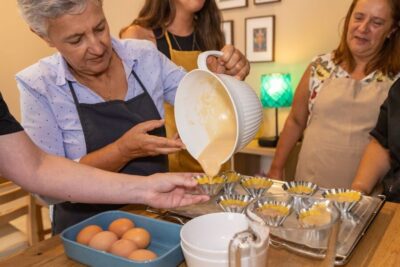
You also get to ask questions as you work. In a larger demonstration, it is easy to miss the moment when pastry becomes too thick or the filling is portioned incorrectly. With a maximum of eight people, Miguel can give more direct help.
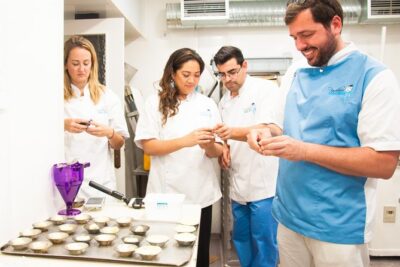
The class may involve pairs for some of the work. One two-person session produced about ten tarts per pair, though the exact amount can depend on the class setup. That is a generous result for a two-hour activity, especially when some are eaten warm and others are boxed for later.
Shaping the Tart Shells

The pastry stage is where the class becomes more useful than a standard food tasting. You are not only handed a ready-made shell. You take part in forming the base that gives the tart its crisp, layered texture.
This work is also where the class can be a little messy. Baking from scratch means handling dough, following several stages, and working at a steady pace. If you want a polished, effortless activity with no practical work, choose a tasting instead. If you enjoy learning by doing, this is the part that gives the class its value.
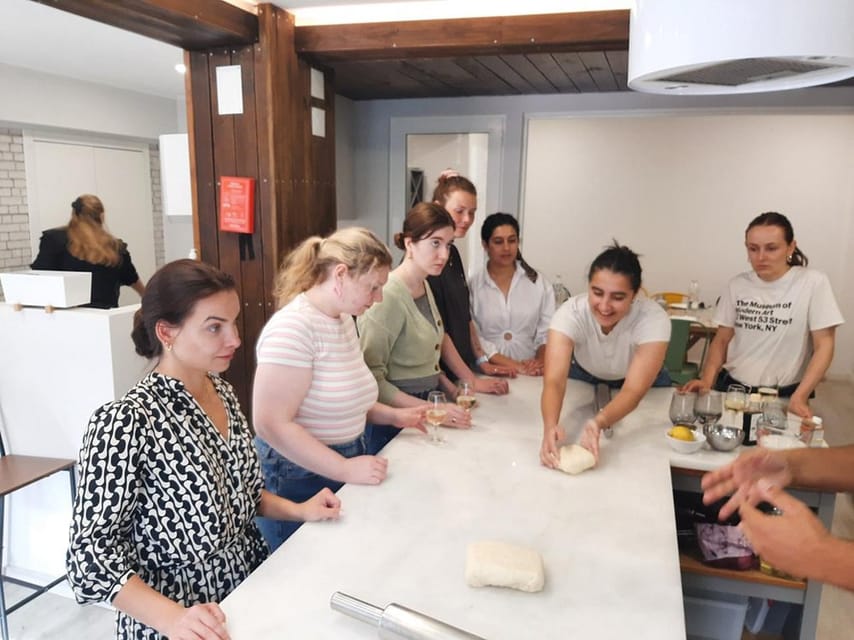
The small-group format helps keep the pace comfortable. A class held with only one other couple has been described as intimate, while a full group of six still felt manageable. You get a social experience without the feeling of being one anonymous person in a large crowd.
The setting also encourages conversation. You work alongside other people, then share a drink while the tarts bake. That makes the class a good choice for couples, solo visitors, families with an interest in food, or a small team looking for an informal activity.
Filling, Baking, and the Best Part of the Class

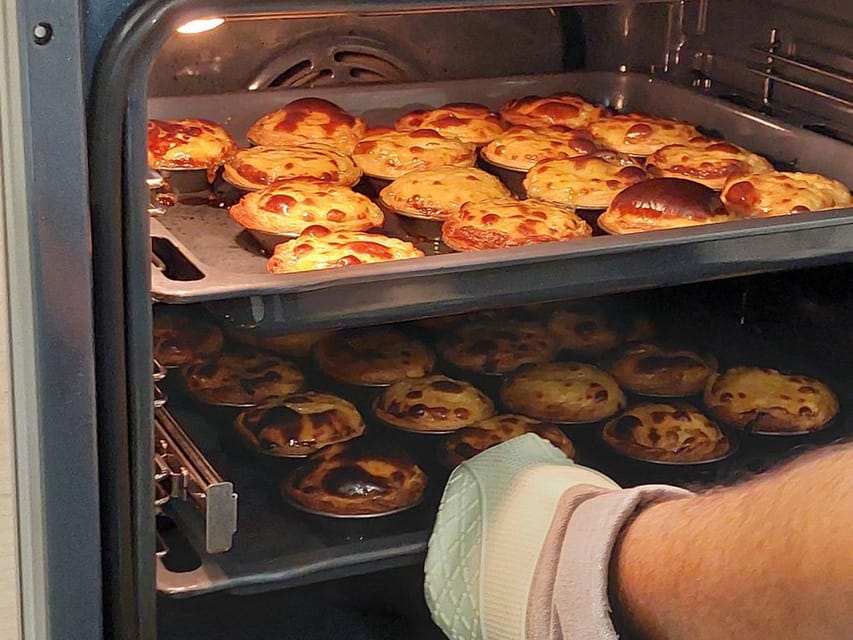
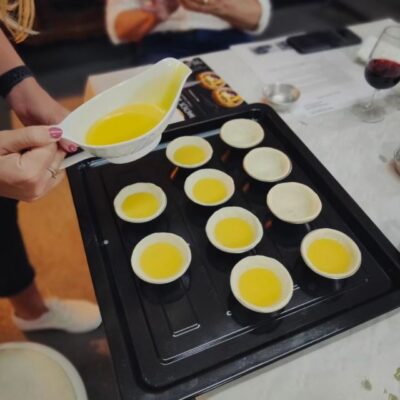
Once the shells are ready, you add the custard and send the tarts into the oven. The waiting time is put to good use. You receive a drink, with coffee and tea available, and learn about the background of this Portuguese pastry.
The history lesson is brief rather than academic. That suits the class. You get enough context to understand why pastéis de nata matter in Portugal, while most of the time stays focused on cooking and eating.
The tasting is the reward. Freshly baked custard tarts have a different appeal from pastries that have been sitting in a bakery case. You can taste the work immediately, judge the crispness of your shells, and see how well your filling has set.
The class includes one alcoholic beverage, and some sessions have paired the tarts with port or Portuguese liqueurs. Coffee and tea are also included, along with bottled water. If you do not drink alcohol, the nonalcoholic choices still give you something pleasant to enjoy while the pastries finish.
You generally do not eat the entire batch on the spot. Participants have been given a box to take the remaining tarts away. That makes the experience feel generous and gives you a sweet snack for later, though pastry is at its best when fresh.
Same corner of the country, a different pace:
- Lisbon City Center Tour – The Unmissable Lisbon
★ 5.0 · 22,234 reviews - Lisbon: Sintra, Pena, Regaleira, Cabo da Roca & Cascais
★ 4.7 · 19,656 reviews - Lisbon: Jerónimos Monastery Entrance Ticket
★ 4.1 · 14,164 reviews - Lisbon: History, Stories and Lifestyle Walking Tour
★ 4.8 · 10,902 reviews
How Miguel Shapes the Experience
A cooking class rises or falls on its instructor. Here, Miguel is repeatedly described as warm, organized, attentive, and fun. Those qualities matter more than a polished speech.
He explains why he takes each step, not just what to do. That can help you remember the process when you try making pastéis de nata at home. His relaxed manner also makes it easier to ask questions or admit that your dough does not look quite like the sample.
The class has enough structure to keep moving, but it does not sound rushed. A good baking lesson needs both. If the instructor goes too fast, beginners lose the thread. If the class drags, two hours can feel long. The reported pace is balanced, with time for cooking, conversation, and tasting.
Miguel also appears to be part teacher and part host. He talks with the group while the baking happens, which makes the session social without turning it into a forced performance. Solo visitors can join comfortably, and couples can treat it as a shared activity.
One useful point is that you should not expect a large staff or multiple workstations with separate instructors. The class is built around a small group and one main chef. That is a strength for personal attention, but the experience depends heavily on the group size and the flow of the session.
Is $76 a Fair Price?
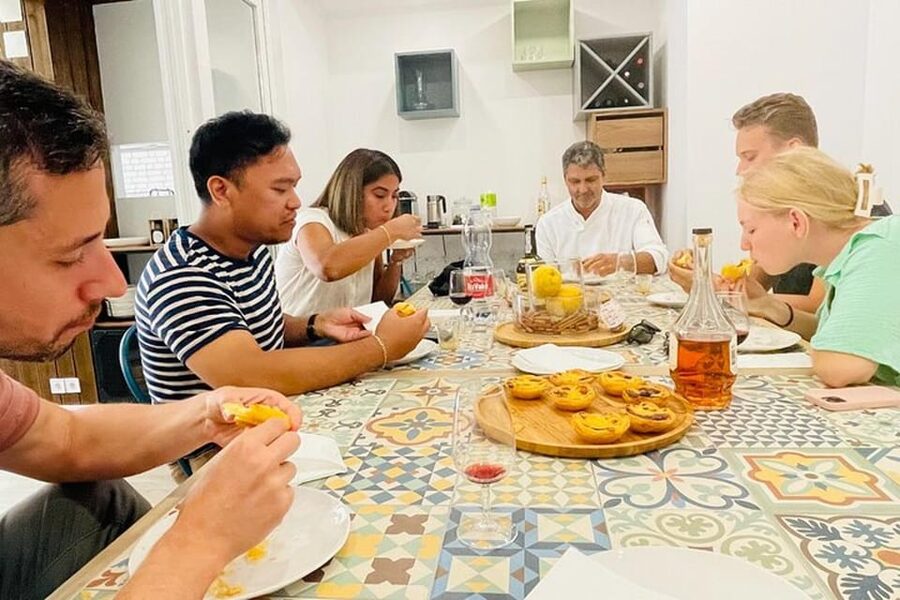
At $76 per person, this is not the cheapest way to eat pastéis de nata in Lisbon. You can buy a single tart for a small amount at bakeries throughout the city. The price makes sense only if you want more than the finished pastry.
You are paying for a two-hour lesson, an instructor, ingredients, your own baked tarts, coffee or tea, bottled water, and one alcoholic beverage. You also receive a skill and a recipe process you can use after returning home. The takeaway box adds practical value, especially for people who like to bring edible souvenirs back to their lodging.
The small group is another part of the price. A class limited to eight allows more personal guidance than a large tourist demonstration. If you are baking with a partner, you also share an activity rather than simply sitting through a talk.
I would call it good value for food-focused visitors, couples, solo visitors who enjoy meeting people, and anyone who has already eaten several pastéis de nata and wants to understand how they are made. I would not choose it if your main aim is simply to sample Lisbon’s sweets as cheaply as possible.
Morning or Afternoon: Choosing Your Slot
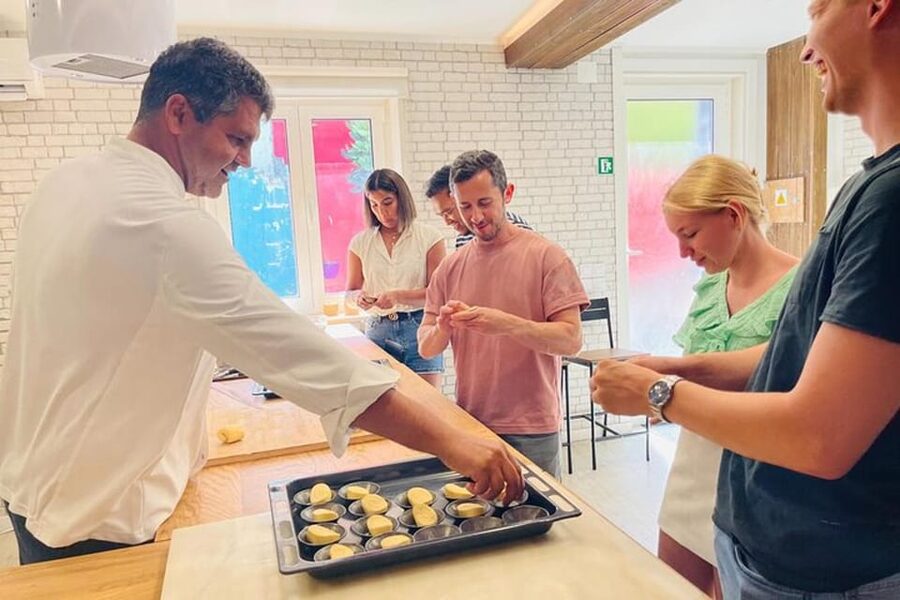
Both morning and afternoon start times are available, so you can fit the class around your plans. A morning session can work well before an afternoon of sightseeing, while an afternoon class gives you a break from museums, churches, and uphill streets.
The activity lasts two hours, which is short enough to avoid taking over your day. Still, allow time to reach the private yard and find the green gate. The exact starting times vary, so check the available schedule when booking.
You may also want to think about what you plan to do afterward. If you take home a box of tarts, avoid putting it at the bottom of a packed day bag. The pastries are edible souvenirs, but they are not built for careless handling.
The class is taught in English and Portuguese. That makes it accessible to English-speaking visitors, while the Portuguese language option adds a local touch for people who prefer it.
Who Will Enjoy This Baking Class Most?
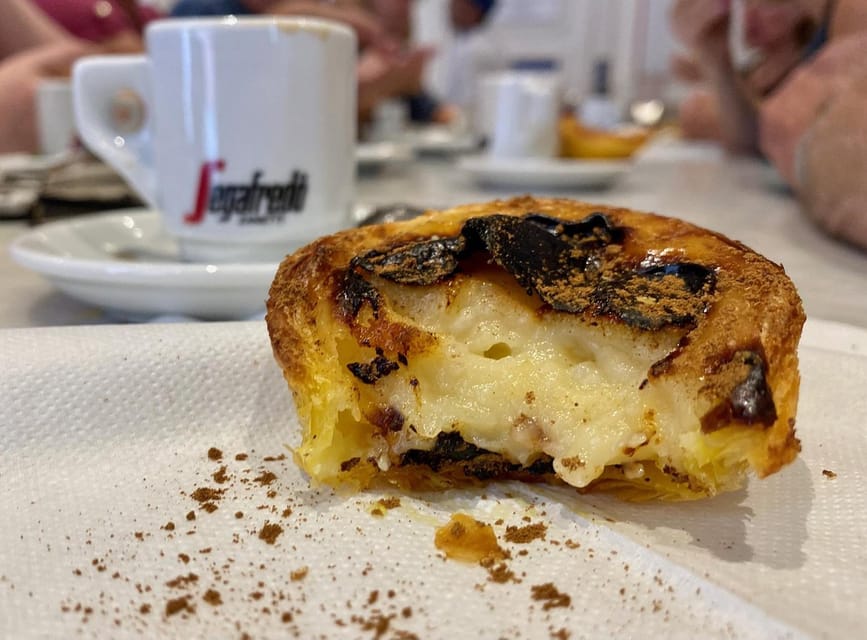
I would recommend this experience to:
- First-time bakers: The instructions are clear and the chef guides you through each stage.
- Food lovers: You learn how a famous Portuguese pastry is built, from shell to custard.
- Couples: Working together makes the class a relaxed shared activity.
- Solo visitors: The small group creates an easy setting for conversation.
- Small groups and team outings: The eight-person limit suits a compact group without losing the personal feel.
- Visitors with a tight schedule: Two hours leaves room for other Lisbon plans.
Children and families may enjoy the activity, but the supplied information does not specify age limits. If you are booking with young children, check the current requirements first.
People with limited mobility should note the positive point that the kitchen studio is wheelchair accessible. You still need to arrange your own transport to the meeting point, and the green-gate entrance should be identified in advance.
The Drawbacks to Keep in Mind
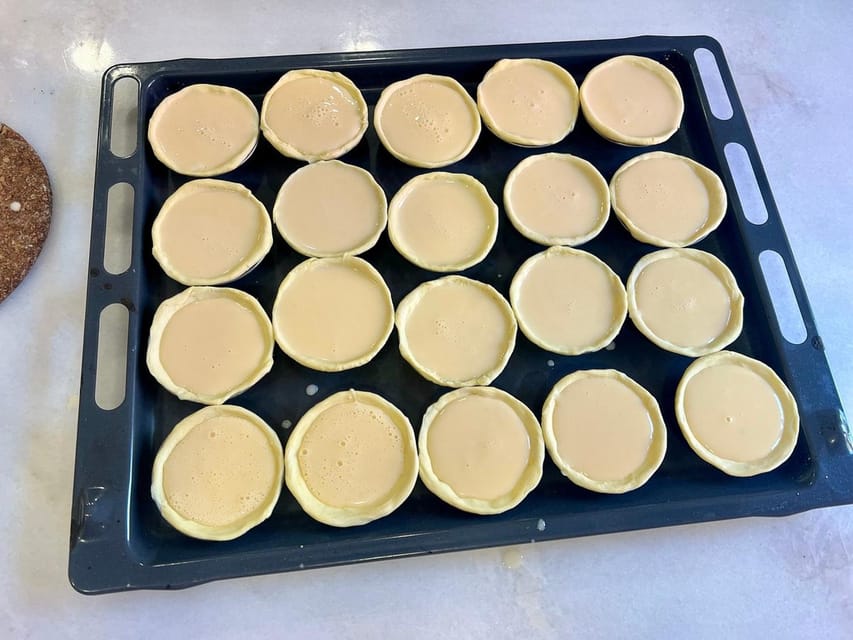
The biggest drawback is value for money if you judge the activity only by the food. Ten or so tarts shared by two people, plus drinks, do not equal $152 in bakery purchases. The extra cost pays for teaching, the setting, the social time, and the chance to make the pastries yourself.
The second consideration is that this is a single-dish class. You will not learn a broad range of Portuguese cooking. The focus is pastéis de nata, with a short drink and history segment while the baking is underway.
There is also no hotel pickup or drop-off. That is normal for a short city class, but it means you must plan your route. Since the studio is inside a private yard, finding the green gate is more important than simply reaching the right neighborhood.
Finally, class quality depends on the group. Eight people is still small, but the experience will feel more intimate with two or four participants than with a full group. The good news is that the format is designed to keep the group involved rather than seated as an audience.
Booking, Cancellation, and Practical Details
You can reserve your place and pay later, which is useful when your Lisbon schedule is still changing. Cancellation is free up to 24 hours before the activity for a full refund.
The class lasts two hours and is offered in English and Portuguese. It includes the pastry-making lesson, the chef-instructor, your baked pastéis de nata, coffee, tea, one alcoholic drink, and bottled water.
You do not need a hotel transfer, and none is provided. Go to the private-yard meeting point and look for the green gate. Since the entrance may not look like a conventional business doorway, build in a little extra arrival time.
Should You Book the Lisbon Pastéis de Nata Class?
Book it if you want to move past simply eating Lisbon’s signature tart. The class gives you a real task, a friendly teacher in Miguel, a clean and peaceful kitchen, drinks during the bake, and a box of pastries to enjoy afterward.
I especially like it for a second or third day in Lisbon, when you have seen the main sights and want an activity tied to Portuguese life. It also makes sense for couples, solo visitors, and small groups who prefer participation to passive sightseeing.
Skip it if you want the lowest-cost pastry experience or a full meal. At $76, the class is an experience purchase. For anyone curious about the craft behind those flaky shells and creamy centers, that is exactly what makes it worthwhile.
FAQ
How long does the pastéis de nata class last?
The class lasts two hours. That includes the pastry lesson, baking time, a short history discussion, drinks, and tasting.
How many people can join the class?
The class is limited to a maximum of eight participants, creating a small-group setting with more opportunity for individual help.
Is the class offered in English?
Yes. The instructor teaches in English and Portuguese.
Are food and drinks included?
Yes. The experience includes the pastry lesson, your own pastéis de nata, coffee and tea, bottled water, and one alcoholic beverage.
Can I take pastries home?
Yes. The class includes your own baked pastéis de nata, and the remaining pastries can be taken away. A box has been provided for this purpose.
Is the kitchen wheelchair accessible?
Yes, the activity is listed as wheelchair accessible. Hotel pickup and drop-off are not included, so you arrange your own transportation to the meeting point.
Recently added in Lisbon
- Lisbon Cinematic Photoshoot with Top-Rated Photographer★ 5.0 · 76 reviews
- City Centre Run in Lisbon★ 5.0 · 164 reviews
- Hands on Portuguese Cooking Class in Lisbon★ 5.0 · 136 reviews
- City of Neighborhoods Tour 1H 30M Private Tour by Tuk Tuk★ 5.0 · 38 reviews
- Central Lisbon E-Bike Tour★ 5.0 · 168 reviews
- Lisbon Sailing Catamaran Public Cruise with drinks★ 5.0 · 304 reviews
- Lisbon City Tour by Tuk Tuk★ 4.5 · 137 reviews
- Romantic Private Sailboat in Lisbon for couples★ 5.0 · 38 reviews
Cooking Classes, compared.
Pastel de Nata Cooking Class with Grandma’s Recipe
Read our review →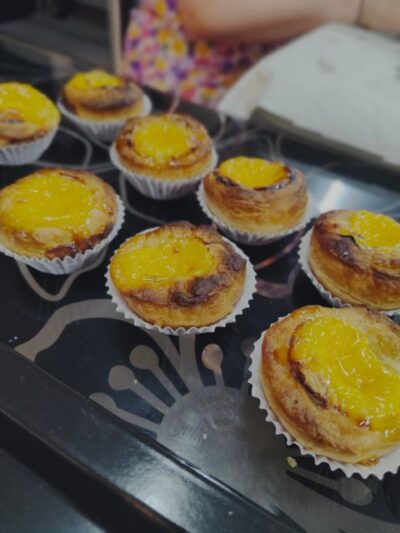
Pastel de Nata Cooking Class with Port Wine – Sé
Read our review →
Pastel de Nata Masterclass at a Real Bakery in Downtown Lisbon
Read our review →
Pastel de Nata Pastry Class: Bake and Enjoy Your Own Treats
Read our review →Browse the lists this tour appears in