
REVIEW · WORKSHOPS
Sintra: Hispanic Moorish Tile Workshop
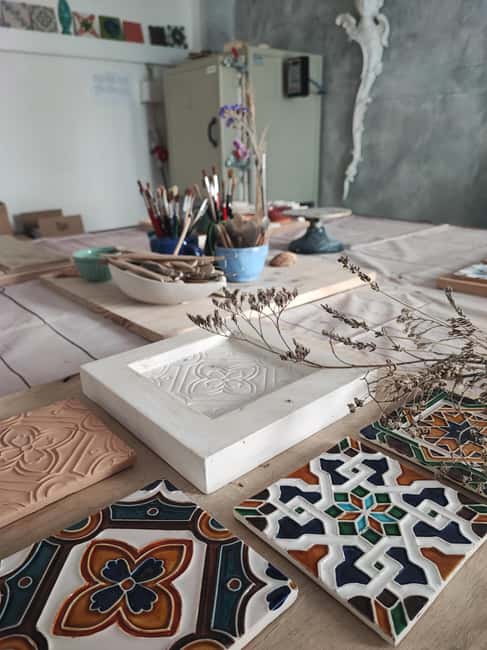
Tiles tell Portugal’s story in color. This two-hour Sintra workshop lets you handle that story yourself, shaping fresh clay with a mold and painting a second tile with colored glazes. I especially like the small group of up to eight and the chance to choose from many geometric designs. The main catch is timing: the session runs from 3 to 5 pm, and your finished tile is not ready to take home that afternoon.
I also like the clear link between this craft and Portugal’s famous azulejos. Aldina, also referred to as Dina in participant accounts, receives repeated praise for her patient teaching and warm manner. The $58 price includes materials, instruction, one painted tile, and firing, but shipping is extra. If you are visiting from the United States, postal delivery is currently restricted, so plan on pickup or hotel courier delivery instead.
In This Review
- Key points at a glance
- Why this Sintra craft class is worth your afternoon
- From Spain to Portugal: the craft behind the class
- The 3 pm start and the studio setting
- Shaping the clay with a mold
- Painting the tile with colored glazes
- What happens after the class
- Is $58 a fair price?
- Who will enjoy this most?
- Planning your afternoon in Sintra
- Booking flexibility and access
- Should you book this Sintra tile workshop?
- FAQ
- Where does the Hispanic Moorish tile workshop take place?
- How long does the workshop last?
- What will I make during the class?
- Is one painted tile included?
- Can I choose my own tile design?
- Is the finished tile ready to take home at 5 pm?
- Can the studio ship my tile home?
- Is the workshop taught in English?
- Is the workshop wheelchair accessible, and is there an age limit?
Key points at a glance
- Two different hands-on tasks: Shape one tile from fresh clay and paint another with glaze.
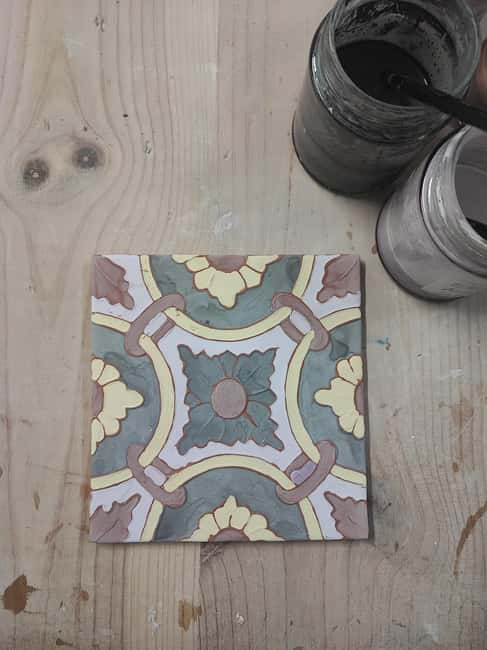
- Aresta technique: Learn a traditional raised-line method with Islamic influence, brought from Spain in the 15th century.
- Small, calm setting: The class is limited to eight people, giving you room to work and ask questions.
- Plenty of design choice: Select from a broad range of motifs on both molds and ready-made tiles.
- Finished later: Your painted tile must be fired, then collected or shipped for an additional fee.
- Easy Sintra add-on: The studio is described as a short walk from the train station, making it practical after time in town.
Why this Sintra craft class is worth your afternoon
Sintra is best known for palaces, gardens, and steep streets. That makes this workshop a useful change of pace. Instead of looking at Portuguese decoration from behind a camera, you spend two hours learning how a small piece of it is made.
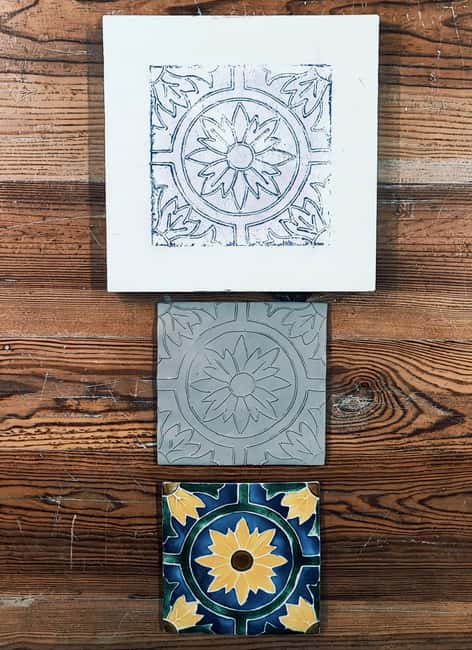
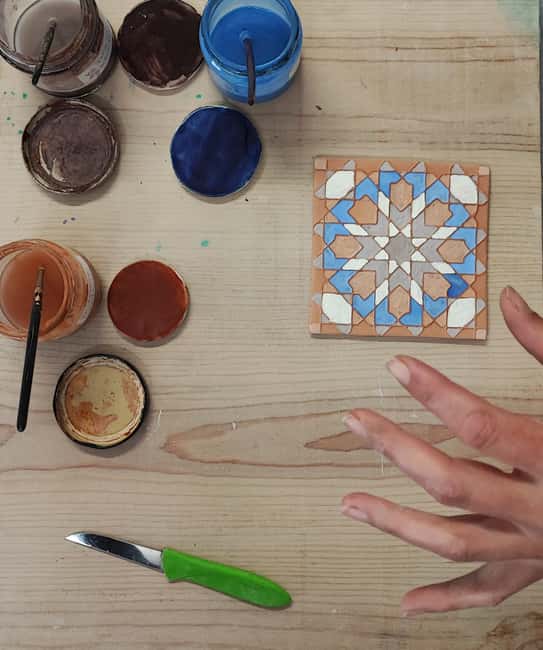
The subject is the traditional Aresta technique, a form of tile decoration linked to Islamic design. The method uses raised lines to separate areas of color. Those lines help keep glazes from running together during firing, while also creating the crisp geometric effect associated with Hispano-Moorish tilework.
You do not need an art background. The activity is designed around simple, guided steps. You work with clay and a mold first, then move on to painting a tile with colored glazes. The two tasks feel different. Clay work is more physical and shape-based, while painting is slower and more exact.
I like that the class gives you both sides of the process. A tile is not just a painted square. You see how its form begins, how a motif is transferred, and how color is applied before heat changes the final result.
A few more Sintra options side by side
- Sintra: Pena Palace and Park Entrance Ticket
★ 4.2 · 17,410 reviews - Lisbon: Sintra, Pena Palace, Cabo da Roca, & Cascais Tour
★ 4.9 · 3,509 reviews - Quinta da Regaleira Skip-the-Ticket-Line Entry & Audioguide
★ 4.2 · 3,316 reviews
From Spain to Portugal: the craft behind the class
The workshop introduces a fashion that came from Spain in the 15th century and became known as Hispano-Moorish. The name points to the meeting of Iberian and Islamic artistic traditions, especially the use of repeated shapes, strong borders, and carefully divided color.
That background matters because Portugal’s tile tradition can otherwise seem purely decorative. Once you understand the role of pattern and glaze, the tile-covered walls around Lisbon and Sintra become easier to read. You start noticing how shapes repeat, how borders frame a design, and how color is held inside narrow sections.
The Aresta method offers a practical lesson in that history. The raised lines are not simply decoration. They guide the glaze and help define the design. You learn this by working with your own hands, which is more memorable than hearing a short art lecture.
The historical portion is not meant to be a full course in Iberian ceramics. It is an introduction that gives purpose to the work in front of you. That balance suits a vacation afternoon. You get useful context without giving up most of the session to talk.
The 3 pm start and the studio setting
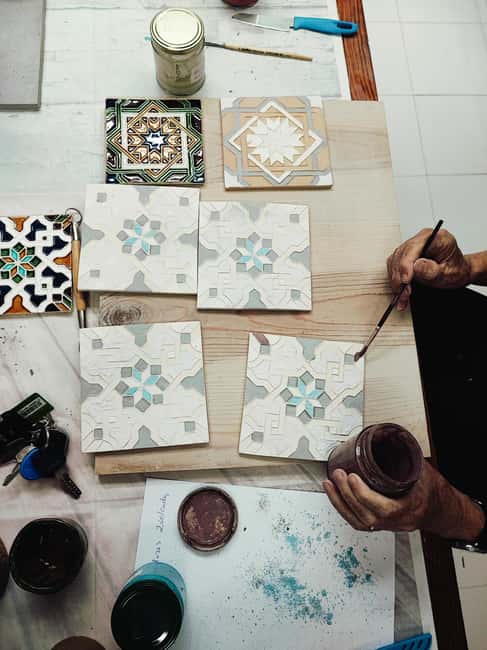
The workshop runs from 3 to 5 pm in the studio. That timing works well if you spend the morning and early afternoon visiting Sintra, then head to class after lunch. It is also useful for anyone coming from Lisbon by train and allowing time to see the town first.
One participant described taking a short train ride from Lisbon, exploring Sintra, and attending the workshop afterward. Another noted that the studio is a quick walk from the train station. Those details make the class easier to fit into a day without arranging a private taxi or tour transfer.
Transportation is not included, so you are responsible for reaching the studio. The exact route and meeting directions should be checked when booking. Since Sintra can involve hills and busy sightseeing areas, leave enough time to get from your earlier stop to the studio without rushing.
The studio itself receives strong praise for being clean, attractive, and carefully arranged. You may also find pottery pieces and small gifts for sale there. That shopping is optional, and there is no need to buy anything to make the activity worthwhile.
Shaping the clay with a mold
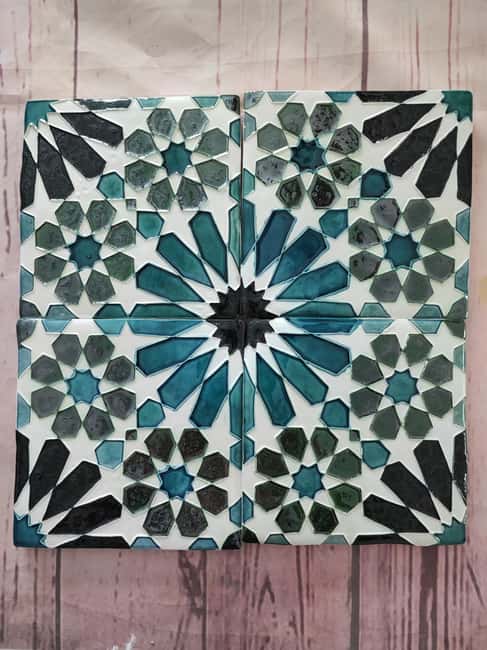
The first practical stage is making a tile with fresh clay and a mold. You work the clay into the mold and create the basic tile form. This is the part that gives you a direct feel for the material, rather than treating the tile as a blank surface.
A mold also makes the task approachable. You are not expected to build a perfect square from scratch or know professional ceramic techniques. The form provides structure, while the instructor helps you understand how to handle the clay and use the chosen motif.
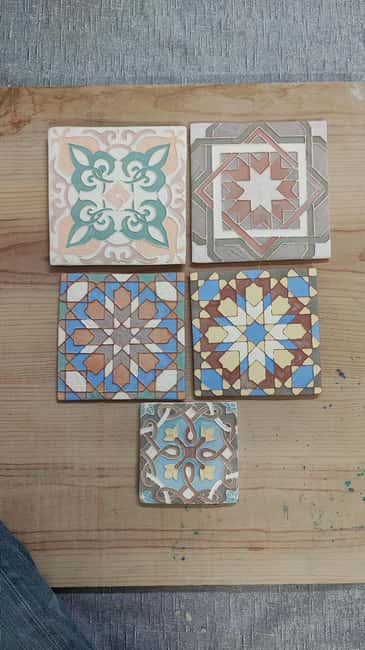
The selection of molds is one of the class’s best features. You can choose among different designs, so your piece does not have to look like everyone else’s. Expect many patterns to feature repeated geometry and Moorish-inspired shapes rather than loose, modern brushwork.
This stage may appeal most to people who like making objects with their hands. It is not a passive demonstration. You should expect to press, shape, and work carefully, with the final result depending partly on your own handling.
The finished clay piece is not the same as the included painted tile. The workshop describes the clay and mold work as one experience, then provides one tile for painting. That distinction is worth understanding before you arrive.
Same corner of the country, a different pace:
- Lisbon: Sintra Cascais & Pena Palace Small Group Tour
★ 4.8 · 3,187 reviews - Sintra: Castle of the Moors Skip-the-Line Ticket
★ 4.6 · 2,893 reviews - From Lisbon: Sintra & Cascais Small Group Tour with Tickets
★ 4.8 · 2,224 reviews - Sintra: Quinta da Regaleira Entry Tickets with Host
★ 4.2 · 2,000 reviews
Painting the tile with colored glazes
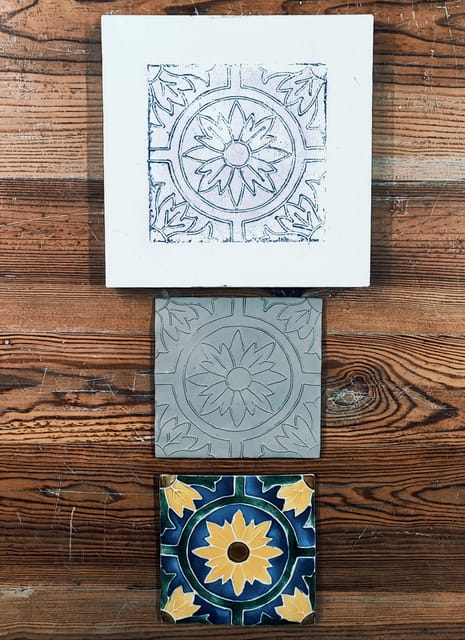
The second stage is the quieter one. You choose a tile and apply colored glazes to its design. The range of tile motifs gives you room to choose a pattern that suits your taste, from intricate geometry to simpler arrangements.
Glaze can look different before firing, so do not expect the wet colors to show their final appearance immediately. The point is to apply the colors carefully and trust the firing process to complete the work. The studio handles that firing after the class.
Painting is often the most relaxing part of the afternoon. You can concentrate on staying inside the raised sections and deciding how to combine the colors. It is a small task, but it rewards patience. If you tend to rush creative work, this is a good place to slow down.
The instruction is in English. Aldina is repeatedly praised for being welcoming, patient, and clear, with specific comments about her explanations of tile history and painting technique. That matters in a small workshop because a calm instructor can make a first attempt feel manageable instead of intimidating.
The standard experience includes one painted tile. At least one participant described painting two Moorish tiles, but you should treat one painted tile as the guaranteed inclusion unless the studio confirms something different for your booking.
What happens after the class
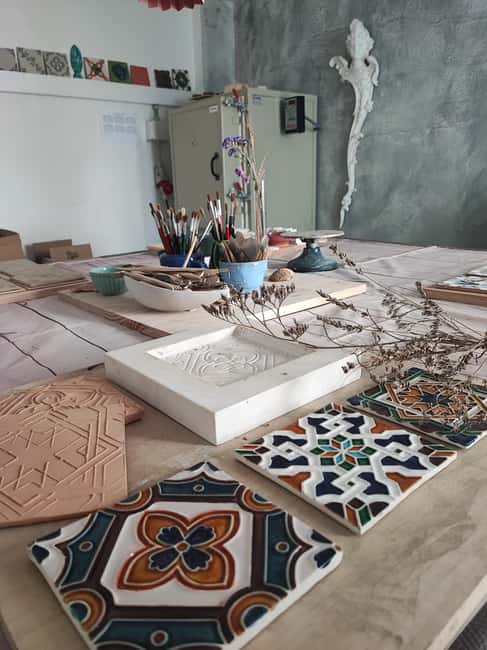
Your painted tile stays at the studio for firing. You cannot normally finish the painting at 5 pm and carry home a ready ceramic piece. The tile needs to go through the kiln, and the final color and hardness come later.
The stated preparation time is two to three days. You can then pick up the tile at the studio, or ask the studio to ship it to your home for a separate fee. This makes the activity easier to fit into a longer stay in the Lisbon area, though it is less convenient if Sintra is only a quick day trip.
For participants from the United States, there is an important current restriction. Portugal’s postal services have temporarily limited shipments to the United States because of changes to duty-free low-value shipment rules. The studio cannot currently mail painted tiles to U.S. addresses.
If you are from the United States, the alternatives are pickup, delivery to your hotel by courier for an additional fee, or storage at the studio until international shipping becomes available again. A previous price reference put shipping at 28 euros for two tiles, but fees can change, and current arrangements should be confirmed directly at the studio.
This is the one logistical issue I would plan around carefully. If your return flight is the next morning, pickup may not work. Booking the workshop earlier in your Sintra stay gives you more options.
Is $58 a fair price?
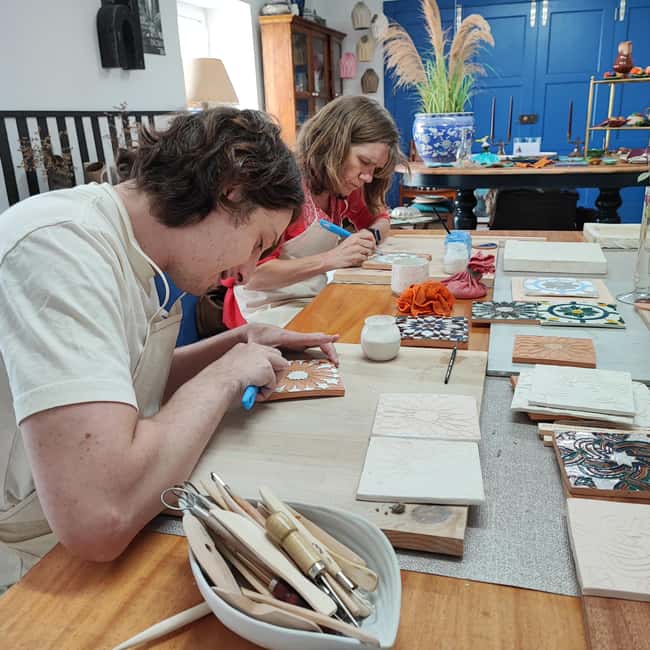
At $58 per person, this is not the cheapest activity in Sintra. The price makes more sense when you count what is included: two hours of instruction, all materials and equipment, clay and mold work, one painted tile, and firing.
You are also paying for a small class rather than a large demonstration. With a maximum of eight participants, you have a better chance of receiving individual help and getting a design you like. That small-group format is especially useful if you have never handled clay or glaze before.
The value depends on what you want from a souvenir. If you only want a ready-made tile, local shops may offer quicker and simpler options. If you want a personal object connected to your time in Sintra, the workshop gives you a story as well as a finished piece.
Shipping is not included. Food and drinks are also not included, though the class is only two hours and begins in the afternoon. Add transportation costs and any delivery charge when setting your budget.
I would call the price fair for anyone who values hands-on instruction and a personal keepsake. It is less convincing for someone who prefers to pack light, has no time to return for pickup, or wants a finished item immediately.
Who will enjoy this most?
This workshop suits adults, couples, families with older children, and anyone who enjoys local craft. Children under seven are not permitted, but older children can take part if they are comfortable following careful instructions.
It is also a good choice for people who enjoy design but do not consider themselves artistic. The molds, prepared tiles, and guided process give you a starting point. You choose the motif and colors, then work through the steps with help nearby.
I would recommend it to anyone who has spent the day visiting palaces and wants an activity that involves doing rather than sightseeing. It also suits repeat visitors to Lisbon who have already seen the main monuments and want a more local, creative experience.
The class may be less suitable if you want a broad pottery course. This is a focused tile workshop, not a full ceramics lesson. You will learn one decorative tradition and complete specific tile projects within a fixed two-hour session.
It also may not suit a tightly scheduled day trip. The class ends at 5 pm, and the fired tile takes two to three days. You need to think ahead about returning to the studio, arranging hotel delivery, or waiting for international shipment.
Planning your afternoon in Sintra
Because the class begins at 3 pm, plan your sightseeing with a clear cutoff. Sintra’s attractions can take longer than expected, and the town’s hills and transport connections can slow you down. The studio’s reported short walk from the train station helps, but you still need to allow time to reach it.
A practical plan is to visit one major sight earlier in the day, eat before the workshop, and arrive ready to begin at 3 pm. The workshop does not include food or drinks, so do not count on a break for refreshments during the session.
If you are arriving from Lisbon, the train is a practical option according to participant experience. Transportation is not part of the workshop, so confirm the studio location and route before setting out. Keep your schedule loose enough to handle a delayed train or a slow walk through town.
For the return trip, remember that your tile may not be ready until two or three days later. If you are spending several nights nearby, pickup is simple. If not, ask about hotel courier delivery or studio storage before you leave.
Booking flexibility and access
You can cancel up to 24 hours in advance for a full refund. The reserve-now, pay-later option also helps if your Portugal plans are still shifting.
The workshop is wheelchair accessible, which is useful information for anyone planning a craft activity in an older town with uneven streets. The class is offered in English, and the small group size supports direct instruction.
The minimum age is seven. All materials and equipment are supplied, so you do not need to bring craft tools or ceramic supplies.
Should you book this Sintra tile workshop?
Book it if you want a personal connection to Portugal’s tile tradition, enjoy calm hands-on activities, and can manage the delayed finished piece. The strongest reasons are the two-part format, broad motif choice, friendly teaching, and small class size.
I would book early in a Sintra stay rather than on the last afternoon. That gives you time to collect the tile after firing and avoids relying on international shipping. If you are traveling from the United States, make pickup or hotel courier delivery part of your plan from the start.
Skip it if you want a quick souvenir, dislike careful painting, or have no room in your schedule after 5 pm. For most craft-minded visitors, though, $58 buys more than a tile. It buys an afternoon of making, a useful lesson in Iberian decoration, and a keepsake with your own fingerprints in the story.
FAQ
Where does the Hispanic Moorish tile workshop take place?
The workshop takes place at a studio in Sintra, in Portugal’s Lisbon District.
How long does the workshop last?
The workshop lasts two hours, from 3 pm to 5 pm.
What will I make during the class?
You will shape one tile using fresh clay and a mold, then paint another tile with colored glazes.
Is one painted tile included?
Yes. The activity includes one painted tile and the firing service for that tile.
Can I choose my own tile design?
Yes. You can choose from a wide selection of motifs on the molds and tiles.
Is the finished tile ready to take home at 5 pm?
No. The painted tile stays at the studio for firing and is expected to be ready for pickup within two to three days.
Can the studio ship my tile home?
Yes, shipping can be arranged for a separate fee. Participants from the United States should note that postal shipment to the U.S. is currently restricted. Pickup, hotel courier delivery, or studio storage are the available alternatives described.
Is the workshop taught in English?
Yes. English instruction is provided.
Is the workshop wheelchair accessible, and is there an age limit?
The workshop is wheelchair accessible. It is not suitable for children under seven.
Recently added in Sintra
- Sintra: Private Tour with Guided Pena Palace Experience★ 4.9 · 99 reviews
- Sintra: Walking Tour with Palace, Castle, and Old Town Visit★ 4.9 · 66 reviews
- Sintra: Pena Palace and Park Entry Ticket with Tuk Tuk Ride★ 3.5 · 43 reviews
- Sintra: The Romantic Village – Private Half-Day Guided Tour★ 4.9 · 84 reviews
- Sintra Guided Tour for Small Groups: Pena, Regaleira & Roca★ 4.8 · 48 reviews
- Sintra/Lisbon: Sintra & Quinta da Regaleira Tour with Ticket★ 4.4 · 51 reviews
- Sintra: Self-Drive Trip to All Monuments and Coast★ 4.8 · 48 reviews
- Sintra: Private and Customizable Tour★ 4.3 · 149 reviews
Workshops, compared.
Pastel de Nata Cooking Class with Grandma’s Recipe
Read our review →
Pastel de Nata Cooking Class with Port Wine – Sé
Read our review →



Browse the lists this tour appears in