
REVIEW · WORKSHOPS
Porto: Tile-Painting Workshop with Porto Wine – Bainharia
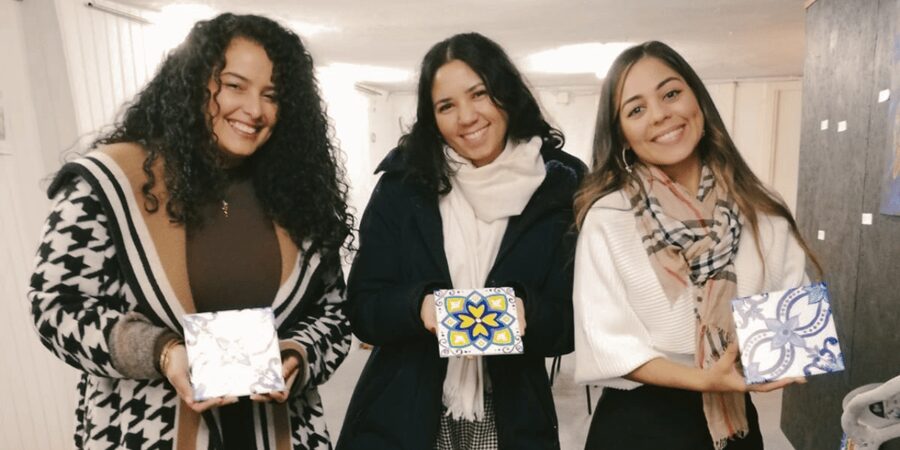
Paint Porto, one tile at a time. This relaxed two-hour workshop introduces you to Portuguese azulejos, then lets you create a tile of your own at Domus Arte in central Porto. I like the mix of local culture and hands-on creativity, and the included glass of port with biscuits gives the session a distinctly Portuguese touch. The main drawback is timing: you paint your tile during the class, but you must return about two hours later, or the following day, to collect it.
I also like that you need no artistic skill to enjoy this activity. Instructor Beatrice or Fernanda can guide you through the process, offer stencils, help mix colors, and suggest ways to make your design work. The setting suits families, couples, solo visitors, and anyone needing a quiet break from Porto’s steep streets and busy sightseeing schedule.
At $45 per person, this is not the cheapest souvenir in town, but it includes instruction, materials, your finished tile, and port wine. The value is strongest if you want an activity rather than another object from a shop. Your tile may not look museum-ready, but it will carry your own fingerprints and memories.
In This Review
- Key points to know before booking
- Why Porto tiles make a good hands-on souvenir
- Arriving at Domus Arte in Porto
- The introduction to Portuguese azulejos
- Choosing a design or creating your own
- Painting with help from Beatrice or Fernanda
- Port wine, biscuits, and conversation
- The pickup arrangement matters
- Is $45 a fair price?
- Who will enjoy this workshop most?
- What I would plan around the class
- Final verdict: Should you book it?
- FAQ
- How long does the Porto tile-painting workshop last?
- What is included in the price?
- Do I need painting experience?
- Can I create my own tile design?
- Where does the workshop take place?
- Is the workshop offered in English?
- Do I take the finished tile home immediately?
- Is the workshop suitable for children?
- Is Domus Arte wheelchair accessible?
- Are dogs allowed at the workshop?
- Can I cancel for a full refund?
- Do I have to pay when I book?
Key points to know before booking
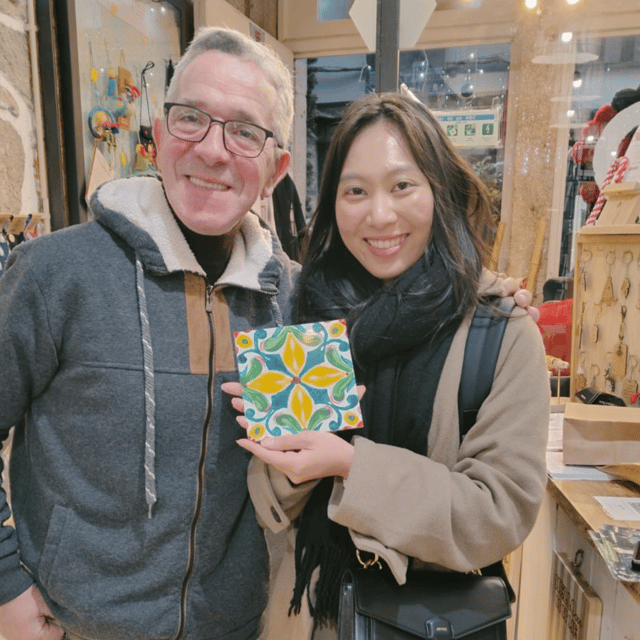
- You paint a real tile to take home: The finished piece becomes a personal Porto souvenir rather than a mass-produced gift.
- The class begins with azulejo history: You learn why painted tiles matter to Porto before picking up a brush.
- Stencils make the activity beginner-friendly: You can copy a traditional pattern or create your own design.
- Port and biscuits are included: The small refreshment adds a pleasant local touch while you work.
- You collect the tile later: Plan enough time to return after the workshop or on the following day.
- The class works for many ages: Families with teenage children, couples, solo visitors, and mixed-ability art groups can all take part.
Why Porto tiles make a good hands-on souvenir
Porto is hard to visit without noticing its tiles. They appear on building fronts, churches, railway spaces, shops, and homes. Some are blue and white, some use several colors, and many feature repeated shapes or carefully arranged scenes.
The workshop gives you a short introduction to this local tradition before you start painting. That matters because you are not simply decorating a blank square. You are learning how your small project connects with one of the visual details that gives Porto its character.
I like this approach. A quick history talk gives the activity some context without turning it into a lecture. You get enough background to look at Porto’s tiled buildings with sharper eyes after class.
The finished tile also has more meaning than a ready-made souvenir. You choose a design, select colors, and make decisions as you go. Even if your brushwork is uneven, the result records the afternoon in a way a standard magnet or postcard cannot.
A few more Porto options side by side
- The Unvanquished Tour in Porto City Center
★ 5.0 · 26,497 reviews - From Porto: Douro Valley w/ Boat Tour, Wine Tasting & Lunch
★ 4.7 · 19,061 reviews - Complete Douro Valley Wine Tour with Lunch, Wine Tastings and River Cruise
★ 5.0 · 12,920 reviews
Arriving at Domus Arte in Porto
You meet the instructor at Domus Arte, a concept store with a ground-floor space devoted to workshops and art exhibitions. The class takes place inside this creative setting rather than in a large commercial attraction.
That location shapes the mood. The activity is built around sitting down, talking, and making something. It is a useful change of pace after walking Porto’s hills, crossing the Ribeira area, or spending hours inside churches and museums.
The workshop is conducted in English. The instructors named in the feedback include Beatrice, Beatriz, and Fernanda. Their personalities are a major part of the experience. Beatrice is praised for her patience, warmth, and clear advice, while Fernanda is described as encouraging and good at explaining both the tile tradition and the painting process.
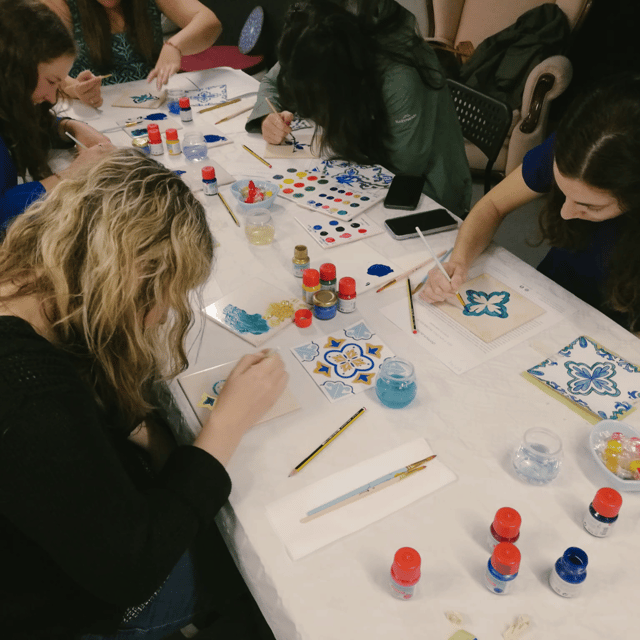
You should arrive ready to spend the full two hours at the table. This is not a quick demonstration where you watch someone else paint. You receive your own tile and take part from beginning to end.
The introduction to Portuguese azulejos
The session starts with a brief explanation of the history of tiles in Porto. This opening is important because it gives you a frame for the design choices ahead.
You learn about the place of painted tiles in Portuguese art and daily life, then see how traditional patterns can be adapted for a small personal project. The aim is not to turn you into a tile historian. It is to help you understand the style you are about to use.
I appreciate that the class connects craft with place. You are not making a generic pottery item in an anonymous studio. You are working with a form strongly associated with Portugal, in the city where tiled architecture is part of the everyday view.
The introduction also helps if you are starting from zero. You do not need to recognize traditional motifs or know how Portuguese tiles are made. The instructor explains enough to give you confidence before the paint comes out.
Choosing a design or creating your own
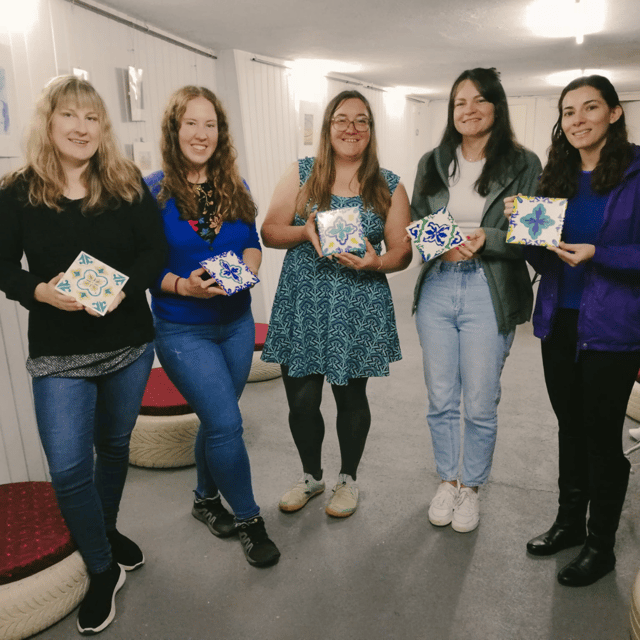
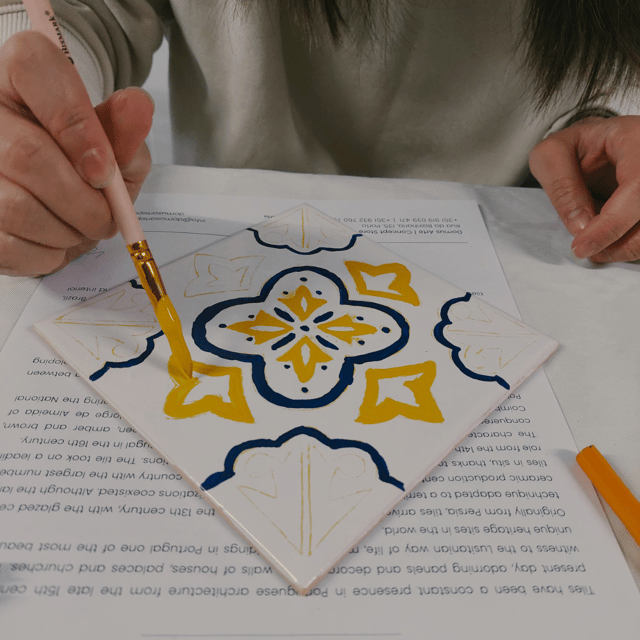
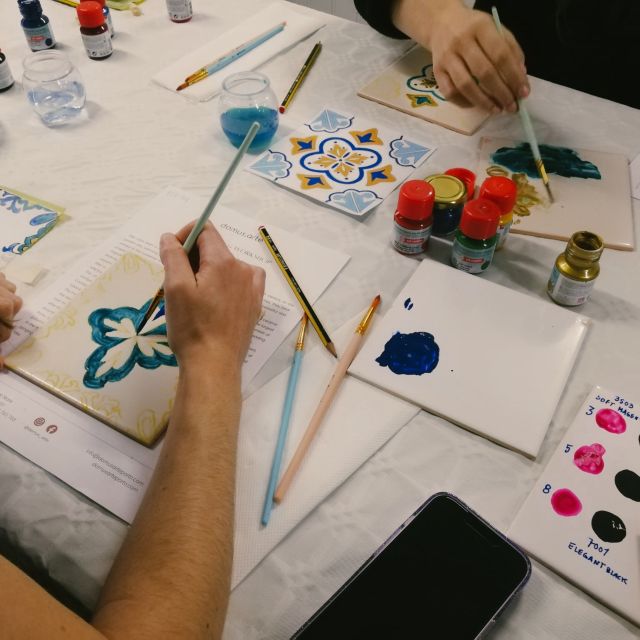
You receive a white tile and can choose from several pre-designed replicas of traditional Porto tiles. These designs are especially helpful if you want a good-looking result without having to invent a pattern from scratch.
You can also make your own design. That choice gives the workshop two different paths. You can follow a traditional model and focus on the painting, or use the provided examples as a starting point for something more personal.
The instructors supply stencils and offer advice on technique. This is one of the most useful features for people who describe themselves as not crafty. You can trace an intricate pattern instead of drawing freehand, then spend your energy on color and careful brushwork.
The best plan is to choose a design that matches your patience. A simple pattern can look clean and attractive. An intricate design may be rewarding, but it takes more concentration and time. The instructor can help you decide and offer guidance without taking over the project.
Families can let each person choose a different route. A child or teenager may enjoy a bold personal pattern, while an adult might prefer a traditional replica. The activity does not require everyone to work at the same speed or produce the same kind of tile.
Same corner of the country, a different pace:
- Porto: Six Bridges Cruise
★ 4.2 · 11,680 reviews - Porto: Live Fado Show with Glass of Port Wine
★ 4.8 · 6,498 reviews - Porto: 6 Bridges Douro River Cruise
★ 4.3 · 6,472 reviews - Porto: Torre dos Clerigos Entrance Ticket
★ 4.6 · 6,395 reviews
Painting with help from Beatrice or Fernanda

Once you have chosen your design, you begin painting under the instructor’s guidance. You can ask about color mixing, brush technique, and how to approach the different sections of the pattern.
The strongest praise goes to the instructors. Beatrice is described as patient and reassuring, especially when someone wants to attempt a more detailed design. Fernanda is praised for giving useful guidance while still allowing people to let their own ideas develop.
That balance is exactly what a beginner needs. Too little help leaves you staring at a blank tile. Too much help turns your souvenir into the instructor’s work. Here, the goal is to support your decisions and help you avoid simple mistakes.
The pace sounds calm rather than rushed. Several people describe the session as relaxing, and one family found that even a teenager who was not eager at first ended up enjoying it. That makes this a good option for mixed-interest groups, where not everyone wants another guided walk or museum visit.
You should still expect to concentrate. Small patterns require a steady hand, and paint can look different once applied than it did in the container. The glass of port may help you relax, but it will not replace a careful brush.
Port wine, biscuits, and conversation
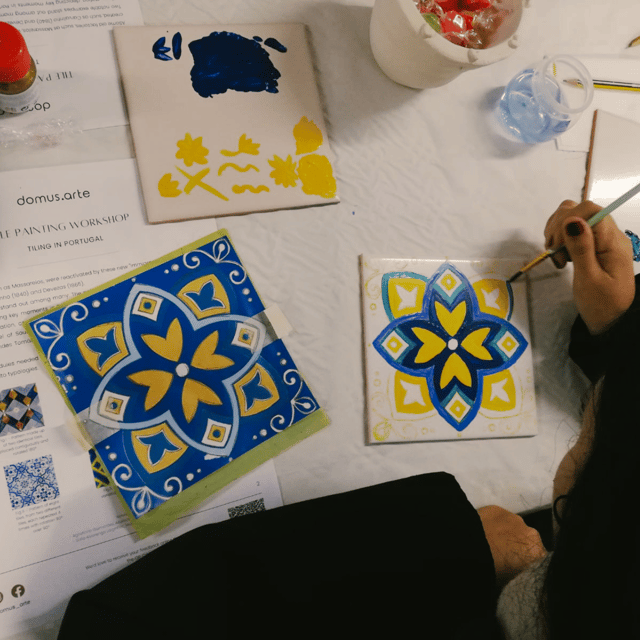
A glass of port is included while you paint. Biscuits are also provided, and the refreshments receive frequent praise for adding to the atmosphere.
This is not a port tasting with a long lesson about vineyards, styles, or production. The wine is a pleasant part of the workshop rather than the main subject. You can enjoy it as you work and chat with the people around you.
The social side is another strength. The table brings together people from different countries, and the relaxed task gives you an easy subject for conversation. If you are visiting Porto alone, this creates a natural way to meet others without the forced feeling of a formal group activity.
You can also treat the session as quiet creative time. The class leaves room for conversation, but you do not have to be constantly social. The painting gives your hands something to do and your mind a break from planning the next stop.
If you do not drink alcohol, the available information confirms the included port but does not specify alternative drinks. It is sensible to ask the provider about nonalcoholic options when booking.
The pickup arrangement matters
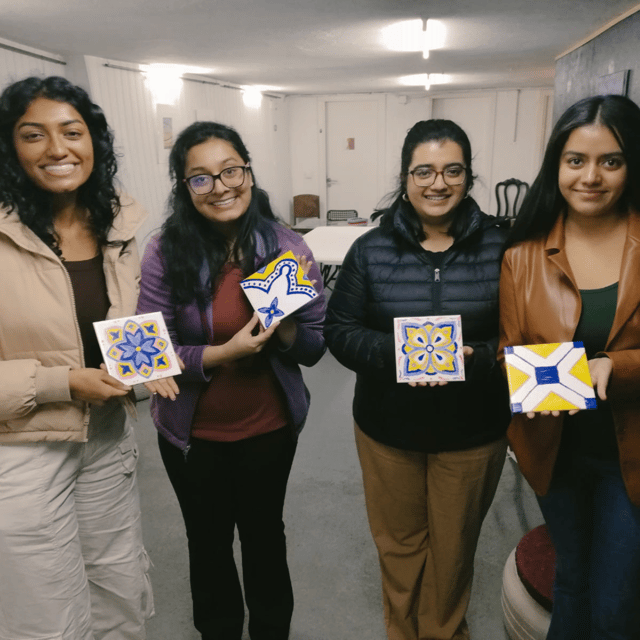
The tile is not ready to take immediately after you finish painting. You return after about two hours to collect it, or pick it up the following day.
This is the one practical detail most likely to affect your plans. The workshop itself lasts two hours, and the later collection adds another stop to your schedule. If you have a train, flight, or tightly packed day trip soon after, make sure you can return to Domus Arte.
The gap may work well for a flexible Porto itinerary. You can leave the workshop, explore the nearby area, eat lunch, visit another attraction, and come back later. It turns the pickup into a useful excuse to walk through the neighborhood again.
Still, do not treat the tile as an item you can pack straight into your suitcase after class. If you are staying only one night, confirm that the collection time fits your departure. A carefully painted souvenir is less useful if you have to leave it behind.
The finished tile should also be packed with care. The supplied information does not explain the packaging, so ask how it will be protected for your journey home.
Is $45 a fair price?
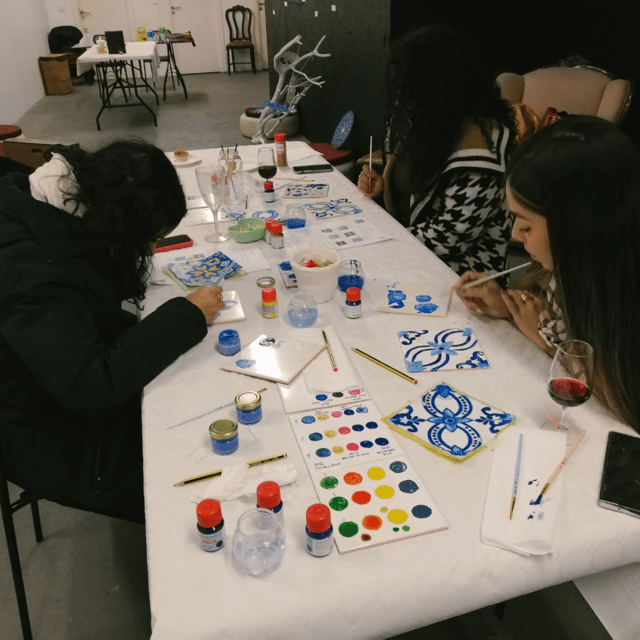
The price is $45 per person. That places the workshop above a simple souvenir purchase, but the comparison is not quite fair. You are paying for a two-hour activity, an instructor, the tile and painting materials, a finished tile, historical background, and port wine.
I see reasonable value here if you enjoy making things. You receive both an experience and an object. The tile may become a framed decoration, a trivet, or a small reminder of Porto, depending on its finish and how you use it.
The value is weaker if your only goal is to buy a tile cheaply. Porto shops offer decorative pieces at different prices, and a workshop cannot compete with the cost of a factory-made souvenir.
For families, the total cost can add up quickly, especially with four participants. Yet the activity gives everyone something to do together, and the finished set of tiles can become a shared holiday memory. One family used its tiles to tell a story back home, which is a nice result for an activity that takes only part of an afternoon.
The high 4.9 rating from 526 reviews supports the idea that the class consistently delivers a pleasant experience. I would still judge the price by your interests. Art lovers, families, couples, and solo visitors are more likely to find it worthwhile than shoppers seeking the lowest-cost souvenir.
Who will enjoy this workshop most?
This activity suits you if you want a cultural experience that is active but not strenuous. You learn about Porto, make something with your hands, and spend time in a friendly indoor setting.
It works especially well for:
- Couples who want a shared souvenir
- Families with children or teenagers
- Solo visitors who enjoy meeting people through an activity
- Beginners who feel unsure about painting
- Anyone looking for a rainy-day or cold-weather plan
- Visitors who want a break from walking and sightseeing
You do not need prior experience. The stencils, sample designs, and instructor support make the class accessible to beginners.
People who dislike crafts may still enjoy it, but the activity does require patience. If you want a fast-paced excursion or a major historic attraction, this will feel slow. If you like the idea of sitting quietly with a brush and a drink, it should fit nicely into your Porto schedule.
Dogs are allowed. Domus Arte is stroller accessible but not wheelchair accessible, so wheelchair users should take that limitation seriously before booking.
What I would plan around the class
I would place this workshop in the middle of a flexible day rather than immediately before a departure. Leave enough room for the two-hour class and the later pickup.
An afternoon booking can work well. Paint first, spend time in the area while the tile is being prepared, then return for collection. A morning class also leaves time for sightseeing afterward, but you still need to remember the second visit.
Wear something you do not mind working around paint, even though no specific clothing rule is provided. Bring a little patience, especially if you choose a detailed stencil. The goal is not speed. It is to create a tile you will be pleased to see at home.
You should also decide in advance if you want a traditional design or an original one. The pre-designed replicas remove much of the pressure, while a personal pattern gives you a more individual souvenir.
Final verdict: Should you book it?
I would book this workshop if you want a slower, more personal side of Porto. The best parts are the patient instruction from Beatrice or Fernanda, the easy support for beginners, the chance to learn about azulejos, and the finished tile you carry into your home.
I would skip it if your Porto schedule is too tight for a second visit to Domus Arte, or if you are looking only for the cheapest tile you can buy. The $45 price makes sense when you value the two-hour activity, not just the object.
For most couples, families, solo visitors, and creative beginners, this is a thoughtful way to spend part of an afternoon. Plan the pickup carefully, choose a design you can finish comfortably, and you will likely leave with both a handmade souvenir and a better eye for Porto’s famous tiled buildings.
FAQ
How long does the Porto tile-painting workshop last?
The workshop lasts two hours. You should also allow time to return later to collect your finished tile.
What is included in the price?
The price includes the tile-painting workshop, an English-speaking instructor, one painted tile, and a glass of port wine.
Do I need painting experience?
No. The activity is designed for beginners, and you can use pre-designed tile replicas and stencils for guidance.
Can I create my own tile design?
Yes. You can choose from traditional Porto tile designs or create your own pattern.
Where does the workshop take place?
The workshop takes place on the ground floor of Domus Arte, a concept store in Porto with space for workshops and art exhibitions.
Is the workshop offered in English?
Yes. The instructor language is English.
Do I take the finished tile home immediately?
No. You return about two hours later to pick it up, or collect it on the following day.
Is the workshop suitable for children?
Yes. The activity is presented as suitable for all ages, including children and adults. Families with teenage children have also enjoyed making tiles together.
Is Domus Arte wheelchair accessible?
No. Domus Arte is not wheelchair accessible, though it is stroller accessible.
Are dogs allowed at the workshop?
Yes. Dogs are allowed.
Can I cancel for a full refund?
You can cancel up to 24 hours in advance for a full refund.
Do I have to pay when I book?
No. A reserve-now, pay-later option is available, allowing you to book without paying immediately.
Recently added in Porto
- Porto: Tuk tuk Tours with Port Wine Tasting★ 4.5 · 65 reviews
- The Beautiful Story of Porto: Guided Tour with Entry Tickets★ 4.8 · 111 reviews
- Porto: Royal Oporto Tour na Real Companhia Velha★ 4.8 · 395 reviews
- Porto: Entry Ticket at WOW – The Wine Experience Museum★ 4.7 · 356 reviews
- Porto: WOW Daily Ticket★ 4.7 · 42 reviews
- Porto: Luxury Yacht Tour of the 6 Bridges and Douro Estuary★ 4.9 · 521 reviews
- Porto: 6 Bridges Port Wine River Cruise with 4 Tastings★ 4.8 · 182 reviews
- Porto Wine Tasting Experience with Portuguese Tapas Plate★ 4.7 · 356 reviews
Workshops, compared.

Pastel de Nata Cooking Class with Grandma’s Recipe
Read our review →
Pastel de Nata Cooking Class with Port Wine – Sé
Read our review →



Browse the lists this tour appears in