

REVIEW · WALKING TOURS
Lisbon: Street Art Walk
Lisbon paints outside the museum. This three-hour walk takes you through Graça, Mouraria, and historic Alfama, where murals, stencils, paste-ups, and large public works appear on walls, stairways, and unexpected corners. I like the access to lesser-known spots and the chance to hear an artist’s view of how Lisbon’s street-art scene works. The main drawback is the climbing: this is not an easy stroll, and three hours may feel long if your interest in street art is only casual.
I also like the small-group format, capped at 10 people, because it gives you a better chance to ask questions and stop for photographs. Guide names in the feedback include Igor, with one mention of Iwan, while the tour information identifies the artist guide as Mr. Red. The praise is consistent: visitors value the guide’s enthusiasm, stories about technique, and ability to connect the art with Lisbon’s older neighborhoods. Bring good shoes, though, and leave the large bag behind.
In This Review
- Key points at a glance
- Starting at Largo da Graça
- Graça, where old streets meet new walls
- Mouraria and the story behind the paint
- Alfama from a street-art perspective
- Fresh work at Caracol da Graça
- The International Women’s Day street-art gallery
- What the guide adds to the walk
- Is $40 a fair price?
- Prepare for hills, sun, and a three-hour pace
- Who should book the Lisbon Street Art Walk?
- FAQ
- Where does the Lisbon Street Art Walk meet?
- How long does the tour last?
- What language is the tour offered in?
- How large is the group?
- Which Lisbon neighborhoods are included?
- Which artists might I see?
- Is the tour suitable for people with mobility impairments?
- What should I bring?
- What happens if I need to cancel?
Key points at a glance
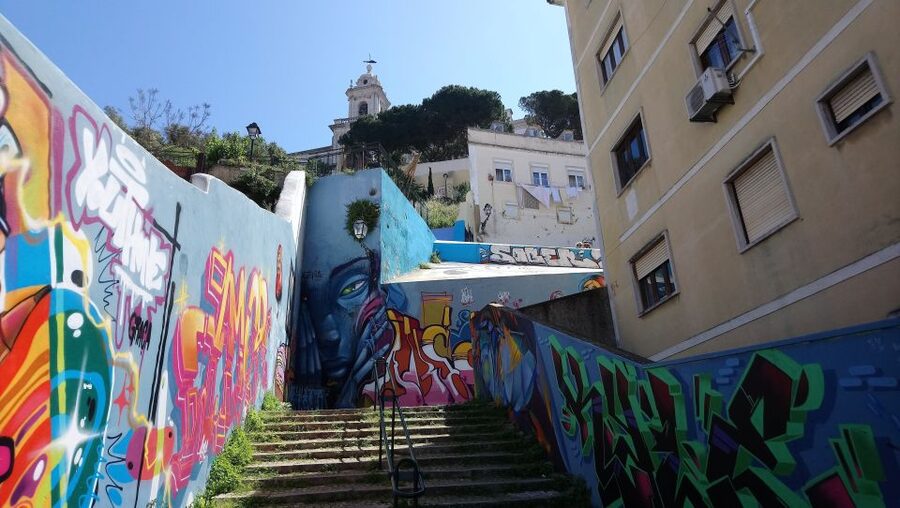
- Artist-led insight: The guide is an artist, identified in the tour details as Mr. Red, with many comments naming Igor.
- Three historic districts: The walk covers Graça, Mouraria, and an overview of the old Alfama area.
- Major names on the walls: Look for work by Obey Giant, Vhils, Add Fuel, Mário Belem, Aka Corleone, Ozearv, Bordalo II, and Daniel Eime.
- Fresh work changes the route: Caracol da Graça and Rua Josefa de Obidos can reveal recently painted pieces.
- A useful physical warning: Lisbon’s hills, stairs, and uneven routes make this unsuitable for people with mobility impairments.
- A personal souvenir included: You receive an exclusive street-art souvenir at the end.
Starting at Largo da Graça
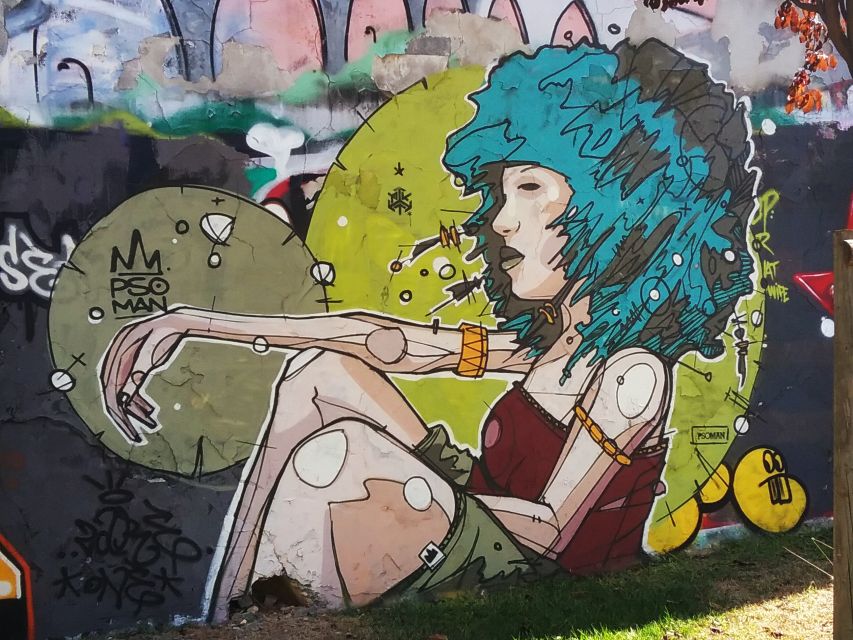
Your meeting point is in front of the Coreto da Graça at Largo da Graça, near Desgraça Restaurant. Arrive 10 minutes early. This is a busy neighborhood square, so allowing a few extra minutes to find the exact spot will make the start less rushed.
Graça is a good place to begin because it gives you two things at once: a traditional Lisbon setting and a strong concentration of public art. The neighborhood is old, hilly, and full of viewpoints, lanes, walls, and corners where art can appear without warning. You are not simply walking from one famous mural to another. You are being trained to notice the city above eye level, below eye level, and along side streets.
That habit is one of the best parts of the tour. The guide encourages you to keep looking up and down because street art may be placed almost anywhere. A doorway, retaining wall, faded building front, or narrow passage can become part of the route.
The private or small-group setup matters here. With no more than 10 people, you should have room to stop, take a picture, and ask why a work was made or how it was produced. A larger group would make those small discoveries harder to manage.
More Walking Tours in Lisbon
- Lisbon: History, Stories and Lifestyle Walking Tour
★ 4.8 · 10,902 reviews - Best of Lisbon Small-Group Guided Walking Tour
★ 5.0 · 4,869 reviews - Lisbon: Food and Wine Small Group Walking Tour
★ 4.9 · 4,082 reviews
Graça, where old streets meet new walls
Graça is one of the core areas of the walk. The route is designed to show how contemporary art works within older residential streets rather than in a separate arts quarter. That contrast gives the tour much of its character.
You may see pieces associated with Obey Giant, Vhils, Bordalo II, Ozearv, and Daniel Eime. The names matter, but the guide’s explanations are more useful than a simple checklist. The strongest comments about this walk praise the guide for explaining the artists, materials, motives, and stories behind the pieces. You get help understanding the difference between a planned artwork and random tagging, rather than being asked to admire every painted wall in the same way.
Vhils is especially relevant to Lisbon’s street-art identity because his work is known for carving or removing layers of a wall rather than simply adding paint. The tour details do not promise a particular Vhils piece on every departure, so think of the named artists as examples of what you may encounter, not a guaranteed museum-style collection.
The same applies to Obey Giant, Add Fuel, Mário Belem, Aka Corleone, and Ozearv. Street art changes. A piece can be tagged, covered, weathered, or replaced. One useful idea from the guide is that artists cannot expect permanent control over their work. That gives you a more realistic sense of the scene: this is public art in motion, not a fixed gallery display.
Mouraria and the story behind the paint
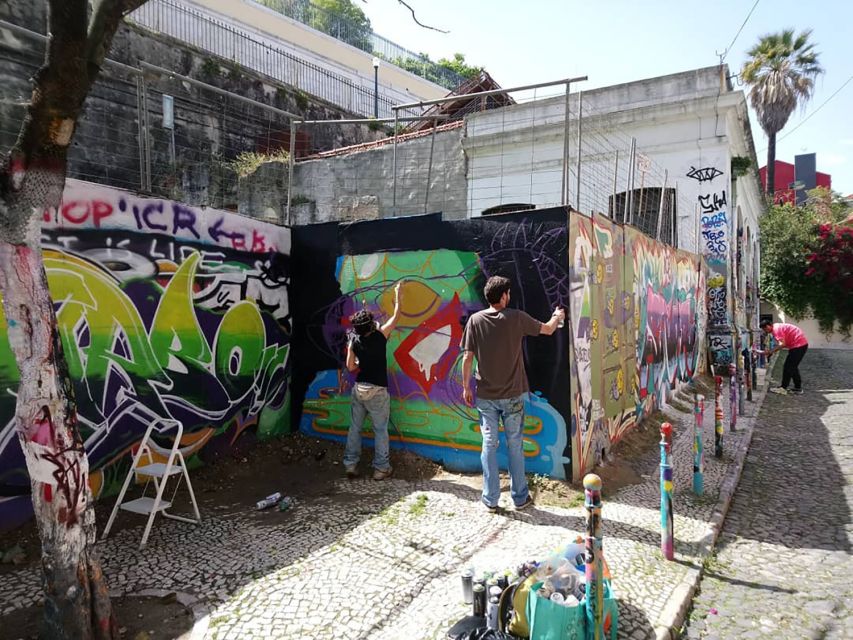
The walk also reaches Mouraria, another old Lisbon neighborhood where art is tied closely to the life of the streets. Here, the value is not just finding a colorful wall. You get an overview of how the city’s older districts fit together and how present-day art sits beside long-established buildings and lanes.
The guide’s role is particularly important in Mouraria because a photograph alone tells only part of the story. You might notice a bold character, a political image, or a carefully placed stencil, but the guide can explain the technique, the artist, and the local street-art rules behind it.
One of the most useful subjects raised on the walk is the difference between street art and graffiti tagging. That distinction is not always obvious to someone seeing Lisbon’s walls for the first time. The tour helps you look at intention, scale, placement, and execution instead of treating every mark as the same thing.
You can also ask about the unwritten limits of the scene. The guide has been praised for discussing rules and no-go areas within street art culture. That kind of information turns a photo stop into a lesson about public space, ownership, reputation, and the short life of outdoor work.
Alfama from a street-art perspective
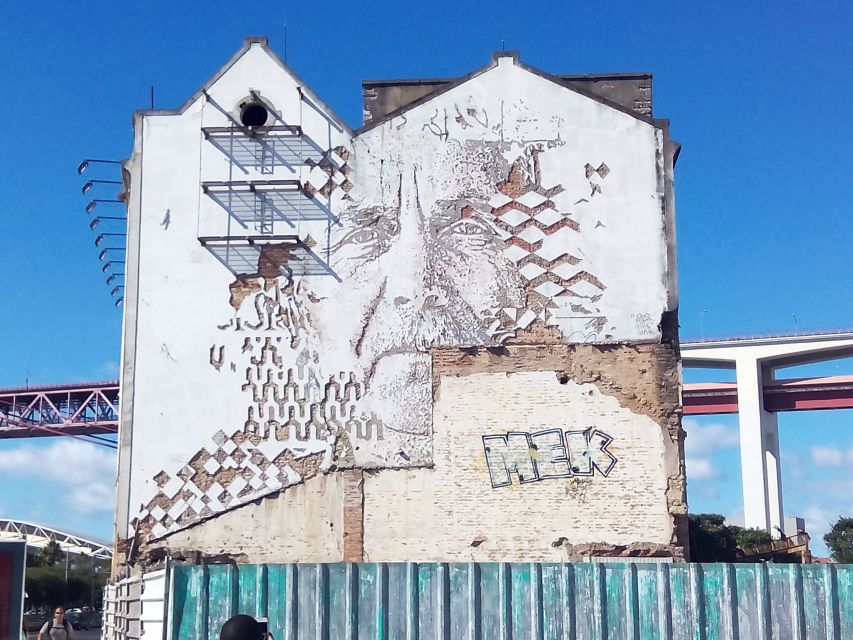
The experience includes an overview of the entire historical Alfama area. It is important to understand what that means. This is not advertised as an indoor monument tour, and entrance fees to monuments or galleries are not included. You are getting a walking introduction to the old district while searching for art, not a formal visit inside its major attractions.
That is a good match if you want to understand how Lisbon’s oldest neighborhoods connect to its newer creative scene. Alfama is known for steep lanes and layered streets, and the tour uses that setting as part of the experience. You should expect to walk uphill and downhill, often with stairs or uneven surfaces.
The route may also help you get your bearings in the historic center. If you are visiting Lisbon early in your stay, this overview can give you a better sense of Graça, Mouraria, and Alfama before you explore them on your own. If you have already walked these districts, the street-art focus gives you a different reason to return.
Same corner of the country, a different pace:
- Lisbon City Center Tour – The Unmissable Lisbon
★ 5.0 · 22,234 reviews - Lisbon: Sintra, Pena, Regaleira, Cabo da Roca & Cascais
★ 4.7 · 19,656 reviews - Lisbon: Jerónimos Monastery Entrance Ticket
★ 4.1 · 14,164 reviews - Lisbon: Sunset Boat Party Cruise with DJ and Open Bar
★ 4.5 · 10,378 reviews
Fresh work at Caracol da Graça
Caracol da Graça is singled out as a place to find some of the freshest art. That word is important. You are not being promised a permanent set of murals, and the appeal is partly the possibility of seeing something new.
If artists happen to be painting during your visit, you may get a rare look at the work in progress. The tour information presents this as a matter of luck, not a scheduled demonstration. Do not book expecting to watch an artist at work, but appreciate it if the timing falls your way.
This stop also shows why a local guide adds value. A map of famous murals can become outdated quickly. An artist-led walk can respond to changes in the streets and point out newer work that has not yet made it into guidebooks or online lists.
Rua Josefa de Obidos is another location mentioned for fresh pieces. The exact art you see will depend on what remains on the walls at the time of your visit. That uncertainty is part of the character of street art, though it can disappoint you if you want a fixed checklist of guaranteed works.
The International Women’s Day street-art gallery
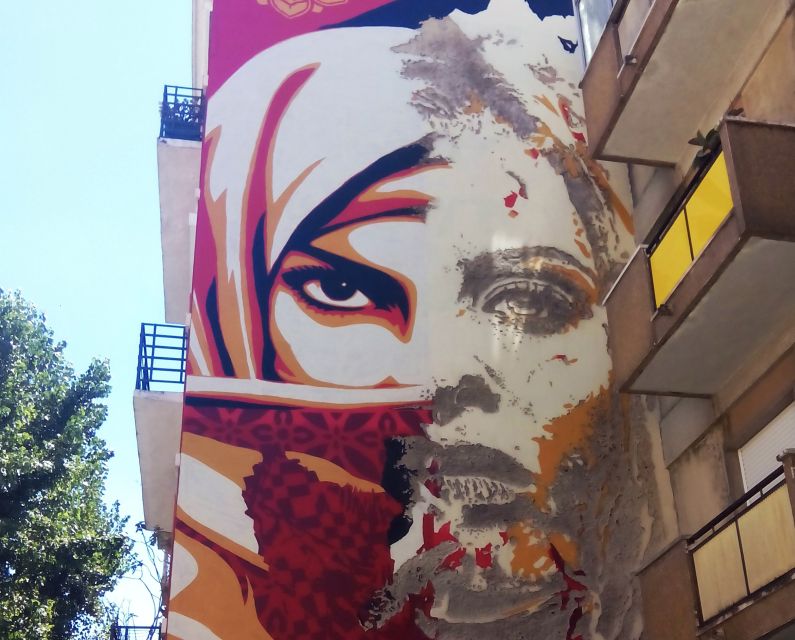
One of the more unusual stops is a street-art gallery connected with International Women’s Day 2025. The details do not specify whether this is an indoor gallery or a particular permanent installation, so you should treat it as an outdoor artistic place within the walk rather than a conventional ticketed gallery.
Its inclusion adds a social and community angle to the route. Street art is often discussed only as a visual attraction, but public projects can also address identity, equality, politics, and local participation. The guide can help place the work in that wider setting.
No entrance ticket is included for monuments or art galleries, although the tour itself includes access to the listed street-art places. If a separate indoor venue is added or encountered, check whether an admission fee applies.
What the guide adds to the walk

The guide is the heart of this experience. The strongest praise centers on enthusiasm, personal experience, and the ability to explain art without making the discussion feel academic. People describe the three hours as passing quickly because the guide combines background information with stories about artists and the city.
The tour details call the guide Mr. Red and identify him as an artist. Many comments name Igor, while one refers to Iwan. If the precise guide matters to you, check the confirmation details before setting out, but the repeated description is of an artist who knows Lisbon’s street-art scene from close up.
I especially value the promised insider information. You may hear about artists’ methods, the meaning behind a piece, and the practical rules that shape public work. One person also received extra suggestions for films, social-media profiles, and further ways to follow the scene. Those follow-up ideas are useful if the tour sparks a new interest.
The guide also connects the art to Lisbon’s broader story. That balance is important. Without it, you might spend three hours photographing walls without understanding the neighborhoods around them. With it, the walk becomes both an art tour and a way to read the city.
Is $40 a fair price?
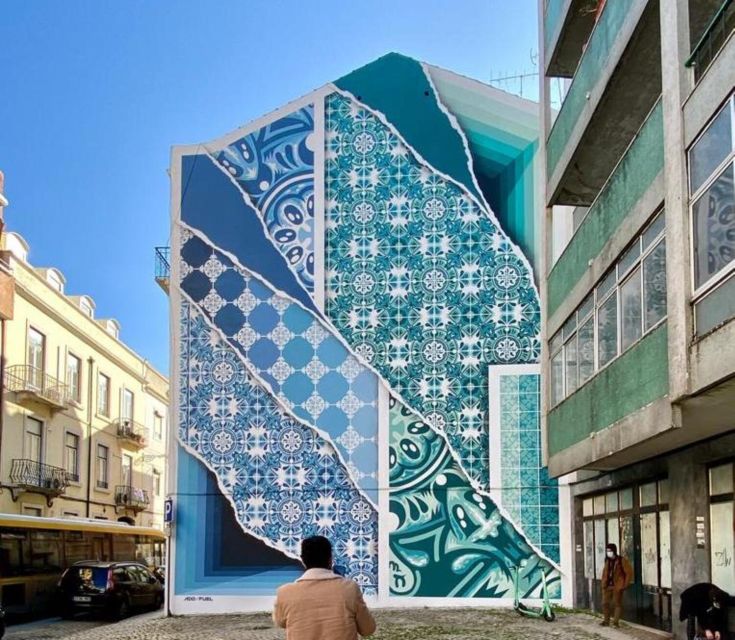
At $40 per person, the walk is not the cheapest way to see public art. You can find many Lisbon murals without paying for a tour. The question is what you want from the visit.
For an independent explorer who enjoys research and does not mind missing works that have changed, walking alone can be good value. For you, the $40 pays for a private or small-group guide, three hours of route planning, access to less obvious locations, explanations of artists and techniques, and a souvenir.
The value improves if you have a real interest in street art, photography, urban culture, or Lisbon’s old neighborhoods. It is also a sensible choice if you prefer conversation and context over a self-guided list of locations. The price is harder to justify if you only want a quick look at two or three murals.
The small-group option helps. A group of up to 10 is intimate enough for questions without the cost of a fully private guide for just one person or couple. Since the route changes with fresh work, you are also paying for local awareness rather than a static sightseeing script.
Prepare for hills, sun, and a three-hour pace

Comfortable shoes are essential. Lisbon is famously up and down in this part of town, and the tour specifically warns you to prepare for climbing. Wear comfortable clothes, and bring sunglasses and sunscreen.
Large bags and luggage are not allowed. That is practical on narrow streets and stairways, but it means you should plan ahead if you are coming directly from a hotel changeover or transport connection. Hand sanitizer is provided.
The tour lasts three hours, and one person felt that two hours would have been enough. That is the main time-related criticism to consider. If you love asking questions and stopping for photos, three hours should feel worthwhile. If you lose interest after a few murals, the length may test your patience.
This walk is not suitable for people with mobility impairments. The warnings about hills are not a minor footnote. Graça, Mouraria, and Alfama require effort, and the route is a poor fit if stairs, steep streets, or uneven ground are difficult for you.
Free cancellation is available up to 24 hours before the start for a full refund, and you can reserve now while paying later. Those terms give you some flexibility, but the physical demands are the point to assess first.
Who should book the Lisbon Street Art Walk?
I would choose this tour if you want to understand Lisbon’s street art rather than simply photograph it. It suits art students, photographers, urban-history fans, curious first-time visitors, and anyone who likes seeing a city through its working neighborhoods.
It is also a strong first or second-day activity. The overview of the old districts can help you recognize the city’s shape, while the guide’s suggestions may lead you to more art after the walk.
I would skip it if you want indoor galleries, a flat route, guaranteed access to every named artist, or a short two-hour outing. The works can change, the route requires climbing, and the three-hour duration asks for steady interest.
FAQ
Where does the Lisbon Street Art Walk meet?
Meet your guide in front of the Coreto da Graça at Largo da Graça, near Desgraça Restaurant in Lisbon’s Graça neighborhood.
How long does the tour last?
The walking tour lasts three hours.
What language is the tour offered in?
The live tour guide speaks English.
How large is the group?
Private and small-group options are available. The small-group tour is for up to 10 people.
Which Lisbon neighborhoods are included?
The walk explores Graça and Mouraria and provides an overview of the historic Alfama area.
Which artists might I see?
The tour features work by artists and projects associated with Obey Giant, Vhils, Add Fuel, Mário Belem, Aka Corleone, Ozearv, Bordalo II, and Daniel Eime. Specific pieces can change over time.
Is the tour suitable for people with mobility impairments?
No. The route includes climbing, and the experience is not recommended for people with mobility impairments.
What should I bring?
Bring comfortable shoes, sunglasses, sunscreen, and comfortable clothing. Large bags and luggage are not allowed.
What happens if I need to cancel?
You can cancel up to 24 hours before the activity for a full refund. You can also reserve now and pay later.
Recently added in Lisbon
- Lisbon Cinematic Photoshoot with Top-Rated Photographer★ 5.0 · 76 reviews
- City Centre Run in Lisbon★ 5.0 · 164 reviews
- City of Neighborhoods Tour 1H 30M Private Tour by Tuk Tuk★ 5.0 · 38 reviews
- Central Lisbon E-Bike Tour★ 5.0 · 168 reviews
- Hands on Portuguese Cooking Class in Lisbon★ 5.0 · 136 reviews
- Lisbon Sailing Catamaran Public Cruise with drinks★ 5.0 · 304 reviews
- Lisbon City Tour by Tuk Tuk★ 4.5 · 137 reviews
- Romantic Private Sailboat in Lisbon for couples★ 5.0 · 38 reviews
Walking Tours, compared.


Best of Lisbon Small-Group Guided Walking Tour
Read our review →

Porto Walking Tour, Lello Bookshop, River Cruise and Cable Car
Read our review →

Best of Lisbon Walking Tour: Rossio, Chiado & Alfama
Read our review →
Experience Porto’s Charm: 3-Hour Guided Walking Tour
Read our review →
Enjoy a Guided Levada Walk in the Rabaçal Valley
Read our review →Browse the lists this tour appears in