
REVIEW · WALKING TOURS
Best of Lisbon Small-Group Guided Walking Tour
Lisbon reveals itself one hill at a time. This half-day walk connects the city’s grand squares, earthquake-rebuilt center, elegant Chiado, old Alfama, and riverfront Commerce Square, giving you a useful first look at the capital without the fuss of planning every stop yourself. I especially like the small maximum of 14 people, which keeps the guide close enough for questions, and the mix of history with a pastel de nata, wine tasting, and tapa. The main consideration is simple: this is an overview tour, so you see many places from outside rather than entering museums or monuments.
I also like the way the route uses Lisbon’s public elevators and escalators when possible. That matters in a city where a short walk can suddenly turn into a steep climb. You should still bring comfortable shoes, since Alfama’s lanes and the route between neighborhoods require steady walking, and the tour can last close to four hours.
In This Review
- Key points before you book
- Starting at Rossio, Lisbon’s natural meeting place
- Restauradores and Rossio Station’s Manueline facade
- Carmo Square and the 1974 Carnation Revolution
- Chiado, the city’s literary and café district
- Rua Augusta and the rebuilt heart of Baixa
- Chão do Loureiro viewpoint and the approach to Alfama
- Alfama’s narrow lanes, fado, and walking demands
- Pastel de nata, wine, and a small tapa
- Ending at Commerce Square beside the Tagus
- What $23.94 buys you in practical terms
- Who will enjoy this Lisbon walking tour most
- Should you book the Best of Lisbon walking tour?
- FAQ
- How long does the Best of Lisbon walking tour last?
- Where does the tour begin?
- Where does the tour end?
- How many people can join the tour?
- Is food included?
- Does the tour include monument or museum admission?
- Is the tour physically demanding?
- Can I cancel for a full refund?
Key points before you book
- A useful first-day route: Start at Rossio and finish at Commerce Square, passing through Baixa, Chiado, Alfama, and several major viewpoints.
- Small-group format: The tour accepts no more than 14 people, allowing more room for questions and personal tips.
- Food is part of the experience: You receive a pastel de nata plus a wine tasting and tapa, not just a long history lesson.
- Strong guide-led storytelling: Guides such as Felipe, Maria, José, Joana, Filipa, and Catarina are praised for clear explanations, humor, patience, and local recommendations.
- Moderate physical effort: Baixa is fairly flat, but Alfama and the viewpoints add hills, stairs, and uneven streets.
- Good value at $23.94: For three to four hours of guiding, neighborhood orientation, tastings, and city history, the price is unusually reasonable.
Starting at Rossio, Lisbon’s natural meeting place
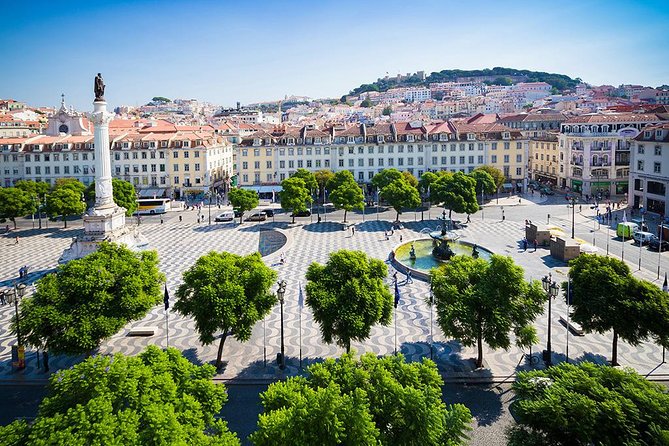
The tour begins at Praça Dom Pedro IV, better known as Rossio Square. This is a smart starting point because Rossio sits in the center of Baixa and gives you an immediate sense of Lisbon’s scale, design, and daily rhythm.
Your guide explains the square’s distinctive Portuguese stone paving, arranged in a wave pattern inspired by the nearby Atlantic. It is a small detail, but it helps you notice how Lisbon uses pavement, facades, and public squares to tell its story.
The route then moves to the Church of São Domingos, beside the square. The stop is brief, but it adds a more intimate piece of Lisbon to the grand urban setting. From here, the walk passes along Lisbon’s most expensive and fashionable avenue before reaching Restauradores Square.
At Restauradores, the tall obelisk recalls Portugal’s restoration of independence from Spain in 1640. The monument lists battles from the Portuguese Restoration War, giving your guide a chance to explain an important turning point without asking you to spend time inside a museum.
More Walking Tours in Lisbon
- Lisbon: History, Stories and Lifestyle Walking Tour
★ 4.8 · 10,902 reviews - Lisbon: Food and Wine Small Group Walking Tour
★ 4.9 · 4,082 reviews - Best of Lisbon Walking Tour: Rossio, Chiado & Alfama
★ 4.9 · 2,700 reviews
Restauradores and Rossio Station’s Manueline facade
The next major stop is Rossio Central Station. Its exterior is one of the memorable sights in the historic center, with ornate details inspired by Manueline architecture, the decorative Portuguese style associated with the Age of Discoveries.
The station is still an active transport hub. You may hear a train heading into the tunnel toward Sintra while your guide explains the engineering work behind the line. That practical connection makes the stop more useful than simply admiring a pretty facade. You see a functioning part of Lisbon and hear how 19th-century infrastructure helped link the city with the surrounding region.
The tour does not include a train ride or station ticket. You are viewing the building and learning its story from outside, which keeps the walk moving but may feel limited if you want interior visits.
Carmo Square and the 1974 Carnation Revolution
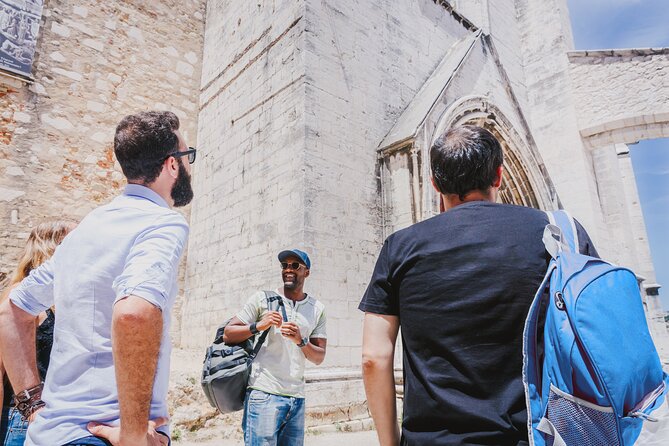
Largo do Carmo is one of the most meaningful stops on the route. The square is tied both to the Carmelite convent and to the Carnation Revolution of 1974, when Portugal’s 48-year dictatorship collapsed.
This is where the tour reaches beyond royal monuments and architecture. Your guide connects the setting to modern Portuguese political life and explains why the square became a key scene in the country’s peaceful revolution. The stop also gives you a change of pace after the larger squares and busy central streets.
The nearby Santa Justa Lift is another visual highlight. This tall iron elevator is one of the best-known monuments in central Lisbon, and the route allows time to admire it and take in a high view. Admission to the attraction is not included, so the tour focuses on the structure and the viewpoint rather than a paid ride.
That distinction is worth noting. If riding Santa Justa is high on your list, you will need to arrange that separately. The tour still helps you understand where the lift fits into the city’s steep street plan.
Chiado, the city’s literary and café district

From Carmo, the walk continues into Chiado. This elegant neighborhood developed in the 19th century as a center for wealthy residents, intellectuals, theaters, bookstores, cafés, and fashionable shops.
I like this part of the route because it gives you a different face of Lisbon. Rossio and Baixa feel formal and monumental, while Chiado feels more refined and lived-in. Your guide points out old facades and long-running cafés, helping you see details you might otherwise pass without a glance.
Several guides are praised for bringing this section to life with humor and useful recommendations. Maria is described as especially warm and enthusiastic, while Filipa is noted for offering practical suggestions for first-time visitors. Those small recommendations can help you plan the rest of your stay.
The tour does not promise a shopping break or a café visit in Chiado. Think of it as an introduction to the neighborhood, followed by more walking through Lisbon’s central streets.
Same corner of the country, a different pace:
- Lisbon City Center Tour – The Unmissable Lisbon
★ 5.0 · 22,234 reviews - Lisbon: Sintra, Pena, Regaleira, Cabo da Roca & Cascais
★ 4.7 · 19,656 reviews - Lisbon: Jerónimos Monastery Entrance Ticket
★ 4.1 · 14,164 reviews - Lisbon: Sunset Boat Party Cruise with DJ and Open Bar
★ 4.5 · 10,378 reviews
Rua Augusta and the rebuilt heart of Baixa
Rua Augusta leads you into Baixa, Lisbon’s Downtown. This is the part of the city rebuilt after the devastating 1755 earthquake, following new rules for street planning and earthquake-resistant construction.
The value here is not just seeing attractive buildings. You learn why the streets feel unusually ordered compared with Alfama’s twisting lanes. Baixa was planned as a rational response to disaster, with straight streets, broad public spaces, and construction methods considered innovative for the period.
Your guide also discusses the role of King José I, known as The Reformer, during the rebuilding of Lisbon. The story connects the monarch, the city’s reconstruction, and the political decisions that shaped the center you see today.
The route spends about 15 minutes in Baixa, enough to explain the plan and orient you to the main streets. It is not enough for a detailed architectural study, but it gives you a framework for exploring on your own later.
Chão do Loureiro viewpoint and the approach to Alfama
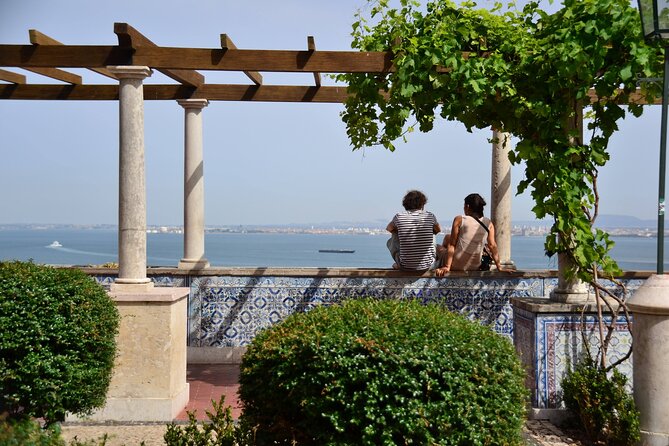
The Miradouro Chão do Loureiro provides a panoramic pause. Viewpoints are valuable on a walking tour because they let you stop, catch your breath, and understand Lisbon as a city of levels rather than a flat grid.
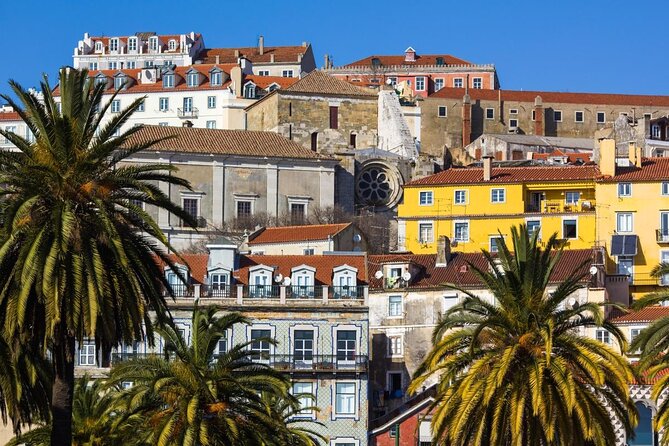
The route then turns toward Alfama, the oldest neighborhood on the walk. Here the atmosphere changes quickly. Streets narrow, slopes become more noticeable, and the Moorish influence is easier to sense in the layout of the lanes.
This is the section where good guiding matters most. It is easy to get turned around in Alfama, and a local guide can explain how the neighborhood developed rather than simply leading you through a maze. Guides are praised for setting a sensible pace, making timed breaks, and helping people manage the hills.
One particularly useful aspect is the attention given to everyday Alfama life and fado. You pass small fado restaurants tucked into narrow streets and learn about Portugal’s famously melancholy music. The tour does not include a fado performance, but it gives you enough context to decide if you want to book one later.
Alfama’s narrow lanes, fado, and walking demands
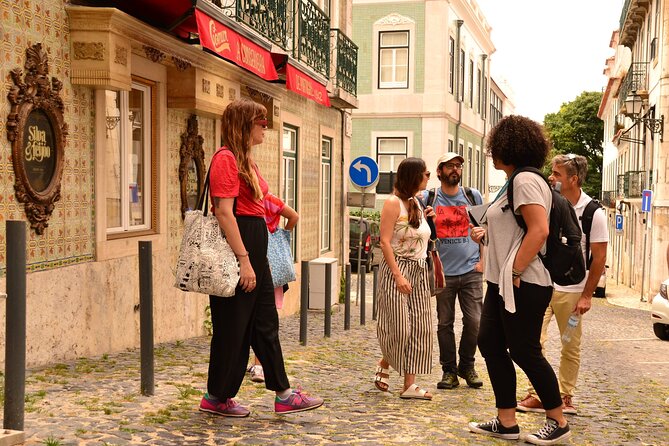
Alfama is the most atmospheric part of the route, but it is also the section that requires the most care with footwear. You will walk on narrow streets and may encounter slopes or uneven paving. Comfortable shoes are not a polite suggestion here. They are the practical choice.
The overall pace is described as manageable rather than punishing. Guides including Felipe and José are praised for stopping often enough to answer questions and allow people to deal with the hills. Public elevators and escalators are used where available, which reduces some of the effort, but this remains an active walking tour.
The route can work well in changing weather, though rain makes the stone streets more demanding. One guide continued the walk in heavy rain, and the experience still included the main sights and food stops. Even so, check the forecast and bring suitable clothing. There is no advantage to pretending Lisbon’s hills are gentle when wet pavement is involved.
Pastel de nata, wine, and a small tapa

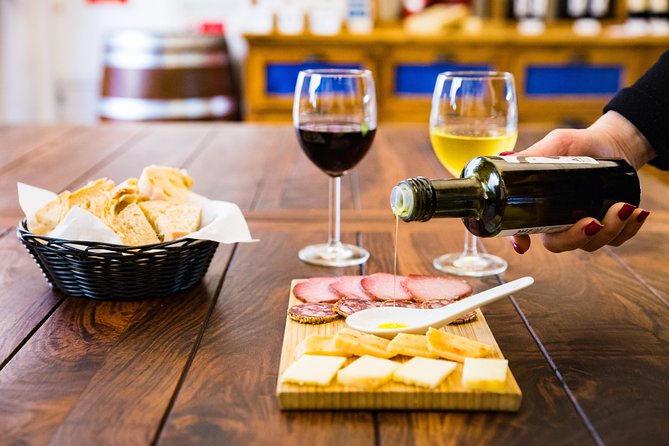
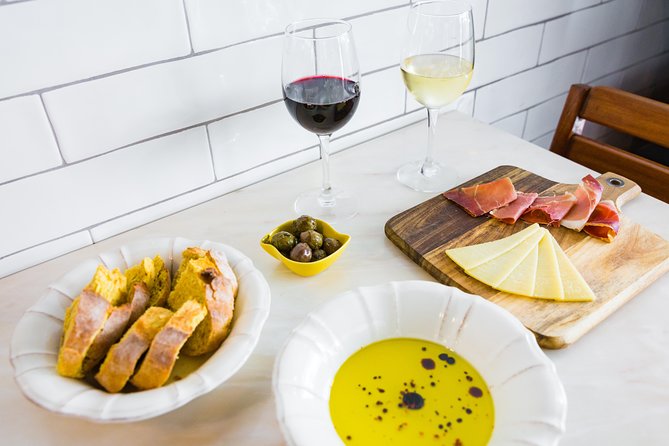
The included food and drink help break up the history. You receive a classic pastel de nata, Portugal’s custard tart, along with a wine tasting and tapa.
This is not a full meal, so do not book the walk expecting lunch. It is better viewed as a pleasant sampling of Portuguese food and drink woven into the sightseeing. The tastings also give the guide a natural opening to discuss local habits and recommendations.
The food stops have been a highlight for many people, and vegetarian requests have been accommodated in at least one reported case. If you have a dietary concern, state it when arranging the tour rather than assuming every option will suit you.
Because food and drinks are included only where specified, any extra purchases remain your responsibility. Hotel pickup, museum admission, monument entry, and other meals are also excluded.
Ending at Commerce Square beside the Tagus
The final stop is Praça do Comércio, the grand riverside square also known as Terreiro do Paço. This was once the site of the Royal Ribeira Palace, which was destroyed in the 1755 earthquake.
The square was rebuilt as part of the Pombaline Downtown plan. Your guide explains how its waterfront setting once welcomed people arriving from the Atlantic and why the square remains one of Lisbon’s most important civic spaces.
Ending here works well. You finish near the Tagus, with a strong sense of Lisbon’s royal past, earthquake rebuilding, and maritime connections. You can continue exploring afterward without needing to return to the starting point.
The end point also makes the tour practical for a first day. From Commerce Square, you can continue along the riverfront or make your own way elsewhere in the city. The guide may also offer restaurant and sightseeing suggestions, as José and Ricardo are praised for doing.
What $23.94 buys you in practical terms
At $23.94 per person, this is good value if you want a fast orientation to central Lisbon. The tour combines three to four hours of guiding, a route through several major districts, a pastry, wine, and a tapa. Booking a private guide would cost far more, while covering this much ground alone would require planning, map checks, and time spent understanding what you are seeing.
The value depends on your expectations. If you want entry into monuments, long visits inside churches, or a specialist architecture lecture, this is not the right format. If you want to learn the city’s basic shape, hear stories from a local guide, and gather ideas for the rest of your trip, the price is easy to justify.
The tour is especially useful at the beginning of a short stay. Several guides are praised for helping people get oriented and suggesting places to visit afterward. You can use the route to decide where to return for more time, including Alfama, Chiado, Baixa, or the viewpoints.
The 4.9 rating from 4,869 reviews and recommendation rate of 99 percent indicate very strong satisfaction, but the one recurring limitation is worth keeping in mind: the tour covers familiar central sights. If you already know Lisbon well, the route may offer more explanation than new locations.
Who will enjoy this Lisbon walking tour most
I would recommend this tour to first-time visitors, people with only a few days in Lisbon, solo visitors who want an easy way to meet a small group, and anyone who prefers local explanation over sightseeing by map.
It also suits people who like a steady pace with frequent stops. Guides are praised for answering questions, helping solo participants feel included, and adjusting the rhythm when hills become tiring.
You may want something else if you have limited mobility, dislike hills, or want a slower, more detailed visit to fewer sites. The tour requires moderate physical fitness, and no wheelchair or special mobility details are provided. You should also know that service animals are allowed and the meeting point is near public transportation.
The tour is offered in English and uses a mobile ticket. Confirmation arrives at booking, and free cancellation is available up to 24 hours before the start time. Changes or cancellations within 24 hours are not refunded, and the experience may be canceled if its minimum group size is not met.
Should you book the Best of Lisbon walking tour?
Book it if you want a strong first look at Lisbon for a low price, especially during your first day. The route covers the central neighborhoods most people want to understand, and the food tastings keep the walk from feeling like a nonstop lecture.
Choose it with realistic expectations. You will see many landmarks from the outside, not enter every monument, and you will walk through hills and uneven lanes. For first-time visitors, that mix of history, views, local food, and practical advice makes this one of the better-value introductions to Lisbon. If you already know the city or prefer quiet, in-depth visits, spend your money on a smaller specialist experience instead.
FAQ
How long does the Best of Lisbon walking tour last?
The tour lasts approximately three to four hours.
Where does the tour begin?
It begins at Praça Dom Pedro IV, also called Rossio Square, in central Lisbon.
Where does the tour end?
The tour ends at Praça do Comércio, near the Tagus River.
How many people can join the tour?
The group has a maximum of 14 participants.
Is food included?
Yes. The tour includes a pastel de nata pastry, a wine tasting, and a tapa. Other food and drinks are not included unless specifically stated.
Does the tour include monument or museum admission?
No. Entry to museums and monuments is not included.
Is the tour physically demanding?
It requires a moderate level of fitness. Baixa is relatively flat, but the route includes walking through Alfama and Lisbon’s hills, so comfortable shoes are important.
Can I cancel for a full refund?
Yes. You can cancel at least 24 hours before the start time for a full refund. Cancellations or changes made less than 24 hours before the start time are not refunded or accepted.
Recently added in Lisbon
- Lisbon Cinematic Photoshoot with Top-Rated Photographer★ 5.0 · 76 reviews
- City Centre Run in Lisbon★ 5.0 · 164 reviews
- City of Neighborhoods Tour 1H 30M Private Tour by Tuk Tuk★ 5.0 · 38 reviews
- Central Lisbon E-Bike Tour★ 5.0 · 168 reviews
- Hands on Portuguese Cooking Class in Lisbon★ 5.0 · 136 reviews
- Lisbon Sailing Catamaran Public Cruise with drinks★ 5.0 · 304 reviews
- Lisbon City Tour by Tuk Tuk★ 4.5 · 137 reviews
- Romantic Private Sailboat in Lisbon for couples★ 5.0 · 38 reviews
Walking Tours, compared.



Porto Walking Tour, Lello Bookshop, River Cruise and Cable Car
Read our review →

Best of Lisbon Walking Tour: Rossio, Chiado & Alfama
Read our review →
Experience Porto’s Charm: 3-Hour Guided Walking Tour
Read our review →
Enjoy a Guided Levada Walk in the Rabaçal Valley
Read our review →
Browse the lists this tour appears in