
REVIEW · WALKING TOURS
Best of Lisbon Walking Tour: Rossio, Chiado & Alfama
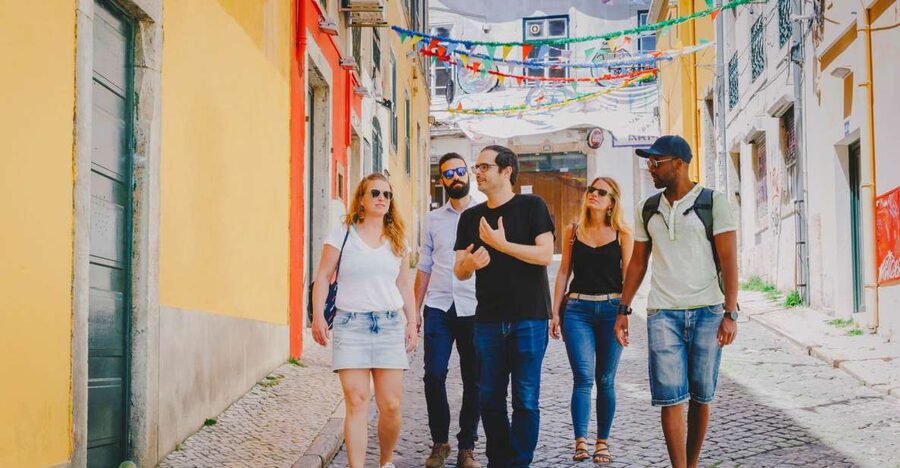
Lisbon reveals itself one hill at a time. This three-hour walking tour links Rossio, Chiado, Baixa, and Alfama in a sensible route, giving you a useful first look at the city rather than isolating you in one monument. I like the strong historical thread, from the restoration of Portuguese independence to the Carnation Revolution, and I like the small food stops, especially the pastel de nata and Portuguese snack with wine. The one catch is simple: you need comfortable shoes and enough energy for a city walk through winding streets and uphill sections.
The route covers a lot of ground for $23. It does not include entry to paid attractions, but that keeps the price low and the pace moving. Guides such as Filipa, Daniel, Maria, Martin, Carlos, and Joana have been praised for mixing facts with humor, local tips, and personal stories rather than delivering a dry lecture.
In This Review
- Key reasons this Lisbon walk earns attention
- Starting at Rossio, Lisbon’s natural meeting point
- Restauradores and the story of Portugal’s independence
- Carmo Square and the Carnation Revolution
- Chiado’s cafés, shops, and literary character
- Baixa and the city rebuilt after disaster
- Viewpoints that break up the walking
- Alfama, Fado, and a small taste of local life
- Finishing at Praça do Comércio
- Guide quality and the pace of the experience
- Is $23 a good value in Lisbon?
- Should you book this Lisbon walking tour?
- FAQ
- How long does the Best of Lisbon Walking Tour last?
- What is the price of the tour?
- Where does the tour begin?
- Where does the tour finish?
- Which language is the tour conducted in?
- What food and drink are included?
- Are entrance fees included?
- Can I cancel the tour for a refund?
Key reasons this Lisbon walk earns attention
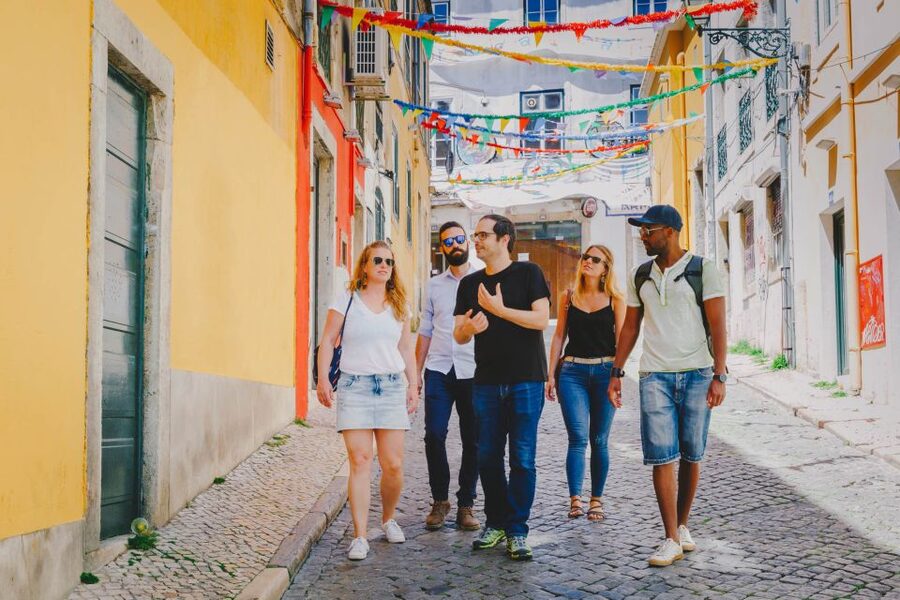
- Rossio to Praça do Comércio: See central Lisbon’s main squares in one continuous walk, ending at the city’s grand former waterfront entrance.
- History with a human scale: The stops explain the 18th-century earthquake, the end of dictatorship in 1974, and Portugal’s return to independence.
- Three local tastings included: You receive a pastel de nata, another Portuguese snack, and a wine tasting, often described as green wine.
- Alfama gets proper time: About 30 minutes is devoted to Lisbon’s oldest neighborhood, including winding lanes and an introduction to Fado.
- Useful orientation: The route helps you understand where Baixa, Chiado, Alfama, Rossio, and the riverfront sit in relation to one another.
- English-speaking local guide: The strongest part of the experience is the guide’s ability to turn streets and buildings into an understandable story.
Starting at Rossio, Lisbon’s natural meeting point
The tour begins at the statue of Dom Pedro IV in Rossio Square. This is a practical place to start because Rossio sits at the center of old and newer Lisbon, with several important streets and squares branching away from it.
You begin with roughly 15 minutes in Rossio, taking in the broad square and its patterned pavement. The guide sets up the city’s story here, helping you see Rossio not just as a meeting place but as a useful reference point for the rest of your stay.
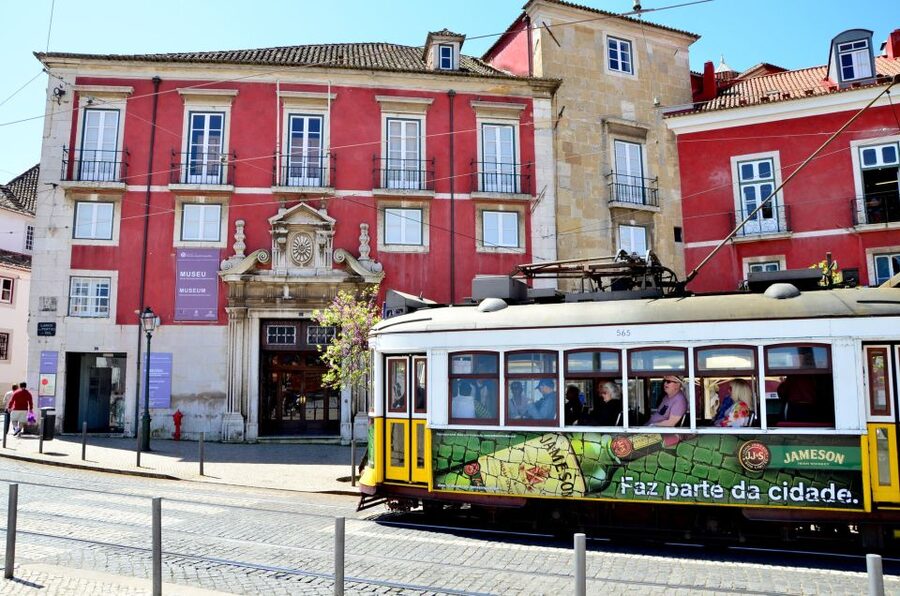
Next comes St. Dominic’s Square, a smaller and more intimate stop. You have time for photos and an explanation of the area before moving toward Rossio Railway Station. The station is worth a pause for its ornate neo-Manueline façade, particularly the detailed horseshoe-shaped entrances. You do not enter a paid attraction here. The value comes from learning what to look for in a building you might otherwise pass without a second glance.
This opening section is especially helpful if Lisbon is new to you. Afterward, you are less likely to treat Rossio, Restauradores, and the streets leading into Baixa as separate pieces. They begin to make sense as one connected center.
More Walking Tours in Lisbon
- Lisbon: History, Stories and Lifestyle Walking Tour
★ 4.8 · 10,902 reviews - Best of Lisbon Small-Group Guided Walking Tour
★ 5.0 · 4,869 reviews - Lisbon: Food and Wine Small Group Walking Tour
★ 4.9 · 4,082 reviews
Restauradores and the story of Portugal’s independence
The walk continues through Restauradores Square, where an obelisk marks Portugal’s restoration of independence from Spain. The stop gives the guide a chance to explain a major turning point in Portuguese history without asking you to spend time inside a museum.
This is one of the tour’s useful habits: important events are tied to actual places. You are not simply memorizing dates. You are looking at a square and understanding why the monument is there.
The presentation style depends on the guide assigned to your group. The high scores reflect a steady pattern of guides keeping the explanations lively and open to questions. Martin has been praised for adding local anecdotes, while Daniel is noted for using humor and personal cultural knowledge to make Portuguese history easier to follow.
That variety matters. A walking tour can be excellent or forgettable based on the person leading it. Here, the repeated praise for guides including Filipa, Carlos, Maria, Joana, Natalia, and Guilherme suggests that the operator has a strong pool of English-speaking guides. Still, your exact experience will depend on who leads your departure.
Carmo Square and the Carnation Revolution
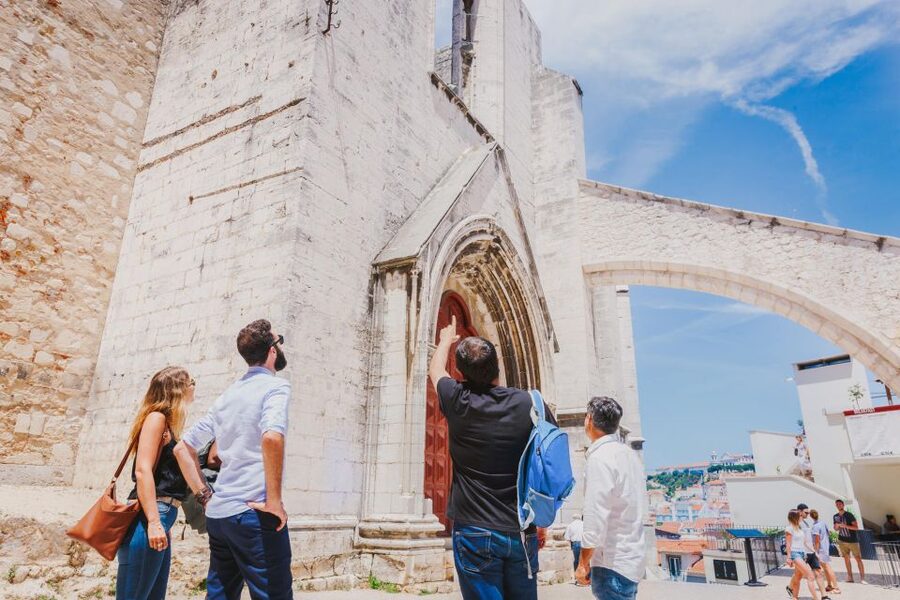
Largo do Carmo is one of the most meaningful stops on the route. Here, you learn about the Carnation Revolution of 1974, the peaceful military uprising that ended 48 years of dictatorship in Portugal.
The square also offers a visual break from the dense streets around Rossio. You stop for photos, hear the political story, and continue on foot. The tour does not include an entry ticket to a museum or church, so this is a contextual visit rather than a formal indoor sightseeing stop.
I like this part because it gives modern Portugal a proper place in the tour. Many city walks focus almost entirely on kings, earthquakes, and churches. Lisbon’s recent political past matters just as much if you want to understand the country you are visiting.
Your guide may also help connect the revolution to present-day Lisbon. Several guides have been praised for explaining both history and current local culture, which makes the stop feel less like a detached history lesson.
Chiado’s cafés, shops, and literary character
From Carmo, the group moves into Chiado. The tour passes old cafés, boutiques, theatres, and bookstores, with scenic views along the way.
Chiado is one of Lisbon’s more elegant central districts, but the important point is not simply seeing attractive façades. The guide gives you a sense of how this neighborhood functions within the city. You see a commercial and cultural district, not just a string of photo opportunities.
The itinerary allows about 15 minutes for the Chiado section. That is enough for an introduction, but not enough for extended shopping, café time, or a detailed look inside every historic building. If you want to browse bookstores or settle into one of the cafés, save that for later.
This is also a good moment to ask for practical recommendations. Guides have frequently offered restaurant suggestions, shortcuts, and ideas for exploring after the walk. Diane specifically appreciated advice on restaurants and ways to handle Lisbon’s hills. That kind of local guidance can be worth more than another five minutes of architectural commentary.
Same corner of the country, a different pace:
- Lisbon City Center Tour – The Unmissable Lisbon
★ 5.0 · 22,234 reviews - Lisbon: Sintra, Pena, Regaleira, Cabo da Roca & Cascais
★ 4.7 · 19,656 reviews - Lisbon: Jerónimos Monastery Entrance Ticket
★ 4.1 · 14,164 reviews - Lisbon: Sunset Boat Party Cruise with DJ and Open Bar
★ 4.5 · 10,378 reviews
Baixa and the city rebuilt after disaster
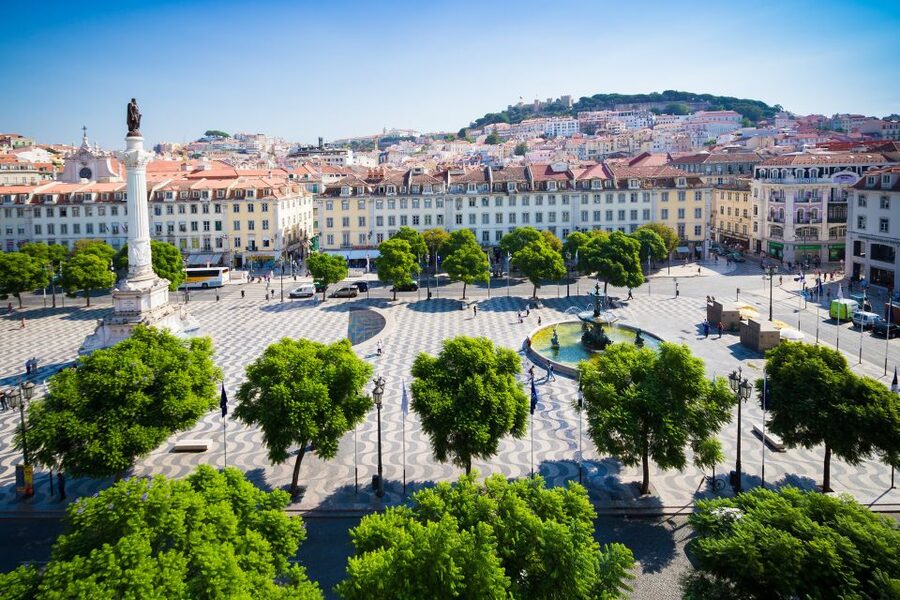
Baixa is the architectural center of the tour. The district was rebuilt after the great earthquake of the 18th century under new urban rules, including a more controlled street plan and anti-seismic construction ideas.
The guide explains why Baixa feels different from Alfama. Its streets are more orderly and planned, while Alfama retains a much older, more winding shape. Seeing both neighborhoods in one outing makes the contrast clear.
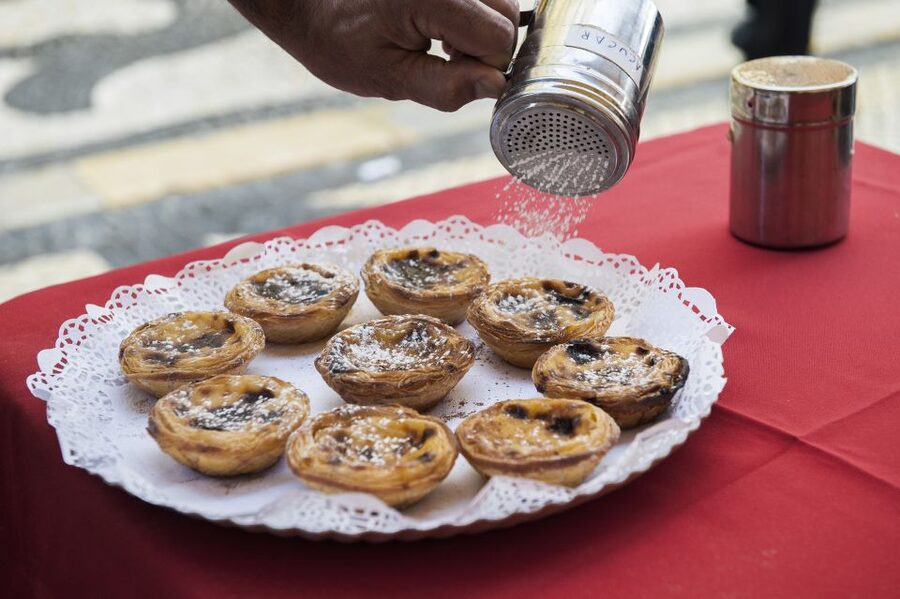
The route includes time for a food tasting in Baixa, followed by more sightseeing and a photo stop. One included pastel de nata is part of the experience. This is the familiar Portuguese egg custard tart, with a crisp pastry shell and creamy filling.
A single tart will not replace a food tour, but it is a smart addition to a history walk. It gives you a taste of an everyday Portuguese favorite and a small pause during the walking. Some accounts also describe a codfish cake as the additional snack, though the exact snack may vary. The supplied details promise one snack tasting, not a specific item, so do not book this expecting a full meal.
Baixa is also where the $23 price begins to make sense. You get a guide, a structured introduction to several central districts, a pastry, another snack, and wine. You are paying for orientation and context more than for admission tickets.
Viewpoints that break up the walking
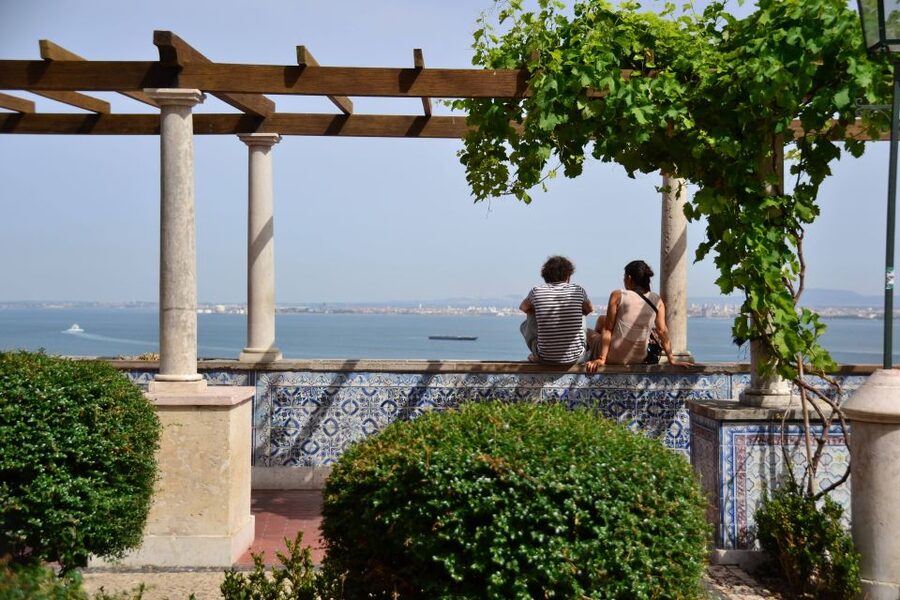
The route includes two viewpoint stops, each with time for photos and scenic views. Exact viewpoints are not identified in the tour information, so you should think of them as planned scenic pauses rather than guaranteed visits to a named lookout.
These stops matter because Lisbon is best understood from above as well as from street level. The city’s slopes, rooftops, river direction, and tightly packed older districts become easier to read when the guide points them out.
They also break up the steady pace of the walk. Three hours can feel long if every minute is spent moving or listening. The viewpoints create natural pauses and give you a chance to take photos without holding up the group.
The walk is not designed for anyone who wants to remain seated. Wear comfortable shoes and comfortable clothing, as requested by the operator. The route includes alleys, winding streets, and Lisbon’s famously hilly central setting, so this is best approached as active sightseeing.
Alfama, Fado, and a small taste of local life
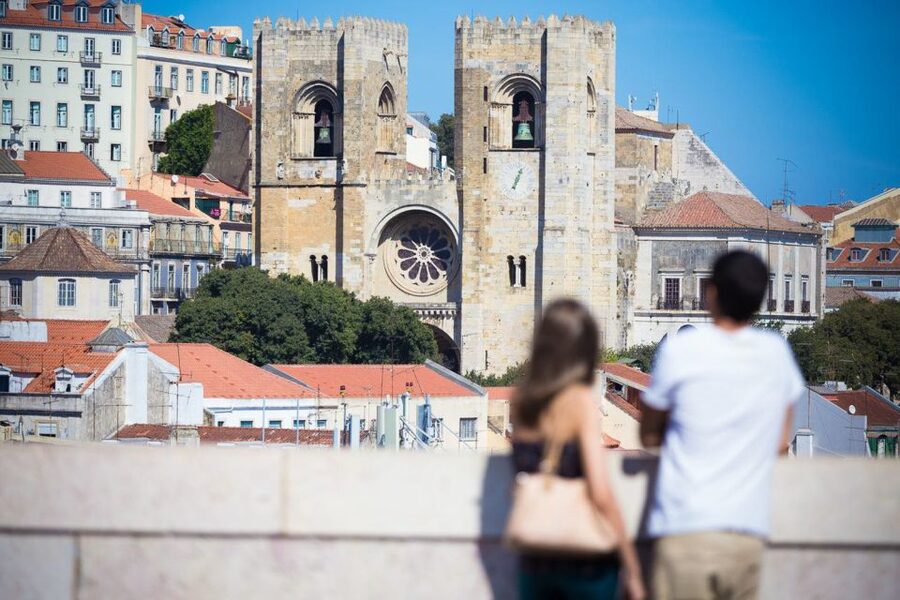
The final neighborhood section takes you into Alfama, the oldest part of Lisbon. The group spends about 30 minutes among narrow lanes and winding streets, with scenic views and guided commentary.
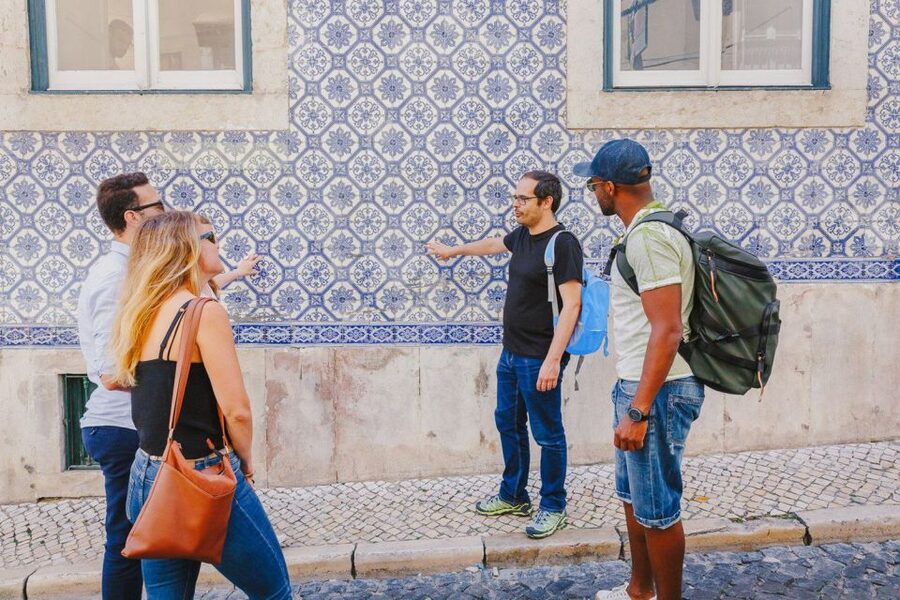
Alfama is where the tour becomes less about grand squares and more about the texture of daily life. Buildings, tiled façades, tight passages, and small corners carry clues to the district’s long development. One useful detail from the tour experience is the suggestion to ask why many Alfama buildings have tiled exteriors. It is exactly the sort of question that can turn a passing view into a memorable detail.
The stop also introduces Fado, Lisbon’s distinctive musical tradition. You should not expect a full Fado concert as part of the three-hour walk. Instead, the guide gives you an up-close cultural introduction while you move through the neighborhood.
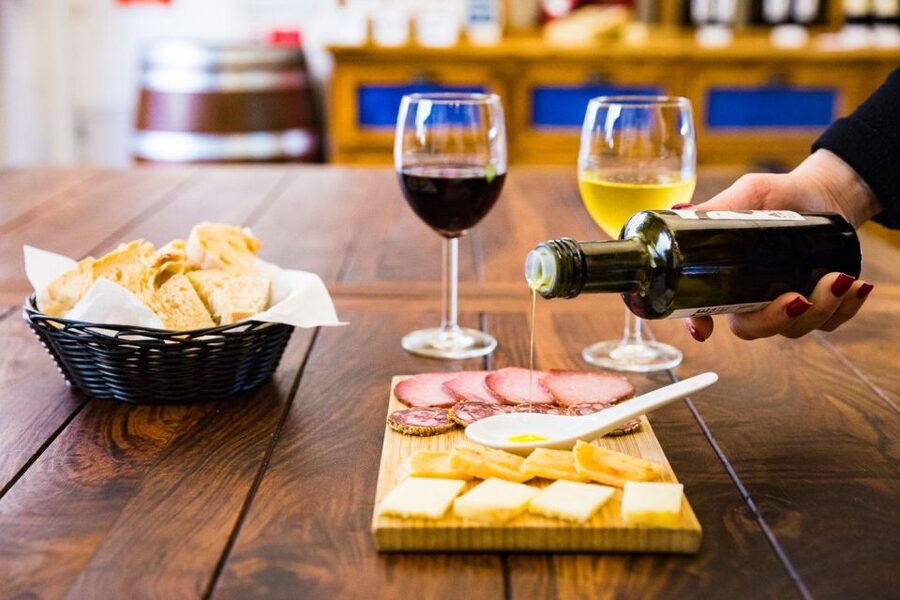
Alfama includes the second food tasting and the wine tasting. The wine is often described as green wine, or vinho verde. Together with the pastel de nata, this creates a modest but welcome sampling of Portuguese flavors. It is enough to add character to the walk, but not enough to serve as lunch.
This section received especially warm praise. One guide was credited with making Alfama the best part of the experience, while another offered a memorable surprise there. The exact presentation can change from group to group, but the neighborhood itself gives the tour its strongest sense of place.
Finishing at Praça do Comércio
The walk ends at Terreiro do Paço, better known as Praça do Comércio. This grand square faces the Tagus and once served as the ceremonial entrance to Lisbon from the river.
Ending here is practical. You finish near the waterfront, with a clear sense of how the central districts connect from Rossio down through Baixa. You can continue along the river, find lunch, or use the square as a new point of reference for independent exploring.
The endpoint also gives the tour a satisfying visual finish. Rossio feels enclosed and urban. Praça do Comércio opens toward the water. The movement between those two spaces tells part of Lisbon’s story without needing a complicated transport plan.
Guide quality and the pace of the experience
The tour’s strongest feature is its guiding. The most praised guides include Filipa, Daniel, Maria, Martin, Carlos, Joana, Natalia, Guilherme, Felipe, Ricardo, Caterina, and Fatima. The qualities repeated most often are clear explanations, humor, patience, warmth, and useful recommendations.
Daniel has been singled out for bringing groups together and making difficult weather feel manageable. Maria is often praised for energy and a good balance between facts and humor. Carlos is noted for answering questions patiently, while Joana and Filipa have received praise for clear pacing and friendly delivery.
A few groups have run longer than three hours, sometimes reaching three-plus hours or even four. That can be a bonus if you enjoy extra stories, but it may matter if you have a lunch reservation or another timed activity. The walk is generally described as unhurried rather than rushed, though the amount of commentary can depend on the guide and group.
The experience is conducted in English. The consistently high 4.9 rating from 2,700 reviews suggests strong reliability, but no walking tour can guarantee a particular guide, group size, or exact duration beyond the advertised three hours.
Is $23 a good value in Lisbon?
At $23 per person, this is a good-value introduction to central Lisbon. The price includes the guide, the walking route, one pastel de nata, one additional snack tasting, and one wine tasting.
You do not receive entrance fees or guided access inside attractions. That is not a weakness if your goal is to understand the city’s streets, squares, viewpoints, and neighborhoods. It is a limitation if you want detailed visits to interiors such as churches, museums, or historic sites.
I would book this near the start of your Lisbon stay. The route covers enough of the center to help you plan later days, and the guides often provide restaurant suggestions and practical advice. You can then return to Chiado, Baixa, or Alfama with a better sense of direction.
The tour is especially suitable for first-time visitors, solo visitors who want company, couples, and anyone who prefers history explained while walking. It may be less suitable for you if you dislike hills, need frequent seating, want a food-focused outing, or prefer spending a long time inside individual attractions.
Free cancellation is available up to 24 hours before the tour for a full refund, and you can reserve now and pay later. Pets are not allowed.
Should you book this Lisbon walking tour?
Book it if you want a well-priced first orientation to Lisbon with real historical context and a few local tastes along the way. The route is broad, the endpoint is useful, and the Alfama section adds character beyond the usual central squares.
I would especially recommend it for your first or second day in the city. You will learn the basic shape of Lisbon, hear about the 1974 revolution and the earthquake rebuilding, sample a pastel de nata and wine, and leave with practical ideas for the rest of your visit.
Skip it if you are looking for an in-depth museum tour, a full meal, or a dedicated Fado performance. For most visitors who enjoy walking and want an engaging introduction for $23, this is an easy booking to justify.
FAQ
How long does the Best of Lisbon Walking Tour last?
The advertised duration is three hours. Some groups have continued beyond three hours, so allow a little extra time if your schedule is tight.
What is the price of the tour?
The price is $23 per person.
Where does the tour begin?
The meeting point is Rossio Square, close to the statue of Dom Pedro IV.
Where does the tour finish?
The tour ends at Terreiro do Paço, also known as Praça do Comércio.
Which language is the tour conducted in?
The live tour guide speaks English.
What food and drink are included?
The tour includes one pastel de nata, one snack tasting, and one wine tasting. The additional snack may include a Portuguese item such as a codfish cake, and the wine is sometimes described as green wine.
Are entrance fees included?
No. Entrance fees and guiding inside attractions and sites are not included.
Can I cancel the tour for a refund?
Yes. You can cancel up to 24 hours in advance for a full refund. You can also reserve now and pay later.
Recently added in Lisbon
- Lisbon Cinematic Photoshoot with Top-Rated Photographer★ 5.0 · 76 reviews
- City Centre Run in Lisbon★ 5.0 · 164 reviews
- Central Lisbon E-Bike Tour★ 5.0 · 168 reviews
- Hands on Portuguese Cooking Class in Lisbon★ 5.0 · 136 reviews
- City of Neighborhoods Tour 1H 30M Private Tour by Tuk Tuk★ 5.0 · 38 reviews
- Lisbon Sailing Catamaran Public Cruise with drinks★ 5.0 · 304 reviews
- Lisbon City Tour by Tuk Tuk★ 4.5 · 137 reviews
- Romantic Private Sailboat in Lisbon for couples★ 5.0 · 38 reviews
Walking Tours, compared.


Best of Lisbon Small-Group Guided Walking Tour
Read our review →

Porto Walking Tour, Lello Bookshop, River Cruise and Cable Car
Read our review →

Experience Porto’s Charm: 3-Hour Guided Walking Tour
Read our review →
Enjoy a Guided Levada Walk in the Rabaçal Valley
Read our review →
Browse the lists this tour appears in