REVIEW · STREET ART
Lisbon: Street Art Tour
Street art changes how you see Lisbon. This three-hour walk moves from Bairro Alto through Chiado, Baixa, Mouraria, and Graça, using murals, tags, sculptures, and small painted details to explain the city’s culture. I like the way the tour connects art with Portuguese history and everyday neighborhood life, rather than treating the walls as simple photo backdrops. I also like the small-group feel reported by many participants, with guides such as Erica, Erika, Maria, and Laith giving the walk a personal touch.
The main drawback is physical: three hours on foot across hilly Lisbon is a real outing, not a gentle stroll. You will face uneven and unpaved ground, along with slopes between districts. The tour is not suitable for wheelchair users, and oversize luggage is not allowed.
The meeting point is in front of the Interpress building at R. Luz Soriano 67. From there, City Guru guides lead the group in English through some of Lisbon’s best-known central districts and several smaller corners you could easily miss on your own. The price is $40 per person, which is fair if you want context and conversation, not just a list of mural locations.
In This Review
- The tour at a glance
- Why Lisbon works so well for a street art walk
- Starting in Bairro Alto at R. Luz Soriano 67
- Chiado and Baixa: art among Lisbon’s best-known streets
- Mouraria: where neighborhood and art meet
- Finishing in Graça after a hillier hour
- The guides make or break the experience
- What $40 buys you
- Practical advice before you book
- Who should book this Lisbon street art tour?
- Should you book it?
- FAQ
- How long is the Lisbon Street Art Tour?
- How much does the tour cost?
- Where does the tour start?
- Which Lisbon neighborhoods does the tour visit?
- What language is the tour offered in?
- Is hotel pickup included?
- What should I bring?
- Is the tour wheelchair accessible?
- Can I cancel the booking?
The tour at a glance
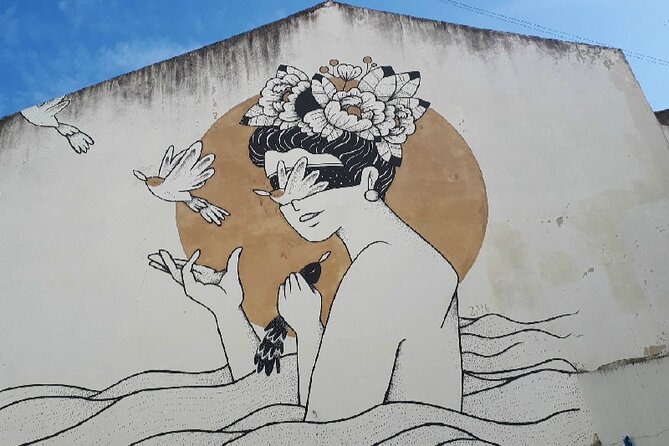
- Five Lisbon districts in three hours: The route links Bairro Alto, Chiado, Baixa, Mouraria, and Graça.
- Art explained in context: Expect discussion of artists, materials, styles, local history, and social or political ideas.
- Guides with strong art backgrounds: Erica, Erika, Maria, and Laith are praised for clear explanations, warmth, and storytelling.
- A walking workout with views: The route crosses hilly streets and uneven surfaces, especially toward Graça.
- Small details matter: Guides point out pieces you might walk past, from tiny interventions to large wall murals.
- Flexible booking: You can cancel up to 24 hours before the start for a full refund and reserve now while paying later.
Why Lisbon works so well for a street art walk
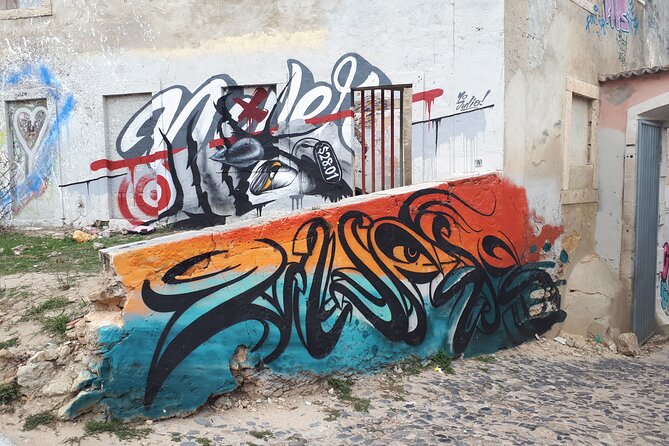
Lisbon is a city of steep streets, old walls, tiled façades, narrow lanes, and changing neighborhoods. That gives street artists plenty to work with. A mural does not sit in a gallery apart from the city. It shares a wall with apartment buildings, shops, historic streets, and daily life.
This is where the tour earns its keep. Instead of saying only who painted a work, the guide explains how the piece relates to its setting and to Lisbon’s changing identity. You learn that street art can carry political ideas, social criticism, neighborhood pride, humor, or a simple interest in color and form.
Several participants describe the tour as a fresh way to understand Lisbon after taking a more traditional history walk. That makes sense. A standard city tour may explain major events and monuments. This one shows how the past still appears in modern public art, and how current artists respond to the city around them.
I especially like the way the walk trains your eye. After a few stops, you begin looking above shopfronts, around corners, and along side streets. Small works become easier to spot. You also start noticing different techniques instead of putting every painted wall into the same category of graffiti.
A few more Lisbon options side by side
- Lisbon City Center Tour – The Unmissable Lisbon
★ 5.0 · 22,234 reviews - Lisbon: Sintra, Pena, Regaleira, Cabo da Roca & Cascais
★ 4.7 · 19,656 reviews - Lisbon: Jerónimos Monastery Entrance Ticket
★ 4.1 · 14,164 reviews
Starting in Bairro Alto at R. Luz Soriano 67
The walk begins at R. Luz Soriano 67, in front of the Interpress building. This is a useful starting area because Bairro Alto gives the guide a chance to introduce both Lisbon’s street life and the basic language of street art.
The Bairro Alto section lasts about one hour, making it the longest stop before Graça. Expect the guide to use several works to explain artists, methods, and the way public art interacts with the neighborhood. The emphasis is not simply on finding the biggest mural. You might stop for a small piece that reveals an artist’s style or a detail that fits the surrounding streets.
This first hour also sets the pace. The guide explains the art while moving through the district, so you are not standing still for long stretches. That helps keep the experience lively, but it also means you need good shoes and enough energy for the full route.
A useful feature is the chance to ask questions as you go. Erica and Erika receive especially strong praise for making complex art ideas easy to follow, while Laith is noted for mixing academic detail with humor and stories. Your exact guide is not guaranteed, but the experience appears to rely heavily on the guide’s personal knowledge and ability to tell a story.
Chiado and Baixa: art among Lisbon’s best-known streets
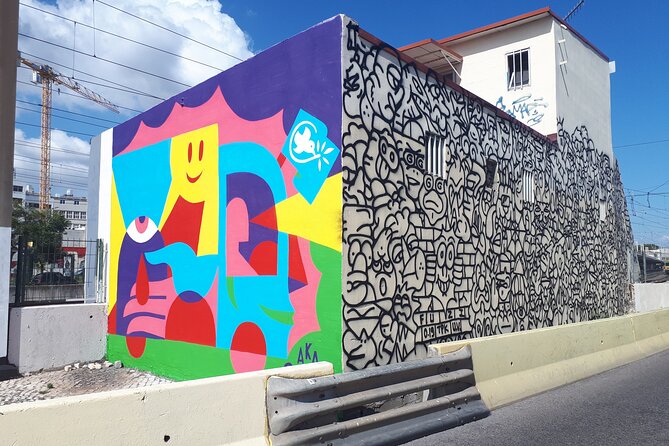
After Bairro Alto, the route continues into Chiado for about 20 minutes, followed by another 20 minutes in Baixa de Lisboa. These sections are shorter, but they help show how street art changes when it appears in busier, more central parts of the city.
Chiado has a polished, cultural feel, while Baixa is known for broad streets and grander urban planning. The contrast matters. A work placed in a central commercial area can have a different effect from one found on a quieter residential lane. Your guide can point out how scale, visibility, architecture, and foot traffic affect the way a piece is seen.
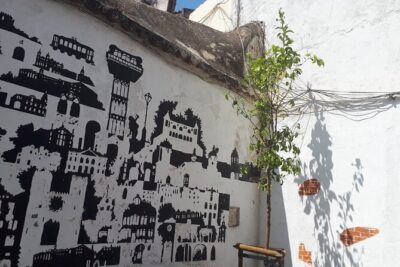
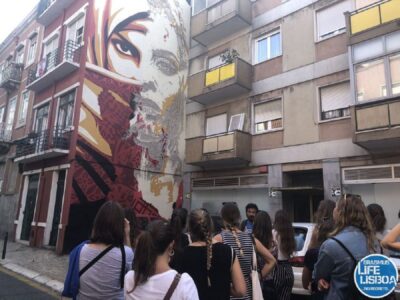
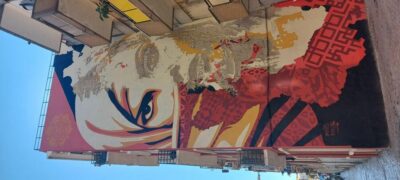
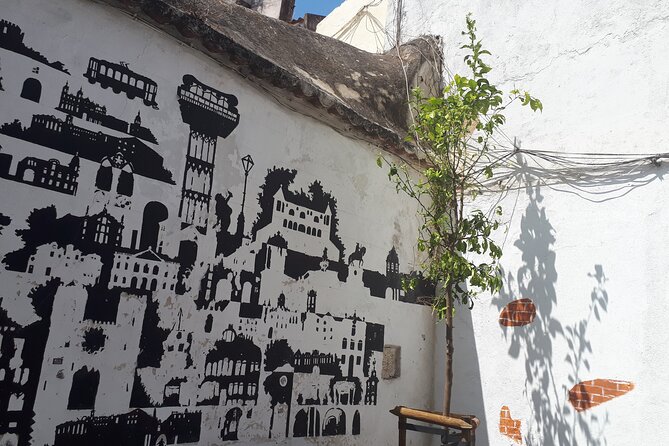
Do not expect every stop to be a giant wall painting. One of the strengths of this tour is its range. The route includes murals, graffiti, street sculptures, and smaller works. The guide may also explain how artists use different materials and techniques, helping you distinguish styles rather than simply taking pictures.
These central districts can be busier than Mouraria or Graça. The tour is designed to avoid large crowds and groups, but you are still walking through working parts of Lisbon. Stay close to the guide and watch the pavement, especially when looking upward at a wall. Lisbon rewards looking up, but its paving can punish inattention.
Mouraria: where neighborhood and art meet
The Mouraria section lasts about 30 minutes. This district adds another layer to the walk because the guide discusses art alongside community and local identity.
The most useful part of this stop is the chance to see street art as something connected to residents, not just an attraction for people carrying cameras. The guide explains how a neighborhood’s culture and way of life can shape the work found there. That context helps you ask better questions: Who is the art for? What does the artist want to say? How does the community respond?
The tour also connects modern art with Portuguese history and culture. One participant found the discussion of Fado especially helpful, saying it added more understanding than a visit to the Fado Museum alone. That does not mean this is a Fado tour, but it suggests that the guide may use art and neighborhood life to explain cultural subjects beyond the painted walls.
Mouraria is also a good point to notice the difference between famous works and overlooked pieces. The guide’s value comes partly from knowing what to look for. You may pass a small image or unusual mark without a second glance on your own. With an explanation, it can become part of a larger story about the city.
Same corner of the country, a different pace:
- Lisbon: History, Stories and Lifestyle Walking Tour
★ 4.8 · 10,902 reviews - Lisbon: Sunset Boat Party Cruise with DJ and Open Bar
★ 4.5 · 10,378 reviews - Lisbon: Pena Palace, Sintra, Cabo da Roca, & Cascais Daytrip
★ 4.7 · 9,981 reviews - Lisbon: Oceanário de Lisboa Entrance Ticket
★ 4.6 · 9,943 reviews
Finishing in Graça after a hillier hour
The final stop is the Graça Historic District, with about one hour of guided walking. This is the longest section after Bairro Alto and the part most likely to test your legs.
Graça is known for steep streets and broad views across Lisbon. The route’s higher ground gives the walk a strong visual finish, with art appearing alongside old streets and changing city views. Participants often praise the final district for showing them parts of Lisbon they would not have visited during a typical central sightseeing route.
The hill is not a minor detail. People who are reasonably fit should manage the walk at a steady pace, but you should not book this as a low-effort activity. One participant compared the route to getting your gym steps in, and another specifically warned that hilly Lisbon makes fitness important.
The pace seems to be one of the tour’s better features. Guides have adjusted to the group and checked that the walking speed was comfortable. Still, a considerate pace does not remove the hills. Wear supportive shoes, bring water for yourself, and leave large bags at your accommodation.
The tour ends in Graça rather than returning to the starting point. This is practical for continuing your sightseeing, but you need to plan your next move. One participant appreciated help finding a tram option because Graça does not have a nearby metro stop. The guide may offer useful local advice, but hotel transport is not included.
The guides make or break the experience
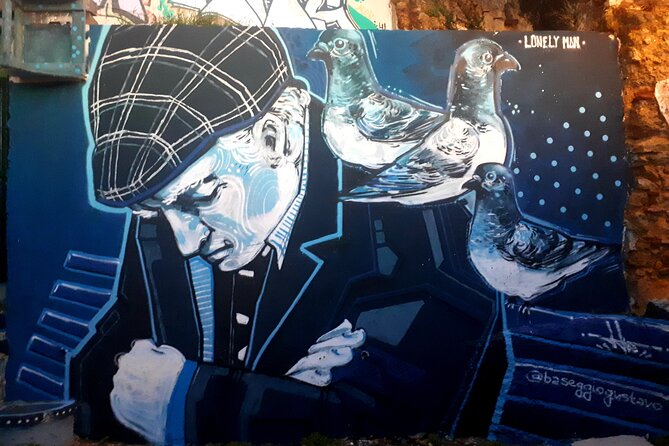
The strongest praise is aimed at the guides. Erica and Erika are repeatedly described as warm, highly prepared, and passionate about art and Lisbon. Maria is praised for linking street art with local history and for answering questions about neighborhoods. Laith receives similar approval for his personal connections within the art scene and his ability to make the tour feel informal.
The names vary because guide assignments can change. Some walks have been private or nearly private, while others have been small group experiences. You should not assume you will receive a particular guide or a private tour unless your booking specifically says so.
What you can reasonably expect is an English-speaking live guide who does more than point at walls. The best parts of the experience come from explanations of artistic methods, artist intentions, political and social themes, and the evolution of street art in Portugal.
I would book this early in a Lisbon visit if you enjoy learning through conversation. The walk can give you a useful framework for the rest of your stay. Afterward, you may notice works that were not part of the route and understand why they caught your eye.
What $40 buys you
At $40 per person, this is not the cheapest way to see Lisbon’s streets. You can walk through Bairro Alto, Chiado, Baixa, Mouraria, and Graça without paying anything. You can also photograph public art without a guide.
The difference is interpretation. For three hours, you receive a planned route, a live English guide, and explanations that connect separate works into a story about Lisbon. The tour also saves you the time of researching artists and finding pieces scattered across several districts.
The value is strongest for first-time visitors, art lovers, and people who prefer local context to a quick photo stop. It is also useful if you have already seen Lisbon’s major monuments and want a different angle on the city.
The value is weaker if you dislike walking, want guaranteed giant murals at every stop, or prefer to explore at your own pace. Street art changes. Pieces can be painted over, removed, or replaced, so the exact works you see may vary. One participant also noted that a raccoon image shown in promotional material was not part of the walk. Keep expectations flexible and focus on the guide’s explanation rather than a fixed checklist of pictures.
Practical advice before you book
Wear comfortable shoes with good grip. This is the single clearest preparation tip, because the route includes unpaved or uneven terrain and hilly streets.
Bring only what you need. Oversize luggage is not allowed, and a large suitcase would be awkward on narrow streets and steep pavements. Hotel pickup and drop-off are not included, so make your own way to the meeting point.
The activity is conducted in English. If you need another language, this tour is not a fit based on the available information.
Rain does not automatically ruin the experience. A participant enjoyed the walk in rainy conditions, while another found sunny but mild weather ideal. Still, outdoor art is easiest to appreciate in dry weather, so check the forecast and dress sensibly.
The tour is not suitable for wheelchair users. Anyone with limited mobility should also think carefully about the hills and uneven surfaces, even if they do not use a wheelchair.
Cancellation is flexible: you can cancel up to 24 hours in advance for a full refund. The reserve-now, pay-later option is useful if your Lisbon plans are still moving around.
Who should book this Lisbon street art tour?
Book it if you want to understand Lisbon through its walls. The tour suits people who enjoy art, city history, photography, architecture, and local culture in equal measure.
It is especially good for curious first-time visitors. The route crosses several districts, and the guide’s recommendations may help you plan the rest of your stay. It also suits people who think graffiti is not their thing. The walk presents street art as a broad form that includes murals, sculptures, lettering, political work, and small pieces with very different aims.
Families with older children may enjoy the visual side, but the three-hour walk and hills require stamina. It is a less sensible choice for anyone carrying heavy luggage, managing serious mobility limits, or wanting a relaxed seated activity.
Should you book it?
I would book this tour if you want more than a mural-hunting photo walk. The combination of five neighborhoods, strong guide commentary, and discussion of Portuguese culture gives the $40 price solid value.
Book it near the start of your visit so you can use your newly trained eye for the rest of Lisbon. Skip it if three hours of hills sounds unpleasant or if you need a fully accessible route. For most reasonably fit visitors who like art and want to see Lisbon beyond its famous viewpoints, this is a smart and unusually personal introduction.
FAQ
How long is the Lisbon Street Art Tour?
The tour lasts three hours.
How much does the tour cost?
The listed price is $40 per person.
Where does the tour start?
Meet the guide in front of the Interpress building at R. Luz Soriano 67.
Which Lisbon neighborhoods does the tour visit?
The route includes Bairro Alto, Chiado, Baixa de Lisboa, Mouraria, and the Graça Historic District.
What language is the tour offered in?
The live guided tour is offered in English.
Is hotel pickup included?
No. Hotel pickup and drop-off are not included.
What should I bring?
Bring comfortable shoes. You should be prepared for unpaved or uneven terrain and hilly streets.
Is the tour wheelchair accessible?
No. The tour is not suitable for wheelchair users.
Can I cancel the booking?
Yes. You can cancel up to 24 hours in advance for a full refund. You can also reserve now and pay later.
Recently added in Lisbon
- Lisbon Cinematic Photoshoot with Top-Rated Photographer★ 5.0 · 76 reviews
- City Centre Run in Lisbon★ 5.0 · 164 reviews
- City of Neighborhoods Tour 1H 30M Private Tour by Tuk Tuk★ 5.0 · 38 reviews
- Central Lisbon E-Bike Tour★ 5.0 · 168 reviews
- Hands on Portuguese Cooking Class in Lisbon★ 5.0 · 136 reviews
- Lisbon Sailing Catamaran Public Cruise with drinks★ 5.0 · 304 reviews
- Lisbon City Tour by Tuk Tuk★ 4.5 · 137 reviews
- Romantic Private Sailboat in Lisbon for couples★ 5.0 · 38 reviews