
REVIEW · COIMBRA TOURS
Conimbriga and The Roman Tour
Ancient Rome is closer than you think. This four-hour outing from Coimbra takes you to Conimbriga, Portugal’s grandest Roman site, with an added look at the aqueduct’s spring and two useful museums. I like the private format, which lets your group set the pace, and I especially like the way the guide explains the ruins instead of leaving you to puzzle over broken walls and faded stones.
The main drawback is that museum admissions are extra, and Museu PO.RO.S is closed on Mondays. Pickup is offered from many central Coimbra hotels, but some locations cost an additional €10 to €20, so check that detail before booking.
In This Review
- Key points at a glance
- Why Conimbriga deserves a half-day from Coimbra
- Alcabideque and the Roman water system
- PO.RO.S, the modern introduction to Roman Portugal
- Two hours among Conimbriga’s mosaics
- What the private format changes
- Is $102.80 a fair price?
- Timing, pickup, and practical planning
- Who will get the most from this tour?
- Should you book Conimbriga and The Roman Tour?
- FAQ
- How long does Conimbriga and The Roman Tour last?
- Where does the tour start and finish?
- Is hotel pickup available?
- Is Museu PO.RO.S open every day?
- Are museum entrance fees included?
- What happens if bad weather cancels the tour?
Key points at a glance
- See the aqueduct at Alcabideque: The tour begins at the spring and waterworks that once supplied Conimbriga.
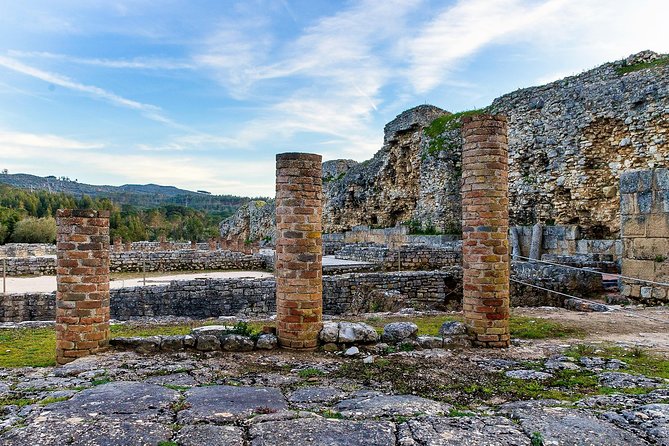
- Walk among superb mosaics: Conimbriga’s villas, fountains, baths, and streets are unusually rewarding for anyone interested in Roman life.
- Benefit from a private guide: Your group alone takes part, with a maximum of 10 people and room to adjust the pace.
- Add two museums to the ruins: PO.RO.S explains Roman Portugal through multimedia displays, while the Monographic Museum displays objects from Conimbriga.
- Allow for extra costs: Museum tickets, food, drinks, and some hotel pickups are not included in the listed $102.80 price.
- Check the day carefully: PO.RO.S closes on Mondays, and the tour operates outdoors in all weather unless poor conditions force a cancellation.
Why Conimbriga deserves a half-day from Coimbra

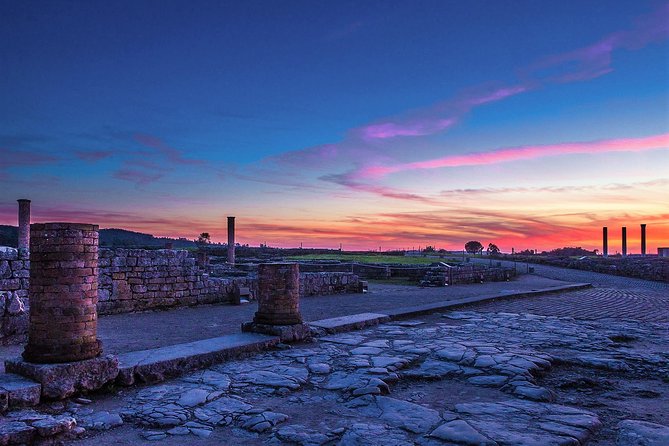
Coimbra has plenty to fill a day, but Conimbriga gives you a different view of Portugal. Here, Roman streets, houses, water systems, public buildings, and mosaics remain visible on a scale that makes the ancient town easy to picture.
The site was occupied before Roman rule, then taken by Roman troops in 139 BC. Under Emperor Augustus, the town grew into an important urban center in Lusitania, the Roman province that covered much of present-day Portugal.
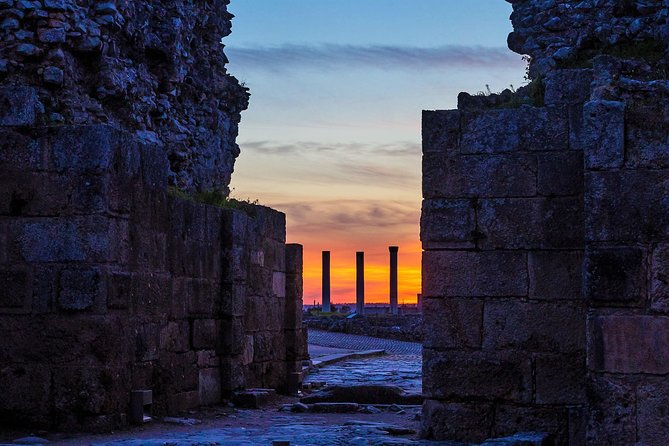
You can still make out the forum, amphitheatre, thermal baths, and a later three-nave basilica. The private houses are often the real stars. Their mosaic floors, fountains, courtyards, and traces of domestic decoration show that this was not simply a military outpost. It was a prosperous town with people who cared about comfort, display, and good plumbing.
I would not treat this as a quick photo stop. The grounds are larger than many first-time visitors expect, and the remains make more sense when someone points out how each part worked. A guide can show you why a wall matters, how water moved through the town, and what a mosaic says about the owner’s taste.
A few more Coimbra options side by side
- Coimbra: Live Fado Show with Glass of Port Wine
★ 4.7 · 998 reviews - University of Coimbra guided tours without queue
★ 5.0 · 518 reviews - Guided tour of the University and city of Coimbra.
★ 5.0 · 377 reviews
Alcabideque and the Roman water system
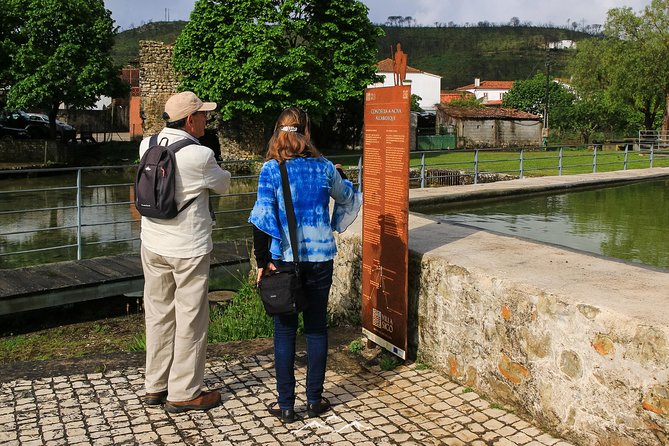
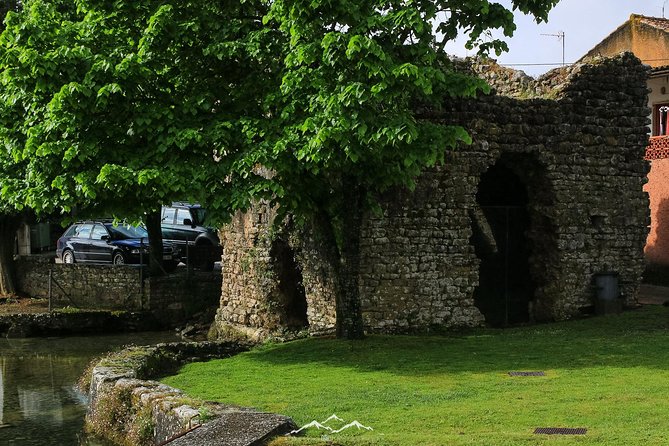
The first stop is Alcabideque, a small village connected to Conimbriga’s water supply. The spring’s original collecting basin is still used as the village pond, an everyday setting for an ancient piece of engineering.
Next to the pond are the remains of a castellum, a basin used to clean and manage the spring water before it entered the aqueduct. The water then traveled about 3.5 kilometers toward Conimbriga, partly along a supporting structure, before reaching a complex castellum aquae inside the town.
This is a short stop, about 30 minutes, and admission is free. It gives the ruins a useful beginning. Instead of seeing Conimbriga as a collection of villas and walls, you start by asking a basic Roman question: where did the water come from?
I like this part because it is modest and local. There is no grand entrance or polished monument competing for attention. You see an old water source beside a village pond, then connect it to the baths, fountains, and homes you will visit later.
The stop may be less exciting if you want only the largest ruins. Still, it adds real value, particularly if Roman engineering interests you. Bring shoes suitable for uneven ground, since the tour includes outdoor sites and not just museum floors.
PO.RO.S, the modern introduction to Roman Portugal
The Museu PO.RO.S, also called the Roman Portugal Museum in Sicó, is the newest museum on the route. It works as a multimedia and virtual introduction to the Roman legacy of the area, complementing the archaeological site at Conimbriga.
You spend about an hour here. That timing matters. The museum can give you a framework before you walk among the ruins, so names, dates, and building types do not arrive all at once. The displays are designed as a cultural project linked to the wider Roman route, rather than as a simple room of excavated objects.
The admission fee is not included. The museum is also closed on Mondays, an important detail since one booking was shortened when the stop was unavailable. If you choose a Monday, the tour description makes the closure clear, but you should still expect a different balance between the museums and the outdoor archaeology.
Some people may prefer to spend that extra hour at Conimbriga itself. I see PO.RO.S as most useful for visitors who like context before seeing a site. It is also a sensible choice if you want a more modern presentation than the ruins alone can provide.
Two hours among Conimbriga’s mosaics
The main archaeological site receives roughly two hours, and this is where the tour earns most of its appeal. Conimbriga has enough surviving detail to help you picture daily Roman life, especially in the larger houses.
The mosaics are a major attraction. Several rooms preserve patterned floors, and the fountains still working in the garden areas create one of the site’s most memorable details. You can also see the remains of baths and water channels, which connect directly to the aqueduct story from Alcabideque.
The ruins are not limited to private homes. Your guide can place the houses beside the forum, amphitheatre, thermal baths, and basilica, explaining how public, religious, and domestic life fitted together. The museum visit adds objects from years of excavation, including material linked to religion, architecture, manor houses, decoration, and activity at the forum.
I like the order of this experience. The spring introduces the water supply, PO.RO.S provides a modern explanation, and Conimbriga lets you see the evidence in place. The sequence is much more useful than arriving at the ruins without any preparation.
The site can be warm, and much of the experience is outdoors. Dress for the forecast, carry water, and expect to walk. The tour is described as suitable for most people, but individual mobility varies. Guides have adjusted the pace for people with walking or sight limitations, yet you should discuss your needs when arranging the tour rather than assume every part will be easy.
Same corner of the country, a different pace:
- Coimbra: Mondego River Kayaking Tour
★ 4.7 · 324 reviews - Coimbra: Guided tour with a local student
★ 5.0 · 170 reviews - Portugal dos Pequenitos entry ticket
★ 4.2 · 167 reviews - Joanina Library & Coimbra University | Private Former Alumni Tour
★ 5.0 · 135 reviews
What the private format changes
This is a private activity, not a standard coach excursion. Only your group participates, with a maximum of 10 people. That is a strong advantage at an archaeological site where you may want to stop over a mosaic, ask about a building, or move on when a display has given you enough.
Families can benefit from the flexible pace. One family of four effectively had the vehicle and guide to themselves, which allowed them to spend more time where they wished. The same format can help couples or small groups with mixed energy levels.
The guide can also add small observations along the way. One tour included an extra look at a local artist cutting mosaic stones, as well as a house built on Roman arches against the old Roman walls when the main site faced an unexpected strike. Those additions cannot be guaranteed, but they show the value of a local guide who can respond when plans change.
Alfredo is the guide most often named in the feedback, and he is also described as the company owner. His strengths are clear: strong command of Roman history, humor, patience, and an ability to explain why the remains matter. Ivone is also mentioned positively, particularly for stopping at points of interest seen during the drive. The company may use a multilingual guide, so your guide’s style and language ability can vary.
A small caution: not every person connects with the same guiding style. One booking described Alfredo as abrupt, while most of the comments praise his warmth and teaching. Another group expected hotel pickup but found that arrangement did not match what they had been told at booking. Confirm the pickup point and any added fee in writing.
Is $102.80 a fair price?
At $102.80 per person, this is not the cheapest way to reach Conimbriga. You are paying for a private vehicle, an air-conditioned ride, a driver-guide, the four-hour route, and the convenience of starting and ending in Coimbra or arranging an eligible hotel pickup.
The value improves if you are a small group. A private tour for two costs more per person than joining a large bus, but you gain control over the pace and can ask far more questions. For four people, the cost becomes easier to justify, especially if you would otherwise need to arrange transport and pay for a separate guide.
The price does not cover museum admissions, food, drinks, or souvenir photos without logos. One souvenir photo is included, but expectations around that item have caused confusion. A guide may offer to take photos, yet the exact delivery or format may not satisfy everyone. If the photo matters to you, clarify what is included before departure.
I consider the price reasonable for history-minded visitors who want explanation rather than transport alone. If you only need a ride to the ruins and prefer to read signs independently, a self-guided visit may cost less. If Conimbriga is a major reason for your stay in Coimbra, the guide adds meaning to details that are easy to miss.
Timing, pickup, and practical planning
The tour lasts about four hours and begins at Largo da Portagem in Coimbra, with the activity ending back at the meeting point. Pickup is available from most hotels in central Coimbra, Condeixa-a-Nova, and Penela when parking allows.
Other pickup locations may carry a €10 to €20 surcharge. This is worth checking before you pay, since the advertised price does not tell you every pickup situation.
The tour is offered in English, though a multilingual guide may operate the activity. It runs in all weather, so you should dress for outdoor conditions. If poor weather causes cancellation, you receive the choice of another date or a full refund.
You can cancel for a full refund up to 24 hours before the start time. Changes or cancellations inside that window are not accepted and are not refunded. Booking confirmation is normally immediate, but bookings made within seven days of departure may take up to 48 hours and remain subject to availability.
The experience is often booked well ahead, with an average lead time of 53 days. That does not mean you must plan two months out, but it is a useful warning for busy periods and for groups that want a particular date.
Who will get the most from this tour?
I would recommend it most strongly to:
- People who enjoy Roman archaeology but do not want to decode every ruin alone
- Families who need a flexible pace
- Small groups who value private transport
- Visitors staying in Coimbra without a rental car
- Anyone especially interested in mosaics, Roman water systems, baths, and domestic life
- Visitors who want both a modern museum and an outdoor archaeological site
You may want to skip it if you have little interest in ancient history, dislike walking on uneven ground, or want a full-day excursion with meals and many different stops. The route is focused. Its strength is depth at one important Roman site, not a long list of unrelated attractions.
Should you book Conimbriga and The Roman Tour?
Yes, if you want Conimbriga explained properly. The mosaics, fountains, baths, houses, aqueduct, and museums make this one of the strongest history outings from Coimbra, and the private format keeps the morning personal.
Book on a day other than Monday if you want the complete museum combination. Confirm hotel pickup, extra transport fees, museum admission costs, and the souvenir photo details before setting off.
I would choose this tour over a simple taxi ride when Roman Portugal is high on your list. The ruins are impressive on their own, but a good guide helps you see the town as a working place, not just a pretty field of stones.
FAQ
How long does Conimbriga and The Roman Tour last?
The tour lasts approximately four hours.
Where does the tour start and finish?
The listed meeting point is Largo da Portagem, 3000-337 Coimbra. The activity ends back at the meeting point.
Is hotel pickup available?
Pickup is offered from most hotels in central Coimbra, Condeixa-a-Nova, and Penela when parking is available. Other locations may require an additional fee of €10 to €20.
Is Museu PO.RO.S open every day?
No. Museu PO.RO.S is closed on Mondays. If you book on a Monday, that museum stop will not be available.
Are museum entrance fees included?
No. Admission to Museu PO.RO.S and the Monographic Museum of Conimbriga is not included in the tour price.
What happens if bad weather cancels the tour?
If poor weather causes cancellation, you are offered a different date or a full refund. The tour operates in all weather conditions, so dress appropriately for outdoor visits.
Recently added in Coimbra
- Time travel at the Convent of Christ Tomar★ 5.0 · 56 reviews
- Soft Canyoning, river Ceira, Góis, Serra da Lousa, Coimbra★ 5.0 · 48 reviews
- Lousa Mountain Private Tour★ 5.0 · 88 reviews
- Schist Villages at Lousa Mountain★ 5.0 · 127 reviews
- All of Tomar’s history and loads of fun.★ 5.0 · 39 reviews
- Discovering the charms and places of Coimbra★ 5.0 · 78 reviews
- University of Coimbra – more complete and private visit, ticket included★ 5.0 · 53 reviews
- Schist Villages of Lousã Mountain, half-day from Coimbra★ 5.0 · 42 reviews
Coimbra Tours, compared.

University of Coimbra guided tours without queue
Read our review →
Guided tour of the University and city of Coimbra.
Read our review →



Joanina Library & Coimbra University | Private Former Alumni Tour
Read our review →
Browse the lists this tour appears in