
REVIEW · WALKING TOURS
Lisbon: Starter Walking Tour to the highlights in German
Lisbon reveals itself on foot. I like the way this two-hour German tour links major sights with everyday city life, and I like the small-group limit of 12, which leaves room for questions. You will see the Santa Justa Lift, Carmo Convent, Bica, and the riverside market without spending half your day on a bus. The main drawback is the pace: steep streets, stairs, and a lot of ground make this a poor fit if walking is difficult.
The route also gives you useful orientation early in your stay. Guides explain Lisbon’s past, present, food spots, local customs, and current events, rather than simply pointing at handsome buildings. Recent feedback singles out Pedro for his friendly, open approach, while other German-speaking participants praised the amount of information packed into a short tour.
In This Review
- Key points at a glance
- Starting at Rossio Square
- Baixa and the planned heart of Lisbon
- Rossio Square and Lisbon’s public life
- Santa Justa Lift and Carmo Convent
- Chiado and Praça Luís de Camões
- Bica and the Elevador da Bica
- Views, tiles, and the walk toward the river
- Finishing at Time Out Market Lisboa
- What $33 buys you
- Who should book this Lisbon walk?
- Should you book it?
- FAQ
- How long does the Lisbon walking tour last?
- What language is the tour conducted in?
- Where does the tour begin?
- How will I recognize the guide?
- Where does the tour finish?
- What sights are included on the walking route?
- Are food, drinks, or hotel transfers included?
- Is the tour suitable for people with mobility impairments or wheelchair users?
Key points at a glance
- A compact route through three central districts: Walk from Rossio through Baixa, Chiado, and Bica, finishing near the Tagus River.
- German-language guiding: The live tour is conducted in German, a major benefit if you prefer history and local advice in your first language.
- Small groups of up to 12: The group size should make it easier to hear the guide and ask questions.
- A strong mix of famous and everyday Lisbon: You get the Santa Justa Lift and Carmo ruins alongside tiled buildings, viewpoints, streets, and local life.
- A useful first-day introduction: The guide offers suggestions on where to eat and what to see during the rest of your stay.
- Good value at $33: For two hours with a local guide and no transport between sights, the price is fair if you want context rather than just photographs.
Starting at Rossio Square
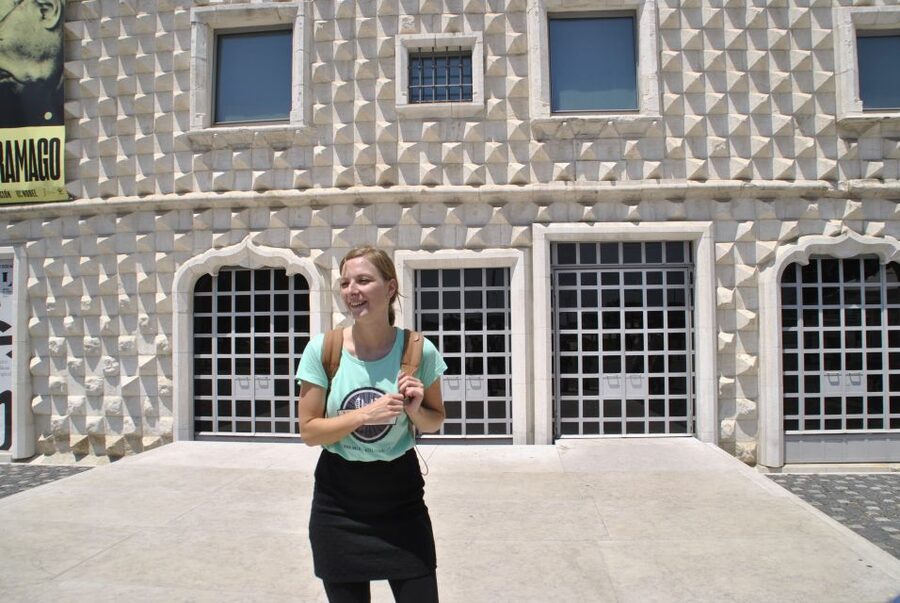
Your meeting point is the northern fountain in Rossio Square, also called Praça Dom Pedro IV. Look between the National Theater and the statue of the Royal figure. The guide will wear a mint-colored WALK ‘N’ ROLL T-shirt or carry a matching mint burlap bag.
This detail matters. Rossio is a busy central square, and a clear meeting marker saves you from circling the pavement looking for a group. Arrive ready to walk, rather than expecting hotel pickup. Pickup and drop-off are not included.
Rossio is also a sensible place to begin. It gives you a quick introduction to Lisbon’s central layout before the route moves into older streets and steeper districts. From here, the guide leads you into Baixa, the lower city and one of the easiest parts of Lisbon to walk.
More Walking Tours in Lisbon
- Lisbon: History, Stories and Lifestyle Walking Tour
★ 4.8 · 10,902 reviews - Best of Lisbon Small-Group Guided Walking Tour
★ 5.0 · 4,869 reviews - Lisbon: Food and Wine Small Group Walking Tour
★ 4.9 · 4,082 reviews
Baixa and the planned heart of Lisbon
Baixa de Lisboa is laid out in a regular grid, a sharp contrast to the winding lanes found elsewhere in the city. Your guide uses this area to explain how Lisbon developed and how the center functions today.
I find this kind of opening valuable because it helps you read the city. Instead of seeing isolated squares and grand facades, you begin to understand how the lower center connects Rossio with the river. The tour is not just a parade of photo stops. It gives you a basic map in your head.
Look closely at the architecture as you walk. Lisbon is famous for azulejos, the painted wall tiles that decorate many buildings. You will also see Art Nouveau details along the way. The guide can help you notice the small touches that are easy to miss when you are focused on traffic, hills, and directions.
Baixa is relatively straightforward underfoot, but the tour later becomes more demanding. If you have just arrived after a long journey, wear supportive shoes from the start. Lisbon’s polished stone streets can feel tiring, particularly when the route turns uphill.
Rossio Square and Lisbon’s public life
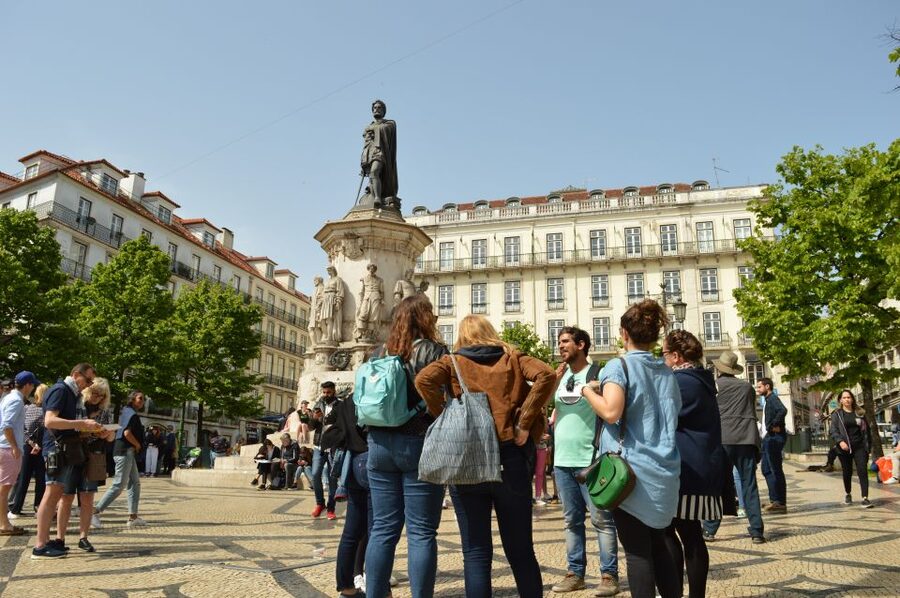
The tour returns to Rossio as a formal stop, allowing the guide to add more detail about the square and its role in the city. This is a good place to pause and connect the history of the center with present-day Lisbon.
A guide can add value here by explaining how people use the square, not just what the buildings are called. The experience is designed to cover culture, current events, and daily life, so you should expect more than dates and architectural labels.
The feedback about the tour repeatedly highlights its information-packed format. That is useful if you want a quick introduction, though it also means you should ask questions when something interests you. Two hours passes quickly, and a short tour cannot cover every subject in equal depth.
Santa Justa Lift and Carmo Convent
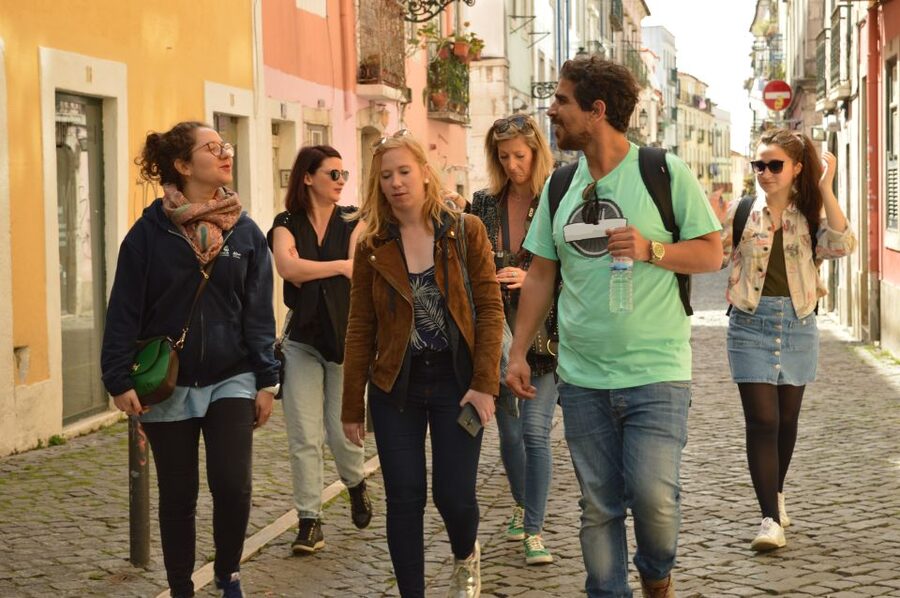
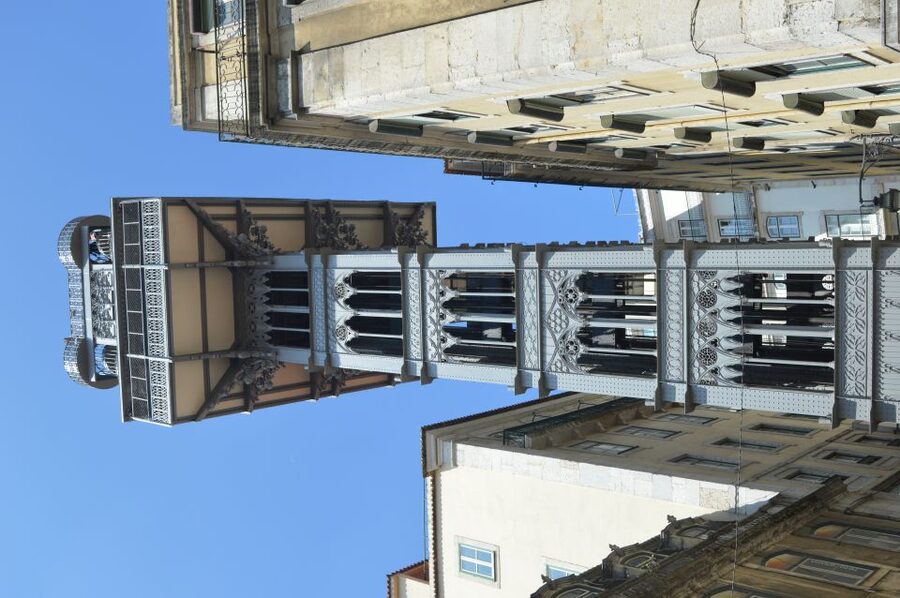
The Santa Justa Lift is one of Lisbon’s most recognizable sights. Its iron structure rises above the Baixa streets and offers a striking example of the city’s older transport and architectural design.
On this tour, the lift is a guided sight rather than a guaranteed ride. That distinction is important. The experience includes a walking tour and a local guide, but it does not list lift tickets or rides as an included feature. You can admire the structure and learn about its place in Lisbon, but do not book this tour expecting a separate attraction entry.
Nearby, the Carmo Convent Ruins offer a more solemn stop. The roofless remains give the center a powerful sense of age and change. Your guide explains the site as part of Lisbon’s story, helping you connect the ruins with the city’s past instead of treating them as a quick backdrop.
These two stops work well together. The lift is engineered, vertical, and closely tied to the modern city center. The convent ruins are open, weathered, and visibly marked by history. You get variety without needing a long transfer.
Same corner of the country, a different pace:
- Lisbon City Center Tour – The Unmissable Lisbon
★ 5.0 · 22,234 reviews - Lisbon: Sintra, Pena, Regaleira, Cabo da Roca & Cascais
★ 4.7 · 19,656 reviews - Lisbon: Jerónimos Monastery Entrance Ticket
★ 4.1 · 14,164 reviews - Lisbon: Sunset Boat Party Cruise with DJ and Open Bar
★ 4.5 · 10,378 reviews
Chiado and Praça Luís de Camões
From the lower center, the route moves into Chiado. This district brings a different mood, with elegant streets, shops, cafes, tiled facades, and Art Nouveau decoration.
The walk through Chiado is especially useful for first-time visitors because it links sightseeing with practical orientation. You are not only learning what a building is. You are also seeing an area where you may return for meals, browsing, or an evening walk.
The tour continues to Praça Luís de Camões, an important square between Chiado and the Bica area. It works as a transition point between the more orderly lower streets and Lisbon’s hillier neighborhoods.
Expect the guide to discuss Portuguese culture and modern life along with the buildings. That balance is one of the strongest reasons to choose a local walking tour. You can find facts about Lisbon online, but a live guide can respond to your questions and point out what matters locally.
The German language is another practical advantage. If German is your preferred language for complex subjects, you are less likely to miss a detail about history, politics, or local customs. The guide also has a chance to explain small cultural points in a natural conversation.
Bica and the Elevador da Bica
The route then reaches Bica and the famous Elevador da Bica. This cable car is one of Lisbon’s most recognizable street scenes, running along a steep slope between the city’s lower streets and higher ground.
The stop is visually appealing, but it also shows you why Lisbon requires sensible footwear. Bica is associated with slopes, and this section may be more tiring than the Baixa portion. A moderate level of fitness is required, and you should be comfortable walking for the full two hours and climbing some stairs.
Again, the tour does not promise a ride on the cable car. The listed experience is a guided walk, so expect to see and learn about the Elevador da Bica rather than automatically board it. If riding it is a priority, you will need to treat that as a separate plan.
Rain can affect this section. If the streets become slippery, the final 30 minutes may be changed to avoid accidents on slopes. That is a sensible safety measure, but it means the exact finish may vary in wet weather.
Views, tiles, and the walk toward the river
The experience includes a special viewpoint, though the supplied details do not name it. You can expect a chance to pause for city views as the route moves through the central districts.
This is where the walking format earns its keep. Lisbon’s hills make its streets feel layered, with rooftops, facades, river glimpses, and viewpoints appearing at different heights. A guide can show you how the neighborhoods connect, something that is harder to grasp when you move only by taxi or public transport.
Keep an eye out for azulejos during this part of the route. The tiles are not merely decoration. They are one of the visual signatures of Portuguese buildings, and a guide can help you spot differences in pattern, placement, and use.
The walk eventually heads toward Mercado da Ribeira beside the Tagus River. The route changes from historic streets to a modern market hall, giving the tour a useful present-day finish. You see how Lisbon’s food culture and public spaces fit into the older center.
Finishing at Time Out Market Lisboa
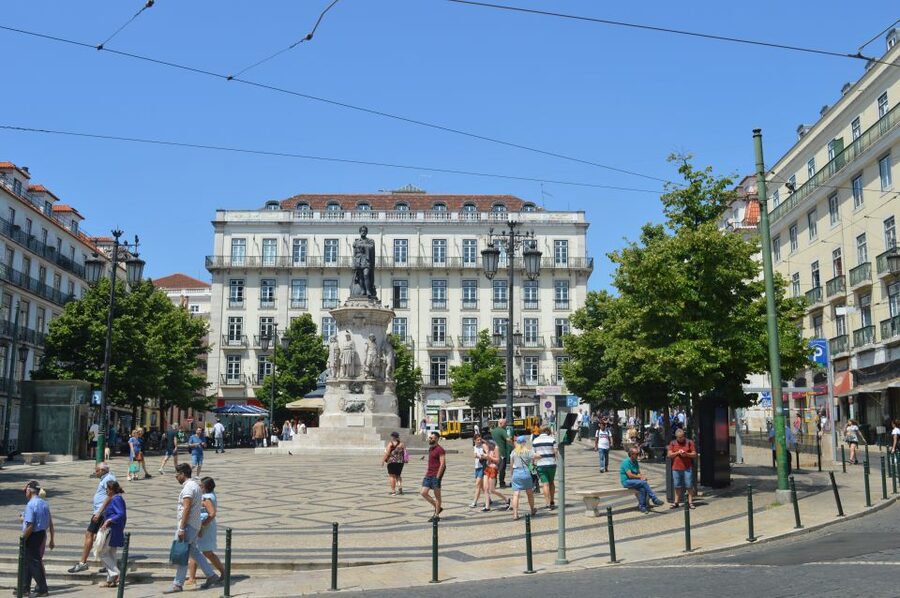
The tour ends at Time Out Market Lisboa, the modern market hall also known as Mercado da Ribeira. Food and drinks are not included, but this is a convenient place to continue on your own.
The finish is practical because you can use the market for a meal or a look around after the guide leaves. Do not assume the tour includes a tasting or reserved food stop. The guide can offer dining tips, but anything you order is at your own expense.
I like this ending because it leaves you with options. You can eat, continue toward the Tagus, or use the central location to plan your next stop. It also gives the tour a clean contrast: Rossio and Baixa introduce the historic center, while the market shows a more current side of Lisbon.
What $33 buys you
At $33 per person, this is priced as an orientation tour, not an attraction package. You are paying for two hours of walking, a local German-speaking guide, route planning, and the chance to ask questions in a group capped at 12 people.
That is a fair deal if you value context. The tour does not include food, drinks, admission fees, transport, or hotel pickup. You should judge the price against the guide’s input, not against the number of tickets included.
The small group improves the value. A 12-person maximum is still a group, but it is far more manageable than a large city walk. You are more likely to hear the guide clearly and get a question answered. If you want an even more personal experience, a private group is available for you and your companions.
The strongest praise focuses on the guide’s manner and content. Pedro is described as friendly, well informed, and open to questions and interesting conversations about Lisbon. Other German-speaking participants praised the tour as informative, interesting, and lively, with both history and the present day explained. That combination is exactly what you want from a first look at a city.
Who should book this Lisbon walk?
I would choose this tour if you are visiting Lisbon for the first time, prefer German guiding, and want to get oriented before exploring alone. It suits couples, friends, and independent visitors who want practical suggestions about restaurants and future sightseeing without committing to a full-day activity.
It is also a good choice if you want famous landmarks in a short block of time. In two hours, you cover Baixa, Rossio, Chiado, Bica, the Santa Justa Lift, Carmo Convent, Praça Luís de Camões, the Elevador da Bica, and Mercado da Ribeira.
You should think twice if you dislike hills or need frequent rests. The tour requires continuous walking and some stairs, and it is not suitable for wheelchair users or people with mobility impairments. Baby strollers and luggage or large bags are not allowed, so arrange care for those items before meeting the guide.
Bring comfortable shoes, water, and sunscreen. Lisbon’s sunshine can make a short city walk feel warmer than expected. If rain is forecast, leave room in your plans for the final section to change.
Cancellation is flexible: you can cancel up to 24 hours in advance for a full refund. You can also reserve now and pay later, which helps if your schedule is still shifting.
Should you book it?
Book this walk if you want a German-language introduction to Lisbon that mixes landmarks, local life, architecture, and practical advice. The $33 price is reasonable for a two-hour small-group experience, especially when you consider the range of central neighborhoods covered.
Skip it if you want entrance tickets, a food tour, a ride on the Santa Justa Lift or Bica cable car, or a slow pace with little uphill walking. For everyone else, it is a sensible first-day choice, particularly if you want to leave with a clearer map of Lisbon and a short list of places to explore next.
FAQ
How long does the Lisbon walking tour last?
The tour lasts two hours.
What language is the tour conducted in?
The live tour guide speaks German.
Where does the tour begin?
It begins at the northern fountain in Rossio Square, also called Praça Dom Pedro IV, between the National Theater and the Royal Statue.
How will I recognize the guide?
The guide will wear a mint-colored WALK ‘N’ ROLL T-shirt or carry a mint-colored WALK ‘N’ ROLL burlap bag.
Where does the tour finish?
The tour finishes at Time Out Market Lisboa, also known as Mercado da Ribeira.
What sights are included on the walking route?
The route includes Baixa de Lisboa, Rossio Square, the Santa Justa Lift, Carmo Convent, Chiado, Praça Luís de Camões, the Elevador da Bica, and Mercado da Ribeira.
Are food, drinks, or hotel transfers included?
No. The tour includes the walking tour and local guide only. Food, drinks, hotel pickup, and hotel drop-off are not included.
Is the tour suitable for people with mobility impairments or wheelchair users?
No. A moderate level of fitness is required, including walking for the full duration and climbing some stairs. The tour is not suitable for people with mobility impairments or wheelchair users.
Recently added in Lisbon
- Lisbon Cinematic Photoshoot with Top-Rated Photographer★ 5.0 · 76 reviews
- City Centre Run in Lisbon★ 5.0 · 164 reviews
- City of Neighborhoods Tour 1H 30M Private Tour by Tuk Tuk★ 5.0 · 38 reviews
- Central Lisbon E-Bike Tour★ 5.0 · 168 reviews
- Hands on Portuguese Cooking Class in Lisbon★ 5.0 · 136 reviews
- Lisbon Sailing Catamaran Public Cruise with drinks★ 5.0 · 304 reviews
- Lisbon City Tour by Tuk Tuk★ 4.5 · 137 reviews
- Romantic Private Sailboat in Lisbon for couples★ 5.0 · 38 reviews
Walking Tours, compared.


Best of Lisbon Small-Group Guided Walking Tour
Read our review →
Porto Walking Tour, Lello Bookshop, River Cruise and Cable Car
Read our review →

Best of Lisbon Walking Tour: Rossio, Chiado & Alfama
Read our review →
Experience Porto’s Charm: 3-Hour Guided Walking Tour
Read our review →
Enjoy a Guided Levada Walk in the Rabaçal Valley
Read our review →Browse the lists this tour appears in