
REVIEW · MUSEUMS
Lisbon: National Tile Museum Entry Ticket
Tiles tell Lisbon’s story. At the National Tile Museum, you’ll see Portuguese azulejos from the 15th century to today, displayed inside the former Madre de Deus Convent. I especially like the chronological route and the chance to see the convent’s church, cloister, chapel, and decorated rooms along with the tiles. The main drawback is practical: the museum closes from 1:00 to 2:00 pm, and parts of the building may feel warm because ventilation is limited.
I also like the price. At $11 per person, this is an unusually good-value cultural stop, especially if you give it 90 minutes to two hours rather than rushing through. You’ll need to enter at the main entrance, show your ticket, and remember that the ticket information says it is not a skip-the-line entry ticket.
In This Review
- Key points to know before you go
- Entering the former Madre de Deus Convent
- Starting with how azulejos are made
- Following Portuguese tile work from the 15th century onward
- The church, cloister, and convent rooms
- The Chapel of Saint Anthony and its Baroque decoration
- The large Lisbon city display
- How long the visit takes
- The cafe and garden break
- Is the $11 ticket good value?
- Who will enjoy this museum most?
- Should you book the National Tile Museum ticket?
- FAQ
- How much does entry to the National Tile Museum cost?
- How long is the ticket valid?
- Is this a skip-the-line ticket?
- Where do I enter the museum?
- What are the museum’s opening hours?
- When is the museum closed?
- Is the museum wheelchair accessible?
- What does the ticket include?
- Is the ticket refundable?
- What should I bring?
Key points to know before you go
- 15th-century beginnings: Follow Portuguese tile-making from early examples through later decorative styles and contemporary work.
- A museum inside a convent: The former Madre de Deus Convent adds a church, cloister, sacristy, high choir, and Baroque chapel to the visit.
- Allow 90 minutes to two hours: The collection is larger than many people expect, with big displays and several rooms worth taking slowly.
- The top-floor Lisbon display: A large Lisbon city scene is one of the most memorable pieces in the museum.
- A useful rainy-day stop: Much of the experience is indoors, making it a good choice when Lisbon’s weather turns wet.
- Plan around the hours: It opens Tuesday through Sunday from 10:00 am to 1:00 pm and 2:00 to 6:00 pm, with last entry at 5:30 pm.
Entering the former Madre de Deus Convent
The National Tile Museum is not housed in a plain modern gallery. It occupies the former Convent of Madre de Deus, founded by Queen D. Leonor in 1509. That setting changes the mood from the moment you arrive. You are not simply walking from white gallery to white gallery. You are moving through a religious complex shaped by several building campaigns and centuries of decoration.
Enter at the main entrance and show your ticket on arrival. The ticket is valid for one day, but it is not a timed guided tour. Check the available starting times when booking, then plan around the museum’s split opening schedule.
The museum is closed on Mondays, January 1, Easter Sunday, May 1, June 13, and December 25. Tuesday through Sunday, you can enter from 10:00 am to 1:00 pm or from 2:00 to 6:00 pm. The last entry is at 5:30 pm, so do not arrive at closing time expecting a full visit.
More museum visits in Lisbon:
- Lisbon: Luz Stadium Tour & SL Benfica Museum Ticket w/Scarf
★ 4.7 · 3,264 reviews - Lisbon: Banksy Museum Permanent Exhibition Entry Ticket
★ 4.7 · 506 reviews - Lisbon: Belem, Jeronimos Monastery, and Coach Museum Tour
★ 4.8 · 478 reviews
Starting with how azulejos are made
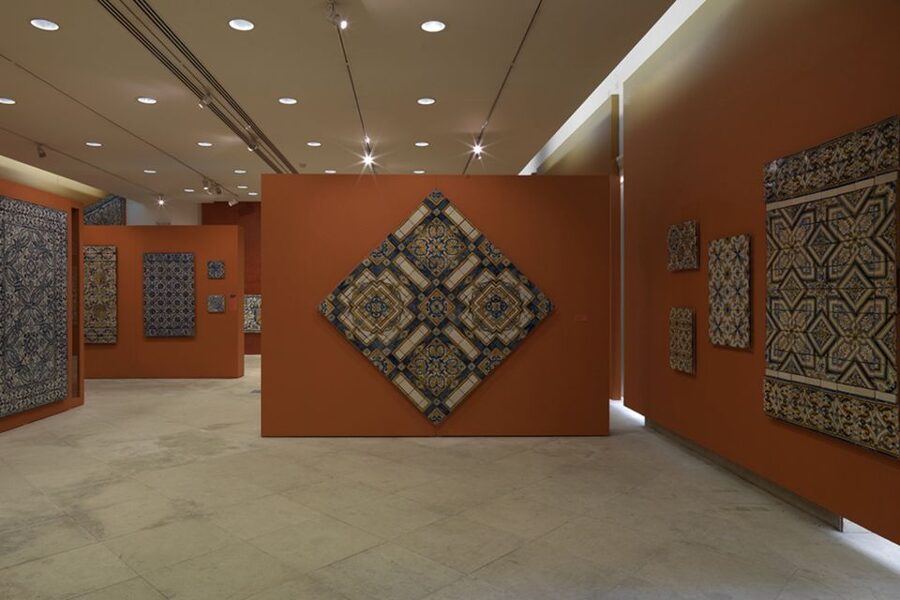
The permanent exhibition begins with the materials and techniques used to make tiles. This is a smart way to start. If you go straight to the grand blue-and-white panels, it is easy to admire the surface without noticing how much work went into producing it.
The opening section gives you a basic framework for understanding decorative ceramic tiles, or azulejos. You can then look at later displays with a better eye for color, pattern, technique, and changes in style.
I would not expect a long practical workshop or a hands-on demonstration. The museum introduces the subject through its collection and displays. If you want a detailed account of every tool and stage of production, you may find the explanation fairly brief. Still, it gives you enough groundwork to make the rest of the visit more rewarding.
This first section is also useful for families. A tile museum might sound narrow to teenagers or anyone who thinks the visit will mean staring at rows of small squares. The clear progression from technique to finished work helps keep the subject moving.
Following Portuguese tile work from the 15th century onward
After the introduction, the exhibition follows a chronological order. The collection begins with tiles dating from the second half of the 15th century and continues to the present day.
That order is one of the museum’s strongest features. Instead of presenting decorative pieces as unrelated objects, it lets you watch Portuguese tile work change over time. You see different styles placed within a larger artistic story, from early examples to later decorative schemes and contemporary pieces.
The chronological structure also makes the museum easy to visit at your own pace. You can read closely where the subject catches your attention, then keep moving without losing the overall sequence. Explanations connected to the different monarchies are reported to be easy to follow, which helps place the work within Portugal’s changing periods of rule.
The collection is not limited to wall tiles. The museum also includes ceramics, porcelain, and faience dating from the 17th to the 21st century. That wider material gives you a better sense of how ceramic decoration developed beyond the familiar blue-and-white azulejo.
The church, cloister, and convent rooms
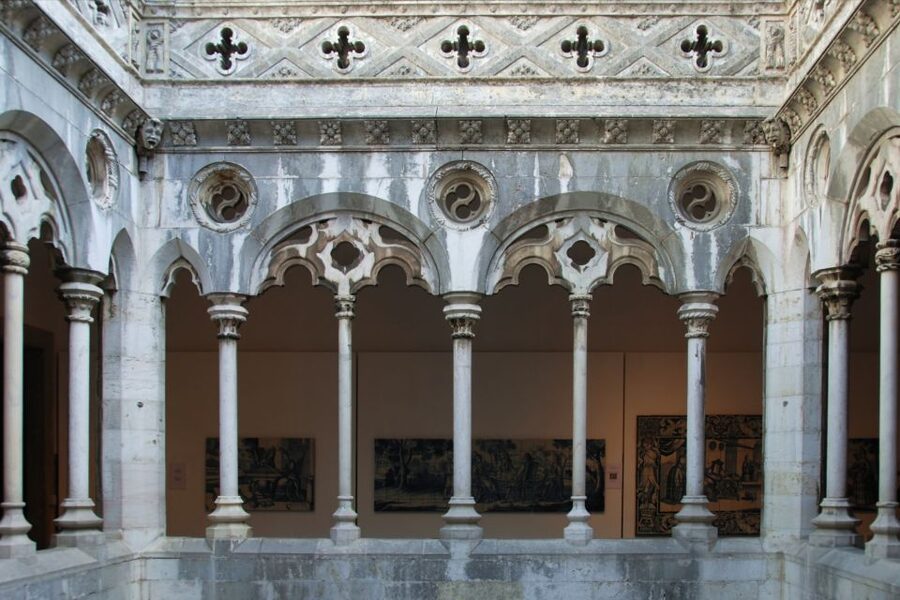
The building itself can be as memorable as the collection. The 16th-century Mannerist cloister gives the museum a quiet architectural center, while the church is decorated with notable paintings and tile panels.
Make time for the church rather than treating it as a hallway between galleries. Its decoration shows how tiles worked as part of a larger religious interior. They were not only household decoration or colorful fragments. They could cover major architectural surfaces and help create a complete visual setting.
The sacristy adds another change of pace. Look for the Brazilian wood display cabinet and the carved wooden frames holding paintings. The combination of wood, paint, and tile is important because it shows how the convent’s interiors were designed as whole rooms rather than collections of isolated objects.
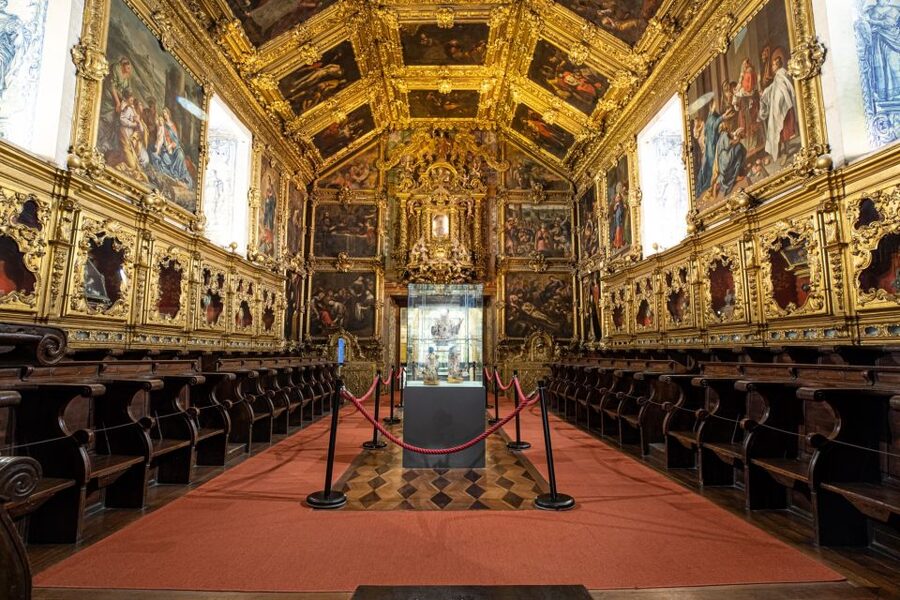
The high choir is another strong stop, with carved giltwood decoration. If you enjoy historic interiors, these rooms may be the part of the museum you remember most clearly. If your main interest is modern tile design, you can move through them more quickly, but skipping them would leave out much of what makes this museum special.
A few more Lisbon options side by side
- Lisbon City Center Tour – The Unmissable Lisbon
★ 5.0 · 22,234 reviews - Lisbon: Sintra, Pena, Regaleira, Cabo da Roca & Cascais
★ 4.7 · 19,656 reviews - Lisbon: Jerónimos Monastery Entrance Ticket
★ 4.1 · 14,164 reviews - Lisbon: History, Stories and Lifestyle Walking Tour
★ 4.8 · 10,902 reviews
The Chapel of Saint Anthony and its Baroque decoration
The Chapel of Saint Anthony brings another visual shift. It has an 18th-century Baroque decoration and includes a notable number of canvases by the painter André Gonçalves.
This chapel helps explain why the museum feels larger and more elaborate than its modest ticket price suggests. You are not paying only to see tile panels arranged on gallery walls. The former convent contains rooms where painting, carved wood, religious architecture, and tile decoration work together.
Some displays in the religious spaces may feel unusual or unexpected. That is part of the character of the place, but it also means this is not a tightly edited modern art show. The museum presents a historic religious setting with all its layers, and those layers may appeal more to some people than others.
You should allow time to look upward. One review specifically praised a room with paintings across the ceiling, and the building rewards attention above eye level. The best details are not always placed directly in front of you.
The large Lisbon city display
The Lisbon city display on the top floor is one of the clearest highlights. Large tile scenes can be more powerful than individual pieces because they show how azulejos function at full architectural scale.
Take your time here. A city scene made from tiles is not just a decorative panel. It can preserve an image of Lisbon and show how the city was pictured through Portuguese ceramic art. The display also gives you a welcome change after smaller examples and explanatory sections.
This is a good place to use your camera, provided photography is allowed in the area. Bring a camera if you want to record patterns, room arrangements, or details for later reference. A phone works fine, but the scale of the large displays is easier to appreciate in person than in a quick photograph.
How long the visit takes
I would set aside about 90 minutes at a minimum. Two hours is better if you enjoy art, historic interiors, or reading display information.
A fast visit can cover the main chronological collection and the most important convent rooms. A slower visit gives you time for the making techniques, ceramics and porcelain, the cloister, church, sacristy, high choir, Chapel of Saint Anthony, and top-floor Lisbon display.
The museum is also a sensible rainy-day choice. One person described it as a must-see when the weather is poor, and most of the experience takes place indoors. On hot days, however, comfort may be less predictable. Some parts of the museum have limited ventilation, so wear light, comfortable clothing and bring water.
Comfortable shoes matter too. Even without a long outdoor route, the visit involves moving through a substantial historic building. The garden is also worth seeing, and seating in the garden area of the cafe gives you a pleasant pause after the galleries.
The cafe and garden break
The cafe is a useful part of the visit, not just an afterthought. It has garden seating and is described as a reasonable place for a bite or coffee.
If you arrive hungry, you might prefer to stop at the cafe before entering the museum. Lines can build there, and eating first may help you give the collection your full attention. If you are visiting with children or teenagers, the cafe and garden provide an easy break between the more formal museum rooms.
Do not mistake the cafe for part of the ticket inclusion. The $11 admission covers entry to the National Tile Museum only. Food and drinks are separate.
There is also a gift shop. The combination of cafe, garden, and shop makes the former convent feel like a place where you can spend a relaxed couple of hours rather than a quick in-and-out attraction.
Is the $11 ticket good value?
Yes, for most people interested in Lisbon’s art and architecture. At $11, you get access to a collection covering several centuries, plus a historic convent with major decorative rooms. The price is especially fair if you stay for 90 minutes or more.
The value is less obvious if you want only a quick look at colorful tiles. This is not a single spectacular room with an instant payoff. The museum asks you to follow its sequence and give attention to the building as well as the objects.
Because the ticket is non-refundable, check your day carefully before buying. Confirm the opening hours, avoid the listed closure dates, and allow for the 1:00 to 2:00 pm shutdown. The one-day validity gives you some flexibility, but you still need to visit during the operating hours.
The ticket information also says this is not a skip-the-line ticket. Some online comments describe entering quickly with advance tickets, but you should not purchase this option expecting guaranteed priority access. Treat it as an admission ticket and plan accordingly.
Who will enjoy this museum most?
I recommend it to anyone who has noticed Lisbon’s tiled facades and wondered how they became such a defining part of Portuguese design. The museum gives you context for the patterns and surfaces you see around the city.
Art lovers will find plenty to study, especially in the large scenes, religious interiors, and changing styles. Architecture fans may enjoy the convent rooms as much as the collection. Families can make it work, particularly if children respond to visual patterns, large scenes, and unusual historic buildings.
It is also a good choice for a flexible afternoon. You do not need a guide or a fixed group schedule, and the chronological path makes it possible to decide how deeply you want to read and look.
I would be more cautious about recommending it to someone who dislikes museums built around decorative objects. The collection is broad, but tile remains the central subject. The church and convent spaces add variety, yet you will still spend much of your time examining ceramic work.
The museum is wheelchair accessible, which makes it a practical option for many people. Bring a passport or ID card, comfortable shoes, water, a camera, and comfortable clothes. An audio tour can add useful explanation, but it requires downloading an app and using your own headphones.
Should you book the National Tile Museum ticket?
Book it if you want more than pretty surfaces. The National Tile Museum explains how Portuguese tile work developed, then places it inside a former convent filled with carved wood, paintings, chapels, cloisters, and large decorative panels.
The strongest reasons to go are the chronological collection, the top-floor Lisbon scene, and the chance to see the original religious setting around the art. At $11, it is a strong value for a 90-minute to two-hour visit.
Skip it only if your Lisbon schedule is extremely tight or if decorative art is not your interest. Otherwise, choose a Tuesday to Sunday time that avoids the midday closure, wear comfortable shoes, and leave room for the cafe and garden afterward.
FAQ
How much does entry to the National Tile Museum cost?
The entry ticket costs $11 per person.
How long is the ticket valid?
The ticket is valid for one day. You should check availability for the available starting times.
Is this a skip-the-line ticket?
No. The ticket information states that it is not a skip-the-line entry ticket.
Where do I enter the museum?
Enter through the National Tile Museum’s main entrance and show your ticket when you arrive.
What are the museum’s opening hours?
The museum is open Tuesday through Sunday from 10:00 am to 1:00 pm and from 2:00 to 6:00 pm. Last entry is at 5:30 pm.
When is the museum closed?
It is closed on Mondays, January 1, Easter Sunday, May 1, June 13, and December 25.
Is the museum wheelchair accessible?
Yes, the activity information states that the museum is wheelchair accessible.
What does the ticket include?
The ticket includes entry to the National Tile Museum.
Is the ticket refundable?
No. The activity has a non-refundable cancellation policy.
What should I bring?
Bring a passport or ID card, comfortable shoes, a camera, water, and comfortable clothing. An audio tour may require your own headphones and an app download.
Recently added in Lisbon
- Lisbon Cinematic Photoshoot with Top-Rated Photographer★ 5.0 · 76 reviews
- City Centre Run in Lisbon★ 5.0 · 164 reviews
- City of Neighborhoods Tour 1H 30M Private Tour by Tuk Tuk★ 5.0 · 38 reviews
- Central Lisbon E-Bike Tour★ 5.0 · 168 reviews
- Hands on Portuguese Cooking Class in Lisbon★ 5.0 · 136 reviews
- Lisbon Sailing Catamaran Public Cruise with drinks★ 5.0 · 304 reviews
- Lisbon City Tour by Tuk Tuk★ 4.5 · 137 reviews
- Romantic Private Sailboat in Lisbon for couples★ 5.0 · 38 reviews
Museums, compared.

Luz Stadium Tour & SL Benfica Museum Ticket w/Scarf
Read our review →

Banksy Museum Permanent Exhibition Entry Ticket
Read our review →
Belem, Jeronimos Monastery, and Coach Museum Tour
Read our review →

Entry Ticket at WOW – The Wine Experience Museum
Read our review →
Lisbon SL Benfica Stadium & Museum Tour with Scarf
Read our review →Browse the lists this tour appears in