
REVIEW · MUSEUMS
Lisbon: Belem, Jeronimos Monastery, and Coach Museum Tour
Belém rewards curious visitors. This 3.5-hour walking tour brings together Jerónimos Monastery, the Coach Museum, a warm Pastel de Belém, Belém Tower, and the Monument to the Discoveries. The route gives you both Lisbon’s grand national story and a few local pleasures along the way.
I especially like the skip-the-line monastery entry, which can save a long wait, and the surprising Coach Museum, a stop many people might otherwise miss. The break for coffee, beer, tea, and a Pastel de Nata also gives your feet a rest. The main consideration is that the morning packs in several stops, so you should expect a fair amount of walking and keep your shoes comfortable.
In This Review
- Five things to know before you book
- Why skip-the-line entry changes the morning
- Jerónimos Monastery and its remarkable cloisters
- A pastry break at Pastéis de Belém
- The Coach Museum, Belém’s unexpected highlight
- Belém Tower from a black cab
- The Monument to the Discoveries and the final view
- How much walking and time should you expect?
- What the $94 price includes
- The guides make the biggest difference
- Who should book this Belém tour?
- Should you book it?
- FAQ
- How long does the Belém tour last?
- How much does the tour cost?
- Where do I meet the guide?
- Are museum tickets included?
- What food and drinks are included?
- Which languages are available?
- Can I cancel the tour or pay later?
Five things to know before you book
- You enter Jerónimos Monastery without waiting in the main queue, a major advantage during busy morning hours.
- The cloisters receive a full guided visit, with attention to their architecture, carvings, and symbolism.
- The Coach Museum is a genuine surprise, especially if grand royal carriages are not already on your Lisbon list.
- Your pastry stop includes the original Pastéis de Belém shop, with a chance to see part of the production area.
- A black cab connects the museums with Belém Tower and the Monument to the Discoveries, saving some walking along the broad riverside avenues.
- Guides speak English, Portuguese, or Spanish, with Mario receiving especially warm praise for his humor, care, and storytelling.
Why skip-the-line entry changes the morning
The meeting point is the main entrance of Jerónimos Monastery at 9:20 AM. Look for the guide wearing or displaying a small yellow badge, and try to arrive on time. You do not need to buy tickets separately, since admission to both Jerónimos Monastery and the Coach Museum is included.
The queue advantage is not a minor extra. Jerónimos is one of Lisbon’s most visited sights, and the line can become long even outside the height of summer. One March visit took place during rain and a coastal storm, yet the queue was still considerable. Walking directly inside lets you use your limited Lisbon time for the building itself rather than for standing behind a rope.
The tour begins with about an hour inside the monastery. That is enough time to see the celebrated cloisters with guidance instead of simply wandering through, taking photographs, and missing the details that give the place its meaning.
More museum visits in Lisbon:
- Lisbon: Luz Stadium Tour & SL Benfica Museum Ticket w/Scarf
★ 4.7 · 3,264 reviews - Lisbon: National Tile Museum Entry Ticket
★ 4.6 · 868 reviews - Lisbon: Banksy Museum Permanent Exhibition Entry Ticket
★ 4.7 · 506 reviews
Jerónimos Monastery and its remarkable cloisters
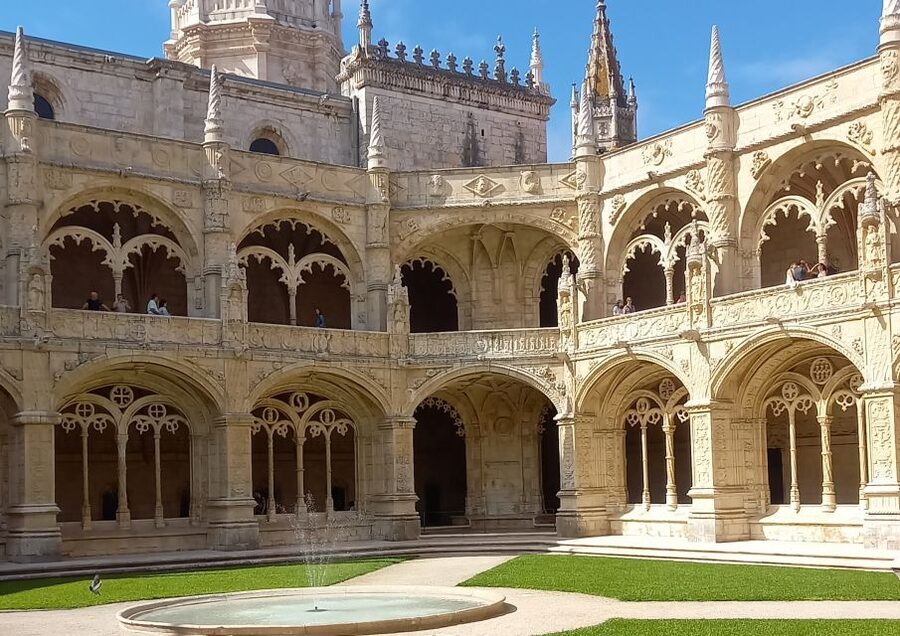
Jerónimos Monastery is the visual centerpiece of the morning. Its ornate stonework belongs to the Manueline style, Portugal’s exuberant architectural language associated with the Age of Discoveries. Expect carved details connected to the sea, navigation, religion, royal power, and Portugal’s overseas ambitions.
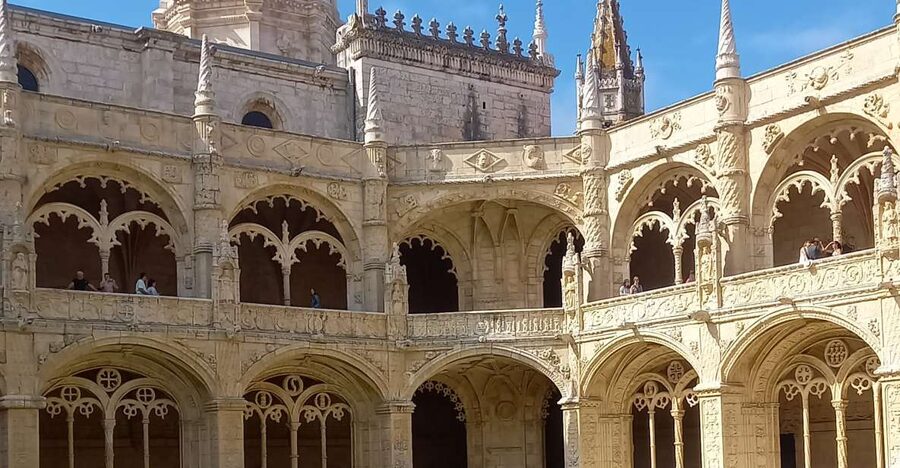
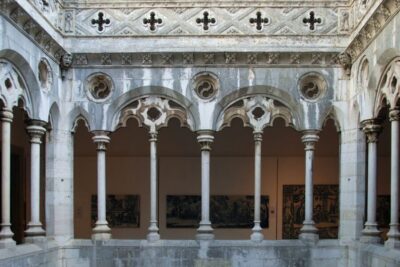
The cloister is especially rewarding. Two levels of arches frame a quiet central courtyard, and the stone decoration changes as you move around it. A guide can point out symbols and explain why particular maritime forms appear in a religious building. That extra context helps turn a beautiful photo stop into a place you understand.
Mario is repeatedly praised for making the monastery easy to follow without flattening its complexity. His style appears to mix clear explanations, humor, and stories. Other guides, including Laila and Manuel, have also been singled out for their warmth and strong command of Portuguese history.
I would pay attention to the guide’s explanations of symbolism rather than rushing from one angle to the next. The cloisters are spacious enough to invite lingering, but the group’s one-hour visit means you will not have unlimited time for every carved column and doorway.
The monastery portion suits first-time visitors particularly well. If you already have a strong background in Portuguese architecture, you may find the pace introductory in places. For most people, though, the guided approach adds just the right amount of structure.
A pastry break at Pastéis de Belém
After the monastery, the group walks about five minutes to the Belém neighborhood for a 30-minute break. This is not just a quick pastry handed over while you continue walking. The experience includes a Pastel de Nata and a refreshment, with coffee, tea, or beer available.
The featured pastry is a Pastel de Belém, the local name used by the original Pastéis de Belém shop. The tour visits that shop and may include access to a back area where you can see part of the kitchen or early pastry-making process. That behind-the-scenes touch is one of the more unusual parts of the outing.
You will have free time here for a drink, shopping, and a chance to talk with other people in the group. This pause matters because the morning otherwise moves from one major sight to another. It gives you a seat, a snack, and a moment to absorb what you have just seen.
The pastry itself is a small item, but it carries real local meaning. Portugal’s custard tarts are one of the country’s most recognizable foods, and tasting one at the original Belém shop connects the snack with the neighborhood rather than treating it as a generic café stop.
A practical note: the included treat is one pastry. If you are especially fond of pastéis, you may want to buy another. One participant’s only complaint was wishing there had been more.
The Coach Museum, Belém’s unexpected highlight

The five-minute walk to the National Coach Museum comes next, followed by about 30 minutes with a guide. This museum can sound less exciting than a monastery or riverside tower, but it often becomes the morning’s surprise favorite.
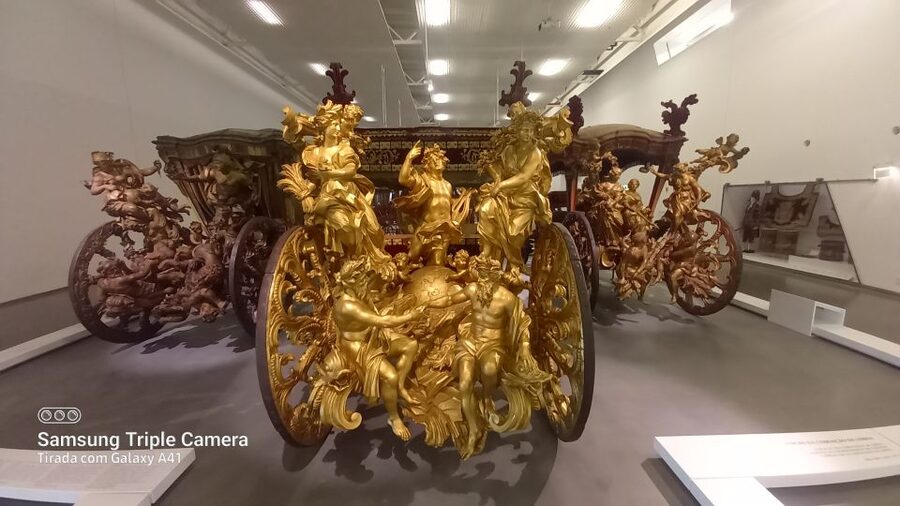
The collection centers on historic coaches and carriages, including ornate vehicles connected with Portuguese royalty and court life. The scale, decoration, and craftsmanship give you a different view of Portugal’s past. Instead of focusing on explorers and monasteries, the museum shows how rulers and elites traveled, appeared in public, and displayed wealth.
The guided visit helps you notice details you might otherwise pass by. A carriage can look like a large decorative object until someone explains its purpose, construction, or place in court ceremony. Several people who were unsure about this stop beforehand found it far more interesting than expected.
Thirty minutes is a brisk introduction. You will not inspect every carriage at length, but you should get a strong sense of why the collection matters. If you are passionate about vehicles, decorative arts, royal life, or museum design, you may wish you had more independent time afterward.
The Coach Museum also improves the balance of the tour. Jerónimos gives you religious and maritime architecture. The pastry break gives you everyday pleasure. The carriages add court culture and visual spectacle. Together, the stops create a fuller picture of Belém than a simple monastery visit would.
A few more Lisbon options side by side
- Lisbon City Center Tour – The Unmissable Lisbon
★ 5.0 · 22,234 reviews - Lisbon: Sintra, Pena, Regaleira, Cabo da Roca & Cascais
★ 4.7 · 19,656 reviews - Lisbon: Jerónimos Monastery Entrance Ticket
★ 4.1 · 14,164 reviews - Lisbon: History, Stories and Lifestyle Walking Tour
★ 4.8 · 10,902 reviews
Belém Tower from a black cab
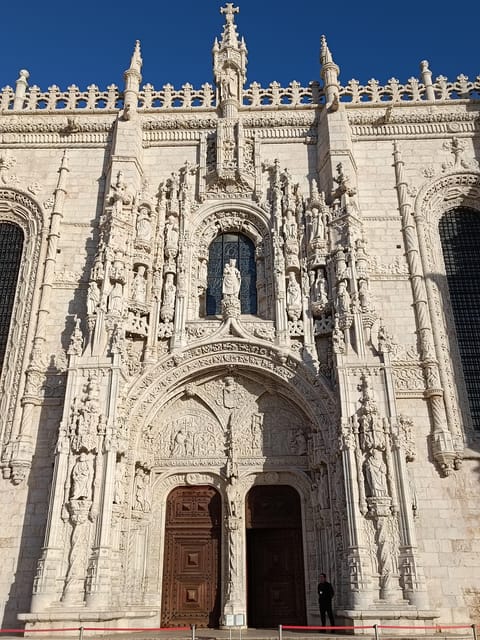
After the museum, the tour uses a black cab for roughly 10 minutes to reach Belém Tower. This is a practical choice. The riverside area has broad open spaces, and the cab reduces the amount of walking between the inland museum and the tower.
The tower is one of Lisbon’s most familiar symbols. Built beside the Tagus, it is tied to the city’s maritime identity and the period of Portuguese sea exploration. The stop is listed as a photo stop with a short guided explanation and scenic drive.
Do not expect a long interior visit. The planned time here is about 10 minutes, so the emphasis is on seeing the monument, hearing its story, and taking photographs. If your main goal is climbing inside the tower, this experience is not designed around that.
The tower has also been affected by renovation work. In July 2025, scaffolding made it difficult to see clearly. Conditions can change, so you should treat this as an exterior stop whose appearance may be partly restricted. Even with construction, the location remains useful for understanding how Belém’s monuments relate to the river.
The cab itself adds a little fun and saves energy. It is not a long sightseeing ride, but it keeps the morning moving without making you walk every stretch of the route.
The Monument to the Discoveries and the final view
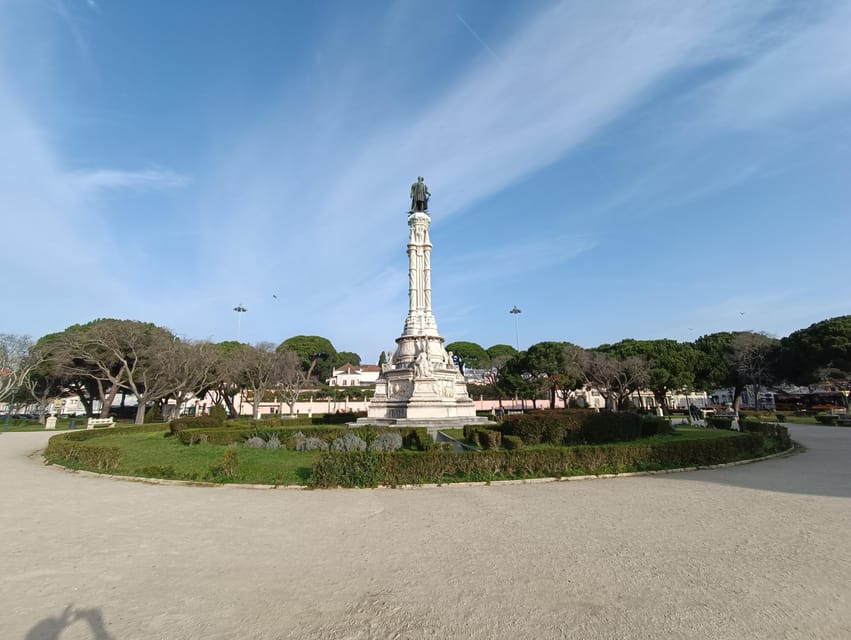
A second short black cab ride, about five minutes, brings you to the Monument to the Discoveries. The tour spends roughly 15 minutes here, including a photo stop, a guided explanation, free time, and views along the way.
The monument presents a dramatic group of Portuguese figures facing the river, led by Henry the Navigator. Its subject is Portugal’s seafaring expansion and the voyages that helped shape the country’s national identity. The monument is visually powerful, but its story deserves some care. A good guide can explain both the pride attached to the voyages and the wider consequences of overseas expansion.
This is an effective final stop because it gathers together many themes introduced earlier. At Jerónimos, you see religious architecture linked to royal power and maritime ambition. At the tower, you see a defensive structure on the river. Here, you get a large public statement about exploration and national memory.
The 15-minute visit is enough for photographs and an overview. You may want more time if you hope to study every sculpted figure or visit the interior. The planned route returns to Jerónimos Monastery afterward, so you finish close to where you began.
How much walking and time should you expect?
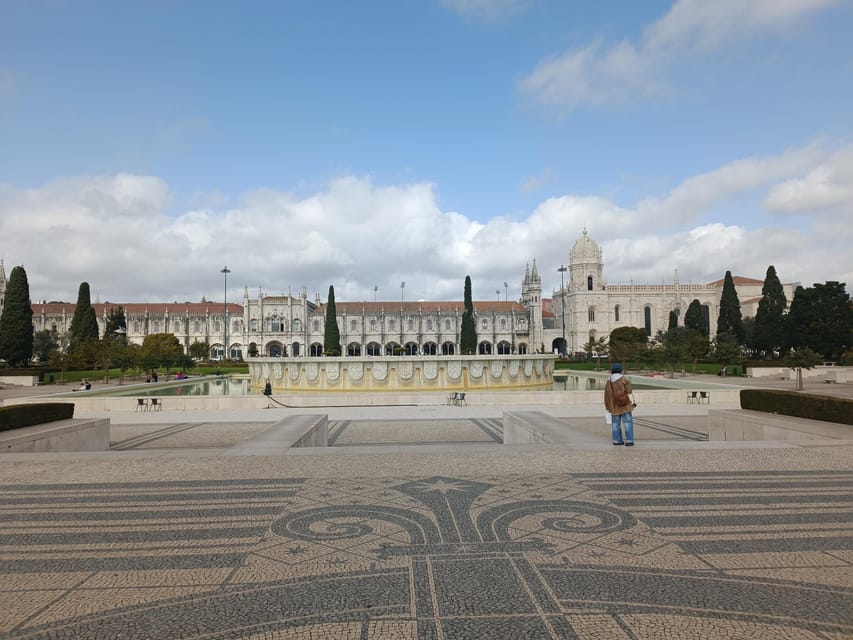
The published duration is 3.5 hours, though some people describe the morning as closer to four hours depending on the pace and stops. The scheduled walking sections are short, with five minutes from the monastery to the Belém break and another five minutes to the Coach Museum. The cab rides cover the longer connections.
Still, do not mistake the short listed walks for a completely easy outing. You will move through large cultural sites, stand during parts of the explanations, and spend time outdoors around the tower and monument. Comfortable shoes are specifically recommended, and that advice is worth following.
The guide appears to make room for bathroom stops and quick rests when needed. That is useful for families, older visitors, and anyone who does not enjoy a nonstop lecture. The pastry break also provides a natural pause halfway through the route.
Because the tour covers several sights, it works best when you want a broad introduction to Belém rather than long, solitary visits. You will see more in one morning, but you give up some freedom to set your own pace.
What the $94 price includes
At $94 per person, this is not the cheapest way to see Belém. The price makes more sense when you add up what is included: a live guide, skip-the-line admission to Jerónimos Monastery, skip-the-line admission to the Coach Museum, a Pastel de Nata, a coffee, tea, or beer, and black cab rides to Belém Tower and the Monument to the Discoveries.
The strongest value comes from the monastery access and the guide. If the queue is long, avoiding it may save a large part of your morning. The cab rides are also useful because they link sights that are close enough to form one route but spread out enough to make the transfer tiring on foot.
The food and drink are pleasant extras rather than the reason to book. You could buy a pastry and coffee yourself for much less. The value lies in having the stop built into a well-planned morning, with access to the original shop and time to sit down.
I would call the price fair for someone who wants organized sightseeing, museum tickets, transport between the farther stops, and historical explanation in one package. If you prefer to walk independently, skip the Coach Museum, or spend a full hour photographing each monument, you may get better value by arranging Belém on your own.
The guides make the biggest difference

The guide is central to this experience. Mario receives the most consistent praise for being funny, attentive, and able to explain difficult subjects in clear language. Several people describe his stories as the reason the monastery and Coach Museum became so engaging.
His style seems particularly helpful for groups with different interests. He can keep the main story moving, answer questions, and add more detail when someone wants it. He also appears to notice practical needs, including bathroom breaks and short rests.
Laila has been praised for tailoring parts of the history to a British participant, including the connection with Philippa of Lancaster. Manuel has also been credited with bringing the monastery to life. Guides may vary by departure, so you should not assume Mario will lead every tour, but the listed languages are English, Portuguese, and Spanish.
A strong guide cannot change the basic length of the stops or guarantee clear views of a monument under renovation. What the guide can do is give the sites shape and meaning. That is where this tour earns much of its appeal.
Who should book this Belém tour?
I would recommend it to first-time Lisbon visitors who want to understand Belém without spending a full day planning connections and ticket lines. It is also a good choice if you enjoy history, architecture, royal collections, and local food in equal measure.
Families and mixed-interest groups may appreciate the varied format. Children who would lose patience during a long monastery lecture get a pastry pause, a cab ride, and the visual drama of the carriages and monuments. Adults still receive plenty of historical context.
The tour may not suit you if you want a slow, private visit or dislike organized schedules. The monastery gets about an hour, the Coach Museum about 30 minutes, and the tower only about 10 minutes. Those limits keep the outing efficient, but they also mean you cannot linger everywhere.
You should also consider the day’s weather. Some parts take place outdoors, and the wide spaces around the tower and Discoveries Monument offer little shelter. Comfortable shoes remain the most important item to bring.
Free cancellation up to 24 hours before the start gives you some flexibility, and you can reserve now and pay later. Starting times vary, so check availability when choosing your date.
Should you book it?
Book this tour if you want efficient access to Belém’s major sights, clear explanations, and a few memorable extras. The monastery queue advantage alone can justify the price on a busy morning, while the Coach Museum adds a welcome surprise to the usual Belém route.
I would be especially happy to recommend it to anyone who might otherwise overlook the carriages or struggle to connect the monuments into one story. Just arrive at the monastery entrance by 9:20 AM, wear comfortable shoes, and expect a brisk morning rather than a leisurely museum day.
Skip it if your priority is complete independence, extended time inside Belém Tower, or a very slow photographic visit. For most first-time visitors, though, the mix of cloisters, carriages, pastries, cabs, and riverside monuments makes this a strong use of half a day in Lisbon.
FAQ
How long does the Belém tour last?
The stated duration is 3.5 hours. Some departures may take closer to four hours depending on the pace and timing of the stops.
How much does the tour cost?
The listed price is $94 per person.
Where do I meet the guide?
Meet at the main entrance of Jerónimos Monastery at 9:20 AM. The guide displays a small yellow badge, and you should try to arrive on time.
Are museum tickets included?
Yes. Admission to Jerónimos Monastery and the National Coach Museum is included, along with skip-the-line entry to both museums.
What food and drinks are included?
The tour includes one Pastel de Nata, also known locally as a Pastel de Belém, plus a coffee, tea, or beer during the break.
Which languages are available?
The live guide service is available in English, Portuguese, and Spanish.
Can I cancel the tour or pay later?
You can cancel up to 24 hours in advance for a full refund. The reserve-now, pay-later option lets you book without paying immediately.
Recently added in Lisbon
- Lisbon Cinematic Photoshoot with Top-Rated Photographer★ 5.0 · 76 reviews
- City Centre Run in Lisbon★ 5.0 · 164 reviews
- City of Neighborhoods Tour 1H 30M Private Tour by Tuk Tuk★ 5.0 · 38 reviews
- Central Lisbon E-Bike Tour★ 5.0 · 168 reviews
- Hands on Portuguese Cooking Class in Lisbon★ 5.0 · 136 reviews
- Lisbon City Tour by Tuk Tuk★ 4.5 · 137 reviews
- Lisbon Sailing Catamaran Public Cruise with drinks★ 5.0 · 304 reviews
- Romantic Private Sailboat in Lisbon for couples★ 5.0 · 38 reviews
Museums, compared.
Luz Stadium Tour & SL Benfica Museum Ticket w/Scarf
Read our review →

Banksy Museum Permanent Exhibition Entry Ticket
Read our review →

Entry Ticket at WOW – The Wine Experience Museum
Read our review →
Lisbon SL Benfica Stadium & Museum Tour with Scarf
Read our review →Browse the lists this tour appears in