
REVIEW · WALKING TOURS
Lisbon: Jewish Quarter Guided Walking Tour
History hides in plain sight here. This two-hour walk connects Lisbon’s Jewish past with its wider story, from Praça do Comércio through Alfama, Mouraria, Baixa, and Rossio. I like the way the tour places Jewish life inside Portuguese history, rather than treating it as an isolated subject. I also like the limited group size, capped at 10 people, which gives you a better chance to ask questions.
The main drawback is that little physical evidence remains from Lisbon’s former Jewish quarters, so this is a story-led tour rather than a procession of intact synagogues and monuments. You should also expect steep streets around the castle hill, and the $57 price is best value for visitors who want serious historical context, not just a quick orientation walk.
In This Review
- Key points to know before you book
- A Jewish Lisbon tour that follows the city’s whole story
- Starting at Praça do Comércio and the riverfront
- Casa dos Bicos, Ribeira, and Lisbon’s working waterfront
- The Resistance Museum and the 1940s refugee passage
- Mouraria and the crowded story of medieval Lisbon
- Alfama and the surviving shape of a vanished quarter
- Baixa and the pressure of forced conversion
- Praça da Figueira and Rossio’s 1506 massacre
- What Amber adds to the two-hour format
- How the $57 price measures up
- Who should take this Lisbon walking tour?
- Should you book it?
- FAQ
- How long does the Lisbon Jewish Quarter Guided Walking Tour last?
- What language is the tour conducted in?
- How many people can join the tour?
- Where does the tour start?
- Where does the tour end?
- What places does the route cover?
- Are food and drinks included?
Key points to know before you book
- Praça do Comércio begins the story: The tour links this grand waterfront square to the Exodus and to Lisbon’s wider Jewish story.
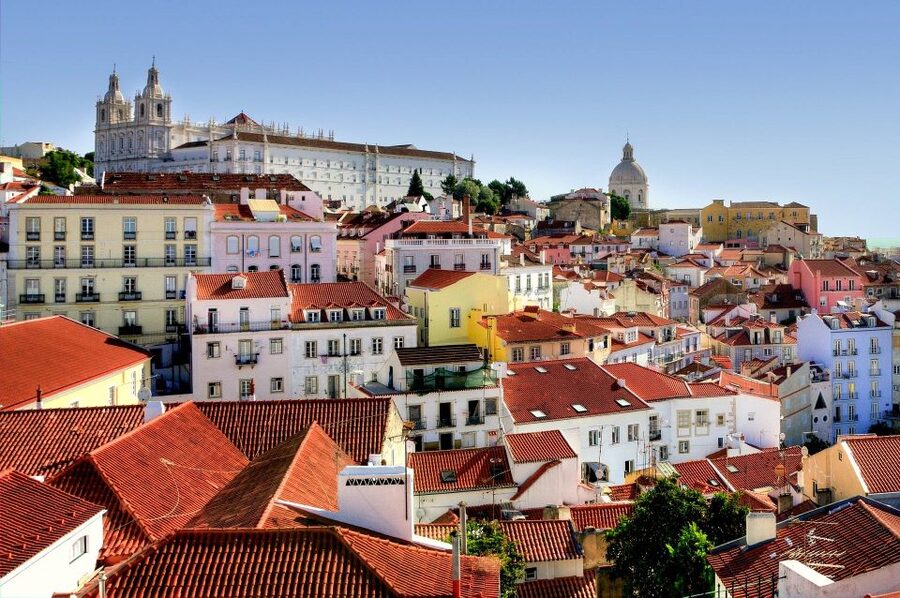
- Alfama brings medieval segregation into view: Narrow lanes and the castle hill help explain where Jewish communities lived and how the city was divided.
- Rossio carries a painful memory: The 1506 Pessah massacre is one of the tour’s central historical episodes.
- Forced conversion is treated as a major turning point: In Baixa, you learn about New Christians, Conversos, and the pressure placed on Lisbon’s Jewish population.
- The story continues into the 20th century: The tour covers the passage of Jewish refugees through Lisbon during the 1940s.
- Amber is a particularly strong guide: Her clear explanations, broad command of Portuguese and Jewish history, and willingness to answer questions receive repeated praise.
A Jewish Lisbon tour that follows the city’s whole story
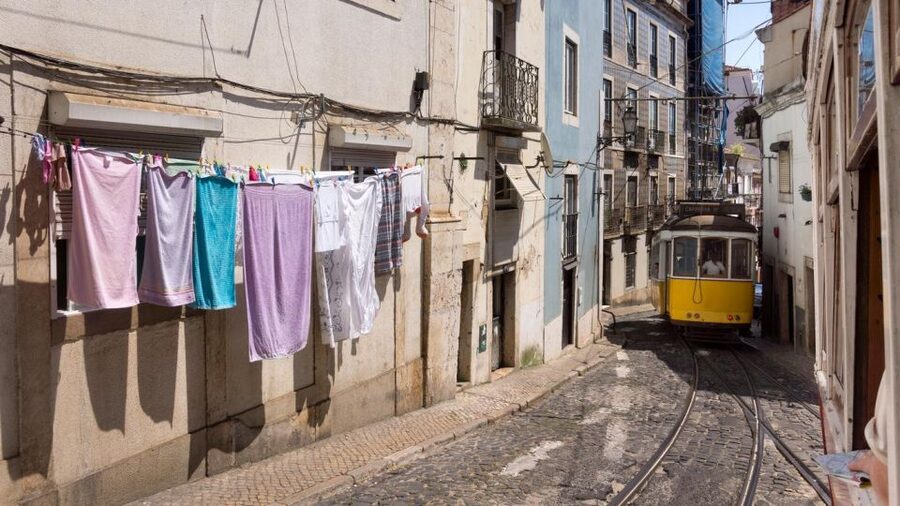
Lisbon’s Jewish history is not easy to read from the streets. Earthquakes, rebuilding, religious persecution, urban change, and the passage of time have erased or altered many of the places once tied to Jewish life.
That makes a guided walk useful. You are not simply looking at old stone. You are learning how to connect a square, lane, church, palace, or street name to the people who lived there and to the decisions that shaped their lives.
The route covers medieval and modern Jewish Lisbon, then reaches into the 1940s and the passage of refugees through Portugal during World War II. It also follows the wider diaspora that spread from Lisbon toward the Atlantic, the Mediterranean, Asia, and northern Europe.
I appreciate that reach. You get more than a local neighborhood tour. You get a sense of how Lisbon fitted into a much larger Jewish and Portuguese story.
The tour is conducted in English and lasts about two hours. With no food, drinks, or entrance tickets included, the price mainly pays for the guide’s time and historical explanation. That can be good value if you want depth, but less so if you prefer a casual walk with only a few facts.
More Walking Tours in Lisbon
- Lisbon: History, Stories and Lifestyle Walking Tour
★ 4.8 · 10,902 reviews - Best of Lisbon Small-Group Guided Walking Tour
★ 5.0 · 4,869 reviews - Lisbon: Food and Wine Small Group Walking Tour
★ 4.9 · 4,082 reviews
Starting at Praça do Comércio and the riverfront
The walk begins at Praça do Comércio, Lisbon’s grand riverside square. It is an effective starting point because the open space allows the guide to set out the broad historical frame before the route moves into tighter streets.
Here, the discussion includes the origin of the Exodus and the place of Jewish memory within a wider Mediterranean and Portuguese story. The square also helps you think about Lisbon as a port city, a point of departure, arrival, trade, and forced movement.
From there, the route passes Praça do Município and continues along Rua do Comércio. These early stops connect the monumental center with the commercial heart of the city.
You should not expect a visible Jewish monument at every point. Instead, the guide helps reconstruct the city as it was, using locations that remain while explaining what has disappeared. That approach requires attention. If you want a tour built around preserved interiors and clearly marked sites, this may feel less concrete.
For anyone interested in how cities change, though, the method works well. Lisbon’s present-day streets become a map of absences as well as surviving buildings.
Casa dos Bicos, Ribeira, and Lisbon’s working waterfront
The route continues toward Casa dos Bicos and Ribeira. Casa dos Bicos is one of Lisbon’s more distinctive historic buildings, with a pointed stone facade that gives it an immediate visual identity.
The stop matters less as a surviving Jewish landmark than as part of the city’s wider urban and commercial setting. The guide uses this section to explain how Jewish residents and merchants fitted into Lisbon’s economic life and how the waterfront connected the city to distant regions.
Ribeira adds another layer. Lisbon’s riverfront was tied to commerce, shipping, movement, and contact with other ports. That makes it a useful place to discuss the Jewish diaspora that spread out from Portugal across the Atlantic, into the Mediterranean, toward Asia, and into northern Europe.
You may find this part especially helpful if you know Jewish history mainly through religious or family stories but want to understand the economic and geographic forces behind migration.
The route does not treat diaspora as a simple tale of departure. It connects movement to persecution, opportunity, trade, forced conversion, and changing political conditions. That wider view is one of the tour’s strongest features.
The Resistance Museum and the 1940s refugee passage
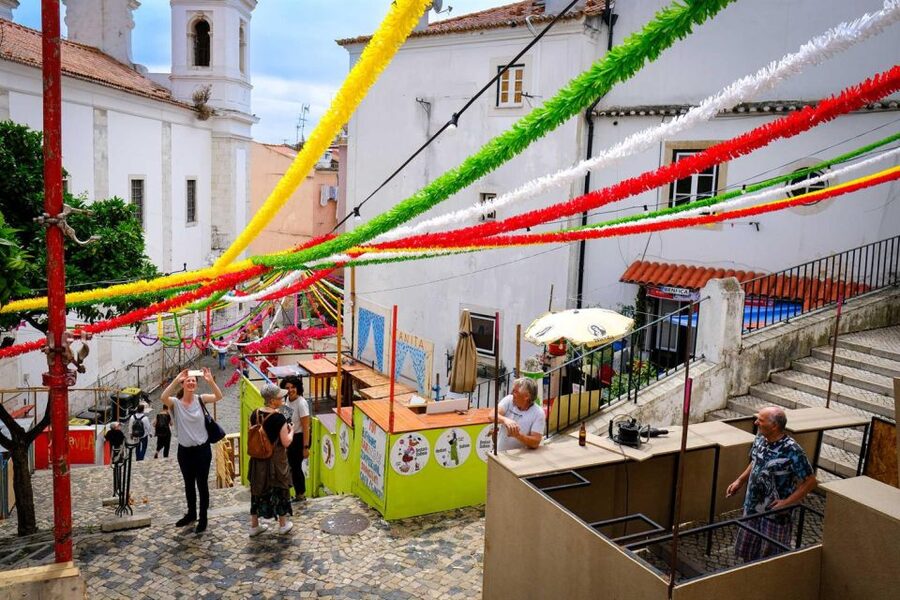
The Resistance Museum adds a modern political dimension to the walk. Its inclusion helps move the story beyond medieval Lisbon and the early modern period.
The tour also covers Jewish refugees passing through Lisbon in the 1940s. Portugal’s position made the city part of the wartime story of escape, transit, and uncertainty. This section gives you a reminder that Jewish Lisbon did not end with the destruction or transformation of medieval communities.
This is a valuable part of the route because many tours stop at the Inquisition, forced conversion, or the 1506 massacre. Here, the guide carries the subject into the 20th century.
The exact balance can depend on the questions asked and the guide’s pacing. If you want a very detailed account of contemporary Jewish institutions or present-day community life, note that the advertised focus is mainly historical. One person specifically wished for more about current Jewish activity, so you may want to ask about that if it matters to you.
Same corner of the country, a different pace:
- Lisbon City Center Tour – The Unmissable Lisbon
★ 5.0 · 22,234 reviews - Lisbon: Sintra, Pena, Regaleira, Cabo da Roca & Cascais
★ 4.7 · 19,656 reviews - Lisbon: Jerónimos Monastery Entrance Ticket
★ 4.1 · 14,164 reviews - Lisbon: Sunset Boat Party Cruise with DJ and Open Bar
★ 4.5 · 10,378 reviews
Mouraria and the crowded story of medieval Lisbon
Mouraria brings you into one of Lisbon’s older and more layered districts. The route uses the area to discuss the city’s medieval communities and the way religious groups were separated within the urban fabric.
This is where the idea of the Jewish quarter becomes more than a label. You learn about judiarias, the districts associated with Jewish residents, and about medieval segregation. The narrow streets make the subject easier to picture, even though the buildings themselves may not provide clear signs of their former use.
The physical setting also affects the experience. Lisbon’s older quarters are hilly, and the tour covers the castle hill, Alfama, and surrounding streets. You should wear practical shoes and be ready for uneven or steep walking.
The route’s compact geography is useful. You can see how close different communities and political centers were to one another, while also learning how boundaries were imposed. That contrast gives the history some force: people lived near each other, but not on equal terms.
Alfama and the surviving shape of a vanished quarter
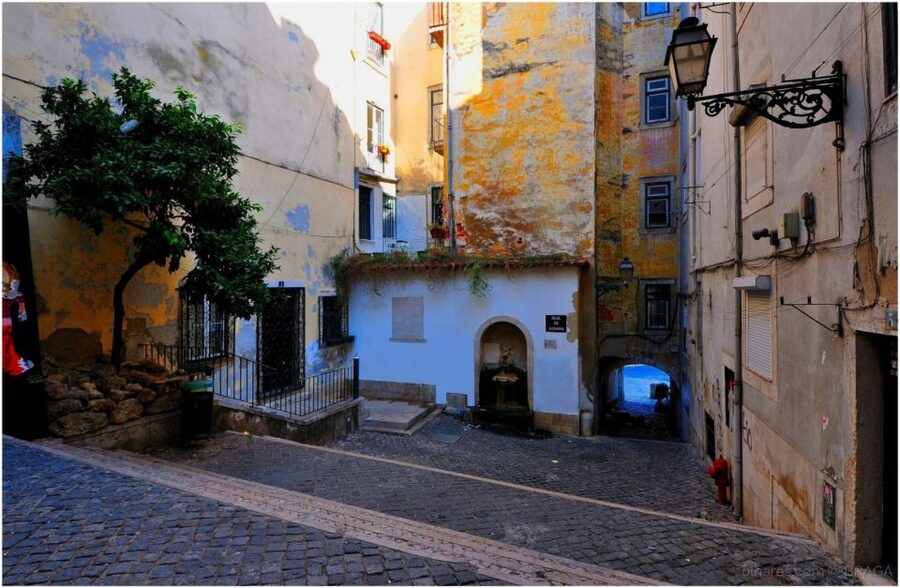
Alfama is one of the central areas on the tour. Its maze of narrow streets makes it a natural place to discuss medieval Jewish life, neighborhood boundaries, and the daily setting of the former quarter.
Do not expect Alfama to function as a preserved Jewish museum. Much of the challenge is that direct evidence is limited. The guide’s explanation does the work that plaques and intact buildings cannot.
That is also where a strong guide matters most. Amber is repeatedly praised for explaining Portuguese and Jewish history clearly, answering questions fully, and bringing difficult material to life without making the walk feel like a lecture.
Her background in history comes through in the way the tour links individual events to larger changes. The discussion can include Jewish and New Christian history in the Iberian Peninsula through the 18th century, rather than ending abruptly after the forced conversions.
The streets themselves can be busy and cramped. You may need to stop at the side while the guide speaks, and the city’s hills can make the two hours more tiring than the duration suggests. Still, Alfama is one of the places where the setting and the subject support each other.
Baixa and the pressure of forced conversion
Baixa gives the tour a different mood. This planned central district is more open and orderly than Alfama, and it helps frame the period when Jewish residents faced forced conversion and the creation of a New Christian population.
The subject is difficult, but it is essential. The tour explains how religious identity, public life, and political power were reshaped when Jews were pressured to convert. You also learn about Conversos and the long division between Old and New Christians.
This is not a story that ends with one decree. The effects continued for generations, shaping families, social status, suspicion, and public policy.
The tour also reaches the 18th century and the reforms associated with the Marquis of Pombal. His actions removed some of the formal division between Old and New Christians, though the period itself was shaped by an authoritarian monarchy.
That detail is a sign of the tour’s intellectual range. It does not reduce history to simple heroes and villains. You get the awkward realities of reform under a powerful government, along with the long afterlife of earlier persecution.
If you have read about the Portuguese Inquisition or Sephardic migration, Baixa helps connect those subjects to the actual streets of Lisbon.
Praça da Figueira and Rossio’s 1506 massacre
The route passes through Praça da Figueira before reaching Rossio. These central squares provide room to discuss one of the darkest events in Lisbon’s Jewish history, the 1506 Pessah massacre.
The massacre is not treated as a detached tragedy. It belongs to a period of religious tension, forced conversion, public hostility, and political failure. Hearing the sequence while standing in the modern city can be sobering, especially because the square is now part of ordinary Lisbon life.
This stop is likely to be one of the tour’s emotional centers. The subject is painful, and the quality of the explanation matters. A guide who can give dates, causes, consequences, and human context will make the difference between a list of facts and a meaningful account.
The central locations also show why a walking tour can work better than a museum visit alone. You are moving through places that have changed function but remain part of the city’s daily rhythm.
At the same time, remember that the physical traces are limited. You are not walking through a preserved site of the massacre. You are standing in a modern public space and using the guide’s account to understand what happened there and what Lisbon chose to remember or forget.
What Amber adds to the two-hour format
The strongest praise centers on Amber. She is described as articulate, personable, clear, and able to handle detailed questions about both Portuguese and Jewish history.
That matters because the subject crosses several centuries and includes unfamiliar terms, political changes, religious divisions, and events across multiple regions. A weaker guide could make the route feel like a string of names and dates.
Amber’s approach appears to be conversational as well as structured. She has adapted parts of the tour to individual interests, showing requested places alongside the planned route. That flexibility is useful, especially if you already know the basic outline and want to ask about a particular family, period, or historical figure.
The small-group limit of 10 people supports that style. It is not a private tour, but it is intimate enough for questions to be practical rather than disruptive.
There is also a striking possibility in poor weather or low demand: the group may be very small. One booking became a personal tour for a couple when rain was possible and Passover was about to begin. You cannot count on that arrangement, but the limited capacity gives the experience a more personal feel than a large city walk.
How the $57 price measures up
At $57 per person, this is not the cheapest way to spend two hours in Lisbon. The tour includes only the guide, with food, drinks, and other purchases left to you.
I think the price makes sense for three kinds of visitors:
- You care about Jewish history and want a guide who can answer detailed questions.
- You want to connect Lisbon’s streets with the history of forced conversion, diaspora, and wartime refugees.
- You prefer a small group where the guide can adjust the conversation.
The value is weaker if you mainly want photographs, major monuments, or a broad first look at Lisbon. You can see many of the route’s squares and streets without booking a tour.
The key question is how much context you want. The walk covers many locations in two hours, so it cannot offer long stops at every site. Its value comes from the connections between places and periods.
Free cancellation up to 24 hours before the start and the option to reserve without paying immediately also make it easier to fit into a changing Lisbon schedule. To find the meeting point, look for a dark red umbrella or sign, and contact the number on your voucher through WhatsApp or iMessage to confirm the guide’s position.
Who should take this Lisbon walking tour?
I would recommend it most to visitors with a clear interest in Jewish, Portuguese, Sephardic, or World War II history. It also suits anyone who enjoys seeing a city through events that are not obvious from its architecture.
The tour works well for first-time visitors who want a historical framework, but it may be even better for people who have already seen Lisbon’s main sights and want a more focused subject.
You should be comfortable walking uphill and through narrow streets. The two-hour length is manageable, but the castle hill and Alfama make it more physical than a flat Baixa stroll.
Families with older children may find the stories engaging, though the material includes massacres, persecution, and forced conversion. The guide speaks English, and the small group gives you room to ask for clarification if a name or period is unfamiliar.
If your main interest is the present-day Jewish community, ask about the modern portion before booking. The tour includes contemporary history and the 1940s refugee passage, but its main emphasis is the historical Jewish presence in Lisbon.
Should you book it?
Book this tour if you want Lisbon’s Jewish story explained with care, context, and attention to the people affected by political and religious change. Amber has earned especially strong praise for her clear delivery, patience, and command of the subject.
Skip it if you want a short list of visible Jewish monuments or a relaxed walk with little historical detail. The evidence is often indirect, and the hills are real.
For the right audience, the tour gives you a more thoughtful way to see Praça do Comércio, Alfama, Baixa, Mouraria, and Rossio. You leave with fewer postcard views, perhaps, but a better understanding of how Jewish life shaped Lisbon and how Lisbon shaped the wider diaspora.
FAQ
How long does the Lisbon Jewish Quarter Guided Walking Tour last?
The tour lasts two hours. Starting times vary, so you need to check availability when booking.
What language is the tour conducted in?
The live guided tour is conducted in English.
How many people can join the tour?
The group is limited to 10 participants.
Where does the tour start?
It starts at Praça do Comércio. The guide will be identifiable by a dark red umbrella and or a sign.
Where does the tour end?
The activity ends back at the meeting point.
What places does the route cover?
The route includes Praça do Comércio, Praça do Município, Rua do Comércio, Casa dos Bicos, Ribeira, the Resistance Museum, Mouraria, Praça da Figueira, Rossio, Alfama, Baixa, and the castle hill.
Are food and drinks included?
No. Food and drinks are not included. The guide is included in the tour price.
Recently added in Lisbon
- City Centre Run in Lisbon★ 5.0 · 164 reviews
- Lisbon Cinematic Photoshoot with Top-Rated Photographer★ 5.0 · 76 reviews
- City of Neighborhoods Tour 1H 30M Private Tour by Tuk Tuk★ 5.0 · 38 reviews
- Central Lisbon E-Bike Tour★ 5.0 · 168 reviews
- Hands on Portuguese Cooking Class in Lisbon★ 5.0 · 136 reviews
- Lisbon Sailing Catamaran Public Cruise with drinks★ 5.0 · 304 reviews
- Lisbon City Tour by Tuk Tuk★ 4.5 · 137 reviews
- Romantic Private Sailboat in Lisbon for couples★ 5.0 · 38 reviews
Walking Tours, compared.

Best of Lisbon Small-Group Guided Walking Tour
Read our review →
Porto Walking Tour, Lello Bookshop, River Cruise and Cable Car
Read our review →
Best of Lisbon Walking Tour: Rossio, Chiado & Alfama
Read our review →
Experience Porto’s Charm: 3-Hour Guided Walking Tour
Read our review →
Enjoy a Guided Levada Walk in the Rabaçal Valley
Read our review →Browse the lists this tour appears in