REVIEW · FULL-DAY
Lisbon: Full Day Tour to Fátima, Batalha, Nazaré and Óbidos
Faith, castles, and Atlantic views. This 9-hour day trip packs four very different Portuguese places into one well-planned outing from Lisbon. I like the strong mix of spiritual history and grand architecture, and I like that lunch in Nazaré breaks up the sightseeing with sea views and local food. The one drawback is the pace: four stops and several hours on the road leave limited time for lingering.
The guides are a major part of the experience. Luis, Lewis, André, Beatrice, Stefano, and others have been praised for clear explanations, friendly service, and good lunch advice. You should also know that this is not a good fit if you have a mobility impairment, since several stops involve walking over uneven or sloping ground.
In This Review
- Key points to know before booking
- Four very different Portuguese places in nine hours
- Fátima: a serious and moving first stop
- Batalha Monastery and the story of Portuguese independence
- Nazaré: Atlantic air and a well-timed lunch
- Óbidos: old walls and a sweet final stop
- Why the guide matters so much
- Transport, walking, and the pace of the day
- What the $116 price really buys you
- Who should book this day trip?
- Should you book the Fátima, Batalha, Nazaré, and Óbidos tour?
- FAQ
- How long does the tour last?
- Does the tour include hotel pickup?
- Is lunch included in the price?
- Which languages are available?
- Is this a private tour or a group tour?
- Is the cherry liquor tasting included?
- Can I cancel the booking?
- Is the tour suitable for people with mobility impairments?
Key points to know before booking
- Four major stops in one day: Fátima, Batalha, Nazaré, and Óbidos give you religion, architecture, coast, food, and medieval streets in a single outing.
- Hotel pickup in Lisbon: Pickup and drop-off at your Lisbon hotel lobby make this easier than arranging several separate buses or trains.
- A guide can shape the whole day: Guides such as Luis, Lewis, André, Beatrice, and Stefano have earned praise for history, language skills, personal attention, and restaurant suggestions.
- Nazaré is the lunch highlight: You get time near the Atlantic and a chance to eat at a local restaurant, though the meal is not included in the price.
- Óbidos ends the day on a lighter note: Its old walls, narrow streets, and sour cherry liquor tasting offer a charming finish after the solemnity of Fátima.
- Small-group or private options: A small booking can sometimes become a private outing, which gives you more freedom to ask questions and set the pace.
Four very different Portuguese places in nine hours
This is a long day, but the route works because each stop offers something distinct. Fátima is solemn and religious. Batalha is architectural and historical. Nazaré brings the ocean and lunch. Óbidos is picturesque, compact, and easy to enjoy on foot.
The trip begins with hotel pickup in Lisbon and about 1.5 hours in the van before the first major stop. That road time is not wasted if you enjoy hearing about Portugal from your guide, but you should expect a full day rather than a relaxed country outing.
The price is listed at $116 per person. That is fair if you value door-to-door transport, a live multilingual guide, four stops, and the ease of having someone handle the route. It is less attractive if you are comfortable navigating Portugal alone and want to spend a full morning or afternoon at just one site.
The guide languages are English, French, Italian, Spanish, and German. Group sizes can be private or small, and several bookings have resulted in a private tour when only two people signed up. That can be an excellent value, since you still pay the advertised per-person rate but receive much more personal attention.
A few more Lisbon options side by side
- Lisbon City Center Tour – The Unmissable Lisbon
★ 5.0 · 22,234 reviews - Lisbon: Sintra, Pena, Regaleira, Cabo da Roca & Cascais
★ 4.7 · 19,656 reviews - Lisbon: Jerónimos Monastery Entrance Ticket
★ 4.1 · 14,164 reviews
Fátima: a serious and moving first stop
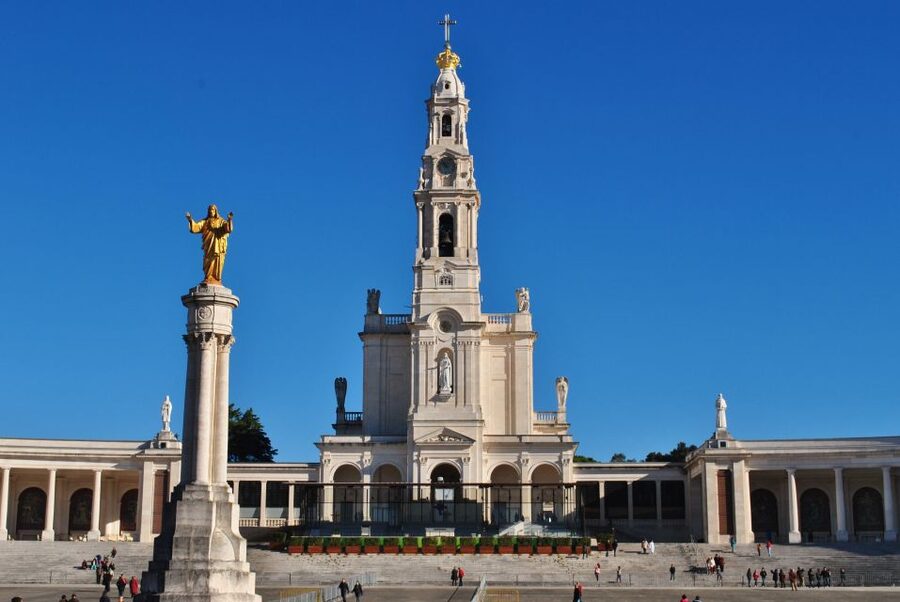
Fátima is Portugal’s best-known pilgrimage center, and the tone changes as soon as you begin exploring the sanctuary. The story centers on three shepherd children who reported apparitions of the Virgin Mary in 1917. Your guide explains the events and points out the places that matter, giving you a useful frame before you walk around on your own.
The Chapel of Apparitions is the central stop. It marks the place connected with the reported appearances, so it carries more meaning than a quick photo stop. Even if you are not religious, you can appreciate how important Fátima is to Portuguese Catholic life and to pilgrims from around the world.
You also visit the Basilica of Our Lady of the Rosary. The tombs of the shepherd children are inside, and this is where the history becomes personal. A guide can help you understand who the children were and why their story has had such a lasting effect.
The newer Basilica of the Holy Trinity gives the sanctuary a different feel. Its modern design contrasts with the older basilica, and seeing both buildings in one visit helps you understand how Fátima has grown over time.
I would allow yourself some quiet time here. This is not simply another sightseeing square where you rush out, snap a picture, and move on. The stop can be especially meaningful if you have a personal reason for visiting, as one guest with a history of cancer described the visit as a precious moment of prayer.
The tradeoff is that Fátima can feel solemn and focused rather than lively. If churches and religious sites are not your interest, you may find the stop long. Still, the guide-led introduction helps, and you have enough direction to explore without wandering aimlessly.
Batalha Monastery and the story of Portuguese independence
Batalha follows Fátima with one of the day’s strongest architectural sights. The Monastery of Batalha was ordered by King John I to celebrate Portugal’s victory at the Battle of Aljubarrota, a conflict that threatened the country’s independence from Spain.
That background matters. You are not just looking at a beautiful church. The monastery is a royal thank-you carved in stone, tied to a moment when Portugal’s future was uncertain. The political story gives the building extra weight and helps explain why the site became so important.
Inside, you see the tombs of King John I and his wife, along with those of their children. The tomb of Prince Henry the Navigator is particularly notable because of his role in Portugal’s period of exploration and overseas expansion.
This is the stop where a good guide earns the fee. Without context, a monastery can blur into a sequence of arches, chapels, and carved details. With clear explanations, you begin to see the connection between the royal family, national independence, religion, and Portugal’s later maritime ambitions.
You receive guided sightseeing and some free time. That combination is useful: the guide can point out the essential features, then you can look at the details at your own speed. Batalha is also a good place to take photographs, though the main value is the interior and the story behind it.
One practical point: the day includes several walking visits, and Batalha is not a stop to treat as a quick van exit. If you want time for every architectural detail, this tour may move too quickly. The advantage is that you see it at all without giving up the coast and Óbidos later.
Nazaré: Atlantic air and a well-timed lunch
Nazaré changes the rhythm of the day. After two stops centered on religion, monarchy, and stonework, you reach a traditional fishing village near the Atlantic. The views give you a chance to breathe, and lunch provides the natural pause the schedule needs.
The meal is not included, so budget separately for lunch. That is a small extra cost, but it gives you freedom to choose what suits you. The guides have been especially helpful here, with Luis and Gustafa praised for selecting good places to eat, and one lunch spot described as directly in front of the beach.
I like the way Nazaré is placed in the middle of the route. It is easier to absorb Batalha when you know an ocean view and a proper meal are coming next. You also get a chance to see a coastal side of Portugal rather than spending the entire day among churches and historic walls.
The stop includes guided sightseeing, photographs, and free time. You should not expect a long beach holiday, though. The tour still has Óbidos ahead, and the return to Lisbon is part of the nine-hour schedule.
If the Atlantic is your main interest, you may wish you had more time in Nazaré. The tour treats the town as one piece of a larger route, not as a stand-alone coastal day. Even so, it is an effective introduction, especially when paired with a guide who can explain local life and recommend lunch.
The ocean views are also a welcome contrast for anyone traveling with mixed interests. One person can appreciate the coast and food, while another enjoys the historical and religious sites. That balance is one reason this route suits couples and small groups with different ideas of a good day out.
Same corner of the country, a different pace:
- Lisbon: History, Stories and Lifestyle Walking Tour
★ 4.8 · 10,902 reviews - Lisbon: Sunset Boat Party Cruise with DJ and Open Bar
★ 4.5 · 10,378 reviews - Lisbon: Pena Palace, Sintra, Cabo da Roca, & Cascais Daytrip
★ 4.7 · 9,981 reviews - Lisbon: Oceanário de Lisboa Entrance Ticket
★ 4.6 · 9,943 reviews
Óbidos: old walls and a sweet final stop
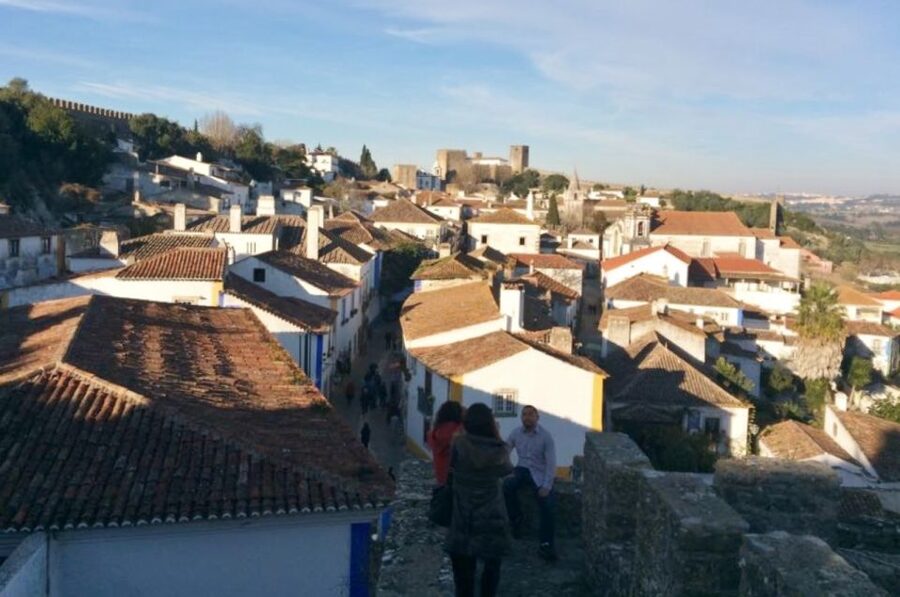
Óbidos is the final major stop, and it is a smart choice for the end of the day. The town has medieval-looking streets, old walls, and a compact feel that makes it easy to enjoy after a busy schedule.
Your free time is best spent simply walking. Look down the narrow lanes, pause for views, and notice how different Óbidos feels from modern Lisbon. The old walls give the town its distinctive shape, while the traditional architecture makes it one of the more photogenic stops on the route.
The day includes a tasting of sour cherry liquor, known locally as ginjinha. It is sold throughout Óbidos, and the tasting gives you a small local food tradition to try before returning to Lisbon. The flavor is sweet and tart, and it makes a pleasant counterpoint to the formal sites earlier in the day.
Óbidos is charming, but that charm can come with crowds and tourist-oriented shops. The supplied information does not promise a long visit or a completely quiet town, so I would treat it as a pleasant walking stop rather than expect an untouched medieval village.
The timing works in your favor. Fátima and Batalha ask for attention and respect. Nazaré refreshes you with the coast. Óbidos lets you finish with an easy stroll and a local drink. It is a well-balanced ending, even if you wish every stop had another half-hour.
Why the guide matters so much
Transport is useful, but the guide is the real engine of this day. The strongest feedback centers on warmth, historical explanations, safe driving, language ability, and a talent for making the route feel personal.
Luis was praised for explaining the Lisbon area as the van left the city, helping visitors understand what they were seeing before reaching the first stop. He also gave clear instructions at Fátima, so visitors could explore independently without missing the main places.
Lewis was praised for speaking five languages and for sharing observations about the musical quality of Portuguese and other languages. That sort of detail is not essential to the itinerary, but it can turn driving time into part of the experience.
André was described as kind, careful, and passionate about history. Stefano received similar praise for explaining each site and connecting the places along the route. Beatrice was noted for her polished English, friendly manner, and engaging presentation.
Guide assignments can change, so you should not book solely for one named person. Still, the repeated pattern is encouraging: the guides are not just drivers dropping you at monuments. They help with orientation, restaurant choices, local background, and questions.
A small group makes this even better. You can ask for clarification, pause for a photograph, or request advice about the rest of your Lisbon stay. In some cases, only two people booked, turning the planned small group into a private experience.
Transport, walking, and the pace of the day
Hotel pickup and drop-off in Lisbon remove much of the day’s planning. You do not need to work out separate connections to Fátima, Batalha, Nazaré, and Óbidos, and you avoid the risk of losing time between transport changes.
The van ride to the first stop takes about 1.5 hours. The full outing lasts around nine hours, so plan for a long day with substantial sitting and several walking visits.
Mobility is the main limitation. This experience is not suitable for people with mobility impairments. The information does not give a detailed accessibility breakdown for each monument, so you should ask the provider directly if you need specific help with steps, surfaces, or walking distances.
Wear practical shoes. That advice follows from the mix of sanctuary grounds, a monastery, coastal streets, and an old walled town. You will want to enjoy Óbidos rather than spend your final stop thinking about your feet.
The schedule includes photo stops, guided visits, and free time at Batalha, Nazaré, and Óbidos. That balance gives you some independence, but it also means the guide cannot tailor every minute to one interest. If you want a slow study of Batalha or a long lunch in Nazaré, a private arrangement may give you more flexibility.
What the $116 price really buys you
At $116 per person, the cost covers hotel pickup and return, the full-day route, a live guide, transportation between four destinations, and a sour cherry liquor tasting. Meals and other personal spending are extra.
The value is strongest when you compare it with the effort of arranging the day yourself. Four stops in different parts of Portugal require careful timing and several transport decisions. With this tour, you can focus on the places rather than the connections.
The price also becomes more attractive for a first visit to Portugal. A guide helps you understand why Fátima matters, why Batalha was built, and how Óbidos fits into the country’s past. You get a broad introduction to the region in one day.
The value is weaker for repeat visitors who already know these places or who prefer long, unhurried visits. You are paying for range and convenience, not maximum time at each sight.
Free cancellation up to 24 hours before departure gives you some flexibility, and you can reserve now while paying later. Starting times vary, so check availability before planning the rest of your day in Lisbon.
Who should book this day trip?
I would recommend it to first-time visitors who want to get beyond Lisbon without renting a car. It also suits couples, families, and small groups with mixed interests, since the route combines religion, architecture, history, food, and scenery.
It is especially useful if you have only a few days in Portugal. Rather than choosing between Fátima, Batalha, Nazaré, and Óbidos, you get a taste of all four and can decide which deserves a longer return visit.
The tour is less suitable for anyone who dislikes long days, organized transport, or moving between several places. It is also a poor choice if you have mobility limitations or want a slow, deeply detailed visit to one monument.
I would choose a private or very small group if the price difference works for you. Several people received a private outing simply because their group was small, but that depends on bookings and is not guaranteed.
Should you book the Fátima, Batalha, Nazaré, and Óbidos tour?
Book it if you want variety, convenience, and strong guide support in one day. The route is thoughtfully balanced, and the guides add real value through history, local advice, and personal attention.
Go in knowing that the day is full, lunch costs extra, and each stop is an introduction rather than a full exploration. If you accept that tradeoff, this is one of the more efficient ways to see Portugal’s religious center, a great monastery, an Atlantic fishing town, and a medieval walled town from Lisbon.
FAQ
How long does the tour last?
The tour lasts approximately 9 hours, including transportation from Lisbon and the visits to Fátima, Batalha, Nazaré, and Óbidos.
Does the tour include hotel pickup?
Yes. Hotel pickup and drop-off in Lisbon are included, with pickup available from your hotel lobby.
Is lunch included in the price?
No. Meals are not included, so you should plan to pay separately for lunch in Nazaré.
Which languages are available?
The live guide may provide the tour in English, French, Italian, Spanish, or German.
Is this a private tour or a group tour?
Private and small-group options are available. The exact group arrangement depends on the option selected and the bookings for that date.
Is the cherry liquor tasting included?
Yes. A tasting of sour cherry liquor is included during the Óbidos visit.
Can I cancel the booking?
Yes. You can cancel up to 24 hours in advance for a full refund.
Is the tour suitable for people with mobility impairments?
No. The experience is listed as unsuitable for people with mobility impairments.
Recently added in Lisbon
- Lisbon Cinematic Photoshoot with Top-Rated Photographer★ 5.0 · 76 reviews
- City Centre Run in Lisbon★ 5.0 · 164 reviews
- City of Neighborhoods Tour 1H 30M Private Tour by Tuk Tuk★ 5.0 · 38 reviews
- Central Lisbon E-Bike Tour★ 5.0 · 168 reviews
- Hands on Portuguese Cooking Class in Lisbon★ 5.0 · 136 reviews
- Lisbon Sailing Catamaran Public Cruise with drinks★ 5.0 · 304 reviews
- Lisbon City Tour by Tuk Tuk★ 4.5 · 137 reviews
- Romantic Private Sailboat in Lisbon for couples★ 5.0 · 38 reviews
Full-Day, compared.
São Miguel West: Full-Day Van Tour with Lunch
Read our review →
Sintra Full-Day Private Tour – A Journey through Wonderland
Read our review →
Eastern Madeira: Full-Day Tour with Rum Tasting
Read our review →
São Miguel West Full Day Tour with Setes Cidades Including Lunch
Read our review →
São Miguel East: Full-Day Van Tour with Lunch
Read our review →