
REVIEW · HISTORICAL TOURS
Lisbon: 3-Hour The Slave Trade – An Historical Walking Tour
Lisbon’s prettiest streets carry a painful story. This three-hour walk connects Alfama, monuments, churches, and public squares with Portugal’s role in the Atlantic slave trade. I like the African-led perspective and the way guide Rui Fernandes links big historical events to ordinary city streets. I also like the small group format, which gives you room to ask serious questions.
The main drawback is the subject itself: this is not a light sightseeing stroll. The history is disturbing, detailed, and sometimes emotionally heavy. You should also expect a little more than the advertised three hours, since the walk can last three to three and a half hours when questions and the café stop are included.
In This Review
- Key points to know before you book
- Starting in Alfama at Largo do Chafariz de Dentro
- How Portugal entered the Atlantic slave trade
- Reading Lisbon’s grand buildings differently
- Daily life for enslaved people in historic Lisbon
- Brazil, trade, and the wealth behind empire
- Abolition, African colonies, and liberation
- What the guide adds to the experience
- The pace, terrain, and café break
- Is $35 a good value for three hours?
- Who should take this Lisbon history walk?
- Final verdict: should you book it?
- FAQ
- Where does the tour meet?
- How long does the walking tour last?
- What language is the tour conducted in?
- Who leads the tour?
- How large is the group?
- Is a break included?
- Is hotel pickup or drop-off included?
- What should I bring?
Key points to know before you book

- An African guide brings personal and academic context: Rui Fernandes has a background in history, political science, and economics, and has connected the subject with his own family history.
- Lisbon becomes the classroom: Back streets, grand buildings, street names, churches, and squares help explain how slavery shaped the city.
- The tour covers four centuries: Expect discussion of Iberian slavery, the birth of the Atlantic trade, Brazil, abolition, Portuguese colonies in Africa, and liberation movements.
- Questions are part of the experience: Rui encourages discussion and makes time to address both historical and present-day issues.
- The walk is gentle by Lisbon standards: The route is described as mostly flat or only mildly inclined, though comfortable shoes are still essential on cobbled streets.
- A short café break is included: You receive one coffee and one restroom break, with some departures stopping for a pastel de nata.
Starting in Alfama at Largo do Chafariz de Dentro

The tour begins at Largo do Chafariz de Dentro, a square in Alfama, Lisbon’s oldest district. This is a useful starting point because Alfama is not just a photogenic maze of lanes. Its streets help introduce the city’s long connection with Africa, commerce, forced labor, religion, and empire.
You meet your guide here rather than at a hotel. That means you need to make your own way to the square, but it also puts you right in the historic center from the first minute. Allow extra time to find the meeting point, especially if you are unfamiliar with Alfama’s narrow streets.
Rui Fernandes leads the walk in English. His background in history, political science, and economics gives the tour a wider frame than a standard monument talk. You are not simply shown where an event happened. You are asked to consider how politics, money, religion, and social systems made that event possible.
That approach matters. Lisbon can make Portugal’s Age of Discovery look like a polished story of ships, maps, and overseas trade. This walk asks you to look at what made that wealth possible, and who paid the human cost.
More History Tours in Lisbon
- Lisbon: History, Stories and Lifestyle Walking Tour
★ 4.8 · 10,902 reviews - Lisbon: Live Fado Show with Port Wine in Historic Center
★ 4.7 · 4,166 reviews - Lisbon: Fado Show with Wine in a Historic Venue
★ 4.8 · 1,294 reviews
How Portugal entered the Atlantic slave trade
The opening historical section deals with slavery in the Iberian Peninsula before the Atlantic system began. That context is important because slavery did not suddenly appear with ocean voyages. The tour places Portugal’s later actions within earlier European, North African, and Mediterranean systems of captivity and forced labor.
From there, the story moves to the first half of the 15th century, when Portugal, under the direction of Prince Henry the Navigator, began the process now known as the Atlantic slave trade. Over roughly four centuries, between 12 and 14 million Africans were sold and transported across the Atlantic to the Americas.
Those figures can feel remote when presented in a museum display. The walking format helps bring the subject back to the city. As you move through Lisbon, you consider how shipping, government decisions, religious ideas, commercial networks, and colonial ambitions were tied together.
I appreciate that the subject is treated as more than a list of dates and numbers. The tour also addresses the crime against the people who were captured, sold, transported, and forced to work. It examines slavery as an institution built around human lives, not merely as an unfortunate side effect of exploration.
Reading Lisbon’s grand buildings differently
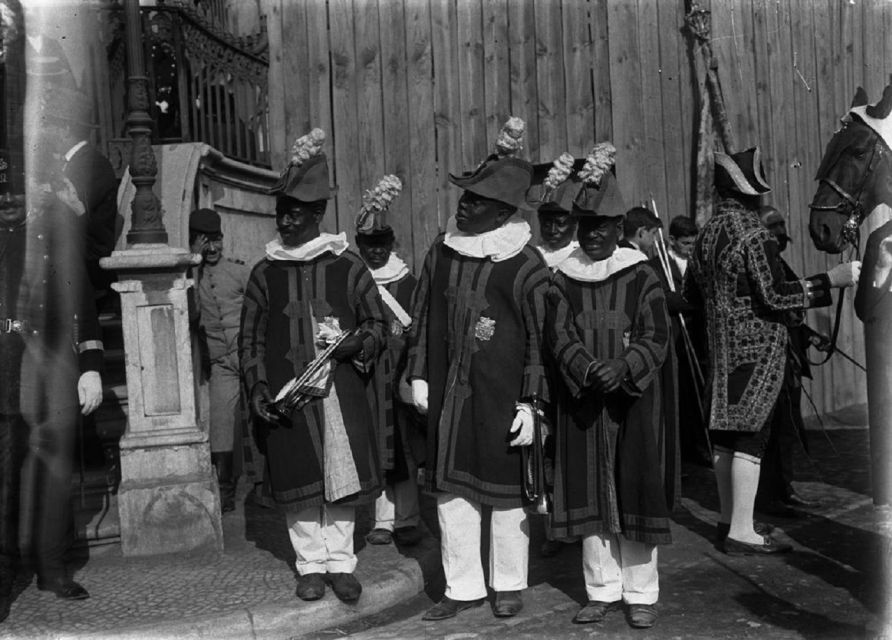
The route uses main avenues and smaller back streets, along with monuments, churches, and public squares. The exact order can vary, but the purpose remains clear: familiar sights are given a second meaning.
You may have already walked past a grand building or square without asking how its money, purpose, or public image was connected to Portugal’s overseas empire. Rui explains former uses, historical connections, and details that can easily be missed when you are sightseeing alone.
This is one of the tour’s strongest features. You do not need to spend three hours looking at memorials specifically devoted to slavery. Lisbon’s connection to this history is often found in what the city celebrates, what it leaves unmarked, and how its buildings were used.
The guide also uses relevant pictures to add context. That helps when the story involves people, places, or past appearances that are no longer visible. A photograph or image can make a vanished building or historical figure easier to understand.
The pace is deliberately slow. That gives you time to listen, look around, and ask questions, but it also means the walk is more about discussion than covering a large number of attractions. If your goal is to check off Lisbon’s major sights quickly, this is not the most efficient three hours. If you want to understand the sights you see, it is time well spent.
Daily life for enslaved people in historic Lisbon
A valuable part of the experience is its attention to everyday life. The tour addresses what it meant to be an enslaved person living in Lisbon, rather than focusing only on kings, explorers, merchants, and laws.
That shift in scale makes the history more human. You are encouraged to think about work, movement, social position, treatment, and the ways enslaved Africans were present in the city. The walk also considers the presence of Lisbon’s Black community, both in the past and in the present.
This is where Rui’s delivery matters most. The subject requires care. He is described as patient, respectful, and willing to answer questions without rushing the group. One particularly valuable feature is his effort to include everyone in the discussion, remember names, and make room for different family backgrounds.
The tour does not present slavery as an issue belonging to one nationality or one modern community. It explains Portugal’s role in a larger Atlantic system and considers how the effects of that system continued after legal abolition.
You should come ready to listen rather than look for a theatrical performance. The tour’s power lies in its detail, context, and direct connection to the city, not in dramatic reenactments.
More Walking Tours in Lisbon
- Best of Lisbon Small-Group Guided Walking Tour
★ 5.0 · 4,869 reviews - Lisbon: Food and Wine Small Group Walking Tour
★ 4.9 · 4,082 reviews - Best of Lisbon Walking Tour: Rossio, Chiado & Alfama
★ 4.9 · 2,700 reviews - Age of Discoveries Walking Tour in Belém
★ 5.0 · 1,513 reviews
Brazil, trade, and the wealth behind empire
Brazil receives special attention because it was central to Portugal’s colonial economy and to the wider Atlantic system. The discussion connects Brazil with Portugal’s commercial and political development, helping explain why the trade continued for so long.
This section also gives you a way to understand Lisbon’s prosperity. The handsome streets and large public buildings did not appear in isolation. Overseas trade, colonial rule, and the exploitation of enslaved people formed part of the economic structure that supported Portugal’s power.
That does not mean every Lisbon building can be reduced to one source of money. A good historical explanation needs care, and this tour attempts to provide it by discussing economic, political, moral, and religious factors together.
I find this balance useful. It avoids the shallow claim that one city or one group created the entire system. At the same time, it does not soften Portugal’s important role in establishing and operating the Atlantic trade.
Abolition, African colonies, and liberation
The final part reaches beyond the early centuries of the trade. You learn about the abolition of the slave trade in Portugal, the country’s African colonies, and the later struggle for liberation by African nationalists.
That wider timeline is one reason this tour can run longer than three hours. The subject does not end when the trade is abolished. Colonial rule, racial attitudes, economic relationships, and political resistance continued to shape Portugal and its former colonies.
You also get a broader account of Portuguese history, including earlier occupants of the region and the political changes that affected the country. This material is useful if you want to understand Lisbon beyond the usual Age of Discovery narrative.
Rui also connects the past with present-day Portugal. The tour does not pretend that legal abolition erased the consequences of centuries of racism and colonial rule. That connection gives the walk a modern purpose, while keeping the focus on historical evidence and explanation.
What the guide adds to the experience
The guide is the heart of this walk. Rui Fernandes is repeatedly praised for clear English, careful preparation, a steady speaking pace, and an ability to handle difficult questions.
That matters because the subject can become confusing very quickly. Portugal’s role overlaps with Spain, Brazil, West and Central Africa, European religious institutions, colonial administrations, and later independence movements. Rui’s academic background helps organize those strands.
He also uses personal connection without making the experience about himself. His own family history has helped shape his interest in the subject, and that can give the discussion added force. Still, the focus remains on the history of Lisbon and Portugal.
The small format improves the conversation. The tour information describes groups limited to six participants, while another activity detail gives a maximum of eight. Confirm the exact group size when booking, but either figure points to a small outing rather than a large city crowd.
With a group this size, you can ask about a monument, a term, a family connection, or something you noticed elsewhere in Portugal. The guide also offers advice on public transportation, places to eat, shops, and other parts of the city. Treat that as a useful bonus, not the main reason to book.
The pace, terrain, and café break
Lisbon is famous for steep hills and slippery cobbles, so the physical details matter. This route is described as mostly flat or only mildly inclined, with a relaxed walking pace. That makes it suitable for a broad range of ages, though you should still wear comfortable shoes.
The tour includes one coffee and one restroom break. A café stop with a pastel de nata has been part of the experience, giving you a chance to rest and absorb what you have heard.
Do not expect a long meal break. The pause is there to regain your energy and continue the discussion. On a hot day, the guide may also adjust the pace and seek shade when possible, but you should still bring water and dress for the weather.
Pets are not allowed. Hotel pickup and drop-off are not included, so plan your route to Alfama and your return journey separately.
Is $35 a good value for three hours?
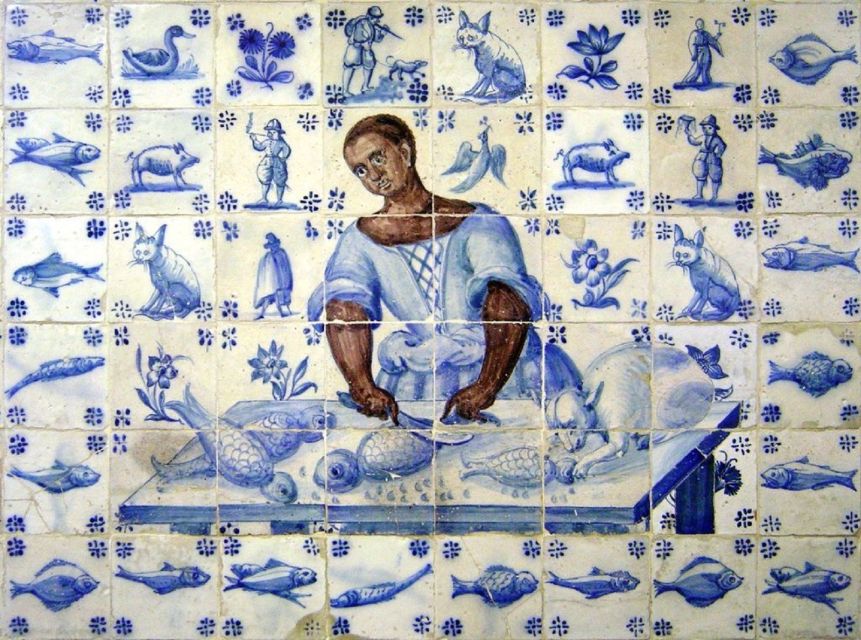
At $35 per person, this is fairly priced for a three-hour guided walk, especially with a licensed local guide and a small group. You are paying for interpretation and discussion, not for entry tickets or transport.
The value is strongest if you want historical depth. Rui’s preparation, the opportunity to ask questions, the use of visual material, and the connections between city sites make this more than a basic orientation walk.
It is less suitable if you want a quick overview of Lisbon’s famous sights. You will see important parts of the center, but the purpose is to understand their connection with slavery rather than simply photograph them.
The cost also compares well with the amount of time involved. A private guide would normally cost much more, while a large bus tour would give you less opportunity to ask questions. For an intimate history walk, $35 is reasonable.
Free cancellation up to 24 hours before the start and a reserve-now, pay-later option make it easier to fit into a changing itinerary. Starting times vary, so check availability before planning other timed activities around it.
Who should take this Lisbon history walk?
I would recommend it to you if you are interested in:
- Portugal’s overseas empire and the Age of Discovery
- The Atlantic slave trade and African history
- The connection between historic buildings and present-day society
- Colonialism, abolition, and liberation movements
- A small group with plenty of time for questions
- A slower, discussion-led walking tour
It is particularly useful early in your Lisbon stay. The guide’s explanations may change how you see Alfama, the central squares, and the city’s grand monuments for the rest of your visit.
Families with older children and teenagers may find it worthwhile, provided they are ready for a serious subject. The material is not presented as entertainment, and younger children may not get much from three hours of detailed history.
You should skip it if you want a carefree sightseeing walk, a food tour, or a fast route through Lisbon’s headline attractions. This experience asks you to pay attention and think about uncomfortable facts.
Final verdict: should you book it?
Yes, if you want a fuller understanding of Lisbon. The tour’s greatest strengths are Rui Fernandes’s clear teaching, the African perspective, the small group setting, and the way ordinary streets become evidence of Portugal’s past.
Book it with comfortable shoes, water, and an open mind. Set aside three and a half hours rather than rushing to your next appointment, and expect to leave with a more complicated view of Lisbon’s beauty and prosperity.
The 4.9 rating from 179 bookings reflects the experience’s consistent appeal, but the better reason to choose it is its subject. Portugal’s role in the Atlantic slave trade is too important to remain a footnote. This walk gives you a respectful, well-organized way to face that history in the very city where much of it was shaped.
FAQ
Where does the tour meet?
The meeting point is Largo do Chafariz de Dentro, a square in Lisbon’s Alfama district.
How long does the walking tour last?
The scheduled duration is three hours. It may last three to three and a half hours when questions and the café break are included.
What language is the tour conducted in?
The tour is conducted in English.
Who leads the tour?
The walk is led by Rui Fernandes, an African guide with a background in history, political science, and economics. The experience is conducted by a licensed local guide.
How large is the group?
The tour is described as a small-group experience. The information gives a maximum of six participants, while another detail states a limit of eight, so confirm the exact group size when booking.
Is a break included?
Yes. The experience includes one coffee break and one restroom break.
Is hotel pickup or drop-off included?
No. You must travel to Largo do Chafariz de Dentro independently, and hotel pickup and drop-off are not included.
What should I bring?
Bring comfortable shoes for walking on Lisbon’s streets. Pets are not allowed on the tour.
Recently added in Lisbon
- Lisbon Cinematic Photoshoot with Top-Rated Photographer★ 5.0 · 76 reviews
- City Centre Run in Lisbon★ 5.0 · 164 reviews
- City of Neighborhoods Tour 1H 30M Private Tour by Tuk Tuk★ 5.0 · 38 reviews
- Central Lisbon E-Bike Tour★ 5.0 · 168 reviews
- Hands on Portuguese Cooking Class in Lisbon★ 5.0 · 136 reviews
- Lisbon Sailing Catamaran Public Cruise with drinks★ 5.0 · 304 reviews
- Lisbon City Tour by Tuk Tuk★ 4.5 · 137 reviews
- Romantic Private Sailboat in Lisbon for couples★ 5.0 · 38 reviews
Historical Tours, compared.

Douro Valley: Historical Sites, Wine Experience, Lunch & Cruise
Read our review →
Live Fado Show with Port Wine in Historic Center
Read our review →

Browse the lists this tour appears in