
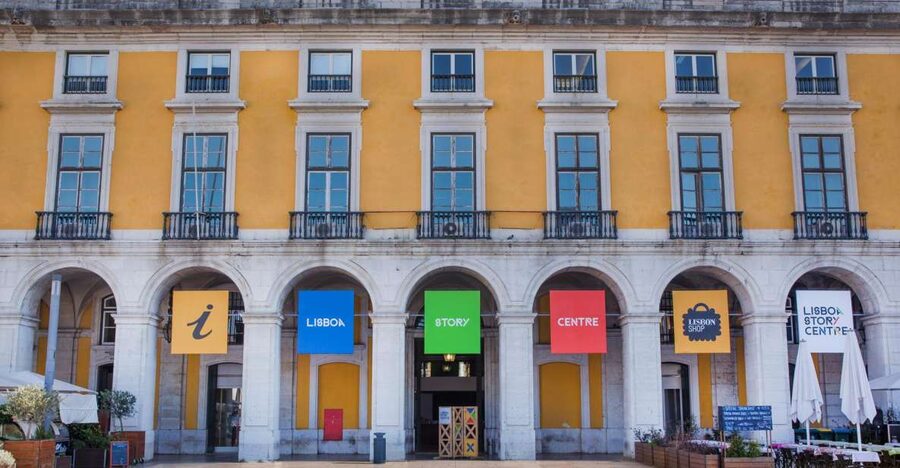
REVIEW · 1-DAY TOURS
Lisboa Story Centre: 1-Day Admission Ticket
Lisbon’s story begins before the postcards. At the Lisboa Story Centre, I like the clear audio storytelling and the clever use of sets, sound, and visual effects to turn city history into something easy to follow. I also like the dramatic 1755 earthquake presentation, which gives real weight to an event you will hear about all over Lisbon.
The main drawback is that the treatment of modern Lisbon is brief, so you should not expect a full account of the city’s contemporary life. The building also has no air conditioning, a point worth keeping in mind during a hot summer afternoon. Still, the presentation is fun, well organized, and especially useful if you are visiting Lisbon with children.
In This Review
- Key points at a glance
- Starting at Lisbon’s grand riverfront square
- Five chronological rooms on the ground floor
- The 1755 earthquake and Lisbon’s painful turning point
- The upstairs model of Lisbon
- Why the audio guide matters
- A family-friendly history lesson, with a few limits
- Working out the value of a one-day ticket
- How to fit it into your day
- Should you book Lisboa Story Centre?
- FAQ
- How long does the Lisboa Story Centre visit last?
- Where is Lisboa Story Centre located?
- What are the opening hours?
- Which languages are available for the audio guide?
- Is Lisboa Story Centre wheelchair accessible?
- Does the ticket include an audio guide?
- Can I cancel my booking?
Key points at a glance
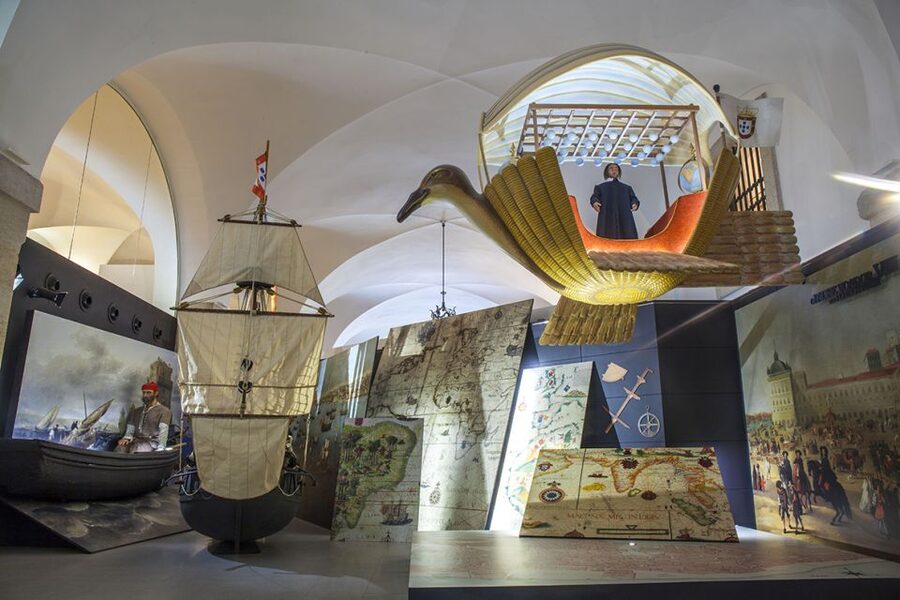
- A 60-minute journey through Lisbon’s past: The main visit moves through five chronological areas on the ground floor, followed by a sixth area upstairs.
- The 1755 earthquake gets the strongest treatment: Sound, sets, and sensory effects recreate the disaster and its aftermath.
- A multilingual audio guide leads the way: Choose Portuguese, English, Spanish, French, Italian, German, Russian, Mandarin, or Japanese. Portuguese also has an adult and child version.
- Terreiro do Paço provides a fitting setting: The Centre sits in the East Wing of the renovated square, close to several central Lisbon sights.
- Good for families: The playful presentation holds children’s attention better than a traditional display of labels and objects.
- The visit is accessible: Wheelchair access is available, and skip-the-line entry saves time at the door.
Starting at Lisbon’s grand riverfront square
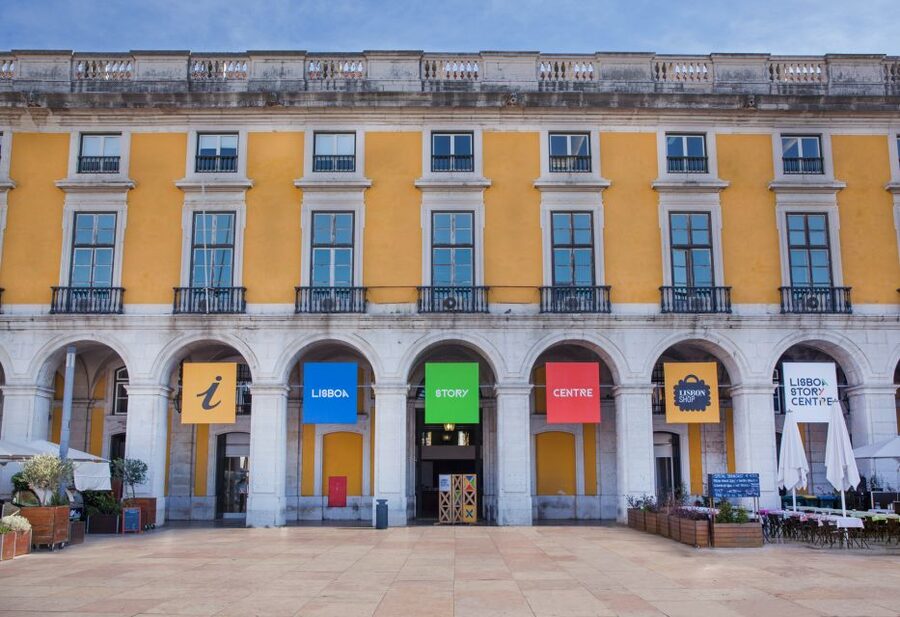
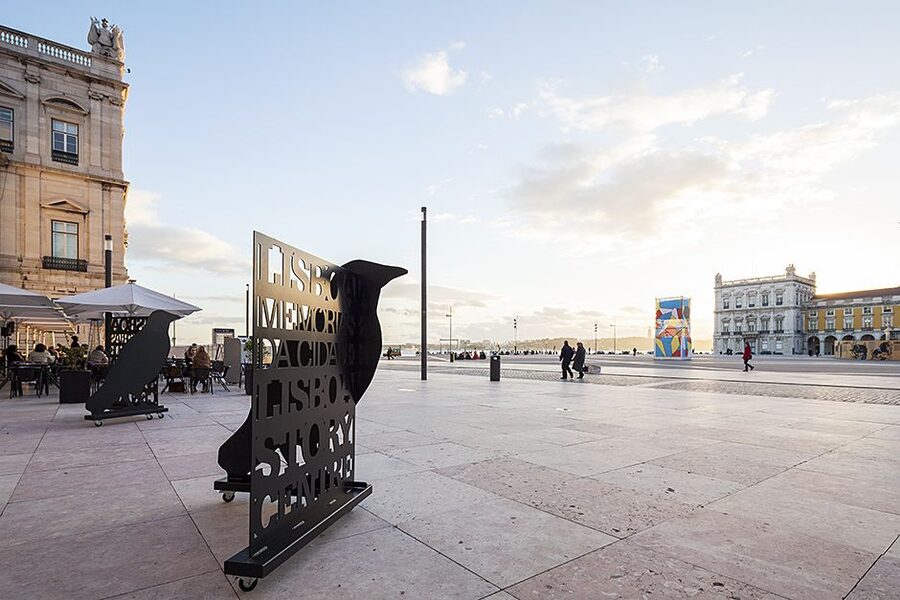
The Lisboa Story Centre is at Terreiro do Paço, 78 to 81, in the East Wing of the square. This is an important detail, because the location lets you pair the visit with a walk around one of Lisbon’s most recognizable public spaces.
The square was rebuilt after the 1755 earthquake, so the Centre’s setting connects directly with one of its main subjects. You are not learning about Lisbon in an isolated museum tucked away from the city. You are standing in the heart of the rebuilt capital, with the surrounding architecture helping to make the story feel relevant.
The Centre covers about 2,200 square meters, but you do not need to set aside half a day. The central presentation lasts about 60 minutes. Your ticket is valid for one day, and the opening hours are 10:00 to 19:00, with the last entry at 18:00.
I would plan this for the middle of a walking day. It works well before lunch, after a visit to the Baixa district, or as a useful indoor stop when the weather is too hot for sightseeing. Since the main experience is compact, you can fit it into a busy Lisbon schedule without losing an entire afternoon.
A few more Lisbon options side by side
- Lisbon City Center Tour – The Unmissable Lisbon
★ 5.0 · 22,234 reviews - Lisbon: Sintra, Pena, Regaleira, Cabo da Roca & Cascais
★ 4.7 · 19,656 reviews - Lisbon: Jerónimos Monastery Entrance Ticket
★ 4.1 · 14,164 reviews
Five chronological rooms on the ground floor
The ground floor contains five main exhibition areas arranged in chronological order. A recorded storyteller guides you through the presentation, so you do not need to read long panels or keep track of a complicated route.
This structure is one of the Centre’s best features. Lisbon’s past includes early civilizations, maritime trade, royal ambition, disaster, reconstruction, and modern growth. Without a clear sequence, those subjects can blur together. Here, each area adds another chapter.
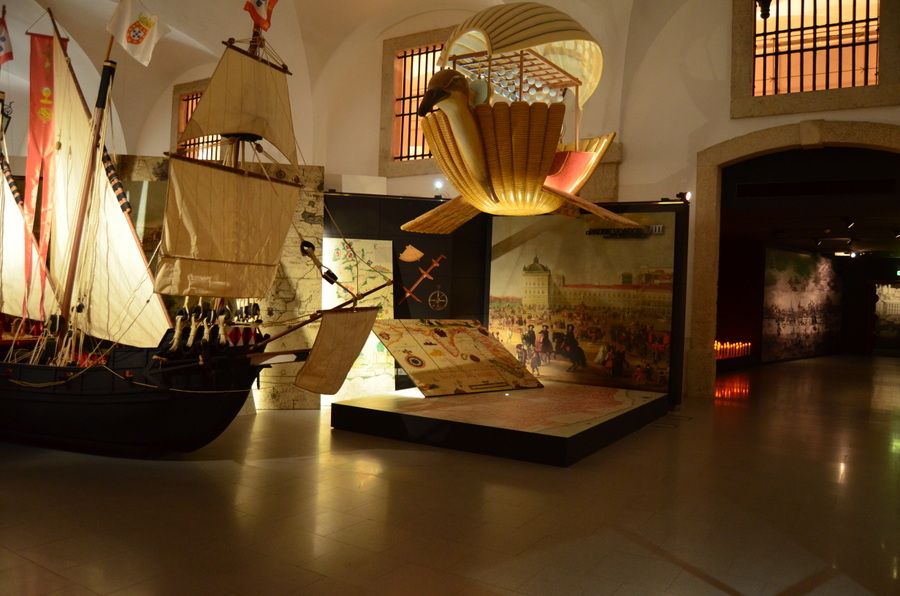
The presentation uses elaborate sets along with multimedia and sensory effects. I would not come expecting a traditional museum filled with original objects. Instead, think of it as a staged history lesson, with the setting and sound doing much of the work.
That approach makes the Centre easy to understand, especially if you are new to Portugal. It also helps families stay engaged. Children do not have to stand quietly in front of rows of display cases while adults read. They can follow the action, listen to the narration, and get a sense of how the city changed over time.
The trade and maritime section is particularly useful for explaining Lisbon’s role during Portugal’s overseas expansion. You are brought into the atmosphere of a 16th-century warehouse and shown products from the New World. Caravela ships are also part of the display, helping connect Lisbon’s prosperity with the sea.
This section gives useful context before you explore sights such as Belém, the Monument to the Discoveries, or the Jerónimos Monastery. Those places can otherwise seem like separate monuments. The Centre helps you see how shipping, trade, and imperial ambition shaped the capital.
The 1755 earthquake and Lisbon’s painful turning point
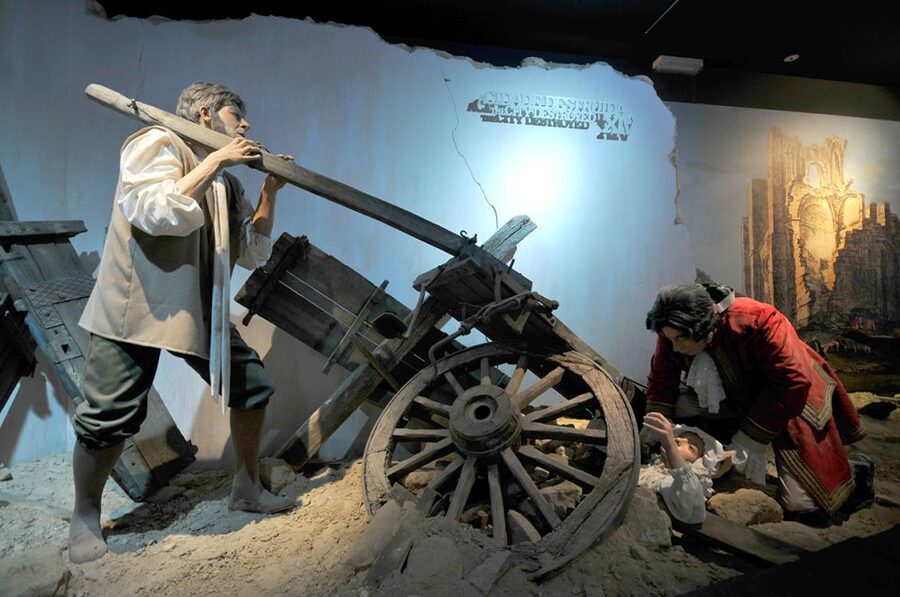
The presentation of All Saints’ Day in 1755 is the emotional center of the visit. The Centre recreates the Great Earthquake and its tragic consequences through an atmospheric presentation rather than a simple written explanation.
You can expect sound, visual effects, and staged surroundings to create a sense of the disaster. The aim is not to reproduce every technical detail. It is to show how quickly Lisbon was changed and why the city you see today has such a distinct, orderly shape in its central district.
This part matters because the earthquake is not just one event in a long timeline. It explains the broad streets and planned blocks of Baixa, as well as the rebuilding program that followed. Once you understand that, a walk through the lower city becomes more meaningful.
The presentation then introduces the Marquis of Pombal and his approach to reconstruction. You follow the rebuilding of Lisbon and see how his plans gave the central district a new form. The Centre presents him as a forceful figure with a large vision for the city, while keeping the material accessible rather than turning the visit into a political lecture.
For me, this is where the attraction offers the most value. You leave with a practical understanding of why Lisbon looks the way it does. The experience does not replace a walk through Baixa, but it gives that walk a clear frame.
One point to keep in mind is that the earthquake section may feel more theatrical than scholarly. If you want a detailed study of the disaster, its causes, or the full social and political aftermath, you will need another source. The Centre’s goal is to make the story understandable and memorable in a short time.
The upstairs model of Lisbon
The sixth exhibition area is on the first floor. It features a virtual scale model of the capital, with attention to different kinds of architecture and a closer look at Lisbon’s development.
This section changes the pace. After moving through staged historical scenes, you get a more visual overview of the city itself. The model helps you understand how neighborhoods relate to one another and encourages you to notice the differences between architectural areas.
I like this part because it can improve the rest of your sightseeing. Lisbon is a city of hills, old quarters, rebuilt central streets, and changing building styles. A model gives you a way to connect those pieces before you walk them.
The information also points you toward modern Lisbon, but this is where the experience feels less complete. The historical journey reaches the present, yet the contemporary period receives less attention than the earlier chapters. If your main interest is Lisbon’s current culture, daily life, or recent urban changes, you may find the ending too short.
There is also a temporary exhibition area linked to the Centre’s main themes. Its subject can change, so I would treat it as an extra rather than the reason to book. It may add useful detail, but the six permanent areas are the core experience.
Same corner of the country, a different pace:
- Lisbon: History, Stories and Lifestyle Walking Tour
★ 4.8 · 10,902 reviews - Lisbon: Sunset Boat Party Cruise with DJ and Open Bar
★ 4.5 · 10,378 reviews - Lisbon: Pena Palace, Sintra, Cabo da Roca, & Cascais Daytrip
★ 4.7 · 9,981 reviews - Lisbon: Oceanário de Lisboa Entrance Ticket
★ 4.6 · 9,943 reviews
Why the audio guide matters
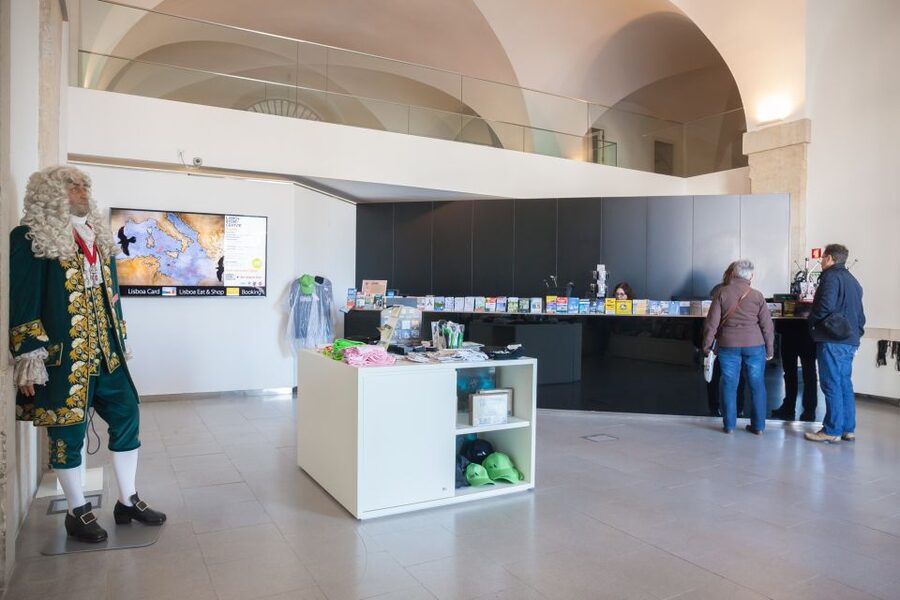
The audio guide is included, and it is central to how the Centre works. The narration is available in Portuguese, Spanish, English, Japanese, French, German, Russian, Mandarin, and Italian. Portuguese also has both adult and child versions.
I would choose your language before entering the main sequence and keep the volume comfortable. Since the route combines narration with visual and sensory moments, it is worth paying attention rather than rushing through the rooms.
The recorded guide keeps the pace consistent and lets you focus on the sets. You do not need to search for the right label or wait for a scheduled talk. It also makes the attraction workable for families with different language needs.
The child version in Portuguese is a thoughtful touch for Portuguese-speaking families. For everyone else, the standard language options provide broad coverage. The available information does not identify an individual guide, because this is a recorded presentation rather than a live guided tour.
This also means the experience is not highly flexible. You cannot stop for a long discussion with a guide or ask questions as you go. I see that as a minor limitation, not a major fault. The Centre is designed as a timed story, and that format keeps the visit simple.
A family-friendly history lesson, with a few limits
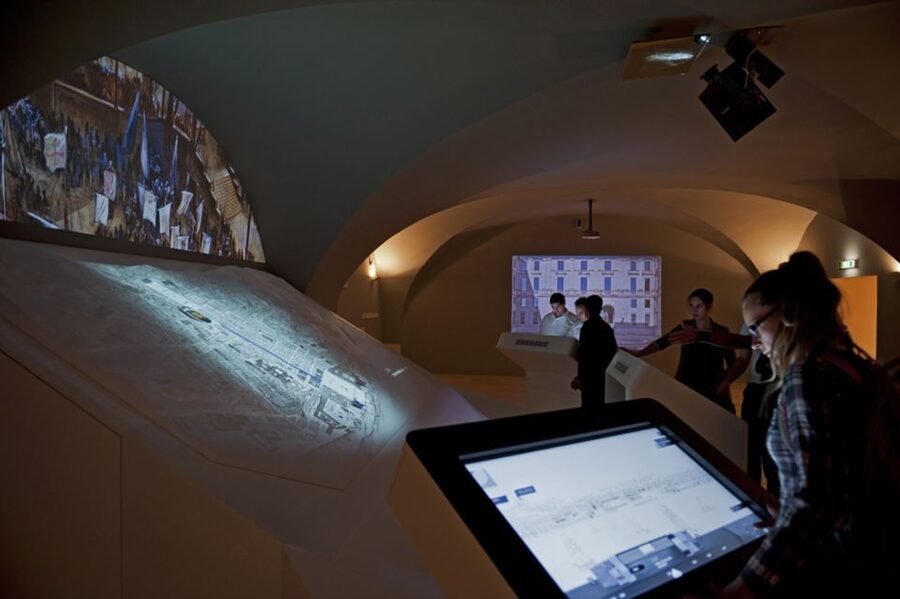
The attraction’s playful style is its biggest strength for families. Children can follow a story about ships, trade, disaster, and rebuilding more easily when each subject has a physical setting and a strong visual hook.
The experience is also straightforward for adults who want an introduction rather than an academic museum visit. I would especially recommend it at the start of a Lisbon stay. The basic timeline gives you useful background before you visit churches, monuments, viewpoints, and neighborhoods across the city.
The limits are clear. The Centre compresses centuries into about an hour, so some topics receive only a quick explanation. It also favors atmosphere and broad understanding over original artifacts and detailed historical debate.
The building does not have air conditioning, according to the available practical information. On a hot day, that can make the visit less comfortable, particularly if you have just walked across central Lisbon. I would go earlier in the day or choose a cooler part of your schedule if heat bothers you.
The experience is wheelchair accessible, which makes it a practical choice for many people who want a history presentation without uneven streets or a long outdoor route. The skip-the-ticket-line option can also be helpful at busy times, though your actual time inside remains about an hour.
Working out the value of a one-day ticket
No ticket price is provided here, so I cannot give you a fair cost comparison in euros. The better question is what you receive for the admission.
You get entry to the permanent presentation, the audio guide, the sixth-floor model area, and access to a temporary exhibition connected to the Centre’s themes. The ticket is valid for one day, but the principal visit is built around a 60-minute route.
I think the value is strongest for three types of people:
- You are visiting Lisbon for the first time and want the city’s main historical turning points explained quickly.
- You are traveling with children and need something more active than a conventional museum.
- You want context before exploring Baixa, Terreiro do Paço, or Lisbon’s maritime sights.
The value is weaker if you already know Lisbon’s history well or want a large collection of original objects. In that case, the staged presentation may feel brief, and the limited treatment of contemporary Lisbon may leave you wanting more.
Still, the Centre can save you from wandering through Lisbon without understanding why the central city looks so planned. That background has practical value. You can use it immediately as you continue sightseeing.
How to fit it into your day
The Centre opens every day from 10:00 to 19:00, with final entry at 18:00. Starting times depend on availability, so check the schedule when planning your day.
I would allow at least 75 to 90 minutes in the area, even though the main journey lasts about an hour. That gives you time to arrive, collect the audio guide, move through the six areas, and look around the model and temporary display without feeling hurried.
A sensible plan is to visit the Centre before exploring the surrounding square and central streets. The earthquake and reconstruction sections will make Baixa easier to read. You will notice the planned layout with more purpose instead of seeing it as simply a convenient shopping district.
You can also place the visit between other central attractions. Since there is no transport component or outdoor walking route, you do not need to organize a complicated transfer. The address puts you close to the action.
If you are sensitive to heat, avoid treating the Centre as a cool escape during the warmest part of the day. The lack of air conditioning may matter, particularly in summer. Its indoor setting is still useful, but comfort may depend on the weather.
Free cancellation up to 24 hours before the visit and the reserve-now, pay-later option make it easier to fit into a changing itinerary. Those terms are useful if you are still arranging your Lisbon days.
Should you book Lisboa Story Centre?
I would book it if you want a clear, entertaining introduction to Lisbon, especially on a first visit or with children. The audio narration, chronological route, warehouse setting, ship displays, earthquake presentation, and city model work together to explain how Lisbon became the city you are exploring.
I would skip it if you want a detailed museum collection, a live historian, or a long account of modern Lisbon. The presentation is short and theatrical, and the contemporary section is limited.
For most first-time visitors, I think the one-hour format is the key advantage. It gives you useful context without demanding a full day. Go early, remember that the building is not air-conditioned, and follow the visit with a walk through Terreiro do Paço and Baixa. That combination gives you both the story and the real city.
FAQ
How long does the Lisboa Story Centre visit last?
The main historical journey lasts about 60 minutes. The Centre covers six public areas, with five main areas on the ground floor and a sixth area on the first floor.
Where is Lisboa Story Centre located?
It is located at Terreiro do Paço, 78 to 81, 1100-148 Lisboa, in the East Wing of the renovated square.
What are the opening hours?
Lisboa Story Centre is open every day from 10:00 to 19:00. The last entrance is at 18:00.
Which languages are available for the audio guide?
The audio guide is available in Portuguese, Spanish, English, Japanese, French, German, Russian, Mandarin, and Italian. Portuguese has both adult and child versions.
Is Lisboa Story Centre wheelchair accessible?
Yes. The Centre is wheelchair accessible.
Does the ticket include an audio guide?
Yes. Admission and the audio guide are included.
Can I cancel my booking?
Yes. You can cancel up to 24 hours in advance for a full refund. A reserve-now, pay-later option is also available.
Recently added in Lisbon
- Lisbon Cinematic Photoshoot with Top-Rated Photographer★ 5.0 · 76 reviews
- City Centre Run in Lisbon★ 5.0 · 164 reviews
- City of Neighborhoods Tour 1H 30M Private Tour by Tuk Tuk★ 5.0 · 38 reviews
- Central Lisbon E-Bike Tour★ 5.0 · 168 reviews
- Hands on Portuguese Cooking Class in Lisbon★ 5.0 · 136 reviews
- Lisbon Sailing Catamaran Public Cruise with drinks★ 5.0 · 304 reviews
- Lisbon City Tour by Tuk Tuk★ 4.5 · 137 reviews
- Romantic Private Sailboat in Lisbon for couples★ 5.0 · 38 reviews
1-Day Tours, compared.

Sintra and Cascais Small-Group Day Trip from Lisbon
Read our review →

Three Cities in One Day: Porto, Nazare and Obidos from Lisbon
Read our review →
Best of Braga and Guimaraes Day Trip from Porto
Read our review →

Day Trip from Porto to Santiago de Compostela and Valença
Read our review →
Arrabida and Sesimbra Small-Group Day Trip from Lisbon with Wine Tasting
Read our review →Browse the lists this tour appears in