
REVIEW · 1-DAY TOURS
Best of Braga and Guimaraes Day Trip from Porto
History comes alive north of Porto. This full-day outing links Braga’s grand religious sights with Guimarães, the city tied to Portugal’s birth, and gives you a useful mix of guided visits, free time, and comfortable transport. I like the strong historical focus and the chance to see two important cities without arranging trains, taxis, and admission tickets yourself. The main drawback is the length of the day, plus the possibility of a bilingual group, which can make commentary feel slower or less detailed.
At about $71.35 per person, the trip offers solid value if you want an efficient first look at northern Portugal. The guide and driver do the route planning, Braga Cathedral and Guimarães Castle are included, and you return to Porto with the evening still ahead. Just bring good walking shoes and a rain jacket. Northern Portugal does not wait for perfect weather.
In This Review
- Key points to know before booking
- Leaving Porto for the Minho Region
- Bom Jesus and the Three-Minute Funicular
- Braga Cathedral and Time to Roam
- Guimarães, the City Connected to Portugal’s Birth
- São Miguel do Castelo and the Old Town
- How the Pacing Works Over Nine Hours
- Is $71.35 Good Value?
- Who Should Book This Day Trip?
- Should You Book It?
- FAQ
- Where does the tour begin?
- Where does the tour end?
- How long does the day trip last?
- Is lunch included?
- Are admission tickets included?
- Can the tour be bilingual?
- How large is the group?
- Can I cancel for a refund?
Key points to know before booking
- Bom Jesus includes a remarkable water-powered funicular: The 1882 system carries visitors up its 300-meter ramp in about three minutes.
- Braga gives you a generous one-hour break: You can eat, shop, or wander instead of following the group every minute.
- Guimarães connects directly to Portugal’s origins: Afonso Henriques, the first king of Portugal, was born here.
- The tour mixes guided structure with breathing room: You get explanations at major sights and time to explore on your own.
- The group may include two languages: The tour is offered in English, but a second language may be used.
- The maximum group size is 27: That is small enough for a minibus, but not the same as a private tour.
Leaving Porto for the Minho Region
You meet at 7:50 a.m. near S. Bento Train Station, at Calçada de Vandoma in central Porto. The meeting point is convenient for anyone staying in the city center, but check the precise instructions before setting out because the description refers both to the area near S. Bento and the Calçada de Vandoma address.
The morning drive takes you toward the Minho Region. This is when the guide begins laying out the story of northern Portugal, including the country’s development, culture, and major historical turning points. That background matters because Braga and Guimarães are not simply pretty towns placed on a sightseeing route. They help explain how Portugal developed as a nation.
The air-conditioned minibus is a practical choice. You are on the road for several stretches, and the vehicle gives you a break from the sun, rain, or chilly weather. The maximum group size is 27 people. That keeps the trip more manageable than a large coach, though you should still expect a shared group pace rather than the freedom of a private car.
Several guides receive special praise for their warmth and ability to tell the story clearly. Castro is described as attentive and personable, while Philip, Christian, José, Pedro, and Jorge are also singled out for good explanations and thoughtful attention to the group. Guide quality can vary from one departure to another, but the strongest pattern is clear: the guide is a major part of the experience.
A few more Porto options side by side
- The Unvanquished Tour in Porto City Center
★ 5.0 · 26,497 reviews - From Porto: Douro Valley w/ Boat Tour, Wine Tasting & Lunch
★ 4.7 · 19,061 reviews - Complete Douro Valley Wine Tour with Lunch, Wine Tastings and River Cruise
★ 5.0 · 12,920 reviews
Bom Jesus and the Three-Minute Funicular
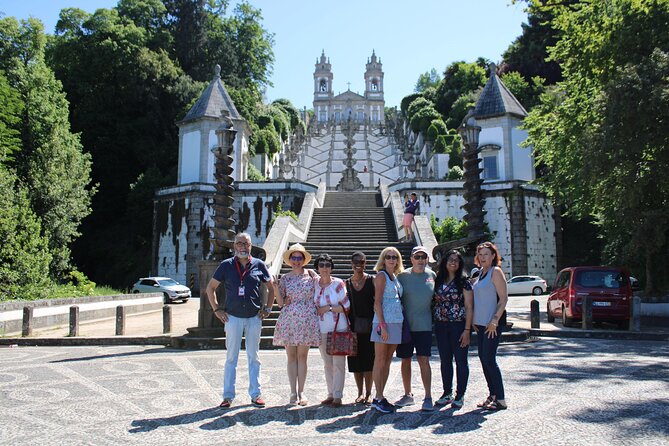
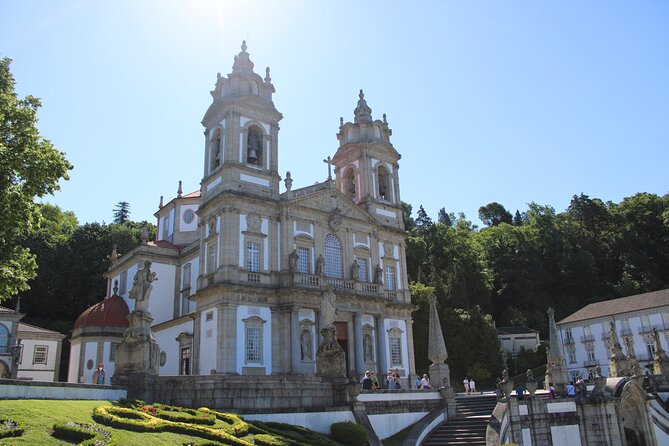
Your first major stop is the Bom Jesus Sanctuary, above Braga. The setting is one of the day’s visual highlights. From the bottom of the staircase, you can look up toward the white church and its long procession of granite steps, fountains, statues, and Baroque decoration.
The staircase has 17 landings. Its themes include the Stations of the Cross, the Five Senses, the Virtues, Moses receiving the Commandments, and biblical figures connected with the condemnation of Jesus. You do not need to study every detail to enjoy the sight. The design works as a grand visual ascent, with each landing adding another layer of symbolism.
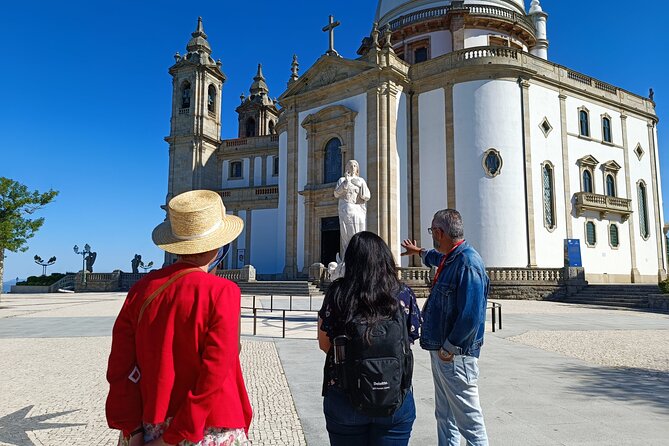
The church itself was designed by Carlos Amarante in an Italian-influenced Neoclassical style. It fits neatly into the northern Portuguese setting, combining formal architecture with the sloping grounds around it. The sanctuary is important for religious reasons, but you do not need to be religious to appreciate the engineering and design.
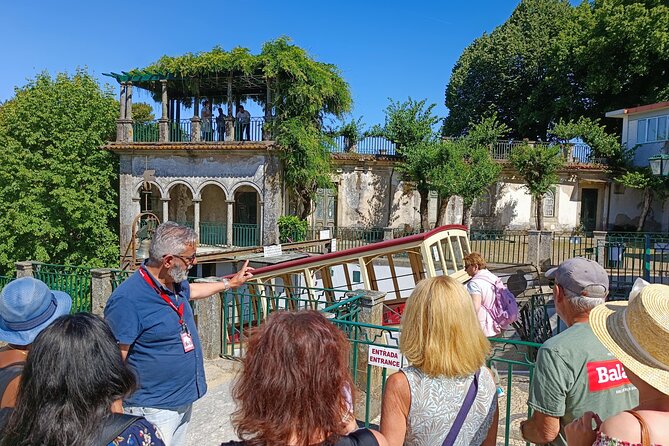
The funicular is the unusual star here. Installed in 1882, it was the first of its kind in Portugal and still uses water power. It climbs the 300-meter track in about three minutes. That detail turns a standard church visit into a small lesson in 19th-century engineering.
You have about 30 minutes at Bom Jesus. That is enough to take in the main view, visit the sanctuary, and see the funicular, but it is not enough for a leisurely exploration of every stairway and fountain. If you want photographs, take them early and keep an eye on the meeting time. The grounds are open and the group must stay on schedule.
Admission to the sanctuary is included. The stop is also one of the reasons this trip works well for people who want to see more than city centers and shops.
Braga Cathedral and Time to Roam
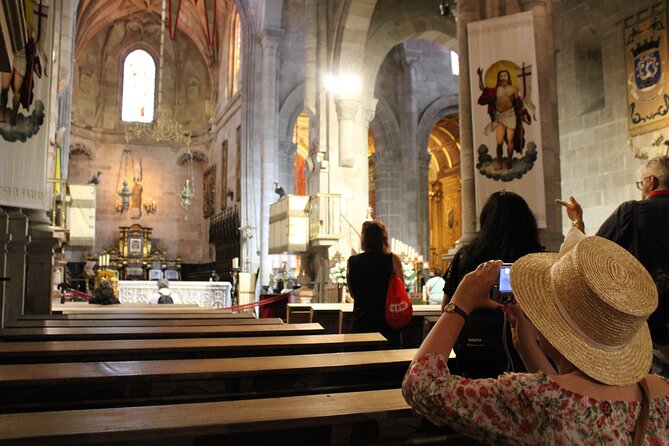
The next stop is Braga Cathedral, known as the oldest cathedral in Portugal. Construction began at the end of the 11th century, and the cathedral was consecrated to the Virgin Mary in 1089. That places the building before Portugal became an independent kingdom.
Braga’s religious importance once rivaled that of Santiago de Compostela. The cathedral’s age gives the visit real weight, but the most useful detail for many visitors is the connection to Portugal’s founding family. Count Henry and Teresa, the parents of Portugal’s first king, are buried in the Chapel of Kings.
You have about 30 minutes inside. The admission ticket is included, so you are not faced with another small fee or a decision about whether the visit fits your budget. The guide’s explanation helps you understand why Braga matters, rather than treating the cathedral as just another old church.
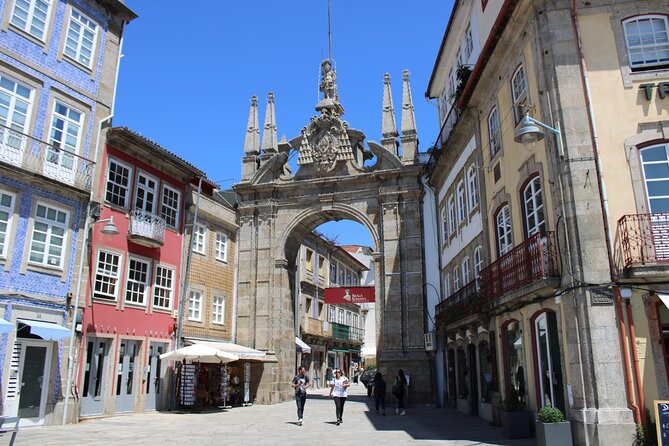
Afterward, you get one hour of free time in Braga. This is an important feature. You can walk the central streets, browse shops, find lunch, or revisit a detail that caught your eye. The free period also breaks up the guided sightseeing and gives you a chance to set your own pace.
A practical point: lunch is not included. You should budget for a meal or snack during the free time. The schedule gives you enough space for food, but the exact choice depends on the day and the group’s timing. A guide may suggest a restaurant, and one particularly positive account praised the food at a recommended restaurant.
Braga is more than a quick photo stop, so the hour is useful. Still, if you want a long, unhurried visit to its museums, churches, or shopping streets, you will need a separate visit.
Guimarães, the City Connected to Portugal’s Birth
After Braga, the minibus makes the short journey to Guimarães. This city is widely associated with the formation of Portugal because Afonso Henriques, the first king, was born here.
The connection is not just a slogan for the visitor map. Guimarães Castle and the surrounding old town place the early story of the country in a physical setting. The city’s compact center also makes it easier to experience on foot than a spread-out modern city.
The schedule allows about two hours in Guimarães, including the castle, the small Church of São Miguel do Castelo, and the old town. That is enough for a useful introduction, but you should not expect to cover every street or museum.
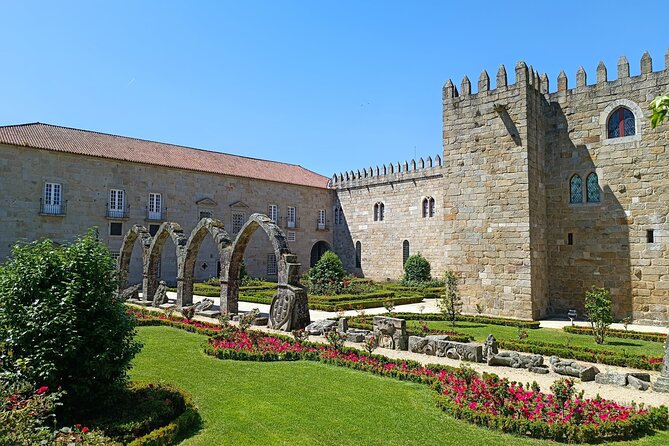
The castle visit lasts about 30 minutes and admission is included. Its origins reach back to the late 10th century, when Countess Mumadona ordered a defensive structure to protect local people from Viking attacks from the north and Muslim raids from the south. Later, Count Henry expanded the fortifications.
The central keep and four corner towers make the castle easy to picture as a defensive stronghold. Tradition also links the building beside the northern wall with Count Henry’s residence and the birthplace of Afonso Henriques, though that connection is not firmly documented.
Set your expectations carefully. The castle is historically important, but parts of it are limited in access, and access to the walls is now prohibited. You may find the visit more rewarding for its place in Portugal’s story than for the amount of interior material on display. One account found the castle less impressive than the other stops, while others especially enjoyed it.
That difference makes sense. If you love medieval fortifications, you will likely appreciate the setting and the stories. If you want furnished rooms, large exhibits, or long rampart walks, the castle may feel spare.
Same corner of the country, a different pace:
- Porto: Six Bridges Cruise
★ 4.2 · 11,680 reviews - Porto: Live Fado Show with Glass of Port Wine
★ 4.8 · 6,498 reviews - Porto: 6 Bridges Douro River Cruise
★ 4.3 · 6,472 reviews - Porto: Torre dos Clerigos Entrance Ticket
★ 4.6 · 6,395 reviews
São Miguel do Castelo and the Old Town
Near the castle is the Church of São Miguel do Castelo, a small Romanesque building dating from the 13th century. Local tradition says Count Henry built it in the 12th century and that Afonso Henriques was baptized here.
The church is simple and compact. Its interest comes from its age, its connection to the founding period, and the warriors buried beneath its floor. You spend only about 10 minutes here, so treat it as a brief historical stop rather than a full church tour.
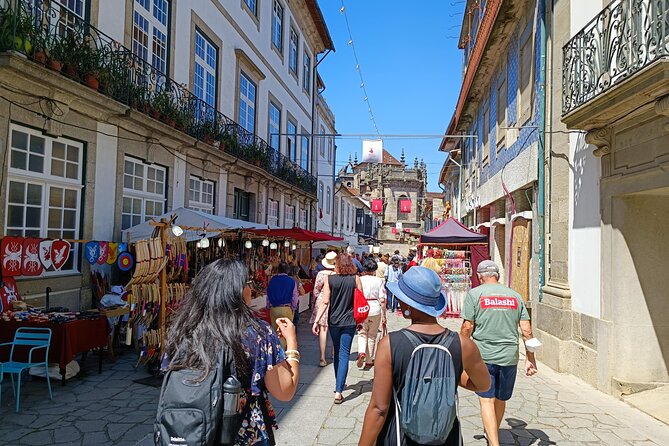
The final major part of the day is Guimarães’ historic center. The old town occupies the area once enclosed by the city walls and has UNESCO World Heritage status dating from 2001. Its appeal is visual and urban: granite balconies, iron verandas, porticos, narrow lanes, arches, towers, cloisters, and paving worn smooth over time.
You will see grand houses such as the Mota Prego house, the Vila Flor Palace, and the Toural Palace. The streets are compact enough for a guided walk, yet they reward looking upward and sideways. Guimarães is the sort of place where a small balcony or connecting arch may say as much about the city as a major monument.
The walking tour lasts about 30 minutes, with additional free time folded into the broader Guimarães visit. This arrangement works well. The guide gives you the basic map and historical frame, then you can browse the shops, take photographs, or find lunch without needing to follow a flag through every street.
Guimarães often becomes the favorite part of the day for people who enjoy attractive old towns. It feels more intimate than Braga, and its connection to Portugal’s beginnings gives the streets a clear sense of purpose.
How the Pacing Works Over Nine Hours
The full outing lasts about nine hours, although traffic and visiting schedules can change the exact return time. The route includes several stops, a one-hour break in Braga, walking in Guimarães, and transport between cities. One reported schedule returned to Porto around 5 p.m., leaving enough time for dinner or an evening walk.
The pacing is one of the tour’s strengths. You spend some time sitting, some time walking with the guide, and some time on your own. That balance keeps the day from becoming a continuous march through churches and monuments.
It is still a long day. Bom Jesus includes steps and sloping paths, while the old centers of Braga and Guimarães involve walking on stone paving. Rain can make the day harder. Bring shoes with a good grip, a waterproof layer, and something to protect your phone or camera.
The tour normally operates in one language, but a second language may be used. This is the clearest practical weakness in the arrangement. English commentary may be followed by Spanish commentary, or the other way around, which can reduce the time available for free exploration and make explanations harder to follow.
If detailed guiding is a top priority, confirm the language arrangement when booking. The tour description allows for bilingual departures, so it should not come as a surprise at boarding. A guide such as Jorge has successfully delivered commentary in both Spanish and English, but a bilingual format will rarely feel as focused as a single-language tour.
Is $71.35 Good Value?
At $71.35, the price is fair for a nine-hour day that includes transport, a professional guide, Bom Jesus Sanctuary, Braga Cathedral, Guimarães Castle, and a guided walk in the UNESCO-listed center.
You are paying for convenience as much as admission. Without a tour, you would need to coordinate transport from Porto to Braga, move between Braga’s upper sanctuary and center, continue to Guimarães, locate the castle, and return to Porto. The minibus removes that planning burden.
The value is strongest for a first visit to northern Portugal, especially if you have limited time in Porto. It is also useful for solo visitors and couples who want company and historical context without booking a private guide.
The value is weaker if you have already spent time in Braga and Guimarães or prefer long, independent visits. The stops are introductory, and free time is limited compared with a self-planned overnight stay. Lunch and personal expenses are extra.
A free Porto walking tour is also offered to people who book this experience. It is available daily in English and Spanish at 9:30 a.m. and 4:30 p.m. from the Living Tours agency on Rua Mouzinho da Silveira. Since this is separate from the Braga and Guimarães route, it is best viewed as a useful bonus for learning Porto, not as part of the day trip itself.
Who Should Book This Day Trip?
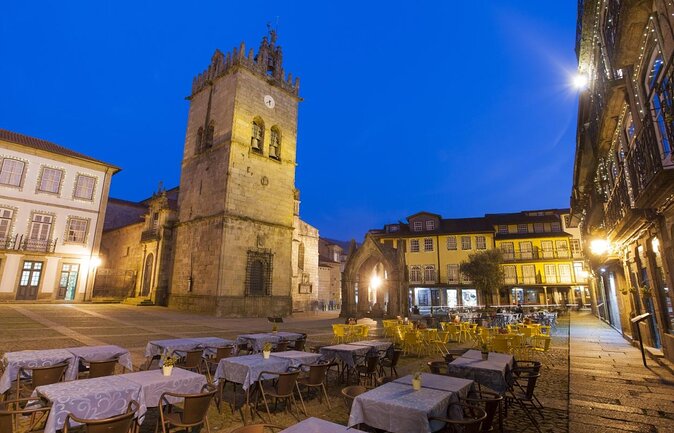
I would choose this tour if you want a broad introduction to northern Portugal in one day. It suits history lovers, first-time visitors, solo visitors, and anyone who prefers a guide to handle transport and timing.
It is also a good fit if you want more than Porto’s center. Braga supplies churches, religious art, and grand architecture. Guimarães supplies medieval streets and the story of Portugal’s first king. Together, they create a better picture of the region than either city alone.
You may want a different plan if you dislike early starts, dislike shared transport, or need a slow pace. The day is full, and the bilingual format can affect how much commentary you receive. Heavy rain is another concern because much of the experience takes place outdoors.
The tour has a strong overall record, with a 4.7 rating from 2,552 reviews and 93 percent of customers recommending it. The praise centers on guides who are friendly, attentive, and good at explaining Portugal’s past. Castro, Christian, José, Pedro, Philip, and Jorge are among the guides specifically praised, though your guide will depend on the departure.
Should You Book It?
Book this day trip if you want an efficient, well-priced introduction to Braga and Guimarães, with key admissions included and a guide to connect the sights. The best parts are Bom Jesus, Braga Cathedral, Guimarães’ old streets, and the personal touch that strong guides bring to the day.
Skip it if you want a private experience, extended museum time, or complete control over meals and departure times. If you book, confirm the meeting point, prepare for nine hours on the go, and ask about the language format. With those expectations in place, this is a sensible way to add two of northern Portugal’s most important cities to a Porto stay.
FAQ
Where does the tour begin?
The tour begins at 7:50 a.m. at Calçada de Vandoma in Porto, near S. Bento Train Station.
Where does the tour end?
The activity ends back at the meeting point in Porto.
How long does the day trip last?
The tour lasts approximately nine hours. Traffic, visiting schedules, and other local conditions can affect the exact duration.
Is lunch included?
No. Lunch and personal expenses are not included, but the itinerary provides free time in Braga and time to explore Guimarães.
Are admission tickets included?
Admission to Braga Cathedral, Guimarães Castle, and Bom Jesus Sanctuary is included.
Can the tour be bilingual?
Yes. Tours are usually conducted in one language, but a second language may be used. The listed tour language is English.
How large is the group?
The maximum group size is 27 people, and transportation is provided in an air-conditioned minibus.
Can I cancel for a refund?
You can cancel at least 24 hours before the start time for a full refund. Cancellations or changes made less than 24 hours before the experience are not refundable.
Recently added in Porto
- Porto: Tuk tuk Tours with Port Wine Tasting★ 4.5 · 65 reviews
- The Beautiful Story of Porto: Guided Tour with Entry Tickets★ 4.8 · 111 reviews
- Porto: Royal Oporto Tour na Real Companhia Velha★ 4.8 · 395 reviews
- Porto: Entry Ticket at WOW – The Wine Experience Museum★ 4.7 · 356 reviews
- Porto: WOW Daily Ticket★ 4.7 · 42 reviews
- Porto: Luxury Yacht Tour of the 6 Bridges and Douro Estuary★ 4.9 · 521 reviews
- Porto: 6 Bridges Port Wine River Cruise with 4 Tastings★ 4.8 · 182 reviews
- Porto Wine Tasting Experience with Portuguese Tapas Plate★ 4.7 · 356 reviews
1-Day Tours, compared.
Sintra and Cascais Small-Group Day Trip from Lisbon
Read our review →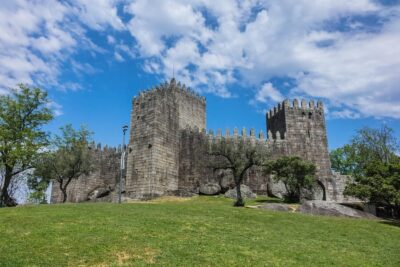
Three Cities in One Day: Porto, Nazare and Obidos from Lisbon
Read our review →
Day Trip from Porto to Santiago de Compostela and Valença
Read our review →
Arrabida and Sesimbra Small-Group Day Trip from Lisbon with Wine Tasting
Read our review →
Browse the lists this tour appears in