
REVIEW · WALKING TOURS
Aveiro: Stories, Canals, and Azulejos Guided Walking Tour
Aveiro rewards a slower look. This two-hour walk connects the city’s churches, canals, salt traditions, boats, tiled façades, and local food through stories you would likely miss on your own. I especially like the focus on azulejos, from early modern tilework to Art Nouveau details, and the way the route explains why Aveiro’s canals and lagoon boats mattered. The price, about $20 per person, is also fair for a guided introduction to the city.
The main consideration is physical comfort. You will walk for two hours in all weather, often over Portuguese calçada, and the tour is not suitable for wheelchair users, people with mobility impairments, people with low fitness, pregnant women, or children under 10. Museums and interiors may also vary by day, so a Monday visit could offer fewer open sites.
In This Review
- Key points at a glance
- Starting at Praça da Republica
- The Carmelite Convent Church on Marques de Pombal Square
- Tile façades and the story of Santa Joana
- Canal da Fonte Nova and Aveiro’s traditional boats
- Beira Mar, Art Nouveau, and iron architecture
- From medieval power to a difficult 17th century
- Local food: eel stew and ovos moles
- Finishing at São Gonçalinho
- What Tony Walker brings to the walk
- Is two hours enough for Aveiro?
- Price, practical details, and who should book
- Should you book the Aveiro walking tour?
- FAQ
- How long does the Aveiro walking tour last?
- Where does the tour begin?
- Where does the tour end?
- Which languages are available?
- Is food included?
- Is the tour suitable for children or wheelchair users?
Key points at a glance
- A story-led route through central Aveiro: Begin at Praça da Republica and finish at the Church of São Gonçalinho, with history linking each stop.
- Excellent tile and architecture spotting: Look for azulejos, Art Nouveau, Art Deco, ironwork, and two façades connected with the Museum of Art Nouveau.
- Canals with a purpose: Learn how the Canal da Fonte Nova developed and how moliceiros and mercanteis served the lagoon.
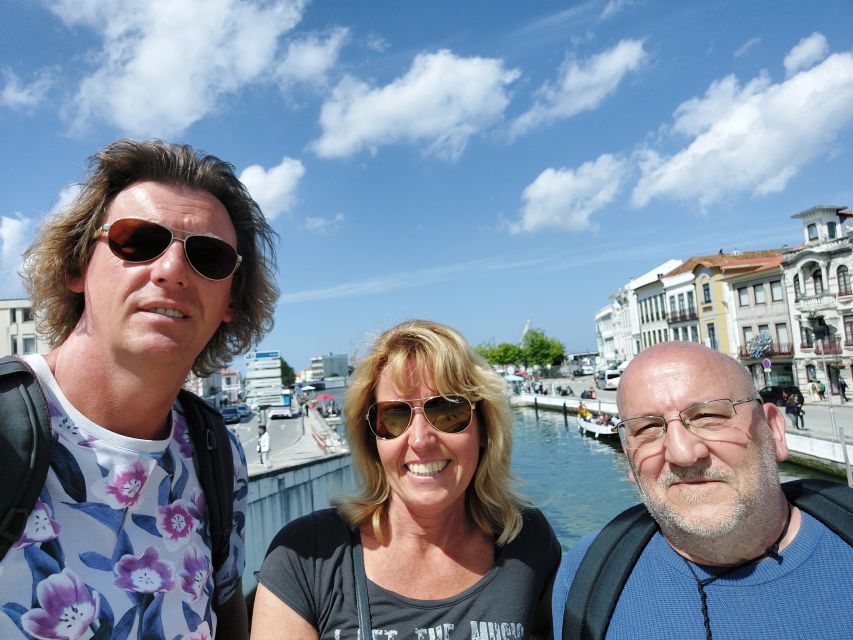
- A strong local guide matters: Tony Walker is the named provider, and the guide Antonio is praised for humor, clear explanations, and a personal connection to Aveiro.
- Good value at $20: The walk includes free-entry or walk-through sites and gives you context before you explore independently.
- Plan for proper footwear: Calçada, sun, rain, and a two-hour route make comfortable shoes and weather protection essential.
Starting at Praça da Republica
Your meeting point is near the statue in the center of Praça da Republica. Look for the guide wearing a yellow and blue badge. This is a practical central starting place, since the first sights are the Town Hall and the Misericórdia Church.
The square gives the guide room to explain how Aveiro developed as a civic and religious center. You are not simply ticking off buildings. The aim is to learn how the city’s public spaces, churches, waterways, and trades fit together.
From here, the walk follows Rua de Coimbra. Pay attention to the pavement beneath your feet. The black and white calçada à portuguesa is easy to treat as background decoration, but the guide explains its role as part of Portugal’s visual language. It also gives you a useful habit for the rest of the walk: look down at the paving, then up at the façades.
The route is conducted in Portuguese, French, English, or Spanish. If you want to ask questions, this is the kind of walk where staying engaged pays off. Several accounts describe the guide as willing to answer questions and adjust the pace when the group pauses for a closer look.
More Walking Tours in Portugal:
- Lisbon: History, Stories and Lifestyle Walking Tour
★ 4.8 · 10,902 reviews - Best of Lisbon Small-Group Guided Walking Tour
★ 5.0 · 4,869 reviews - Lisbon: Food and Wine Small Group Walking Tour
★ 4.9 · 4,082 reviews
The Carmelite Convent Church on Marques de Pombal Square
The next important stop is the Carmelite Convent Church in Marques de Pombal Square. It is described as a small Baroque church, but small does not mean plain. Its scale makes it easier to notice decorative details without the distraction of a giant interior.
This stop is valuable because the tour does not treat churches as isolated monuments. The guide places the church within Aveiro’s religious past and points out the artistic details that make it worth entering. The tour includes free-entry or walk-through access to the sites listed, so you do not need to budget extra admission fees for this route.
Do not rush this part. A short guided explanation can change how you read a Portuguese church. Instead of seeing only an attractive interior, you begin to notice how decoration, devotion, and local wealth shaped the building.
Tile façades and the story of Santa Joana
As you continue, the route brings you past the tile panels of Casa de Santa Zita and Sapataria Leão. These are the sort of details that are easy to pass without a guide. Aveiro is famous for decorative façades, but the real pleasure comes from learning to distinguish dates, styles, and uses rather than photographing every tiled wall in sight.
The walk then passes beside the Dominican Convent of Jesus. Here the guide tells the story of Princess Santa Joana, the city’s patron saint. This adds a human side to Aveiro’s religious history. You are not just looking at a convent building. You are hearing why one particular figure became so important to the city.
After the convent, the route passes the cathedral. The sequence works well because the guide moves from a small church to a convent, then to a larger religious landmark, while keeping the focus on people and local memory.
One of the strongest features of the tour is its attention to details in paintings, symbols, and architecture. A guide who has lived in Aveiro for more than 20 years can point out connections that are not obvious from a map or guidebook. Tony Walker is also described as a retired teacher, which helps explain the clear, explanatory style that many people appreciate.
Canal da Fonte Nova and Aveiro’s traditional boats
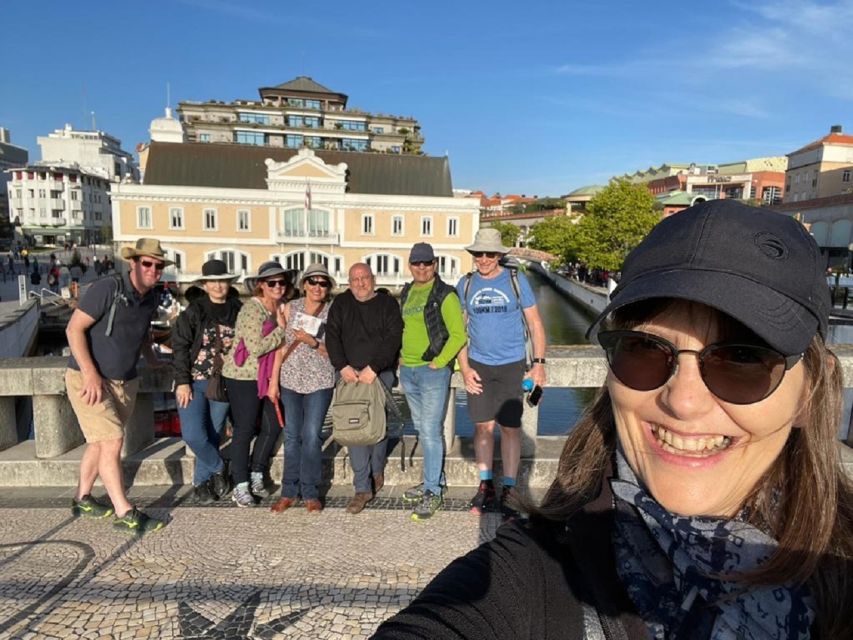
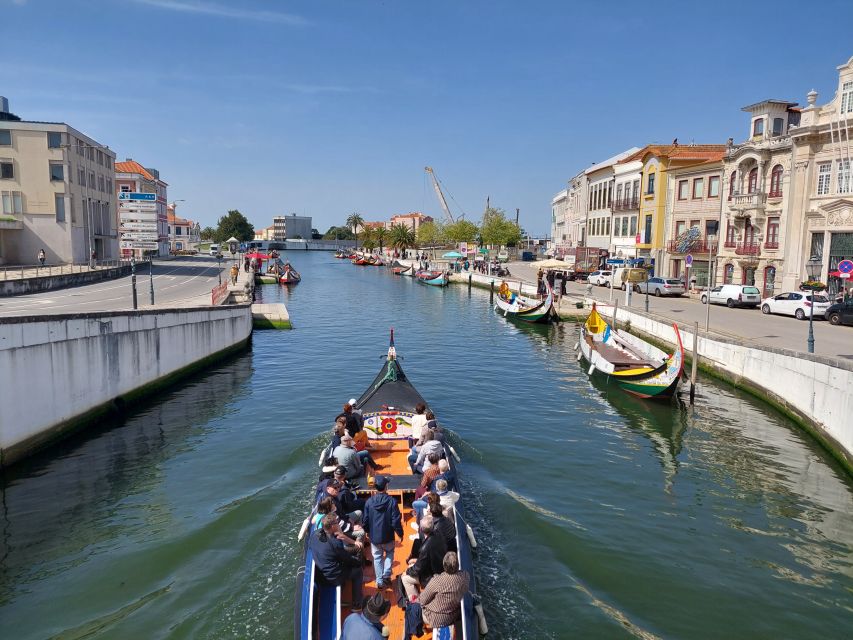
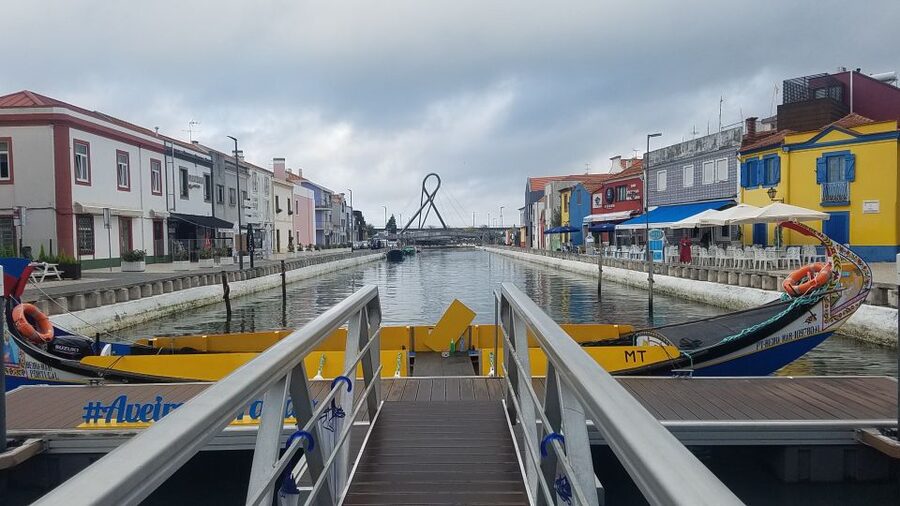
The walk then reaches the Canal da Fonte Nova. This is where Aveiro’s relationship with water becomes easier to understand. The guide explains how the canals began, what practical work they supported, and why the lagoon shaped the city’s economy.
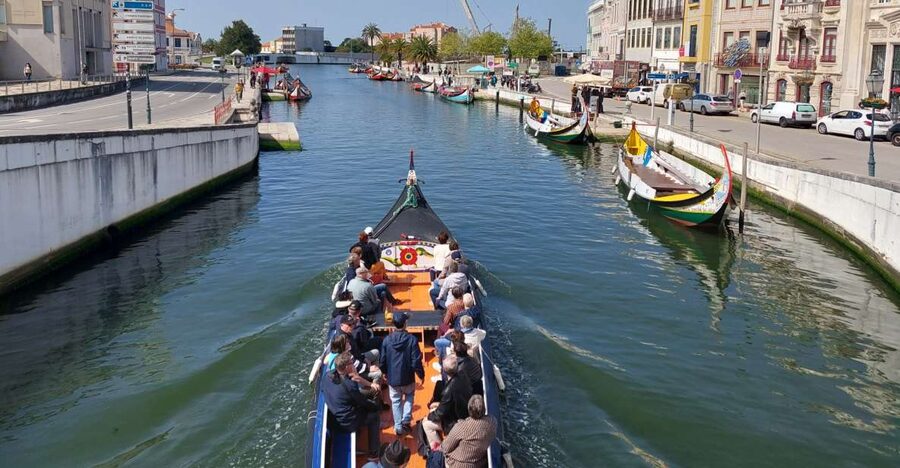
You will learn to identify traditional boats from the Ria de Aveiro, including moliceiros and mercanteis. These are not just colorful sightseeing props. They reflect the working life of the lagoon and the movement of materials connected with local trades.
The canal section is a good reason to choose this tour instead of only taking a boat ride. A boat gives you a pleasant view from the water, but a walking guide can explain what you are looking at, how the canals functioned, and how boats fit into Aveiro’s past. You can book a boat trip separately if you want both experiences.
The Canal da Fonte Nova also preserves a reminder of the city’s industrial past. One of the former ceramic factory buildings still survives there. Its presence helps connect Aveiro’s decorative tiles with the production behind them. The city’s tile tradition was not simply an artistic fashion. It was linked to local industry and changing urban life.
A few more Portugal options side by side
- Aveiro: Traditional Moliceiro Boat Tour
★ 4.5 · 3,443 reviews - Aveiro: Scenic Guided Boat Tour
★ 4.4 · 1,047 reviews - Aveiro: Traditional Moliceiro Boat Cruise
★ 4.5 · 797 reviews - Aveiro: Boat Cruise and City Walking Tour with Sweet Tasting
★ 4.7 · 318 reviews
Beira Mar, Art Nouveau, and iron architecture
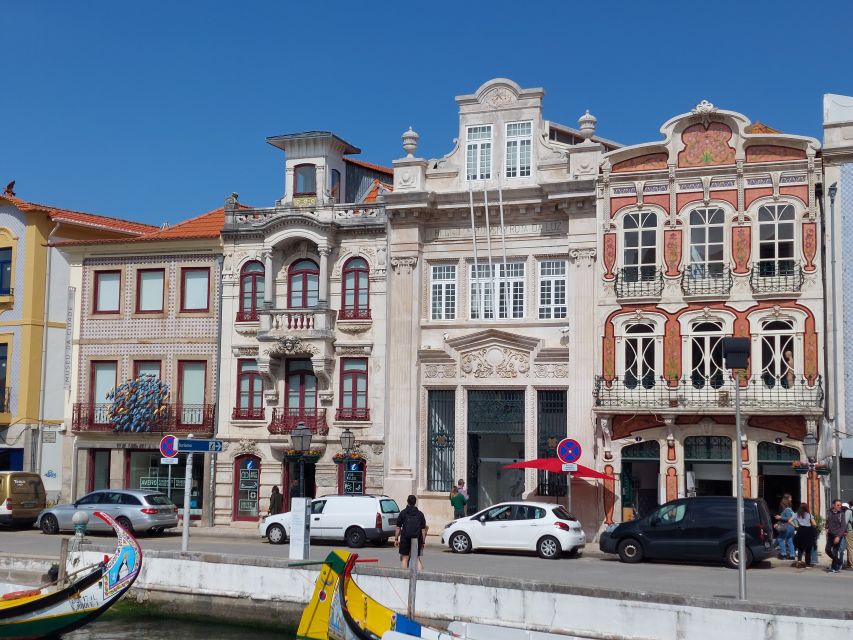
The route continues through the Beira Mar neighborhood, where tiles fill much of your view. This is likely the most rewarding section for anyone who enjoys architecture but does not want a formal museum tour.
The guide points out Art Nouveau and Art Deco features, along with iron architecture from the transition between the 19th and 20th centuries. These styles show how Aveiro changed during its revival in the 19th century. The result is a city where older religious buildings and newer commercial façades sit within a fairly compact walking route.
The two façades associated with the Museum of Art Nouveau are especially useful stops. Even if you do not enter a museum, the exterior details give you something concrete to look for as you continue around town. You may notice curved lines, decorative ironwork, patterned tiles, and an interest in ornament that differs from the older churches.
This is also where a guide can make the biggest difference. Walking Aveiro alone, you might see a pretty façade and move on. With explanations of style, date, materials, and symbolism, the same building becomes easier to remember. One especially useful benefit is learning how to spot these features later, after the tour has ended.
From medieval power to a difficult 17th century
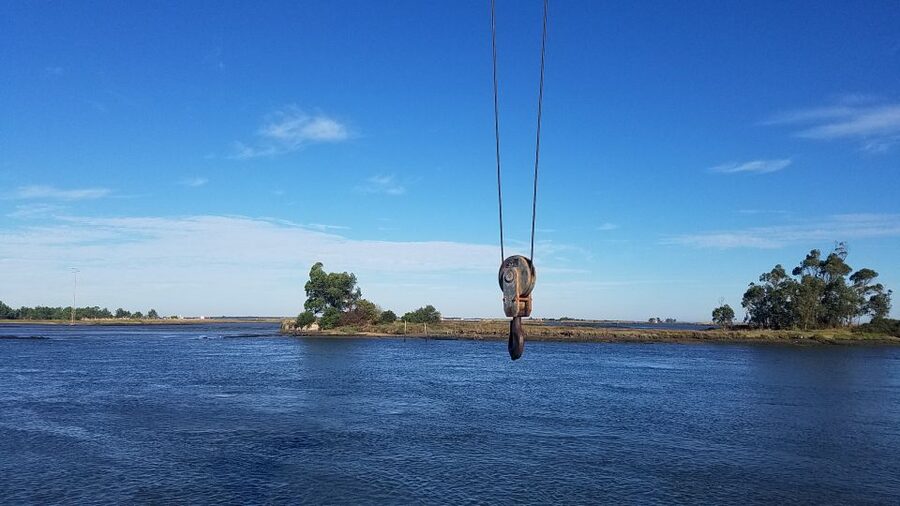
The route does not present Aveiro as a city that simply grew in a straight line. Along the way to the saltpans, the guide discusses Aveiro’s power from the 11th through the 15th centuries, followed by its decline during the 17th and 18th centuries and its revival in the 19th century.
That broad timeline gives the walk shape. You learn that the canals, salt, lagoon, boats, churches, and later architecture are parts of a long cycle of prosperity, hardship, and renewal.
The phrase crossing of the desert is used to describe Aveiro’s difficult 17th and 18th centuries. The point is not to memorize dates. It is to understand why a city with such attractive architecture and strong maritime links also experienced a period of weakness before returning to growth.
The route toward the saltpans may be the least comfortable portion for some people, since the tour is outdoors and continues on foot. Still, it adds context that a short central-city stroll would miss. You see how water and salt were not scenery alone, but essential to Aveiro’s identity and economy.
Local food: eel stew and ovos moles
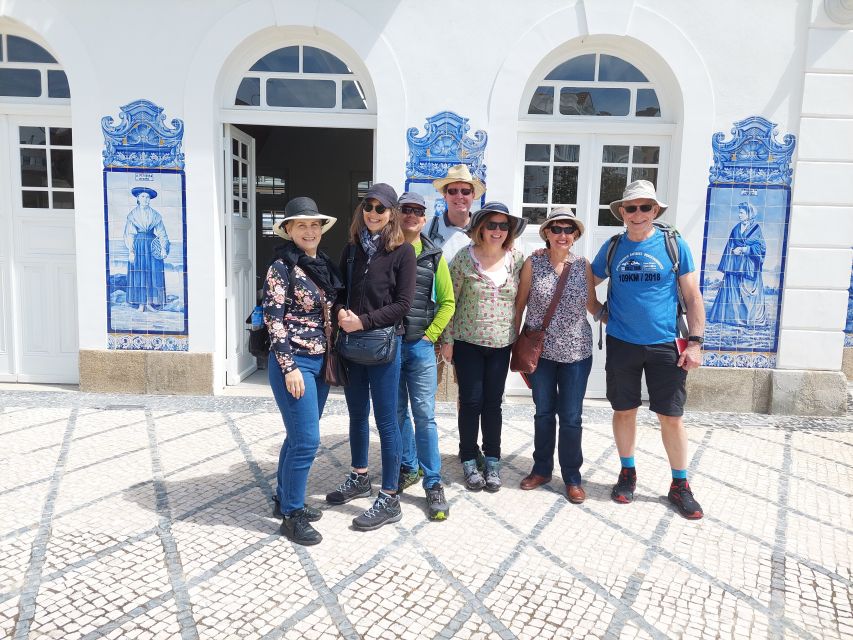
Near the end of the walk, the guide introduces local food. Eel stew is one of the traditional savory dishes associated with Aveiro. It may not suit every palate, but it reflects the lagoon environment and the city’s connection with local waters.
The sweeter side of Aveiro is represented by ovos moles, a traditional confection made with egg yolk and sugar. This is one of the city’s best-known food symbols, and hearing about it during the walk helps place it in local culture rather than treating it as a souvenir with no story.
You should note that food and drinks are not included. The tour provides recommendations and context, not tastings. That arrangement keeps the price low and gives you freedom to choose what you want to try afterward.
Finishing at São Gonçalinho
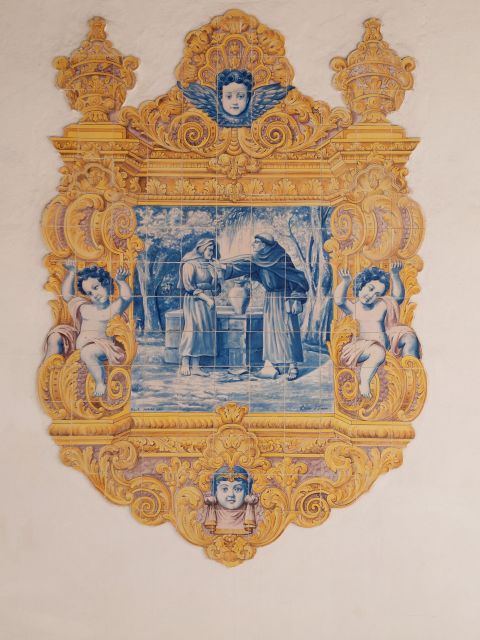
The walk ends at the Church of São Gonçalinho, back at the original meeting point area. The church is tied to a lively January festival in which a traditional sweet called cavacas, hard and heavy, is thrown over the heads of the faithful.
It is a memorable final story because it shows Aveiro at its most playful. The tour has covered churches, industrial buildings, architecture, salt, boats, and political history. It finishes with a local ritual full of humor, devotion, and physical chaos.
This ending also gives you a useful idea for future planning. If your visit lines up with the January festival, ask the guide about it and allow extra time to understand the tradition. If not, the story still gives the church a character that you would not get from a quick photograph.
What Tony Walker brings to the walk
The guide is central to the value of this experience. Tony Walker is the named provider, while the guide is also referred to as Antonio or Tony in the tour material. The strongest praise centers on his clear explanations, good humor, passion for Aveiro, and ability to answer questions.
His background as a retired teacher is worth noting. People who prefer a guide with a structured, classroom-like approach may appreciate him. He is described as someone who has lived in Aveiro for more than 20 years, knows the city personally, and enjoys showing how current administration and daily life connect with the past.
The walk may also feel more personal when the group is small. One account describes a near-private experience, while another notes that the guide was happy to let the walk run longer when the group wanted more time for stories. You should not assume every departure will overrun, but the tone appears conversational rather than rigid.
There is one practical limitation. The quality of the visit can depend on which buildings are open. A Monday departure may mean museums and other interiors are closed. The tour can adapt when special events or free-entry days open more sites, but opening schedules are outside the guide’s control.
Is two hours enough for Aveiro?
Two hours is enough for a well-planned introduction, not a complete study of Aveiro. The route covers many subjects, including churches, tilework, canals, boats, Art Nouveau, salt, food, and local festivals. The pace is likely steady, with regular stops for explanation.
I like this length for a first visit. It gives you a framework without consuming an entire day, and you can return to the areas that catch your interest. The walk is also a sensible choice if you arrive in Aveiro for a short visit and want more than a canal photograph and a pastry.
The tradeoff is that the route has a lot to cover. If you want long interior visits, extended photography stops, or detailed museum time, two hours may feel tight. The focus is on connections and stories, not exhaustive access to every building.
Price, practical details, and who should book
At about $20 per person, this is good value if you want historical context and architectural guidance. The sites are free entry or walk-through, so your payment mainly covers the guide’s time, route planning, explanations, and local knowledge rather than admission tickets.
Wear comfortable shoes with a firm sole. Portuguese calçada can be uneven, and the tour takes place rain or shine. Bring sunscreen, weather-appropriate clothing, and a passport or identity card as requested.
Large bags, luggage, bikes, alcohol, and drugs are not allowed. Children under 10 cannot join, and unaccompanied minors are not accepted. The route is not suitable for wheelchair users or people with mobility limitations, low fitness, or pregnancy.
Cancellation is free up to 24 hours before the tour for a full refund. You can also reserve and pay later, which is useful if your Portugal plans are still changing.
Should you book the Aveiro walking tour?
I would book this tour if you want to understand Aveiro rather than simply pass through it. It is especially useful for first-time visitors who enjoy churches, tiled façades, local legends, industrial history, and the practical story behind the canals.
Choose it over a boat trip if you want a stronger explanation of the city’s buildings and past. Choose both if you have time and want to see the lagoon from the water after learning what its boats and canals were used for.
Skip it if you need a wheelchair-accessible route, dislike walking on stone paving, or mainly want food tastings and a boat ride. For most able-bodied visitors who can manage two hours on foot, the $20 price is a sensible way to see Aveiro with sharper eyes.
FAQ
How long does the Aveiro walking tour last?
The tour lasts two hours. Starting times vary, so check availability when booking.
Where does the tour begin?
Meet the guide near the statue in the center of Praça da Republica. The guide will wear a yellow and blue badge.
Where does the tour end?
The tour ends back at the meeting point area, at the Church of São Gonçalinho.
Which languages are available?
The live guide can conduct the tour in Portuguese, French, English, or Spanish.
Is food included?
No. Food and drinks are not included. The tour discusses local specialties such as eel stew and ovos moles.
Is the tour suitable for children or wheelchair users?
The tour is not suitable for children under 10, wheelchair users, people with mobility impairments, people with low fitness, or pregnant women.
Recently added in Portugal
- Lisbon Cinematic Photoshoot with Top-Rated Photographer★ 5.0 · 76 reviews
- City Centre Run in Lisbon★ 5.0 · 164 reviews
- City of Neighborhoods Tour 1H 30M Private Tour by Tuk Tuk★ 5.0 · 38 reviews
- Central Lisbon E-Bike Tour★ 5.0 · 168 reviews
- Hands on Portuguese Cooking Class in Lisbon★ 5.0 · 136 reviews
- Lisbon Sailing Catamaran Public Cruise with drinks★ 5.0 · 304 reviews
- Lisbon City Tour by Tuk Tuk★ 4.5 · 137 reviews
- Romantic Private Sailboat in Lisbon for couples★ 5.0 · 38 reviews
Walking Tours, compared.

Best of Lisbon Small-Group Guided Walking Tour
Read our review →
Porto Walking Tour, Lello Bookshop, River Cruise and Cable Car
Read our review →
Best of Lisbon Walking Tour: Rossio, Chiado & Alfama
Read our review →
Experience Porto’s Charm: 3-Hour Guided Walking Tour
Read our review →
Enjoy a Guided Levada Walk in the Rabaçal Valley
Read our review →Browse the lists this tour appears in