
REVIEW · HISTORICAL TOURS
Ponta Delgada: Historical Walking Tour
Ponta Delgada reveals itself on foot. This three-hour city walk links museums, gardens, churches, markets, theaters, and seafront defenses in one useful introduction to São Miguel’s capital. I like the route’s mix of everyday island life and major landmarks, especially the Mercado da Graça and the Carlos Machado Museum. I also like that entry to the listed attractions and insurance are included.
The main caution is that the experience can depend heavily on your guide. Manuela has earned especially warm praise for her friendly, well-informed approach, while one English-language tour was criticized for unclear English and too much religious storytelling. Saturday visitors should also know that some stops may be closed.
In This Review
- Key points to know before booking
- Starting beside the Ernesto do Canto Public Library
- Mercado da Graça: the city’s everyday face
- Teatro Micaelense and the island’s cultural life
- Carlos Machado Museum: natural history and regional culture
- Churches, gardens, and Antero de Quental
- Padre Sena Freitas Garden and the Palácio da Conceição
- Coliseu Micaelense and Campo de São Francisco
- Forte de São Brás and the sea-facing city
- Portas da Cidade and the heart of Ponta Delgada
- What the $41 price really includes
- Who will get the most from this walk?
- Should you book Ponta Delgada’s historical walking tour?
- FAQ
- How long does the Ponta Delgada historical walking tour last?
- Where does the tour begin?
- Where does the tour finish?
- What languages are available?
- Is the tour wheelchair accessible?
- Are attraction entry fees included?
- Is lunch included?
- Does the tour include hotel pickup and drop-off?
- What should I bring?
- Can I cancel the booking?
Key points to know before booking
- The route begins at the Ernesto do Canto Public Library, beside the bust of Luís de Camões, making the meeting point easy to identify.
- The Mercado da Graça gives the tour a local feel, with Azorean food, produce, colors, and smells rather than only grand monuments.
- The Carlos Machado Museum and listed attractions are included, adding indoor cultural stops to the outdoor walk.
- The tour covers major civic and religious landmarks, from the Palácio da Conceição to the Igreja Matriz de São Sebastião.
- The final stop is Mercado CORES, a useful place to browse local crafts and creative work after the guided portion ends.
- Wheelchair access is available, but you should still wear comfortable shoes and bring water for three hours on foot.
Starting beside the Ernesto do Canto Public Library
The tour starts at the Ernesto do Canto Public Library on Rua Ernesto do Canto, next to the bust of Luís de Camões. That statue gives you a clear visual marker, which is helpful in a city center where several streets and squares can look similar.
Beginning at a library also sets the tone. This is not only a photo walk through old façades. The route connects Ponta Delgada’s buildings with writers, political life, religion, art, and local customs. Luís de Camões is one of Portugal’s most important poets, and later the walk returns to literature through Antero de Quental.
You will want to arrive ready for a steady outing. The experience lasts three hours, and there is no hotel pickup or drop-off. Comfortable clothes, walking shoes, and water are the sensible choices. If you need a morning coffee, it is worth getting one before the meeting point, since the schedule may not leave room for a long café break.
More Walking Tours in Sao Miguel Island:
- Angra do Heroísmo: Walking Tour with Local Pastry and Coffee
★ 4.8 · 65 reviews - Lisbon: History, Stories and Lifestyle Walking Tour
★ 4.8 · 10,902 reviews - Best of Lisbon Small-Group Guided Walking Tour
★ 5.0 · 4,869 reviews
Mercado da Graça: the city’s everyday face
The Mercado da Graça is one of the strongest early stops because it moves the tour beyond formal monuments. Markets show how a place eats, shops, and socializes. Here, you can expect colors, aromas, and local products that reflect life on São Miguel.
I like this part of the route because it gives context to the rest of the city. After seeing the market, churches and civic buildings feel less like isolated attractions. You have already encountered a working part of Ponta Delgada, not just its historic center.
The market may also be one of the best places to ask your guide practical questions about Azorean food and daily routines. Since lunch is not included, you should treat this stop as a chance to note what you might return for later. The tour is not designed as a food tour, so do not book it expecting a meal or a long tasting session.
Teatro Micaelense and the island’s cultural life
The next major stop is Teatro Micaelense, an important theater and a symbol of artistic life in the Azores. Its presence on the route reminds you that Ponta Delgada is more than a port city or a gateway to São Miguel’s natural attractions.
The theater helps explain the city’s cultural ambitions. You will hear how public performances and the arts fit into island life, with the theater serving as a marker of local identity. The emphasis here is likely on the building’s role and meaning rather than an extended performance visit.
This is a good example of the tour’s overall value. You are not simply collecting church photographs. You are getting a framework for understanding how literature, theater, politics, religion, and trade all occupy the same compact city center.
Carlos Machado Museum: natural history and regional culture
The Carlos Machado Museum adds an indoor stop and gives the tour more substance. Its collections bring together natural history and regional culture, so you can learn about the archipelago’s biodiversity as well as its traditions.
For a first visit to São Miguel, this is particularly useful. The islands can seem defined by scenery, but the museum points toward the plants, animals, customs, and communities that give the Azores their character. It also offers a break from walking, which matters during a three-hour route.
Entry to the listed attractions is included in the tour price. Still, opening hours can affect what you see. A Saturday booking may mean some stops are closed, so check the starting date carefully if museum access is important to you. The tour can still work as a city orientation, but the indoor portion may be less complete.
More History Tours in Sao Miguel Island:
- Douro Valley: Historical Sites, Wine Experience, Lunch & Cruise
★ 5.0 · 5,133 reviews - Lisbon: Live Fado Show with Port Wine in Historic Center
★ 4.7 · 4,166 reviews - Lisbon: Fado Show with Wine in a Historic Venue
★ 4.8 · 1,294 reviews - Porto: Historic City Center Walking Tour
★ 4.7 · 1,172 reviews
Churches, gardens, and Antero de Quental
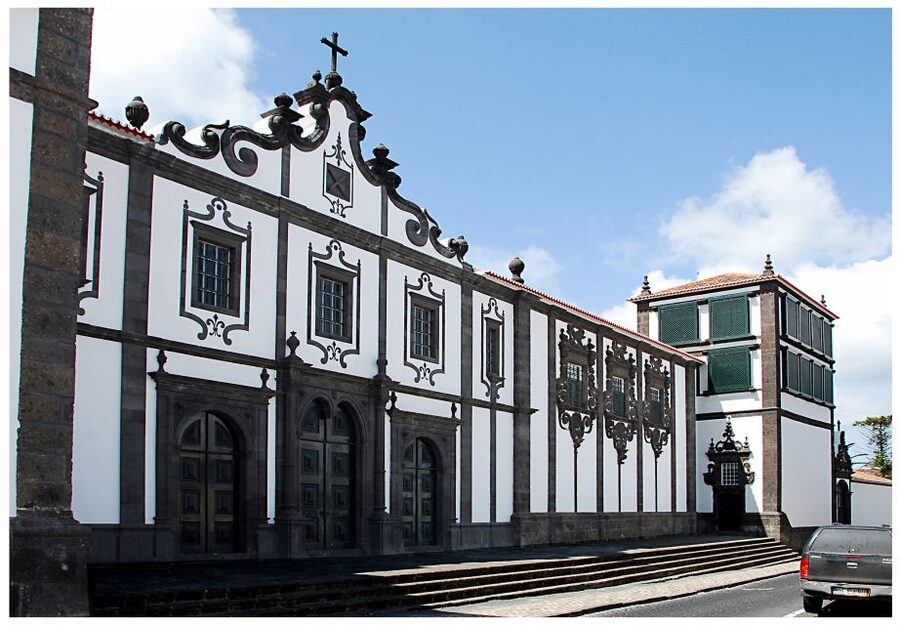
The route continues to the Igreja do Colégio, the Antero de Quental Garden, and the Public Library. This section brings together architecture, green space, and Portuguese literary history.
Antero de Quental is an important figure in Portuguese literature, and the guide explains his connection to Ponta Delgada and his influence on national writing. The garden gives the story a calmer setting. Instead of rushing from one building to the next, you have a place where the city’s intellectual side can be discussed at a slower pace.
The Igreja do Colégio adds a religious dimension. This is where the tour’s style matters most. Some explanations may include biblical stories and Catholic traditions. If you appreciate religious history, that can add useful local context. If you prefer a strictly secular account based on dates, buildings, and political events, you may want to tell your guide that at the start.
That is not a small point. The tour is designed to explain how faith and public life connect in the Azores. It may not suit you if religious interpretation is likely to frustrate you.
Padre Sena Freitas Garden and the Palácio da Conceição
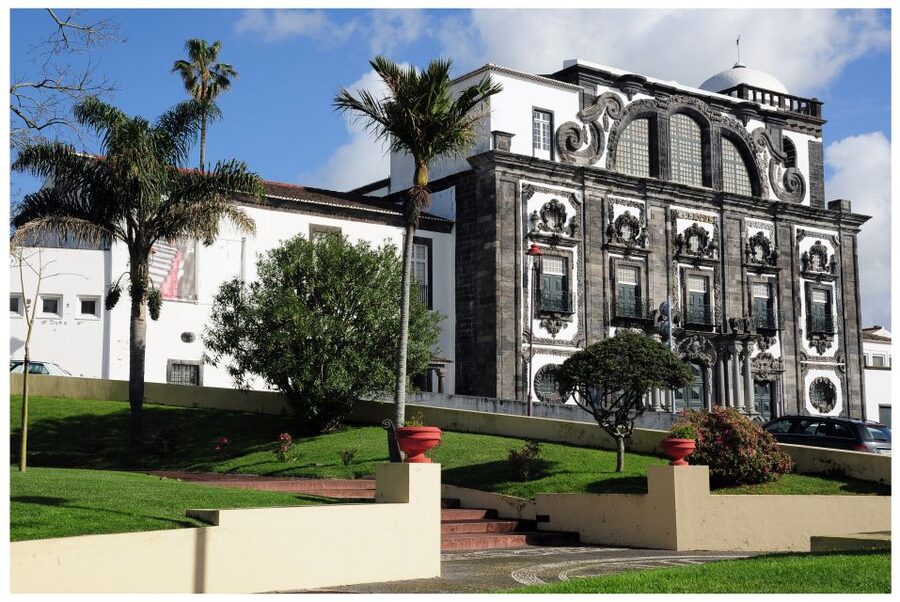
At the Padre Sena Freitas Garden and Palácio da Conceição, the focus shifts to government and Azorean political autonomy. This is one of the more important parts of the walk for anyone who wants to understand the islands as a political region rather than a postcard destination.
Your guide explains how authority is organized among the islands and how autonomy fits into the Azores’ relationship with Portugal. The setting helps make an otherwise abstract subject easier to follow. Gardens and historic civic buildings are more memorable than a lecture in a room.
The route also shows how power has occupied central Ponta Delgada for generations. You are seeing the physical spaces connected with administration, public decisions, and regional identity. Ask questions here if you want a clearer explanation of the islands’ political structure. A good guide can make this section especially rewarding.
Coliseu Micaelense and Campo de São Francisco
The Coliseu Micaelense is one of the largest theaters in the archipelago. Its scale gives you another look at the island’s cultural life, this time through a larger venue with a wider public role.
From there, the group heads toward Campo de São Francisco. The square is closely linked with the Santo Cristo festivities, described as the second-largest religious celebration in Portugal. The festival connection gives the square emotional and social importance beyond its appearance on a map.
This is also a point where the tour’s religious focus becomes more visible. You will learn how devotion, public gatherings, and local identity meet during the celebrations. The subject may feel more personal and less like conventional sightseeing, which is useful if you want to understand how people in Ponta Delgada mark important occasions.
The pace can vary here depending on the guide and group. One account described the tour as informative but somewhat subdued. If your group arrives tired after a morning flight, the energy may be low. A little initiative from the guide, such as allowing time for coffee, could make the experience feel more relaxed and social.
Forte de São Brás and the sea-facing city
The Forte de São Brás brings military history into the route. Its position reflects Ponta Delgada’s connection with the sea and the need to protect an important Atlantic island settlement.
The fort also helps explain why the city developed as it did. Ports bring trade, visitors, and opportunity, but they can also require defense. This stop connects the island’s geographic position with its strategic importance over the centuries.
The fort’s connection with the Santo Cristo festivities creates an interesting contrast. One part of the city speaks to defense and maritime strategy, while nearby public spaces speak to faith and celebration. That mix is a useful reminder that Ponta Delgada’s identity is built from several overlapping stories.
You should not expect a long military tour at the fort. The value comes from seeing it as part of the city’s wider story and hearing how the sea shaped local life.
Portas da Cidade and the heart of Ponta Delgada
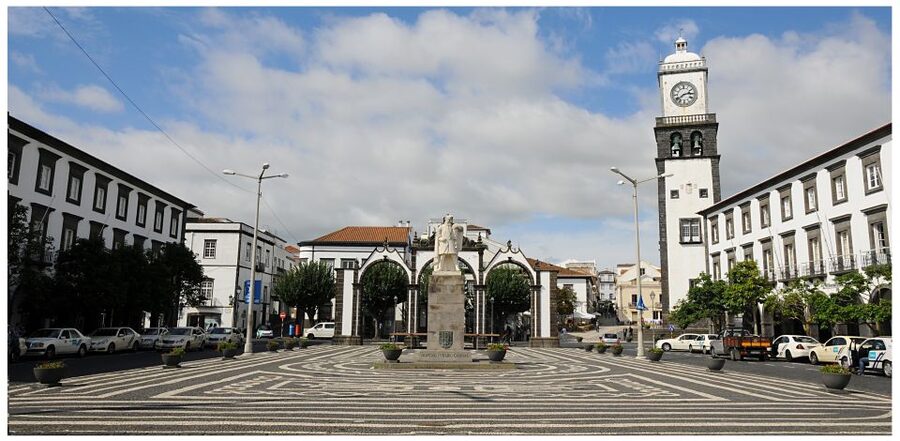
The tour then reaches the Portas da Cidade, the symbolic gateway to the Azores. This is one of Ponta Delgada’s most recognizable landmarks and a natural point for photographs.
Nearby, the Câmara Municipal and Igreja Matriz de São Sebastião form the civic and religious core of the city. The church adds architectural and devotional context, while the town hall represents municipal life. Together, they show how public authority and religion have long shared the center of Ponta Delgada.
This portion is especially useful early in your stay. After three hours, you will have a mental map of the central streets and major landmarks. You can return later to the places that caught your attention, instead of spending your whole visit trying to work out where everything is.
The route ends at Mercado CORES, where the Azores for All project presents local crafts and creative work. That is a fitting finish because it brings you back to present-day island identity. The tour begins with historic and literary references, then ends with contemporary makers and local expression.
What the $41 price really includes
At $41 per person, the tour sits in a reasonable range for a guided three-hour city experience, especially because entry to the listed attractions is included. You are paying for a local guide, access to cultural stops, and a planned route that covers much more ground than a casual stroll.
The value is strongest if you want context. You could walk past the Portas da Cidade, the fort, the theater, and the gardens on your own, but you would miss the connections between them. A guide can explain why a market matters, how Antero de Quental fits into Portuguese literature, and what the Palácio da Conceição tells you about regional government.
The price does not include lunch, transportation, pickup, or drop-off. That keeps the focus on the walking experience, but you should plan your own food and route to the meeting point. The tour is also less useful if you have already spent several days studying Ponta Delgada and prefer to explore independently.
Free cancellation up to 24 hours before the start gives you some flexibility. You can also reserve now and pay later, which helps if your São Miguel plans are still changing.
Who will get the most from this walk?
I would recommend this tour to first-time visitors who want a structured introduction to Ponta Delgada. It suits people who enjoy museums, local politics, literature, churches, gardens, and city stories more than those looking only for panoramic scenery.
It is also a good fit if you want an accessible activity. The tour is wheelchair accessible, although you should confirm any personal mobility needs before booking and still expect three hours of movement through the city.
Families and mixed-age groups may appreciate the variety. The market, theater, museum, gardens, fort, and city gates prevent the route from feeling like one long architectural lecture. That said, the amount of religious material may not suit every child or adult.
Language choice matters. Live guiding is offered in English, Portuguese, Scots Gaelic, and Spanish. If you book in English, the quality of communication is important, so make sure the guide can explain historical details clearly. Manuela is a particularly strong choice if her availability is shown, based on the warm response to her friendly and well-informed style.
Should you book Ponta Delgada’s historical walking tour?
Book it if you want to understand Ponta Delgada before setting off around São Miguel. The route covers the city’s key cultural, political, religious, and maritime points, and the included entries make $41 fair value.
I would be more cautious if your schedule falls on a Saturday and museum access is essential, or if you dislike religious storytelling. Check the date, choose your language carefully, and arrive with water and walking shoes.
For most first-time visitors, this is a useful city primer rather than a flashy sightseeing show. Its best moments come from the connections between ordinary island life, literature, faith, government, and the sea.
FAQ
How long does the Ponta Delgada historical walking tour last?
The guided tour lasts three hours.
Where does the tour begin?
It begins at the Ernesto do Canto Public Library on Rua Ernesto do Canto, next to the bust of Luís de Camões.
Where does the tour finish?
The tour finishes at Mercado CORES, also associated with Azores for All.
What languages are available?
Live guiding is available in English, Portuguese, Scots Gaelic, and Spanish.
Is the tour wheelchair accessible?
Yes, the activity is described as wheelchair accessible.
Are attraction entry fees included?
Yes, entry to the attractions listed for the tour is included.
Is lunch included?
No. Lunch is not included, so you should make your own meal plans.
Does the tour include hotel pickup and drop-off?
No. Pickup and drop-off are not included.
What should I bring?
Bring comfortable shoes, water, and comfortable clothes.
Can I cancel the booking?
Yes. You can cancel up to 24 hours in advance for a full refund. You can also reserve now and pay later.
Recently added in Sao Miguel Island
- Island Van Tour (Full Day) | Terceira Island★ 4.9 · 176 reviews
- Terceira: Half-Day Island Tour with Cheese Tasting★ 4.4 · 106 reviews
- Terceira: Half-Day Dolphin and Whale Watching Tour★ 4.6 · 219 reviews
- Sete Cidades: Half-Day ATV Quad Tour★ 4.9 · 347 reviews
- Sete Cidades Azores 4×4 Day Tour from Ponta Delgada★ 4.9 · 46 reviews
- São Miguel: Sete Cidades and Lagoa do Fogo Full-Day Tour★ 4.8 · 65 reviews
- Ponta Delgada: Full-Day Sete Cidades 4X4 Tour with Lunch★ 4.9 · 50 reviews
- Ribeira Grande: Sete Cidades Quad / Buggy Tour★ 5.0 · 163 reviews
Historical Tours, compared.

Douro Valley: Historical Sites, Wine Experience, Lunch & Cruise
Read our review →
Live Fado Show with Port Wine in Historic Center
Read our review →

Browse the lists this tour appears in