
REVIEW · AUDIO TOURS
Lisbon: National Tile Museum E-Ticket & Audio Guide
Tiles tell Lisbon’s story. This National Tile Museum visit pairs an easy adult e-ticket with a smartphone audio guide, giving you a focused look at Portugal’s tile-making tradition without committing to a live group tour. I like the freedom to pause, replay, or skip stories, and I especially like the mix of grand historic work, the unusual Mickey Mouse panel, and the beautiful Dona Leonor Chapel. The main catch is that the audio does not always follow the museum route in a clear order.
I also like that the visit fits into one to two hours, making it a useful stop when your Lisbon schedule is tight. The museum itself supplies plenty to see, including Mudéjar patterns, a diamond-patterned panel, and centuries of decorative tile work. Still, you may need to wait at the entrance, and the paid ticket is not automatically a fast walk-in at every moment.
The audio guide is in English and works offline on your phone, which is handy inside a museum. You will need to download it before arriving, bring headphones, and leave roughly 100 to 150 MB of storage available. If you prefer to wander without technology, wall labels provide some information, and a free download may be available at the museum.
In This Review
- Key points to know before you go
- Why the National Tile Museum deserves time
- Arriving with the e-ticket and phone guide
- The first galleries: patterns, craft, and Portuguese identity
- The Mickey Mouse panel and the museum’s lighter side
- The Dona Leonor Chapel
- How well does the audio guide work?
- Time, price, and the question of value
- Accessibility, group size, and practical comfort
- Who should book this Lisbon tile museum visit?
- FAQ
- How long does the National Tile Museum visit take?
- What is included in the $16 ticket?
- Is a live guide included?
- What language is the audio guide?
- Do I need to bring a smartphone?
- Which phones are compatible?
- How much phone storage does the guide require?
- Can I listen to the guide without an internet connection?
- Is the museum wheelchair accessible?
- Are children admitted free?
Key points to know before you go

- The Mickey Mouse panel adds a welcome surprise: It gives the museum a playful modern touch among centuries of Portuguese tile work.
- The Dona Leonor Chapel is a major stop: Look for the chapel as one of the visit’s most memorable spaces, not just a quick side room.
- The audio guide is flexible but not perfectly ordered: You can replay sections or move ahead, but you may need to match audio sections to the room you are viewing.
- The ticket costs $16 per person: That is reasonable if you use the guide and spend close to two hours, but less compelling if you only want a quick look.
- You need a compatible smartphone: Android 5.0 or later and supported iPhones work, while older Apple devices, Windows Phones, and several older iPads do not.
- Queues can still happen: The ticket includes a skip-the-line service, but the museum warns that entrance waits may occur.
Why the National Tile Museum deserves time
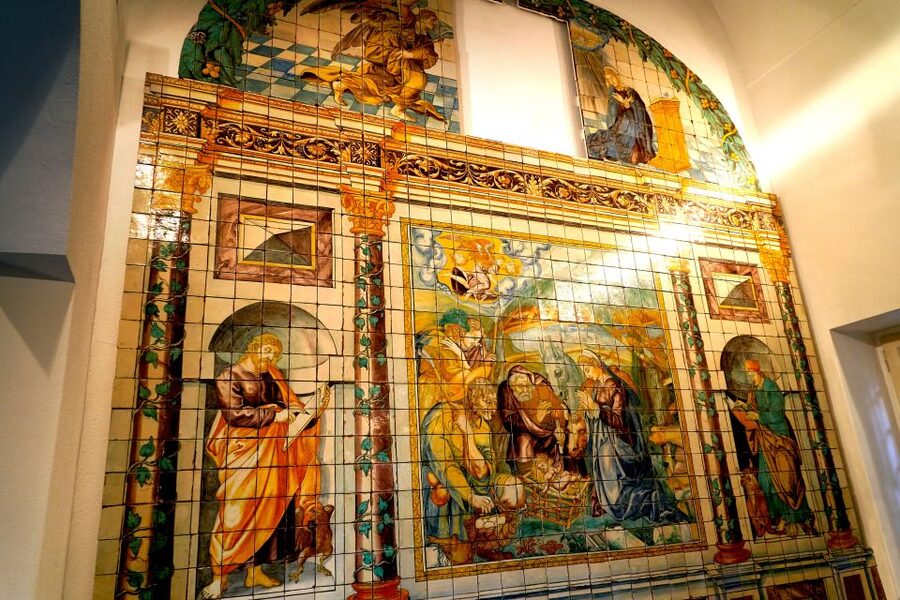
Lisbon is full of painted tiles, from building facades to church interiors, but it is easy to admire them without understanding how much history they carry. The National Tile Museum gives you a place to connect those patterns with Portugal’s tile industry, from medieval influences to more recent examples.
The museum is not only about pretty surfaces. Its displays show how tile design developed through changing artistic styles and outside influences. The Mudéjar patterned tiles, for example, point to the Islamic artistic influence that shaped Iberian decoration. The diamond-patterned panel gives you another chance to see how repeated geometry can turn a wall into a major work of art.
I find this kind of museum especially useful early in a Lisbon visit. Afterward, the tiles on ordinary streets and historic buildings make more sense. You start noticing repeated patterns, color choices, and the difference between a simple decorative strip and a large scene designed to cover an entire interior.
The supplied audio guide adds background about Portugal’s industry and connects the objects to stories from the medieval period through the modern day. It is not a live explanation tailored to your questions, but it gives the exhibits more context than a quick walk through the galleries.
More museum visits in Lisbon:
- Lisbon: Luz Stadium Tour & SL Benfica Museum Ticket w/Scarf
★ 4.7 · 3,264 reviews - Lisbon: National Tile Museum Entry Ticket
★ 4.6 · 868 reviews - Lisbon: Banksy Museum Permanent Exhibition Entry Ticket
★ 4.7 · 506 reviews
Arriving with the e-ticket and phone guide
Your ticket arrives by email, along with instructions for downloading the app and audio content. Check your spam folder if the message does not appear. I would handle the download before leaving your hotel or apartment, since you will want the content stored offline and ready to play.
The audio guide needs about 100 to 150 MB of storage. You also need a functioning Android 5.0 or later phone, or a compatible iPhone. It does not work with Windows Phones, iPhone 5 or 5C and older models, iPod Touch fifth generation and older, iPad fourth generation and older, or the first iPad Mini.
Bring your own headphones. They are not included, and neither is the smartphone itself. This sounds obvious, but a phone-based visit is only useful when your battery, storage, and headphones are all in good shape.
The booking is made per device rather than per participant. That detail matters for couples or families. If two people want to listen separately, you should check the booking option carefully and plan around the number of phones being used.
The entry process is intended to be simple, but do not treat skip-the-line as a guarantee of instant admission. The museum notes that long queues can occur. Free and reduced-price tickets do not receive skip-the-line privileges and must be obtained on-site. Children up to age 12 enter free.
The first galleries: patterns, craft, and Portuguese identity
Once inside, give yourself a few minutes to get oriented before pressing play on every available section. The audio guide contains short stories and facts, but the visit works best when you look at the room first, then match the relevant image or section in the app.
The guide covers a 16th-century tile and helps place it within the longer story of Portuguese production. You can expect a mixture of decorative examples and larger panels, with the designs showing how tile was used to organize walls and create visual rhythm.
The Mudéjar-patterned tiles deserve a slower look. Their repeating forms reward patience because the overall design becomes clearer when you step back. If you rush from one object to the next, you may notice only color and ornament. If you pause, the structure of the pattern becomes the point.
The diamond-patterned panel offers a similar lesson. It is an excellent place to consider how tile makers created scale. A single tile may seem modest, but hundreds arranged together can produce a powerful architectural effect.
The English narration is useful for visitors who want context without reading every label. It includes uncommon anecdotes and historical explanation, and you can replay any part as often as you wish. That flexibility is valuable if you are sharing the museum with children or moving at different speeds.
The Mickey Mouse panel and the museum’s lighter side

The Mickey Mouse tile panel is one of the most distinctive highlights. Its presence keeps the visit from feeling like a steady march through solemn religious and historic decoration. It also shows that tile art is not limited to old geometric patterns or formal scenes.
I would save a little time for it rather than treating it as a novelty to photograph and forget. The panel helps you see how familiar modern imagery can be translated into the same material language used for more traditional designs.
This is one reason the museum suits a mixed-age group. Adults can focus on the history of the tile industry and artistic styles, while younger visitors have an instantly recognizable image to seek out. Since children up to age 12 enter free, families may find the museum easier to justify, though each person who wants audio will need access to a compatible device and headphones.
The guide’s stories can also give the Mickey Mouse panel a place in the wider visit. Without that context, it is simply a fun surprise. With the surrounding examples, it becomes part of the museum’s account of how tile decoration changed over time.
A few more Lisbon options side by side
- Lisbon City Center Tour – The Unmissable Lisbon
★ 5.0 · 22,234 reviews - Lisbon: Sintra, Pena, Regaleira, Cabo da Roca & Cascais
★ 4.7 · 19,656 reviews - Lisbon: Jerónimos Monastery Entrance Ticket
★ 4.1 · 14,164 reviews - Lisbon: History, Stories and Lifestyle Walking Tour
★ 4.8 · 10,902 reviews
The Dona Leonor Chapel
The Dona Leonor Chapel is one of the visit’s strongest visual and historical moments. It gives you a chance to see tile work in an architectural setting rather than as isolated pieces behind a label.
Pay attention to how the decoration relates to the chapel itself. Tile is not just an image applied to a wall. In a space like this, it shapes the feeling of the room and works with the architecture around it.
The chapel also slows the pace of the visit. After looking at individual panels and repeated patterns, you can take in a complete interior. This is where the audio guide can be most helpful, provided you select the section connected to the room in front of you rather than simply playing the guide from beginning to end.
The museum allows you to explore at your own pace, so do not feel obliged to follow every audio segment. If you have only an hour, choose the chapel, the Mickey Mouse panel, the Mudéjar patterns, and the diamond-patterned panel. If you have closer to two hours, add the broader industry and historical sections.
How well does the audio guide work?
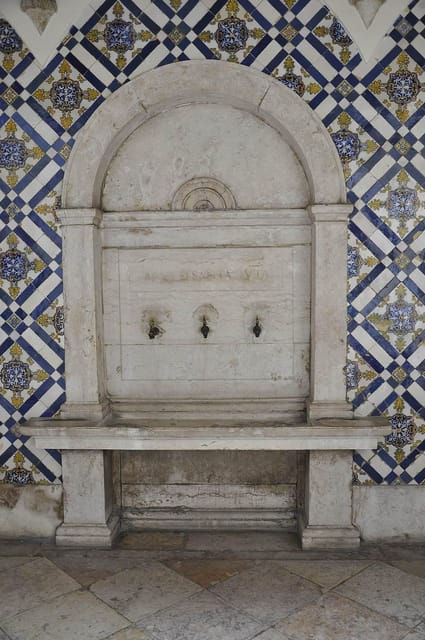
The guide is informative, easy to replay, and available offline. Those are real benefits. You can stop for a photograph, return to a detail, or skip a passage that does not interest you.
The weak point is navigation. The audio does not always follow the physical route in a way that feels natural. You may find yourself moving ahead in the app to reach the image or room you are currently viewing. One useful habit is to use the app’s picture of the room or object as your reference, rather than assuming the next numbered section is directly in front of you.
The opening explanation could also be clearer. Before entering the galleries, look for instructions about advancing to the image of the room you are in. This small step can prevent you from spending the entire visit listening to descriptions of sections you have already passed.
I would not call the audio essential. Wall labels offer enough information for a basic visit, and the museum may provide a free download on arrival. But the paid guide adds stories and historical connections that can make the $16 price worthwhile, especially if you are interested in Portuguese culture rather than only taking photographs.
A live guide is not included, so you cannot ask questions or request a different explanation. That is the tradeoff for having a private, flexible visit.
Time, price, and the question of value
At $16 per person, this is a moderate museum ticket rather than a bargain admission. The value depends on how you use it.
If you spend 90 minutes to two hours inside and listen to much of the guide, the price is fair. You are paying for the adult entry ticket, the convenience of advance purchase, skip-the-line service, offline audio, text, and maps. The ability to replay sections also means you do not have to absorb everything in one pass.
The value drops if you plan to stay for only 30 minutes or if you will not use the audio. In that case, standard museum information may be enough, and you may prefer to arrange admission directly at the museum. Keep in mind that free and reduced admission options must be obtained on-site and do not include skip-the-line privileges.
The one to two hour estimate is realistic as a planning window, but it is not a strict tour length. One audio user felt the museum could easily fill three hours, especially if you listen closely and study the artwork. You can shorten the visit by skipping sections, or expand it by replaying stories and spending time in the courtyard area near the cafeteria.
That courtyard is a useful practical bonus. It has tables and chairs where you can sit with food or a drink, giving you a place to rest after the galleries. It is not part of a guided performance, but it can make the museum easier to fit into a relaxed day.
Accessibility, group size, and practical comfort
The museum is wheelchair accessible, which is important for anyone planning a low-stress cultural visit. The activity is also described as a small group, limited to 10 participants, though the audio format means your experience is largely self-directed rather than built around a guide leading everyone together.
The end point is the meeting point, and the precise starting point may vary with the option booked. Check your confirmation carefully before setting out.
The museum’s route or operating instructions can change, so follow staff directions once you arrive. That includes any changes to the order of rooms, entry procedures, or areas open during your visit.
For the smoothest experience, I would arrive with the app installed, the audio downloaded, headphones packed, and enough battery for at least two hours. If the audio fails, do not abandon the visit. Wall labels still provide useful information, and the artwork is strong enough to reward a self-guided walk.
Who should book this Lisbon tile museum visit?

I would recommend it most strongly to you if you like history, architecture, design, or small museums where you can set your own pace. It is also a good choice if you want a break from Lisbon’s outdoor sightseeing and would rather spend an hour or two indoors with a clear cultural focus.
Families may appreciate the Mickey Mouse panel and the free admission for children up to age 12. Couples and solo visitors will like not being tied to a live guide’s timetable. The English audio is useful if you want more than wall labels but do not want to read every description.
You may want to skip the paid audio option if your phone is old, your battery is unreliable, or you dislike navigating an app while looking at art. The guide is not always arranged in walking order, and that can frustrate anyone expecting a simple stop-and-listen route.
Book it if you will use the stories and can give the museum at least 90 minutes. If you only want a quick look at famous panels, admission without the paid audio may offer better value. Either way, leave room to admire the chapel and courtyard, not just check off the Mickey Mouse panel.
FAQ
How long does the National Tile Museum visit take?
The listed duration is one to two hours, but you can stay longer if you listen closely, replay sections, and study the displays at a slower pace.
What is included in the $16 ticket?
The price includes adult entry to the National Tile Museum, skip-the-line service, an English smartphone audio guide, and offline text, audio narration, and maps.
Is a live guide included?
No. The experience includes a smartphone audio guide rather than a live guide.
What language is the audio guide?
The included audio guide is in English.
Do I need to bring a smartphone?
Yes. A smartphone is required because the audio guide is accessed through an app. You must also bring your own headphones.
Which phones are compatible?
The guide works with Android version 5.0 and later or supported iOS devices. It is not compatible with Windows Phones, iPhone 5 or 5C and older, iPod Touch fifth generation and older, iPad fourth generation and older, or the first iPad Mini.
How much phone storage does the guide require?
You need about 100 to 150 MB of available storage for the audio guide and related content.
Can I listen to the guide without an internet connection?
Yes. Offline content includes the text, audio narration, and maps, so you can use the downloaded material without relying on a live connection inside the museum.
Is the museum wheelchair accessible?
Yes. The National Tile Museum is wheelchair accessible.
Are children admitted free?
Children up to 12 years old enter free. Free and reduced admission tickets must be obtained on-site and do not include skip-the-line privileges.
Recently added in Lisbon
- Lisbon Cinematic Photoshoot with Top-Rated Photographer★ 5.0 · 76 reviews
- City Centre Run in Lisbon★ 5.0 · 164 reviews
- City of Neighborhoods Tour 1H 30M Private Tour by Tuk Tuk★ 5.0 · 38 reviews
- Central Lisbon E-Bike Tour★ 5.0 · 168 reviews
- Hands on Portuguese Cooking Class in Lisbon★ 5.0 · 136 reviews
- Lisbon Sailing Catamaran Public Cruise with drinks★ 5.0 · 304 reviews
- Lisbon City Tour by Tuk Tuk★ 4.5 · 137 reviews
- Alfama and the Castle of Saint George Skip the line Tour★ 5.0 · 53 reviews
Audio Tours, compared.



Pinhão: 2-Hour Rabelo Boat Tour with Audio Guide
Read our review →
Tram 28 Entry Ticket & Audio Guide with 24-Hour Pass
Read our review →

Castle of the Moors & Quinta Entry with Audio Guides
Read our review →
Castle of the Moors Skip-the-Line Ticket+Audio Guide
Read our review →
Browse the lists this tour appears in