
REVIEW · LISBON TOURS
Lisbon: 3-in-1 Hop-On Hop-Off Bus and Tram Tours
Lisbon reveals itself best in layers. This 48-hour ticket combines two open-top bus routes with a vintage tram ride, giving you a useful first look at Belém, the city center, the eastern waterfront, and the old hill districts. I especially like the freedom to hop off for a museum, café, or viewpoint, then use the next bus when it suits you.
I also like the included access to Yellow Carris trams and the free entry to the Carris Museum. The main drawback is timing: the routes stop running in the late afternoon, and the Hills Tramcar Tour is a continuous ride with no hop-on, hop-off stops.
In This Review
- Key points to know before booking
- What the $44 ticket actually gives you
- Starting at Restauradores Square
- The Belém route, Lisbon’s monument-filled west
- Jerónimos Monastery
- Belém Tower
- Monument to the Discoveries
- MAAT and the cruise terminal
- Modern Lisbon, from Rossio to the Expo district
- Tile Museum
- Oceanarium and the Expo area
- The Hills Tramcar Tour, the most characterful ride
- Alfama, Mouraria, and Baixa from the tram
- Audio commentary, comfort, and the practical details
- How I would use the 48 hours
- Who will get the most from this tour?
- Final verdict: Should you book it?
- FAQ
- How long is the ticket valid?
- Where do the bus tours start?
- Where does the Hills Tramcar Tour start?
- Does the tram tour stop so I can get off?
- Which languages are available for the audio guide?
- Are museum and monument admissions included?
Key points to know before booking
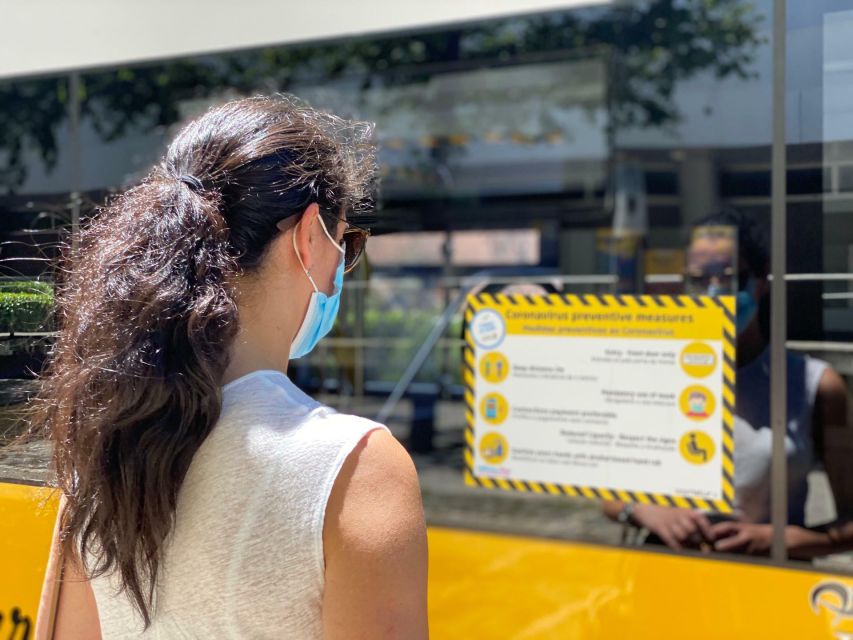
- Three ways to see Lisbon: You get the Belém bus, Modern Lisbon bus, and Hills Tramcar Tour on one 48-hour ticket.
- The Belém route covers the major monuments: Jerónimos Monastery, Belém Tower, the Monument to the Discoveries, MAAT, and the Coach Museum are all on the route.
- The tram tour is scenic but not flexible: It passes Portas do Sol, Lisbon Cathedral, Graça, São Vicente, the Pantheon, and Martim Moniz without stopping.
- Buses leave from central meeting points: Both bus routes begin at Restauradores Square near the Eden Theatre. The tram starts at Praça do Comércio near the arch.
- Look for the colored route signs: Belém buses carry a blue sign, while Modern Lisbon buses carry a pink sign. All buses are yellow.
- The value improves if you use the ticket as transport: At $44 per person, it makes more sense when you use several tours, return to sights, and take public trams during the 48-hour period.
What the $44 ticket actually gives you

The price is reasonable if you treat this as both sightseeing and local transport. You have two full bus routes, a historical tram ride, access to public Yellow Carris trams during the ticket’s validity, an audio guide, discounts at selected museums, restaurants, and bars, and free entry to the Carris Museum.
That is more useful than a single panoramic circuit. You can spend the first day learning the shape of Lisbon, then use the second day to return to the stops that caught your eye. I would not buy it simply for one bus loop. You need to use at least two or three parts of the ticket to get solid value.
The 48-hour period also helps because Lisbon is not a city you should rush through. The Belém route alone covers a long stretch from the central squares to the western monuments. The Modern Lisbon route heads east to the Tile Museum, Oceanarium, Vasco da Gama Shopping, and the former Expo area. The tram then takes you through the old quarters that are difficult to understand from a bus window.
A few more Lisbon options side by side
- Lisbon City Center Tour – The Unmissable Lisbon
★ 5.0 · 22,234 reviews - Lisbon: Sintra, Pena, Regaleira, Cabo da Roca & Cascais
★ 4.7 · 19,656 reviews - Lisbon: Jerónimos Monastery Entrance Ticket
★ 4.1 · 14,164 reviews
Starting at Restauradores Square
Both double-decker routes begin at Restauradores Square, near the Eden Theatre. This is a handy central starting point, close to Rossio Square and Avenida da Liberdade. Before boarding, check the sign in the front window carefully.
The Belém service uses a blue sign. The Modern Lisbon service uses a pink sign. Since all the buses are yellow, the colored route marker matters. It is a small detail, but getting on the wrong bus can cost you much of an afternoon.
The Belém bus departs daily from 9:00 a.m. until 5:30 p.m., generally every 30 minutes. The Modern Lisbon service runs from 9:15 a.m. to 5:15 p.m., also about every 30 minutes. These hours are fine for sightseeing, but they are not late. If you want a relaxed lunch, museum visit, and several stops, start early.
The buses have audio commentary in multiple languages, including English, Spanish, French, German, Italian, Portuguese, Dutch, Russian, Japanese, and Chinese. The audio is generally useful for orientation and basic background. I would treat it as an introduction, not a substitute for a detailed guided tour. Some passengers found the commentary too basic, and music sometimes played where a clearer explanation of nearby buildings would have helped.
The Belém route, Lisbon’s monument-filled west
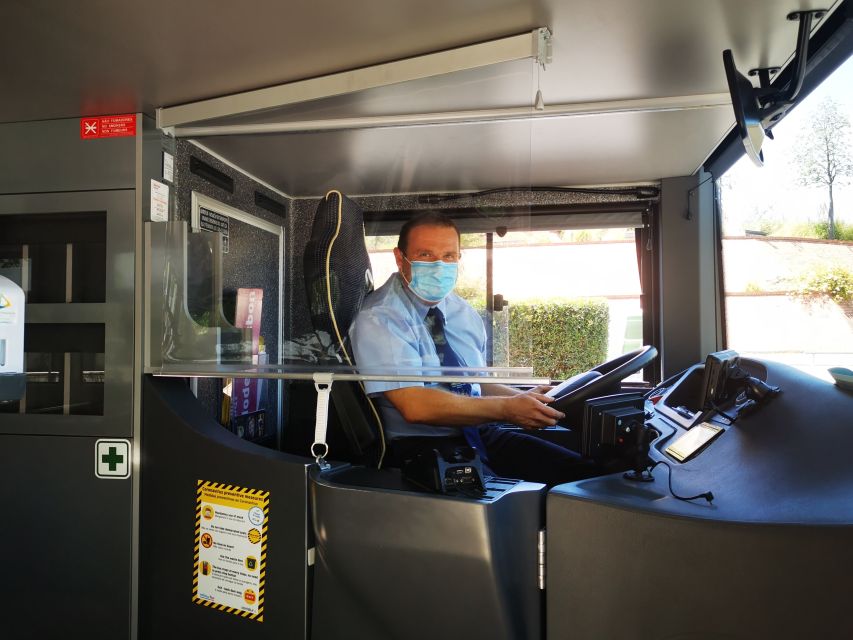
The Belém line is the priority route for most first-time visitors. It runs from central Lisbon toward the Tagus waterfront and passes the city’s best-known monuments.
From Restauradores Square, the bus goes through Rossio and past Marquês de Pombal, El Corte Inglés, Parque Eduardo VII, Amoreiras, and the Basílica da Estrela. These early stops show you Lisbon beyond the postcard center. You get broad avenues, shopping areas, gardens, and residential districts before reaching the river.
The route then reaches Pilar 7 and the Coach Museum. The Coach Museum is one of Lisbon’s better-known museums, but admission is not included. Your ticket covers transportation, not museum or monument entry fees, so plan your stops with that extra cost in mind.
Jerónimos Monastery
The Jerónimos Monastery is one of the essential stops. Its Manueline stonework is full of maritime symbols, carved rope, and elaborate details tied to Portugal’s seafaring past. Even if you do not enter, the exterior gives you a strong sense of why Belém is such a popular part of Lisbon.
The stop works well for a longer break. You can visit the monastery, walk through the surrounding area, and then continue by bus. Since buses come about every 30 minutes, check the timetable before getting off rather than assuming the next one will be right behind you.
Same corner of the country, a different pace:
- Lisbon: History, Stories and Lifestyle Walking Tour
★ 4.8 · 10,902 reviews - Lisbon: Sunset Boat Party Cruise with DJ and Open Bar
★ 4.5 · 10,378 reviews - Lisbon: Pena Palace, Sintra, Cabo da Roca, & Cascais Daytrip
★ 4.7 · 9,981 reviews - Lisbon: Oceanário de Lisboa Entrance Ticket
★ 4.6 · 9,943 reviews
Belém Tower
Belém Tower sits near the river and is one of Lisbon’s most recognizable sights. Its defensive role and ornate design make it more interesting than a quick photo stop suggests. The bus lets you reach it without working out the local connections, but entrance is extra.
The open-top deck is particularly useful along this route because it gives you clear views of the waterfront and monuments. Wind, sun, and occasional road delays are part of the bargain, so bring a layer and do not plan every minute around an exact arrival.
Monument to the Discoveries
The Monument to the Discoveries is another major stop. Its sculpted figures face the Tagus, recalling Portugal’s age of exploration. This is a good place to get off, walk around, and connect the monument with the river setting rather than viewing it only through a bus window.
The nearby museums and waterfront buildings give you several ways to shape the stop. If you want a quick overview, stay aboard. If you want photos and a closer look, allow more time and use the next bus.
MAAT and the cruise terminal
The route continues to MAAT, the Museum of Art, Architecture and Technology, then to the Docas Cruise Terminal. MAAT adds a modern note to a route otherwise dominated by religious and maritime monuments. The contrast is part of the appeal.
The final stops include Jardim da Estrela before the bus returns to Restauradores Square. Estrela gives you a calmer green space and a break from the formal monuments. This route is long enough that many people will not see every stop in one outing, especially if they visit museums. The 48-hour ticket solves that problem better than a one-day pass.
Modern Lisbon, from Rossio to the Expo district
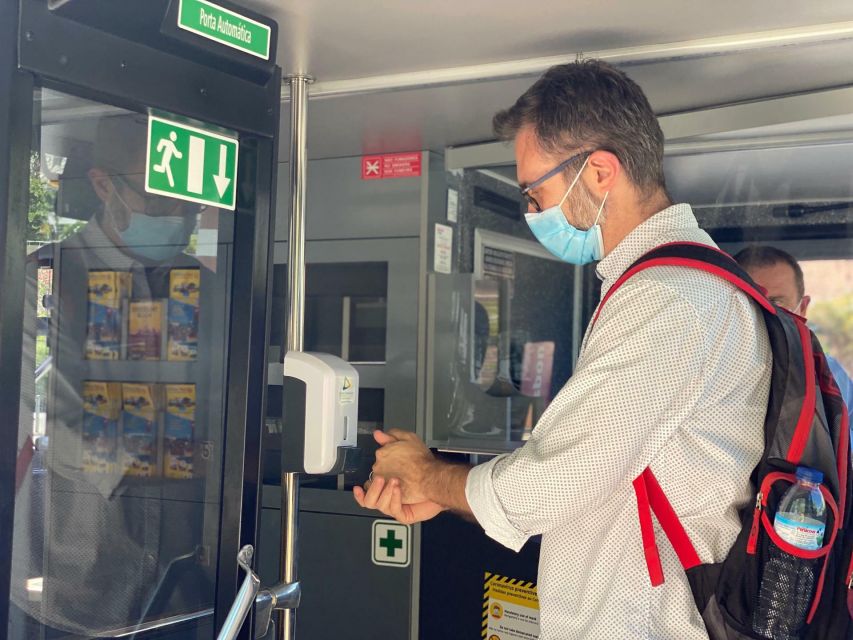
The Modern Lisbon route begins at the same central point but heads east. It is less about old stone monuments and more about Lisbon’s newer commercial, cultural, and waterfront districts.
The first stops cover Rossio and Avenida da Liberdade. Rossio is one of the city’s main squares, while Liberdade is a grand avenue lined with trees, hotels, shops, and patterned pavements. These are easy places to explore on foot, but the bus gives you a quick connection between them and the eastern side of Lisbon.
The route also serves the Lisbon Cruise Terminal, which is useful if you arrive by ship. From there it continues to the Tile Museum, the Oceanarium, Vasco da Gama Shopping, FIL, and the Vasco da Gama Tower and Myriad Hotel area.
Tile Museum
The Tile Museum is a particularly good choice for visitors who want to understand Portuguese design. Lisbon’s tiled facades are not just decoration. They are one of the city’s most familiar visual features, and the museum gives that detail a proper setting.
The museum entrance is not included, so decide in advance if you want to pay for a visit. The bus stop makes it easier to include than it would be if you were trying to string together several separate public transport rides.
Oceanarium and the Expo area
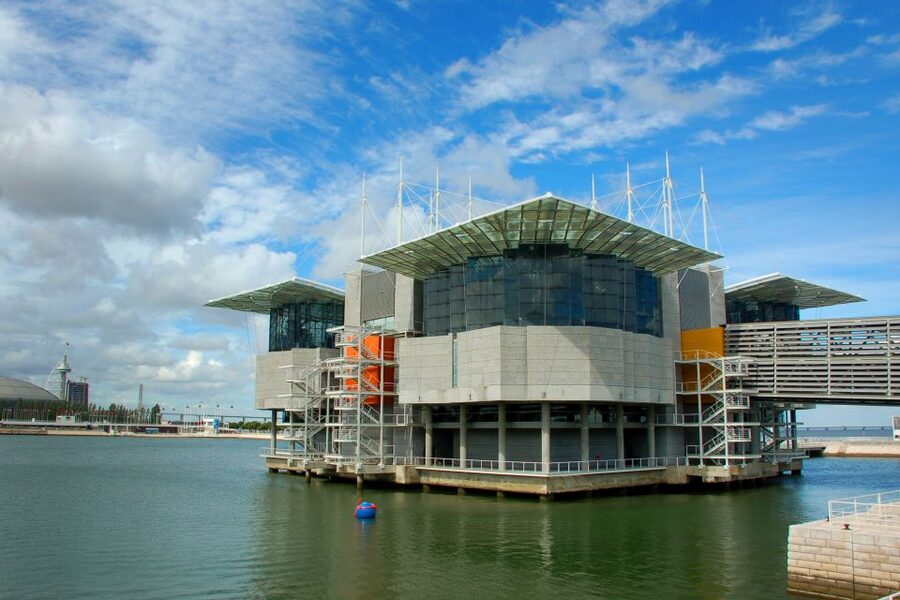
The Oceanarium is one of the route’s most family-friendly stops, though admission is extra. The surrounding former Expo district feels very different from Alfama or Baixa, with broad spaces, modern buildings, and the river nearby.
Vasco da Gama Shopping and the FIL exhibition center offer practical stops for food, shopping, or a break from sightseeing. The Vasco da Gama Tower and Myriad Hotel mark the route’s far end and provide a clear change of scale from central Lisbon.
This line can be slower than expected because of traffic lights, narrow roads, and city congestion. One ride is useful for seeing the area, but you should leave time for waiting at stops. The service ends around 5:15 p.m., so it is not a good evening transport plan.
The Hills Tramcar Tour, the most characterful ride
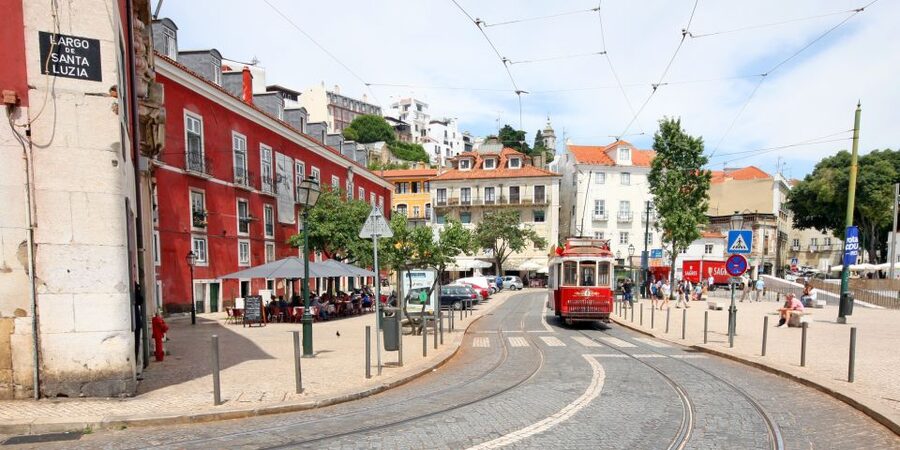
The Hills Tramcar Tour starts at Praça do Comércio, close to the large arch. This is the most atmospheric part of the package because the historic tram fits the old neighborhoods in a way a modern bus cannot.
The route is not hop-on, hop-off. It begins and ends at Praça do Comércio, with no stops along the way. That limitation matters. You cannot use it to visit each neighborhood at your own pace, but you can sit back and watch the tram work through Lisbon’s steep streets.
The tram passes Portas do Sol, Lisbon Cathedral, Graça, São Vicente, the Pantheon, and Martim Moniz. These names cover some of the city’s most rewarding areas, including hilltop viewpoints, old churches, narrow lanes, and districts shaped by centuries of daily life.
The departures run from about 9:30 a.m. to 5:05 p.m. every 35 minutes. The ride is best used as an orientation circuit. Afterward, use the public tram access to return to areas you want to explore more closely, if the available service and route suit your plans.
One especially enjoyable detail is the tram itself. A driver may explain how the vehicle works, including the mechanics and changing cable lines. That hands-on explanation adds something you do not get from the recorded bus commentary. The tram is also a good choice for anyone who wants a traditional Lisbon experience without committing to a long walking route uphill.
Alfama, Mouraria, and Baixa from the tram

The historic tram passes through the old parts of Lisbon associated with Alfama, Mouraria, and Baixa. From the window, you see colorful houses, cobbled streets, churches, and small squares. This is a quick view rather than a full neighborhood visit, but it helps you understand how tightly packed and hilly the older city can be.
Alfama is known for steep lanes and viewpoints. Mouraria has a more everyday, mixed-city feel. Baixa is more open and formal, with major squares and straight streets rebuilt after the 1755 earthquake. Seeing these areas in one ride gives you a useful mental map.
I would not use the tram as your only way to experience the hills. The route has no stops, and busy cars may leave you waiting for the next departure. Use it to get your bearings, then walk or take a public tram to the places you want to examine.
Audio commentary, comfort, and the practical details
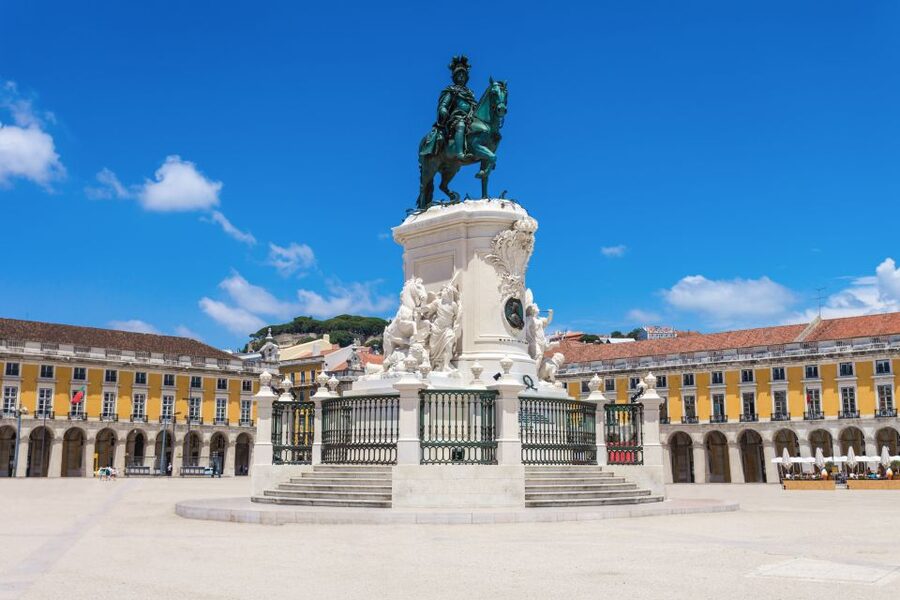
The buses are open-top double-deckers, so the upper deck gives the best view but leaves you exposed to sun, wind, and rain. The lower deck is more sheltered and may suit you better if the weather turns or you prefer a steadier ride on Lisbon’s uneven roads.
The recorded commentary is offered in several languages and covers the Belém, Modern Lisbon, and Hills Tramcar services. English commentary has been described as detailed and complete, though the quality can vary between vehicles. Check the audio equipment when you board. Some units have had faulty components, and not every passing building receives an explanation.
Do not bring food, drinks, or alcohol onto the vehicles. This is easy to follow, but it means you should finish your café stop before boarding. The ticket does offer discounts at selected museums, restaurants, and bars, so keep those benefits in mind when planning the day.
Road works can temporarily interrupt service. Check current updates with the Yellow team before setting out, especially if your schedule is tight. Lisbon’s narrow streets and road repairs can also affect travel time.
How I would use the 48 hours

On the first morning, I would take the Belém bus from Restauradores Square without getting off. This gives you a broad look at the city and shows how long the western route takes. Then I would return toward Belém and choose one or two stops, most likely Jerónimos Monastery, Belém Tower, or the Monument to the Discoveries.
On the second morning, I would take the Modern Lisbon route toward the Oceanarium and Expo district. Get off at the Tile Museum or Oceanarium if either fits your interests. If you do not want museum visits, the ride still shows you a side of Lisbon that the old-city routes miss.
Save the Hills Tramcar Tour for a time when you can sit and watch the old neighborhoods pass by. Since it has no stops, do not count it as your main transport around Alfama or Graça. Use the included public tram access for practical movement during the ticket’s validity, but check route information locally because Lisbon’s services and road conditions can change.
Who will get the most from this tour?
This suits you if it is your first visit, you have two or three days in Lisbon, or you want a quick city overview before choosing where to spend your time. It is also useful if hills and long walks are a concern, though the buses and tram do not remove every bit of walking.
Families may like the simple hop-on, hop-off format, especially with the Oceanarium and Belém stops. Cruise passengers can also make good use of the routes from the cruise terminal, provided the departure times fit the ship’s schedule.
It is less suitable if you want a full guided history lesson, late-night transport, or a tightly timed itinerary. The commentary is informative but not always detailed. Buses may wait in traffic, the routes finish in the late afternoon, and the tram ride is scenic rather than flexible.
Final verdict: Should you book it?
I would book this ticket if you can use at least two bus routes and the tram within 48 hours. The strongest parts are the clear city overview, the Belém monuments, the contrast between old and modern Lisbon, and the character of the Hills Tramcar Tour.
At $44, it is not the cheapest way to make a single short journey. It becomes good value when you use the buses for sightseeing, public trams for getting around, and the second day to revisit a stop you liked. Start early, check the route color, allow extra time for traffic, and remember that the major museums and monuments charge separate entrance fees.
FAQ
How long is the ticket valid?
The ticket is valid for 48 hours, or two days, from its activation according to the activity schedule.
Where do the bus tours start?
Both the Belém Lisbon and Modern Lisbon bus tours start at Restauradores Square, near the Eden Theatre.
Where does the Hills Tramcar Tour start?
The Hills Tramcar Tour starts at Praça do Comércio, close to the arch.
Does the tram tour stop so I can get off?
No. The Hills Tramcar Tour has no stops along its route and returns to Praça do Comércio.
Which languages are available for the audio guide?
The audio guide is advertised in 13 languages. The listed language options include Spanish, Chinese, Dutch, English, French, German, Italian, Japanese, Portuguese, and Russian.
Are museum and monument admissions included?
No. Entrance fees to museums and monuments are not included, although the ticket includes free entry to the Carris Museum and discounts at selected attractions, restaurants, and bars.
Recently added in Lisbon
- Lisbon Cinematic Photoshoot with Top-Rated Photographer★ 5.0 · 76 reviews
- City Centre Run in Lisbon★ 5.0 · 164 reviews
- City of Neighborhoods Tour 1H 30M Private Tour by Tuk Tuk★ 5.0 · 38 reviews
- Central Lisbon E-Bike Tour★ 5.0 · 168 reviews
- Hands on Portuguese Cooking Class in Lisbon★ 5.0 · 136 reviews
- Lisbon Sailing Catamaran Public Cruise with drinks★ 5.0 · 304 reviews
- Lisbon City Tour by Tuk Tuk★ 4.5 · 137 reviews
- Romantic Private Sailboat in Lisbon for couples★ 5.0 · 38 reviews
Lisbon Tours, compared.

Lisbon City Center Tour – The Unmissable Lisbon
Read our review →


Sunset Boat Party Cruise with DJ and Open Bar
Read our review →
Pena Palace, Sintra, Cabo da Roca, & Cascais Daytrip
Read our review →

True 4Hour Private Tuk Tuk Tour: Discover Lisbon with a Local!
Read our review →