REVIEW · LISBON TOURS
Alfama Tour in Lisbon Old Town
Lisbon’s oldest lanes reward slow walking. This 2.5-hour Alfama tour combines grand viewpoints with small corners that are easy to miss, including old fountains, tiled walls, parish squares, and places tied to fado and local traditions. I like the guide-led storytelling, and I like that the route gives you practical Lisbon suggestions for the rest of your stay.
The pay-what-you-want format keeps the starting price low at $3.62 per person, though a tip is welcomed and expected at the end. My main caution is the terrain: steep slopes, stairs, and uneven streets can make this a serious walk, not a gentle stroll.
Guides such as Cecilia, Hugo, Belen, Claudia, Nina, Jessica, and Mariam have earned especially warm praise for their humor, clear explanations, singing, and ability to adjust the pace. One small issue to plan for is finding the meeting point at R. dos Bacalhoeiros 12A, where the guide may be difficult to spot among several groups.
In This Review
- Key Points About the Alfama Walk
- Why Alfama Makes a Good First Lisbon Walk
- Starting at Casa dos Bicos
- Chafariz D’El Rei and Alfama’s Water Story
- Largo do Chafariz de Dentro and the Old Central Plaza
- Largo de São Rafael and Largo do Salvador
- São Miguel Church and the Popular Saints
- The History of Lisbon Mural by Nuno Saraiva
- Santo Estêvão and Alfama’s Maze of Lanes
- Portas do Sol and Santa Luzia Viewpoints
- Lisbon Cathedral and Santo António
- What the Guides Do Best
- Price, Tips, and Overall Value
- Fitness, Weather, and Group Size
- Who Should Book This Alfama Experience?
- Should You Book the Alfama Tour?
- FAQ
- How long does the Alfama tour last?
- What time does the tour start?
- Where does the tour begin?
- Where does the tour end?
- Is the tour offered in English?
- Is the tour fully free?
- Are food and drinks included?
- Does the tour enter Lisbon Cathedral?
- How difficult is the walking?
- What is the maximum group size?
- Can I bring a service animal?
- Can I cancel for a full refund?
Key Points About the Alfama Walk
- Fado comes with context: You learn about saudade, longing, migration, and the traditions behind Lisbon’s best-known music.
- The route reaches four notable viewpoints: Santo Estêvão, Portas do Sol, Santa Luzia, and the streets around Alfama itself provide changing views over the old district and river.
- The walking is demanding: Expect hills, stairs, and winding lanes. Comfortable shoes are essential.
- The group can include up to 25 people: Some departures are much smaller, but the maximum is worth noting if you prefer a quiet walk.
- The tour is tip-based: The low advance price is attractive, but you should budget for a fair payment to the guide.
- You see more than postcard Lisbon: Fountains, a history mural, old wall fragments, churches, and everyday neighborhood spaces give the walk a local feel.
Why Alfama Makes a Good First Lisbon Walk
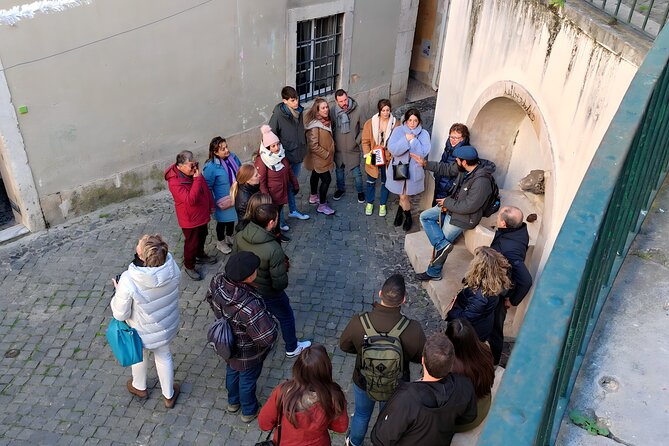
Alfama is the part of Lisbon where getting slightly lost can be useful. Its lanes climb from the lower city toward the castle area, and the route turns through tight passages, small plazas, church squares, and lookout terraces. A guide helps you read the district instead of simply photographing it.
I particularly like the way this walk connects physical details to larger events. A fountain is not just a fountain. A damaged tile wall can raise questions about power, religion, and the city’s past. A church square becomes a place to understand the Popular Saints Festivities, one of Lisbon’s major June traditions.
The tour also puts Alfama’s many influences in view. Explanations may touch on Roman remains, Moorish streets, the former Jewish quarter, the 1755 earthquake, the Salazar dictatorship, empire, migration, and fado. The best guides, including Hugo and Belen, have been praised for making these subjects clear without turning the walk into a classroom lecture.
This is a useful tour early in your Lisbon visit. You get a sense of direction, learn which viewpoints deserve a return visit, and receive suggestions for food, music, and other city experiences. The route ends in a different place from where it begins, so you can continue exploring rather than retracing your steps.
A few more Lisbon options side by side
- Lisbon City Center Tour – The Unmissable Lisbon
★ 5.0 · 22,234 reviews - Lisbon: Sintra, Pena, Regaleira, Cabo da Roca & Cascais
★ 4.7 · 19,656 reviews - Lisbon: Jerónimos Monastery Entrance Ticket
★ 4.1 · 14,164 reviews
Starting at Casa dos Bicos
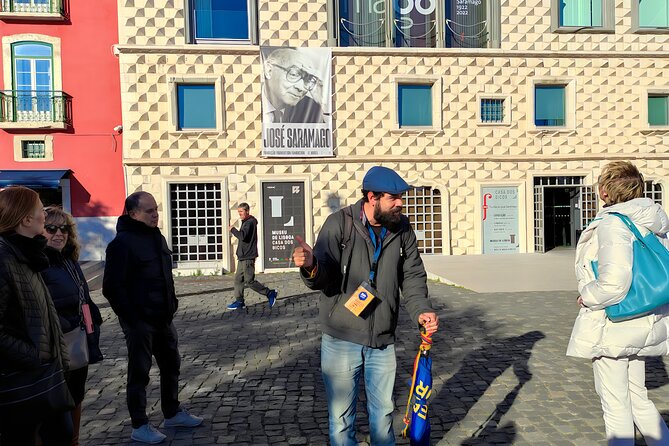
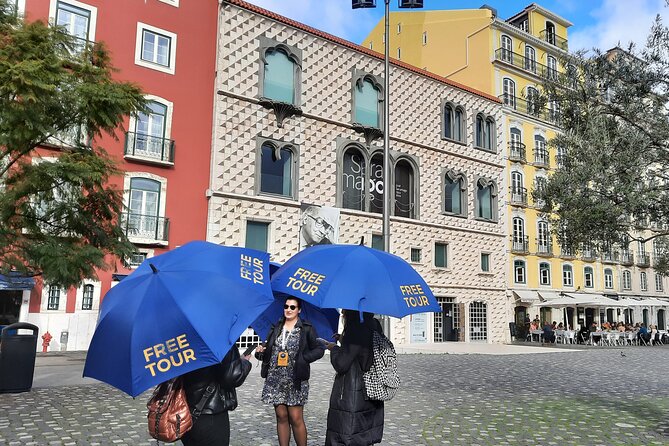
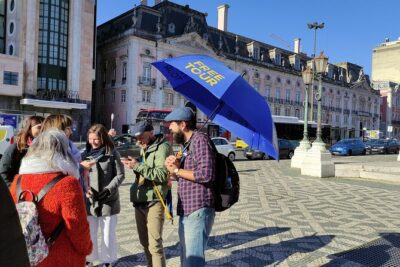
The meeting point is at R. dos Bacalhoeiros 12A, near Casa dos Bicos, the distinctive building with its diamond-shaped stone facade. Look for the blue umbrellas connected with the tour. The meeting instructions are simple, but one person found the start hard to identify because several groups gathered nearby and two churches were close together.
I would arrive early and keep the blue umbrellas in mind. The listed start time is 3:30 pm, although the tour information also refers to morning and afternoon options. Check your confirmation carefully for the departure you booked.
Casa dos Bicos is a fitting starting place because it introduces the layered character of Lisbon. You begin in the lower part of the old city, then move into Alfama’s rising streets. Entry to the museum is not included, and the group does not need to go inside to begin the walk.
Chafariz D’El Rei and Alfama’s Water Story
The first major stop is Chafariz D’El Rei, probably Lisbon’s first public fountain. Built in the 13th century, it used water from the Alfama hillside.
This is the sort of stop that gains value from explanation. On your own, you might pass it as an old stone feature. With a guide, you can connect it to the practical needs of a growing city and the way water shaped life in the district.
The stop lasts about 10 minutes and is free to view. Do not expect a long visit or an indoor attraction. Its importance is in the story attached to the site.
Largo do Chafariz de Dentro and the Old Central Plaza
Next comes Largo do Chafariz de Dentro, once known as Chafariz dos Cavalos, or Horse Fountain. It is described as Alfama’s central plaza, and its current name refers to its position within the walls of the Fernandina wall.
This is a useful place to understand Alfama as a neighborhood rather than a string of monuments. The square has a civic role, and the guide can help you picture how people used this area in earlier periods. Allow about 10 minutes.
The walk is not built around admission-ticket attractions. Most of the interest comes from streets, squares, walls, and stories. That keeps costs low, but it also means the quality depends heavily on the guide’s ability to make ordinary-looking places meaningful.
Same corner of the country, a different pace:
- Lisbon: History, Stories and Lifestyle Walking Tour
★ 4.8 · 10,902 reviews - Lisbon: Sunset Boat Party Cruise with DJ and Open Bar
★ 4.5 · 10,378 reviews - Lisbon: Pena Palace, Sintra, Cabo da Roca, & Cascais Daytrip
★ 4.7 · 9,981 reviews - Lisbon: Oceanário de Lisboa Entrance Ticket
★ 4.6 · 9,943 reviews
Largo de São Rafael and Largo do Salvador
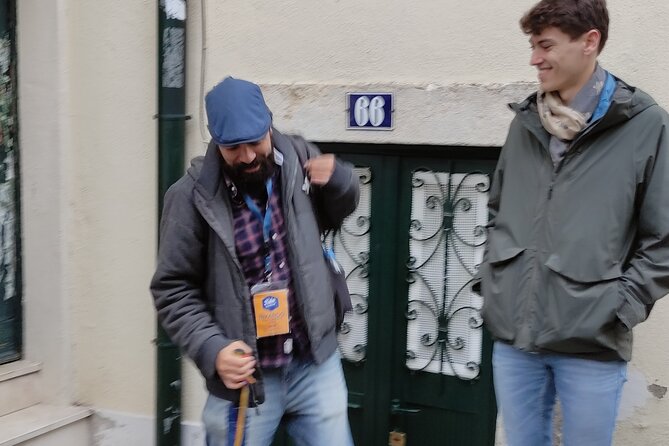
At Largo de São Rafael, the group pauses beside an ancient wall. The stop is short, about 10 minutes, but it gives you another look at older Alfama and the traces that remain among later buildings.
Largo do Salvador follows as a place for stories about culture and old habits. This is where a good guide can add the human side of the district. The tour is not only about kings, churches, and dates. It also considers customs passed between generations and the way different communities shaped local life.
I would pay attention to the guide’s examples here. The strongest tours use these smaller spaces to explain how Lisbon’s past still affects daily life. The walk feels more personal when the focus shifts from famous sights to shared rituals and neighborhood memory.
São Miguel Church and the Popular Saints
Igreja de São Miguel is one of the more important church stops on the route. Its square is a major setting for Lisbon’s Popular Saints Festivities, celebrations that bring music, food, decoration, and street life to the city.
The stop lasts about 15 minutes and is free. The tour does not promise an interior visit, so treat the church and square as an outdoor history and culture stop rather than a church admission visit.
This part may be especially useful if you are visiting Lisbon in June or want to understand why neighborhood squares matter so much during local celebrations. Guides have been praised for adding stories and humor here, which helps the setting feel connected to present-day Lisbon.
The History of Lisbon Mural by Nuno Saraiva
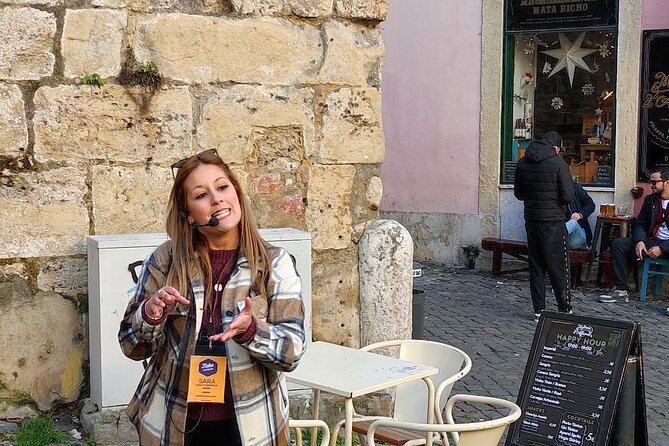
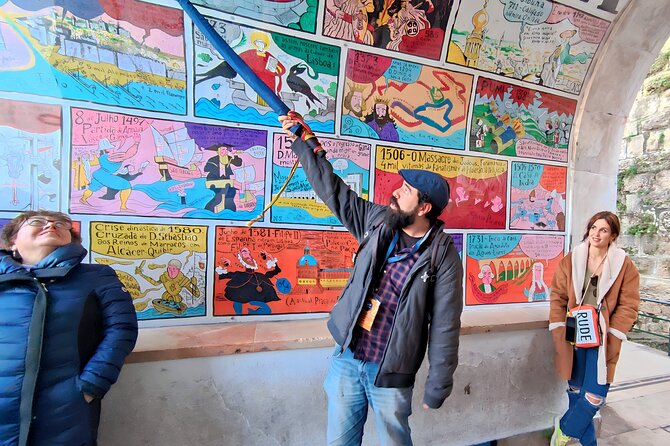
The mural by Nuno Saraiva offers a change of pace. Instead of reading history in stone or church architecture, you read it through a large modern artwork.
The stop lasts around 10 minutes. It is a reminder that Alfama is not frozen in the past. The district carries old structures and customs, but contemporary artists also interpret Lisbon’s story for a modern audience.
A guide can point out details you might otherwise overlook. This is one of the route’s better choices for anyone who wants some street art and visual storytelling alongside traditional monuments.
Santo Estêvão and Alfama’s Maze of Lanes
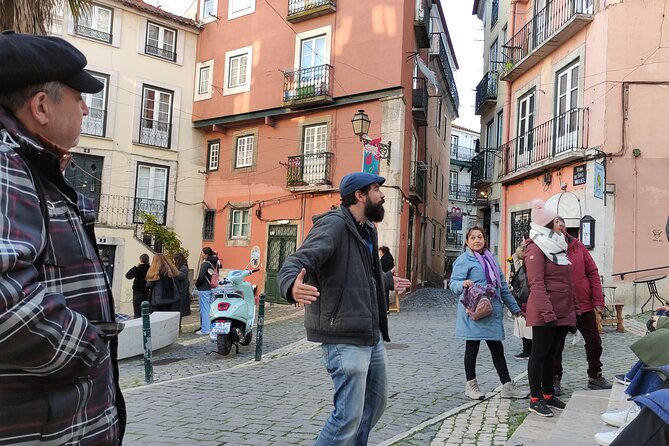
Depending on the group’s pace, the route goes deeper into Alfama’s maze and reaches the Church of Santo Estêvão viewpoint. The stop is planned for about 15 minutes.
This is where the physical challenge becomes clearer. The district’s charm comes from its hills and irregular lanes, but those same features require effort. Some people have found the grades and stairs challenging, while others have appreciated guides who slowed the pace for the group. One 79-year-old participant kept up because the guide adjusted the walk.
That flexibility matters. A group tour cannot stop for every person indefinitely, but guides such as Claudia and Belen have been praised for using shady places for explanations, allowing time for photos, and keeping the pace manageable.
Portas do Sol and Santa Luzia Viewpoints
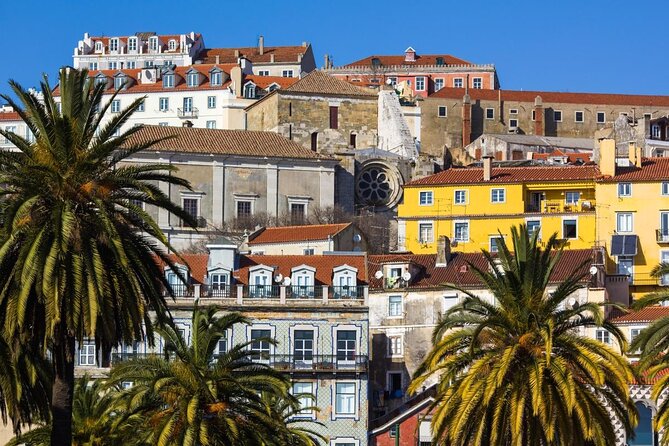
Miradouro das Portas do Sol is one of Alfama’s great balconies. From here, the old district spreads below and the broad Lisbon view explains why this lookout appears on so many postcards.
The stop is about 10 minutes. You will want your camera ready, but I suggest listening before rushing to the railing. The view makes more sense once you can identify Alfama’s slopes, rooftops, churches, and position above the lower city.
Miradouro de Santa Luzia follows, with another 10-minute pause. It is a romantic terrace and one of Lisbon’s most familiar photo spots. The setting can feel polished compared with the rougher lanes below, but it gives you a clear sense of the city’s beauty and geography.
These two viewpoints are valuable because they break up the uphill walking. They also help you understand the route you have just covered. After twisting through narrow streets, you finally see the whole district from above.
Lisbon Cathedral and Santo António
Lisbon Cathedral, or Sé de Lisboa, is the oldest and most important church in the city. Its construction began in the 12th century, and the tour allows about 15 minutes outside the building.
Entry is not included. The stated admission price is €5, so decide before the tour whether you want to return later for an interior visit. The guided stop focuses on the cathedral’s place in Lisbon rather than including a paid visit.
The final stop is the Church of St. Anthony, dedicated to Lisbon’s cherished saint. Spending about 15 minutes here gives the walk a fitting close. The church links the grand sweep of Lisbon’s history to a saint with a particularly strong local following.
The activity ends in a different location from the starting point. That is convenient if you want to continue toward other central sights, though you should not expect a return escort to Casa dos Bicos.
What the Guides Do Best
Guide quality is the strongest reason to book this walk. Cecilia has been praised for her history of Alfama, lively delivery, and singing. Hugo received especially strong praise for explaining fado as more than a music style, connecting it to saudade, longing, resilience, and diaspora.
Belen has been described as warm and compelling when discussing Moorish and modern Lisbon. Claudia has been praised for humor, clear explanations, and careful pacing. Nina, Jessica, Mariam, Laura, Joao, Fernanda, and Belem also received positive comments for bringing personality and local insight to the walk.
That range tells you something useful. The exact style depends on who leads your departure, but the experience is built around a passionate English-speaking guide rather than a fixed audio script. You may get a singer, a sharp historian, a comic storyteller, or a patient walking leader.
There is also a chance to taste ginjinha, Lisbon’s cherry liqueur. One guide introduced the group to ginja, and another stop involved ginjinha served in a dark chocolate cup. This appears to be an occasional local encounter rather than a guaranteed inclusion, and food and drinks are not included in the tour price.
Price, Tips, and Overall Value
The advance price is listed at $3.62 per person, which is unusually low for a guided walk lasting roughly two and a half hours. The reason is the tip-based format. You pay a contribution at the end according to the experience, and that tip is welcomed and expected.
I would not treat $3.62 as the full cost. Think of it as a low booking fee, then set aside enough for a fair tip if the guide gives you a useful, engaging afternoon. One comment expressed disappointment when people left without paying, which is a clear reminder that this model depends on proper tipping.
For the value, I like the combination of orientation, local history, viewpoints, and practical recommendations. You are not paying for museum admissions, transport, food, or drinks. You are paying for access to a person who can make sense of the district.
The tour is especially good value if you are new to Lisbon and want help deciding where to return. It is less useful if you dislike group walks, prefer a slow private visit, or want to spend substantial time inside the cathedral and churches.
Fitness, Weather, and Group Size
You need moderate physical fitness. The route includes steep grades, stairs, and uneven streets, and Alfama’s charm does not come with level pavement. Wear shoes with good grip and avoid bringing anything that makes the climbs harder.
The tour has a maximum of 25 people, although some departures have been much smaller. One reported group had only six people, which allowed easy questions and a flexible pace. A larger group may make it harder to hear in narrow lanes, so your experience can vary by date.
Rain does not automatically end the walk. One guide completed the route during heavy rain and kept the presentation going. Still, bring suitable weather protection. Outdoor viewpoints are much less enjoyable when you are cold, wet, or trying to hold an umbrella on stairs.
Service animals are allowed, and the meeting point is near public transportation. The experience is offered in English and uses a mobile ticket. Confirmation is provided when you book.
Who Should Book This Alfama Experience?
I would choose this tour if you want an active introduction to Lisbon, enjoy local stories, and prefer streets and viewpoints over a long indoor museum visit. It suits first-time visitors, curious walkers, and anyone who wants to understand fado and Alfama beyond a quick photo stop.
You should also book it if you value practical advice. The guides provide suggestions for enjoying the rest of your time in Lisbon, which can be useful when you have only a few days.
I would hesitate if stairs are difficult for you, if you need a fully accessible route, or if you want a guaranteed tasting. The tour also may not suit you if you dislike tip-based pricing or larger groups.
Should You Book the Alfama Tour?
Yes, I would book it for the first or second day of a Lisbon visit, provided you are comfortable with hills and stairs. The route gives you the essential Alfama viewpoints, but its real value is the connection between places: fountains, walls, churches, fado, local festivals, migration, and the daily life of an old neighborhood.
Arrive early at the blue umbrellas, wear excellent walking shoes, and plan to tip the guide. If you want Alfama explained by a person who can add context, humor, and a few local surprises, this is a strong low-cost choice. If you want a private, slow, indoor-focused visit, choose another format.
FAQ
How long does the Alfama tour last?
The tour lasts approximately 2 hours and 30 minutes.
What time does the tour start?
The provided meeting information lists a 3:30 pm start time. The experience also refers to morning and afternoon options, so check your booking confirmation for your selected departure.
Where does the tour begin?
It begins at R. dos Bacalhoeiros 12A, 1100-070 Lisboa, Portugal.
Where does the tour end?
The activity ends at a different location from the starting point. The provided details do not give a separate exact end address.
Is the tour offered in English?
Yes. English is the listed tour language.
Is the tour fully free?
No. The listed price is $3.62 per person, and the format is fully tip-based. A tip in accordance with the experience is welcomed and expected at the end.
Are food and drinks included?
No. Food and beverages are not included. A ginjinha or ginja tasting has occurred during some tours, but it should not be treated as an included feature.
Does the tour enter Lisbon Cathedral?
No. The group visits Lisbon Cathedral from outside. Cathedral admission is not included, and the stated entry cost is €5.
How difficult is the walking?
You should have moderate physical fitness. The route includes steep grades, stairs, and uneven streets, so comfortable walking shoes are important.
What is the maximum group size?
The tour can include a maximum of 25 people. Some departures may be smaller.
Can I bring a service animal?
Yes. Service animals are allowed.
Can I cancel for a full refund?
Yes, if you cancel at least 24 hours before the experience start time. Cancellations made within 24 hours are not refunded, and changes within that period are not accepted. If the minimum number of participants is not reached and the tour is canceled, you will be offered another date or experience, or a full refund.
Recently added in Lisbon
- Lisbon Cinematic Photoshoot with Top-Rated Photographer★ 5.0 · 76 reviews
- City Centre Run in Lisbon★ 5.0 · 164 reviews
- Central Lisbon E-Bike Tour★ 5.0 · 168 reviews
- Hands on Portuguese Cooking Class in Lisbon★ 5.0 · 136 reviews
- City of Neighborhoods Tour 1H 30M Private Tour by Tuk Tuk★ 5.0 · 38 reviews
- Lisbon Sailing Catamaran Public Cruise with drinks★ 5.0 · 304 reviews
- Lisbon City Tour by Tuk Tuk★ 4.5 · 137 reviews
- Romantic Private Sailboat in Lisbon for couples★ 5.0 · 38 reviews
Lisbon Tours, compared.
Lisbon City Center Tour – The Unmissable Lisbon
Read our review →


Sunset Boat Party Cruise with DJ and Open Bar
Read our review →
Pena Palace, Sintra, Cabo da Roca, & Cascais Daytrip
Read our review →

True 4Hour Private Tuk Tuk Tour: Discover Lisbon with a Local!
Read our review →