
REVIEW · DOLPHIN WATCHING
Small Group Dolphin and Wildlife Watching Tour in Faro
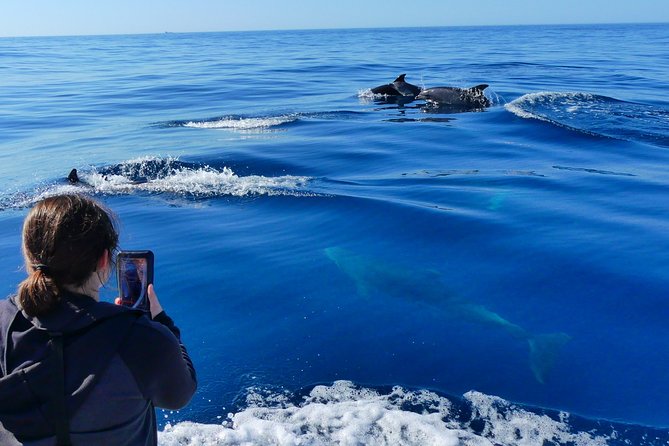
Dolphins are only half the story. This Faro boat trip combines a fast ride from the Ria Formosa to the open Atlantic with a serious search for dolphins, whales, seabirds, turtles, and other marine life. I like the small maximum group of nine, which keeps the boat personal, and I like that marine biologists lead the outing and collect research data after wildlife sightings.
The main thing to consider is the boat itself. This is a rigid inflatable boat with jockey-style seats, not a broad, cushioned sightseeing cruiser. I like the excitement and the excellent view from the open seating, but rough water can make the ride hard on your back, neck, or stomach.
The morning departure is a smart choice. Wildlife is often more active early, temperatures are milder, and the sea may feel calmer before conditions change. Still, this is an Atlantic wildlife search, not a guaranteed dolphin performance. You may see hundreds of dolphins and even whales, or you may see distant dolphins, seabirds, and sunfish.
In This Review
- Key points before you book
- Starting at Faro’s Ginásio Clube Naval
- Through the Ria Formosa toward the Atlantic
- Searching for dolphins in open water
- Whales, turtles, sunfish, and seabirds
- Why the marine biologist crew changes the trip
- What the RIB boat feels like at sea
- Is the $66.51 price good value?
- Who will enjoy this Faro boat tour most?
- Practical timing and cancellation advice
- Should you book the Ocean Vibes Algarve tour?
- FAQ
- Where does the dolphin tour begin?
- Where does the tour end?
- How long does the tour last?
- How many people can join the boat?
- What animals might I see?
- Are dolphins guaranteed?
- Is the tour offered in English?
- Can I cancel for a full refund?
- What happens if bad weather cancels the tour?
Key points before you book
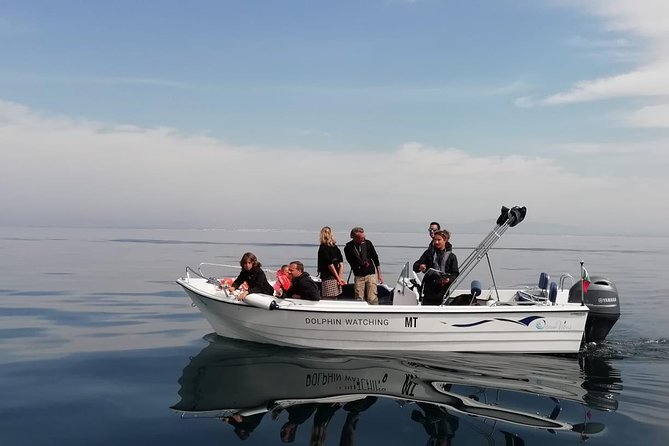
- Small boat, maximum nine people: You get a better view and more room for questions than on a large sightseeing vessel.
- Marine biologists on board: The guides explain animal behavior, identify species, and record information for research.
- Morning departures help: The early trip, including the popular 8:30 a.m. start, avoids the strongest heat and can offer active wildlife.
- Common and bottlenose dolphins are regular targets: Lucky outings can also include porpoises, fin whales, minke whales, orcas, turtles, and ocean sunfish.
- The ride can be lively: The RIB boat is comfortable for many people at speed, but high waves can be rough and may cause motion sickness.
- Wildlife protection matters: The crew keeps a respectful distance and lets dolphins decide how close they want to come.
Starting at Faro’s Ginásio Clube Naval
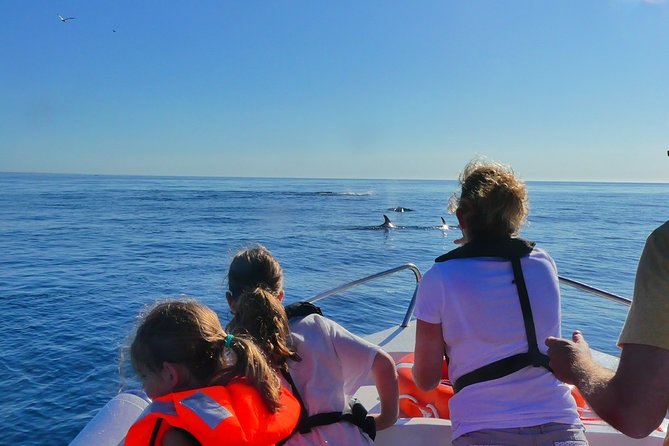
The meeting point is the Ginásio Clube Naval at Estrada do Passeio Ribeirinho 58, in Faro. This is a central waterfront departure point, and the tour returns to the same place, so you do not need to arrange a second pickup location at the end.
The meeting area can be quiet when the boat is still out on an earlier departure. One useful improvement would be a clearer sign or notice for people waiting for the next trip. If you arrive and the office appears empty, do not assume you are in the wrong place. The crew may simply still be on the water.
The tour is offered in English, and the company confirms bookings at the time of purchase. It is also close to public transportation, which makes the central Faro location practical if you are staying in town without a car.
The boat holds no more than nine people. That number matters. Wildlife watching requires people to shift their attention quickly, and a small group gives you a fair chance at a clear view rather than a row of heads in front of you. It also makes it easier to ask about a bird, dolphin, or whale while the sighting is still fresh.
A few more Faro options side by side
- 4 Stops | 3 Islands & Ria Formosa Natural Park – From Faro
★ 5.0 · 3,080 reviews - From Faro: Benagil Cave, Marinha Beach, Algar Seco & More
★ 4.7 · 2,027 reviews - Ria Formosa – Boat trip to the 3 Islands: Armona | Culatra Island | Lighthouse
★ 5.0 · 1,872 reviews
Through the Ria Formosa toward the Atlantic
The trip begins with views of the Ria Formosa Natural Park. This protected wetland area gives you a gentler start before the boat reaches open water. You see Faro from the water and watch the surroundings change as the boat moves from sheltered channels toward the Atlantic.
This first section is more than a transfer. It gives the marine biologists time to explain what you may see and how the crew behaves around wild animals. You are not heading to a fixed enclosure or a feeding site. The team searches for free-ranging animals and adjusts the route according to conditions and sightings.
Once outside the more sheltered waters, the ride becomes faster and more physical. The RIB design lets the skipper move efficiently across the sea, but it also exposes you to the motion of the water. Several people describe the ride as exciting, while others found the jockey seats stiff or uncomfortable.
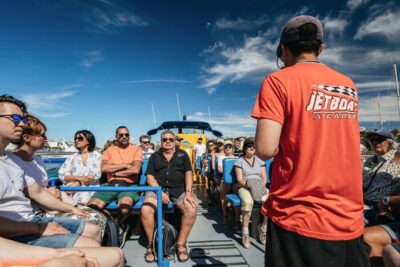
I would treat the boat as part of the adventure, not merely transportation. At speed, you can feel the waves and wind. When the boat slows near animals, you have more time to stretch and focus on watching and taking photographs. Bring a jacket or sweatshirt, even on a warm Algarve morning, because the boat feels cooler once it is moving.
Searching for dolphins in open water
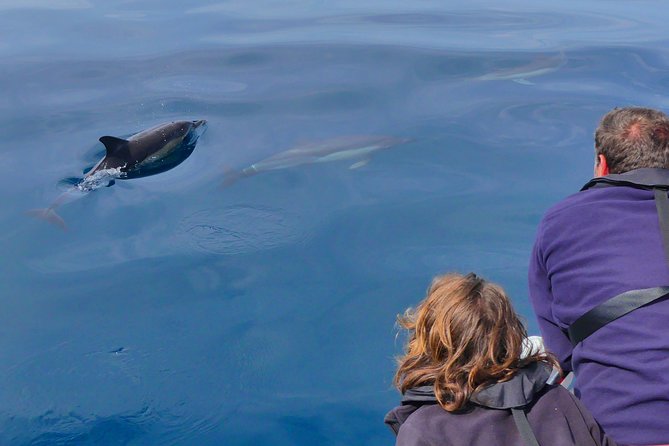
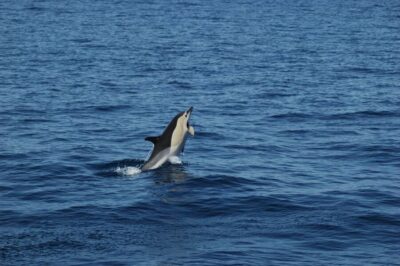
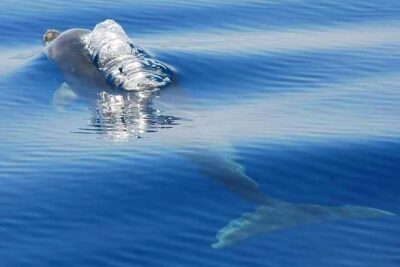
The crew watches for cetaceans, the group that includes dolphins and whales. The most likely dolphin sightings are common dolphins and bottlenose dolphins. Striped dolphins and porpoises have also been seen on successful outings.
The variety of reports gives you a realistic sense of the possibilities. Some mornings produce a huge pod, with descriptions of hundreds of dolphins and even a group close to 300 animals. Other trips bring smaller pods, dolphins in the distance, or two species during the same outing.
That uncertainty is part of the value. You are watching wild animals in their own setting, not waiting for a scheduled jump. The crew may spend time locating a pod, then follow it at a respectful distance. Dolphins sometimes swim beside the boat, pass underneath it, or approach closely. They may also keep away.
The guides do not treat the animals like performers. After a sighting, they explain the species and behavior, while also collecting data for research. The crew keeps within wildlife protection rules and avoids forcing an encounter. That approach gives the trip a stronger purpose than a simple chase for photographs.
One important point is the time spent with a pod. The crew follows the animals within the permitted limits rather than circling them endlessly. You may have a substantial viewing period, but the exact length depends on the animals and sea conditions.
Whales, turtles, sunfish, and seabirds
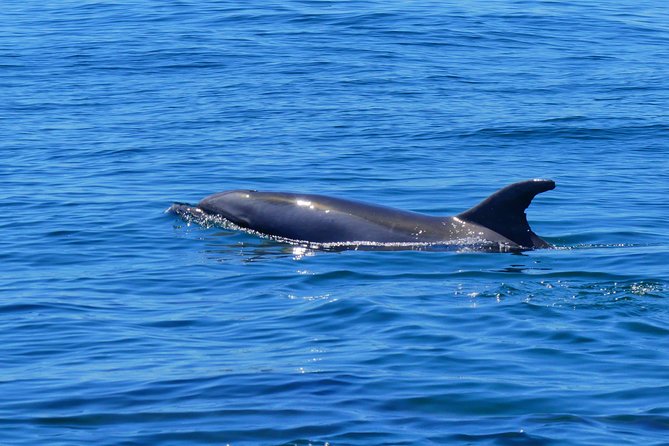
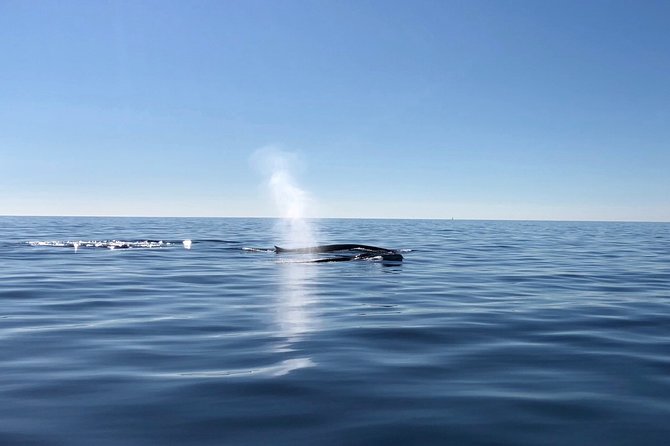
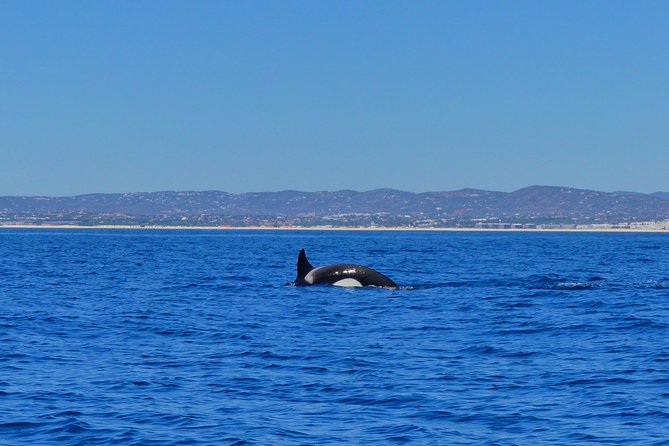
Dolphins receive top billing, but the open Atlantic can produce a wider list of sightings. Whales reported on this route include fin whales and minke whales. Orcas and other whale species are possible but much less predictable.
Season matters. The information provided here notes that whale sightings are especially associated with spring, while Bryde’s whales may appear in spring, summer, and autumn. A trip without a whale is not a failed trip. You might still see dolphins, porpoises, a basking shark, an ocean sunfish, or a Portuguese man-of-war.
Ocean sunfish, also called mola mola, are an especially interesting possibility. These large fish often appear at the surface, where their unusual shape makes them easier to notice. Atlantic bluefin tuna, sharks, and marine turtles are also listed among possible sightings, though none should be treated as assured.
Keep your eyes above the water, too. Northern gannets, shearwaters, storm petrels, and ospreys can appear during the outing. Bird sightings may be brief, so listen when the crew calls out a species and look in the direction they indicate.
The wildlife list is broad because the trip is not limited to one target. If you only want a guaranteed dolphin photograph, this format may frustrate you. If you enjoy learning how a marine ecosystem fits together, the extra sightings make the day more rewarding.
Same corner of the country, a different pace:
- Ria Formosa Natural Park and Islands Boat Cruise from Faro
★ 5.0 · 1,314 reviews - 2 Stop | 2 Islands & Ria Formosa Natural Park – From Faro
★ 5.0 · 1,045 reviews - Faro: Deserta Island and Farol Island Catamaran Boat Trip
★ 4.6 · 955 reviews - From Faro: Benagil, Algar Seco, 7 Hanging Valleys, & Marinha
★ 4.9 · 890 reviews
Why the marine biologist crew changes the trip
The strongest feature here is the crew’s scientific training. Guides such as Diogo, Pedro, Miguel, and Susanne are praised for clear explanations, good humor, and calm handling of the boat and wildlife encounters.
That matters most when an animal appears suddenly. A trained guide can help you distinguish common dolphins from bottlenose dolphins, explain why a whale surfaces in a particular way, or point out a seabird that you might otherwise miss. The guides also share the excitement. They are not simply reading facts from a script while watching the clock.
The research element adds another layer. After finding cetaceans, the team records data before returning to Faro. Your outing therefore supports observation as well as tourism. The company’s stated approach is to respect protected wildlife rules, maintain distance, and avoid encouraging animals to approach.
I also like the crew’s role in managing the human side of the trip. The small group allows more direct help, and the guides work to make people feel safe. Several accounts describe the crew as friendly, careful, and passionate about the animals.
Still, the quality of your day depends partly on the sea. A skilled skipper can respond quickly to unexpected waves, but no crew can make rough water disappear. Conditions can change fast, and a return trip may take longer if the skipper slows down to cross the waves more safely.
What the RIB boat feels like at sea
The boat is best understood before you book. A RIB has an inflatable outer tube and a narrow, open layout. You sit on jockey-style seats rather than in a wide bench or enclosed cabin.
Many people find this arrangement comfortable enough, especially because it offers an unobstructed view and makes the ride feel lively. The open design is useful for wildlife watching. You can turn quickly, see across the water, and avoid looking through windows or around a roof support.
The tradeoff is physical comfort. The seats can feel stiff, and the boat moves with the waves. One particularly rough return caused back and neck pain for a passenger, while two children on another high-wave outing became sick. That is not likely to happen on every departure, but it is a genuine possibility.
If you dislike small boats, have a sensitive back, or are prone to motion sickness, think carefully before paying. The product is clearly a small-boat wildlife tour, and the open Atlantic can be demanding. If you enjoy a roller-coaster-like ride and want to reach the animals quickly, the boat may be one of the best parts.
Wear practical clothing and bring a warm layer. The boat can feel cold at speed, even when Faro is sunny. You will also want to protect your phone or camera from spray and hold on to loose items when the boat accelerates.
Is the $66.51 price good value?
At $66.51 per person for about two and a half hours, this is not the cheapest way to get onto the water. But price alone misses the important point. You are paying for a maximum group of nine, a dedicated search for wildlife, a fast open-water boat, and marine biologists rather than a basic coastal cruise.
The value improves when the crew finds several species. A morning with large dolphin pods, seabirds, a sunfish, or a whale can feel like a very strong use of your money. Even when the main targets stay away, the guides provide interpretation and make the search itself part of the experience.
The small group also matters financially. A cheaper boat with a much larger number of people may offer less personal attention and poorer views. Here, you are paying for access to a more focused outing, not simply a seat on a vessel.
No wildlife tour can promise a specific return. The fair way to judge the cost is to ask whether you value the search, the science, and the chance of a rare sighting. If you do, the price is reasonable. If you need a guaranteed attraction, spend your money elsewhere.
Who will enjoy this Faro boat tour most?
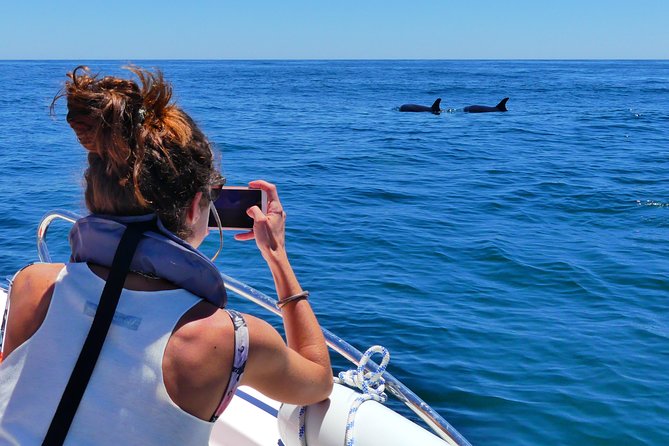
This outing suits people who care about wildlife welfare and want to see animals in the open sea. Families can enjoy it, and children as young as three and six have been able to appreciate the dolphins, though the boat motion may be tiring or uncomfortable for some children.
It is also a good match for photographers, bird lovers, and anyone who wants a closer look at marine behavior. You may not get a perfect photograph. The boat moves, the animals surface without warning, and the crew places welfare ahead of a close-up image.
The tour is less suitable if you want a calm cruise, a covered cabin, or a guaranteed whale sighting. It is also not a good fit for someone who already knows that small boats and rough seas cause severe discomfort.
Most people can participate, and service animals are allowed. The experience requires good weather, and the company may offer another date or a full refund if conditions are poor or the minimum number of bookings is not reached.
Practical timing and cancellation advice
The morning schedule is worth choosing if it fits your plans. The 8:30 a.m. departure has the practical advantages of cooler air and less intense sun, and the crew reports that wildlife can be active then.
Plan for the stated duration of about two hours and thirty minutes. Some outings have lasted close to three hours when the crew found animals or slowed down for rough water. Do not build a tight connection immediately afterward.
You can cancel for a full refund if you do so at least 24 hours before the local start time. Changes or cancellations inside that period are not accepted for a refund. If weather cancels the tour, you are offered another date or a full refund.
Should you book the Ocean Vibes Algarve tour?
Book it if you want a serious wildlife outing in a small group, and you are comfortable with an open RIB boat. The strongest reasons are the marine biologists, the careful distance from animals, the research work, and the chance to see far more than dolphins.
I would choose this tour over a basic boat ride if animal welfare and useful explanations matter to you. I would also choose an early departure, bring a warm layer, and leave room in the schedule in case sea conditions slow the return.
Skip it if you need soft seating, a smooth ride, or a guaranteed sighting. The sea makes the rules here. For the right person, though, a pod of common dolphins, a bottlenose dolphin beside the boat, or a sudden fin whale can make this one of Faro’s most memorable outings.
FAQ
Where does the dolphin tour begin?
The tour begins at Ginásio Clube Naval, Estrada do Passeio Ribeirinho 58, 8000-541 Faro, Portugal.
Where does the tour end?
The activity returns to the same meeting point at Ginásio Clube Naval in Faro.
How long does the tour last?
The planned duration is approximately two hours and thirty minutes. Some outings may run longer because of wildlife sightings or slow returns in rough sea conditions.
How many people can join the boat?
The tour has a maximum of nine travelers.
What animals might I see?
Possible sightings include bottlenose dolphins, common dolphins, striped dolphins, porpoises, whales, orcas, northern gannets, shearwaters, storm petrels, ospreys, ocean sunfish, Atlantic bluefin tuna, sharks, marine turtles, and Portuguese man-of-war.
Are dolphins guaranteed?
No. The tour searches for wild animals, so sightings and species cannot be guaranteed.
Is the tour offered in English?
Yes. The experience is offered in English.
Can I cancel for a full refund?
Yes. You can cancel at least 24 hours before the local start time for a full refund. Cancellations or changes made less than 24 hours before departure are not refunded.
What happens if bad weather cancels the tour?
You will be offered a different date or a full refund if poor weather causes the cancellation. A new date or refund may also be offered if the minimum number of bookings is not met.
Recently added in Faro
- Tuk tuk Tour Tavira Total – 2h00 – Includes Tuna Museum and Fishing Village★ 5.0 · 71 reviews
- From Faro: Benagil Hiking Cliffs and the 4 Treasure Experience★ 5.0 · 424 reviews
- Highlights & Hidden Gems of Faro Private Tour★ 5.0 · 78 reviews
- Algarve Buggy Tours★ 5.0 · 429 reviews
- Tavira City Tuk Tuk Tour – 1h Tavira City Tour★ 5.0 · 100 reviews
- Tavira Tuk Tuk Tour – Chocolate Tour – Tavira City & Chocolate★ 5.0 · 63 reviews
- Group Surf Lessons★ 5.0 · 73 reviews
- Tavira Olive Experience Factory Tour and Tasting★ 5.0 · 190 reviews
Dolphin Watching, compared.

Benagil Caves & Dolphin Watching Speed Boat Tour
Read our review →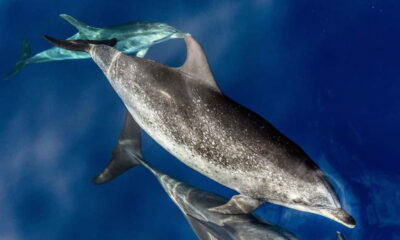
Dolphins Search and Benagil Caves from Albufeira
Read our review →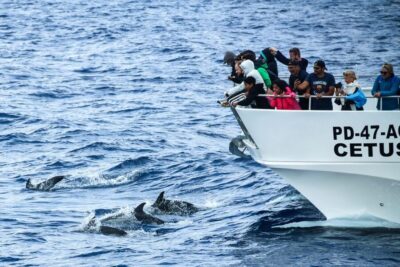
Benagil Caves & Dolphins Watching with Biologist
Read our review →Browse the lists this tour appears in