
REVIEW · TICKETS
Porto: Entry Ticket at WOW The Chocolate Experience by 20|20
Chocolate has a surprisingly serious story. At The Chocolate Experience by 20|20 in Porto’s WOW cultural district, you follow cacao from sacred drink in ancient Central America to the chocolate bars sold today. I like the clear bean-to-bar explanation, and I like that the visit includes raw cacao and finished chocolate tastings. The chance to watch a working factory adds a useful real-world touch.
The main drawback is that the early museum sections rely heavily on written displays. One visitor found the opening less interactive than expected, so this suits curious adults and older children better than anyone seeking a nonstop hands-on attraction.
In This Review
- Key points at a glance
- Starting at The Chocolate Story in WOW
- From sacred cacao to European chocolate
- Seeing the cacao plant and understanding farming
- The bean-to-bar process, one step at a time
- Tasting raw cacao and Vinte Vinte chocolate
- Finishing inside a working chocolate factory
- How much time should you allow?
- What the $20 ticket is really worth
- Who will enjoy this most?
- Practical tips for a smoother visit
- Should you book The Chocolate Experience?
- FAQ
- Where does The Chocolate Experience begin?
- How long does the experience take?
- How much does admission cost?
- What are the opening hours?
- Can I enter at any time during the day?
- Is an audio guide included?
- Is the museum wheelchair accessible?
- Can children visit alone?
Key points at a glance
- 5,000 years of chocolate history: Follow cacao from ancient Central America to European courts and modern shops.
- A real production story: See how cacao is harvested, fermented, dried, roasted, and turned into chocolate.
- Tastings along the way: Try raw cacao, 100 percent cacao chocolate, artisan samples, and Vinte Vinte chocolate.
- A live factory finish: Watch award-winning chocolate being made inside the working production area.
- Flexible one-day entry: Use your ticket any time on your selected date during opening hours.
- Useful for families and wheelchair users: The museum is wheelchair accessible, but unaccompanied minors are not allowed.
Starting at The Chocolate Story in WOW

You begin by showing your ticket directly at The Chocolate Story, part of The World of Wine, usually known as WOW. There is no transport included, so you need to make your own way to the museum and arrive at the meeting point ready to start.
The ticket costs $20 per person and covers about 1.5 hours. That is a fair price if you take time with the displays, use the audio guide, and sample the chocolate at each stage. It is less compelling if you rush through museums or mainly want a factory demonstration.
The opening hours are 10:00 AM to 7:00 PM daily, with last entry at 7:00 PM. Your ticket is valid any time on the selected date during those hours, which gives you room to fit the visit around lunch, sightseeing, or other WOW museums.
The museum also provides a small chocolate bar at entry, according to the visitor information available for this experience. It is a modest touch, but it starts the visit on the right note. The chocolate-filled shop at the end gives you a chance to buy more Vinte Vinte products if one of the tastings catches your attention.
A few more Porto options side by side
- Porto: Cálem Cellar with Chocolate, Cheese, and Wine Tasting
★ 4.6 · 310 reviews - Tavira Tuk Tuk Tour – Chocolate Tour – Tavira City & Chocolate
★ 5.0 · 63 reviews
From sacred cacao to European chocolate
The first part sets out the long story of cacao. You learn how early civilisations in Central America treated cacao as a sacred drink connected with gods and royalty. This gives the ingredient a far more unusual beginning than its modern place in a supermarket aisle suggests.
The displays then follow cacao across the ocean to Europe. There, it changed from a bitter ritual drink into something associated with courts, luxury, and eventually everyday consumption. I like this section because it explains not only what chocolate is, but why it became socially important.
The museum also looks at chocolate’s role in advertising and consumer culture. You see how it moved from a rare product for the wealthy to a familiar symbol of pleasure, celebration, affection, and indulgence.
This part is informative rather than highly physical. You will read a fair amount, and one visitor felt the opening needed more interactive elements. If you enjoy short display panels, historical context, and visual storytelling, that will not be a problem. If you want constant buttons, games, or demonstrations, the beginning may feel slow.
An audio guide is available in English, Portuguese, Spanish, and French. That helps if you prefer listening rather than reading every panel, though the supplied information does not say how long each audio track lasts or whether every display has spoken commentary.
Seeing the cacao plant and understanding farming
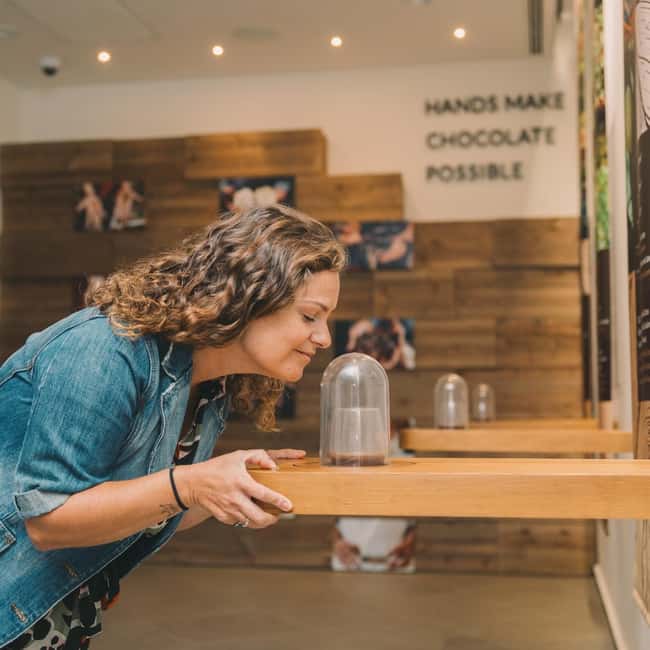
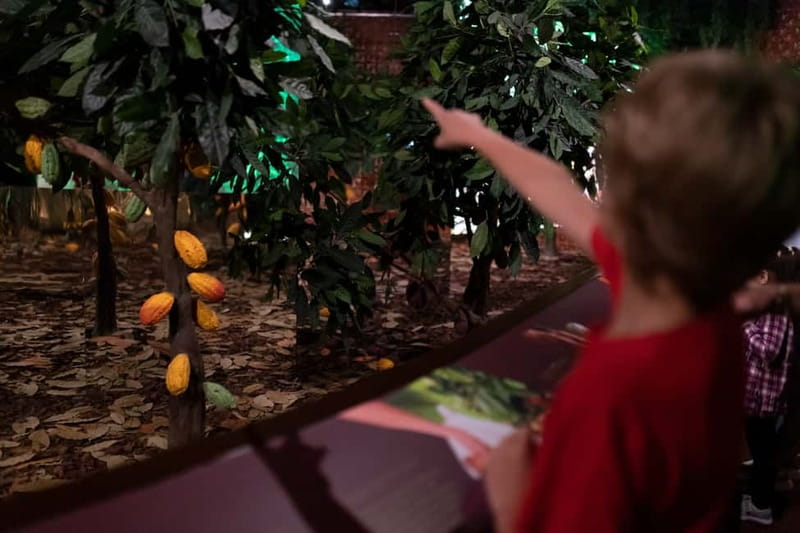
The visit moves from history into the source of the product. You learn about cacao plantations, the cacao plant, and the fruit itself. This is where the chocolate bar begins to feel less like a finished treat and more like the end result of careful agricultural work.
Different cacao varieties are introduced, along with sustainable farming methods. That matters because the flavor and quality of chocolate depend on what happens long before the beans reach a factory.
The museum connects farming with the later stages of production, helping you understand why chocolate makers pay attention to the bean’s origin and condition. You gain a better sense of the work involved before roasting, grinding, and mixing even begin.
The hands-on element becomes more noticeable here, especially when you can see and smell the raw material. You may find this section particularly useful if you have always thought of chocolate mainly in terms of cocoa powder, milk, sugar, and wrappers.
The bean-to-bar process, one step at a time
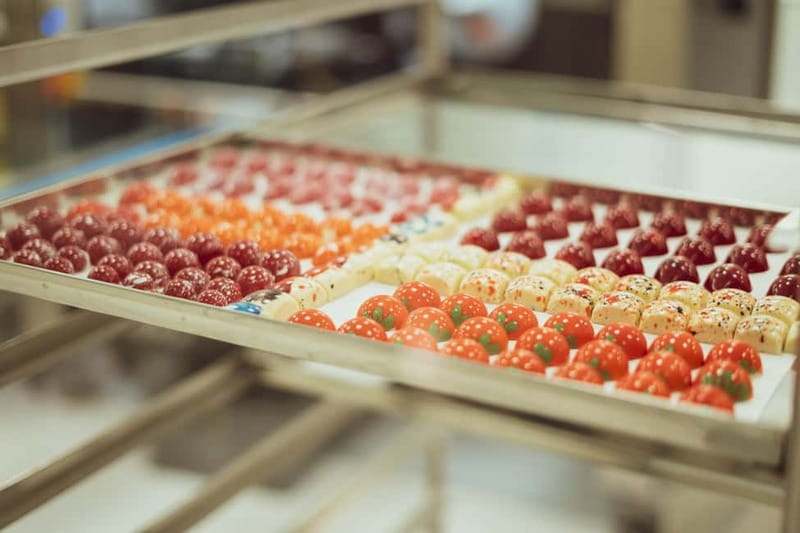
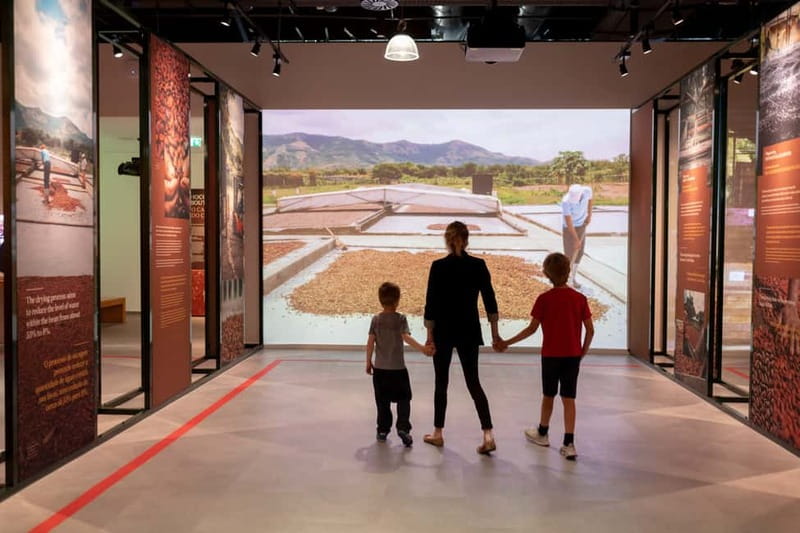
The strongest part of the visit is the production sequence. You follow the cacao bean through harvesting, fermentation, drying, roasting, and conching. Each stage changes the bean’s smell, texture, or taste.
Harvesting is only the start. Fermentation prepares the beans and helps develop the flavors that later emerge in the finished chocolate. Drying protects the beans and gets them ready for storage and transport.
Roasting brings out more familiar chocolate aromas. You then see how later processing turns the roasted beans into a smoother product. Conching is an especially useful term to learn because it explains part of the texture and flavor work that takes place before chocolate reaches a mould or wrapper.
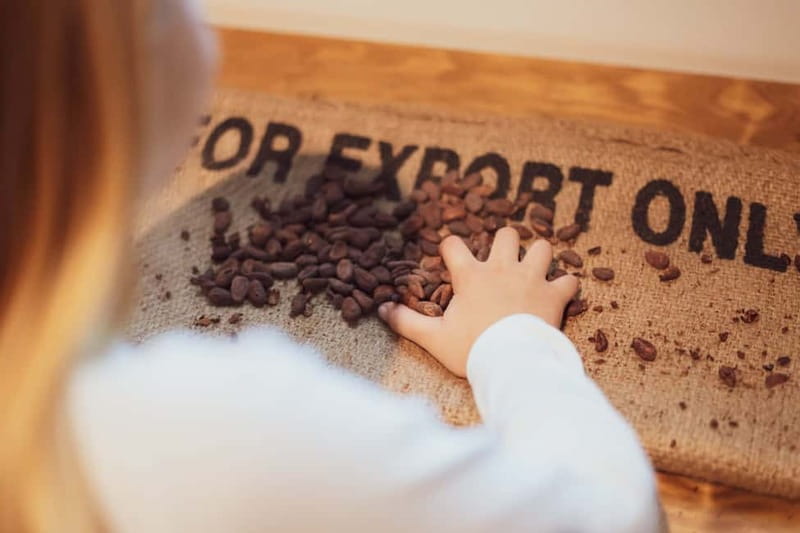
Tastings make this section much more effective. You try raw cacao and chocolate at different stages, rather than simply looking at diagrams and reading descriptions. One sample is 100 percent cacao chocolate, which gives you a very direct taste of the ingredient without the sweetness found in many familiar bars.
That tasting can surprise you. It also helps explain why chocolate makers add other ingredients and adjust the processing. The experience is not simply a parade of sweets. It shows how raw cacao develops into the product you know.
Same corner of the country, a different pace:
- The Unvanquished Tour in Porto City Center
★ 5.0 · 26,497 reviews - From Porto: Douro Valley w/ Boat Tour, Wine Tasting & Lunch
★ 4.7 · 19,061 reviews - Complete Douro Valley Wine Tour with Lunch, Wine Tastings and River Cruise
★ 5.0 · 12,920 reviews - Porto: Six Bridges Cruise
★ 4.2 · 11,680 reviews
Tasting raw cacao and Vinte Vinte chocolate
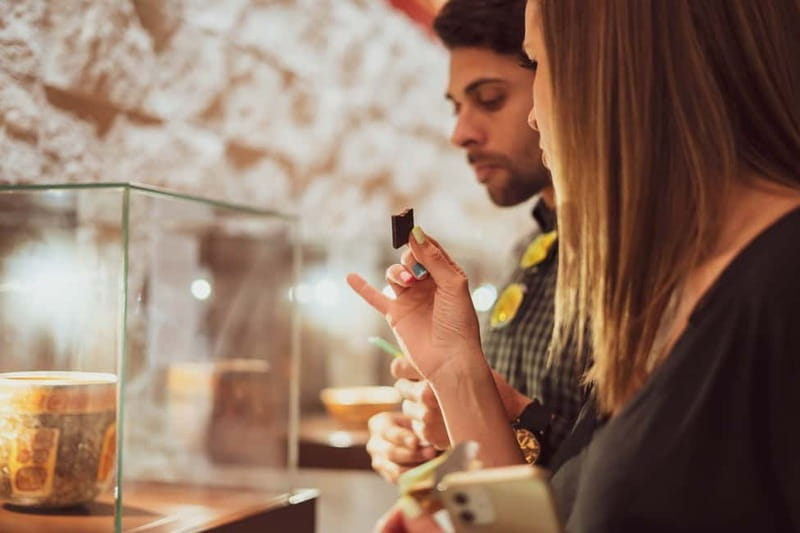
The tasting stops are spread through the visit. This keeps the experience moving and gives you a reason to pay attention to the stages around each sample.
You taste raw cacao as well as chocolate in different forms. The contrast is the point. Raw cacao can be intense and unlike a standard candy bar, while finished chocolate is smoother and more familiar.
Vinte Vinte chocolate tasting is included with the ticket. Vinte Vinte is the chocolate brand produced at WOW, and the visit connects the museum displays with the products made on site.
I like this direct link between explanation and tasting. You are not just told that roasting, refining, or conching changes the product. You get a chance to notice that change for yourself.
The tastings are also useful for families, though very young children may not care about the historical displays or appreciate bitter chocolate. Since unaccompanied minors are not allowed, children need to visit with an adult.
Finishing inside a working chocolate factory
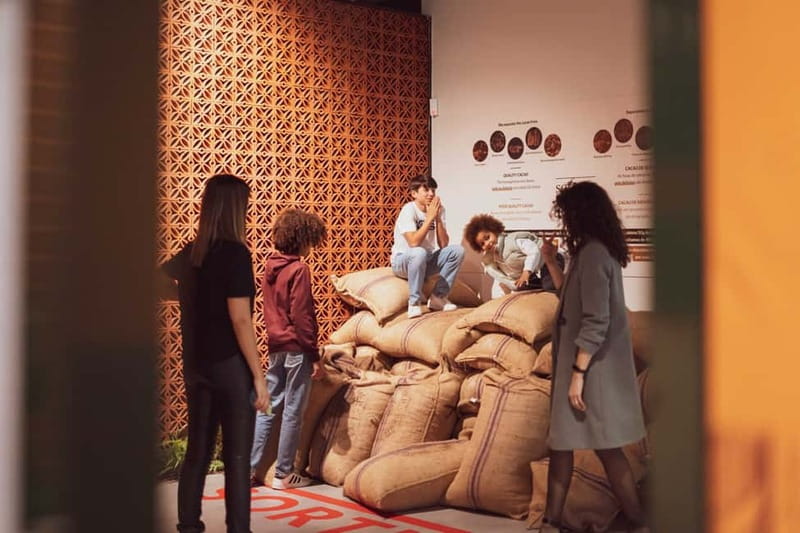
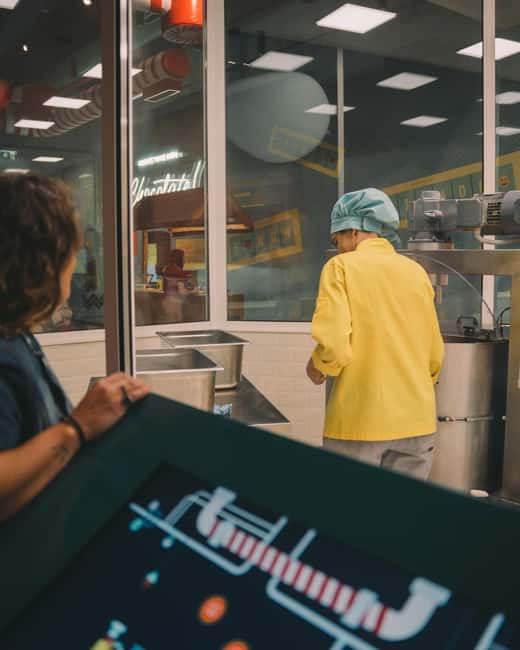
The final section takes you into an operating chocolate factory. Here, you can watch cacao beans being turned into award-winning chocolate. This gives the visit a practical ending and shows that the story is not only historical or theoretical.
A factory in action is the feature I would plan around. The museum is open every day, but the available visitor advice specifically warns that you should not visit on a Sunday if seeing the in-house factory operating is important to you.
That does not make Sunday a bad day for the museum itself. You can still see the displays and take part in the tasting experience. But the factory portion may not have the same sense of movement and production.
The precise factory schedule is not provided, so I would check the official website before booking if the machinery and live production are your main reason for going. Opening hours can also change on bank holidays.
How much time should you allow?
The stated duration is 1.5 hours. That is enough for a focused visit, but I would not treat it as a strict guided tour with everyone moving together at the same pace.
You can use your ticket at any point on the selected date during museum hours. This means you have some control over your timing, although the experience itself takes about an hour and a half.
Allow extra time if you like reading every panel, listening to the complete audio guide, or browsing the chocolate shop. You may also want a little breathing room if the tasting stations are busy.
The flexible entry is useful in Porto, where weather and meal times can change your plans. A morning visit leaves the afternoon open. An early evening entry is possible as long as you enter before the 7:00 PM last admission.
What the $20 ticket is really worth
At $20, this is not a bargain basement museum visit, but it includes more than a basic collection of displays. You get the museum entry, audio guide, several tastings, and access to the factory area.
I consider the price reasonable for anyone who likes food production, cultural history, or chocolate beyond the simple pleasure of eating it. The tasting stations give the ticket real value because you experience the raw ingredient and the finished product.
The value is weaker if you are only interested in buying chocolate. Porto has plenty of places to do that without paying museum admission. This ticket makes sense when you want the story, process, and factory connection as well.
The visit also works well as part of a larger day at WOW. Since transportation is not included, you need to plan your route to the cultural district yourself. The ticket is for The Chocolate Experience by 20|20, so check whether you want to add any other WOW attractions separately.
Who will enjoy this most?

I would recommend this experience to adults who enjoy food traditions and to families with older children who can follow a museum-style presentation. The tastings help keep the subject lively, while the production stages give the visit a clear structure.
It is also a good choice for anyone who wants something indoors during unsettled weather. The 1.5-hour length is manageable, and the flexible entry window makes it easy to fit around other plans.
People with a strong interest in chocolate production will probably get the most from it. You can compare cacao at several points, learn the names of key stages, and see the final product being made.
I would be more cautious about booking it for toddlers or for anyone expecting a highly interactive attraction from the first minute. The early part includes a lot of reading, and the experience is educational as well as entertaining.
Wheelchair users can visit because the museum is wheelchair accessible. The activity is not available to unaccompanied minors, so all children need an adult with them.
Practical tips for a smoother visit
- Choose a non-Sunday date if the live factory operation is your top priority.
- Use the audio guide if you prefer listening in English, Portuguese, Spanish, or French.
- Do not rush the tastings. The samples help you understand the difference between raw cacao, 100 percent cacao, and finished chocolate.
- Check holiday hours before setting out, since bank holiday schedules may vary.
- Plan your own transport. It is not included in the ticket.
- Leave room for the shop if you want to buy Vinte Vinte chocolate after the museum.
Free cancellation is available up to 24 hours before the scheduled date for a full refund. You can also reserve now and pay later, which may help if your Porto plans are still shifting.
Should you book The Chocolate Experience?
Book it if you want more than a sweet snack. The museum gives you a clear route through cacao’s past, farming, production, marketing, and modern use, while the tasting stations make the subject easy to understand.
I especially recommend it if you can visit on a day when the factory is operating. That final step connects the displays to a real product and gives the experience a satisfying finish.
Skip it if you dislike reading in museums or want a short factory tour with little background. At $20, the ticket earns its value through the full story and the tastings, not through chocolate samples alone.
For most food-minded visitors, families with older children, and anyone curious about how a cacao bean becomes a bar, this is a worthwhile Porto stop. Just choose your day carefully and give the displays enough time.
FAQ
Where does The Chocolate Experience begin?
You start by showing your ticket directly at The Chocolate Story at WOW, the World of Wine cultural district in Porto.
How long does the experience take?
The stated duration is 1.5 hours.
How much does admission cost?
The price is $20 per person.
What are the opening hours?
The Chocolate Experience is open daily from 10:00 AM until 7:00 PM, with last entrance at 7:00 PM.
Can I enter at any time during the day?
Yes. You can use your ticket at any time on the selected date during the museum’s opening hours.
Is an audio guide included?
Yes. The audio guide is available in English, Portuguese, French, and Spanish.
Is the museum wheelchair accessible?
Yes. The activity is wheelchair accessible.
Can children visit alone?
No. Unaccompanied minors are not allowed. Children must visit with an adult.
Recently added in Porto
- Porto: Tuk tuk Tours with Port Wine Tasting★ 4.5 · 65 reviews
- The Beautiful Story of Porto: Guided Tour with Entry Tickets★ 4.8 · 111 reviews
- Porto: Royal Oporto Tour na Real Companhia Velha★ 4.8 · 395 reviews
- Porto: Entry Ticket at WOW – The Wine Experience Museum★ 4.7 · 356 reviews
- Porto: WOW Daily Ticket★ 4.7 · 42 reviews
- Porto: Luxury Yacht Tour of the 6 Bridges and Douro Estuary★ 4.9 · 521 reviews
- Porto Wine Tasting Experience with Portuguese Tapas Plate★ 4.7 · 356 reviews
- Porto: 6 Bridges Port Wine River Cruise with 4 Tastings★ 4.8 · 182 reviews
Tickets, compared.

Quinta da Regaleira Skip-the-Ticket-Line Entry & Audioguide
Read our review →
Luz Stadium Tour & SL Benfica Museum Ticket w/Scarf
Read our review →
Browse the lists this tour appears in