REVIEW · TOURS
Marble Tour in Vila Viçosa
Marble has a story beneath your feet. This 2 to 3 hour experience in Vila Viçosa follows the stone from quarry to finished product, with stops at a working quarry, a traditional craft workshop, and an industrial processing site. I like the clear focus on the full production chain, and I also like the chance to hear personal stories from the people who work with marble. The main consideration is transport: you need your own vehicle to move between the meeting point and the sites.
The tour costs $30.25 per person and is offered in English. With a maximum of 10 people, it should feel more personal than a large coach outing. Closed shoes are required, and you should be comfortable walking around active work areas where machinery and quarry hazards are part of the subject.
In This Review
- Key points to know before you book
- Why Vila Viçosa marble deserves your time
- Starting at Rota do Mármore AE
- At the marble quarry, stone becomes a working material
- The traditional workshop shows the human hand
- Industrial processing explains scale and precision
- How much time should you allow?
- The real value of the $30.25 price
- Who will enjoy this most?
- What to wear and how to prepare
- Should you book the Vila Viçosa marble tour?
- FAQ
- Where does the Marble Tour in Vila Viçosa begin?
- Where does the tour end?
- How long does the tour last?
- Is transportation included between the sites?
- What language is the tour offered in?
- What should I wear?
- Can I cancel for a full refund?
Key points to know before you book
- See the whole marble process: Follow the stone from underground extraction to cutting, polishing, and finished artistic or practical products.
- Visit three working settings: The route includes a quarry area, a traditional marble workshop, and an industrial processing workshop.
- Keep your own transport ready: You must drive between the meeting point at Avenida Duques de Bragança 4 and the sites.
- Expect a small group: The maximum is 10 people, with group discounts available.
- Wear closed shoes: This is a working environment, not a polished museum visit.
- Meet local guides: João and Juaquina have received particular praise for their clear English, enthusiasm, and personal approach.
Why Vila Viçosa marble deserves your time
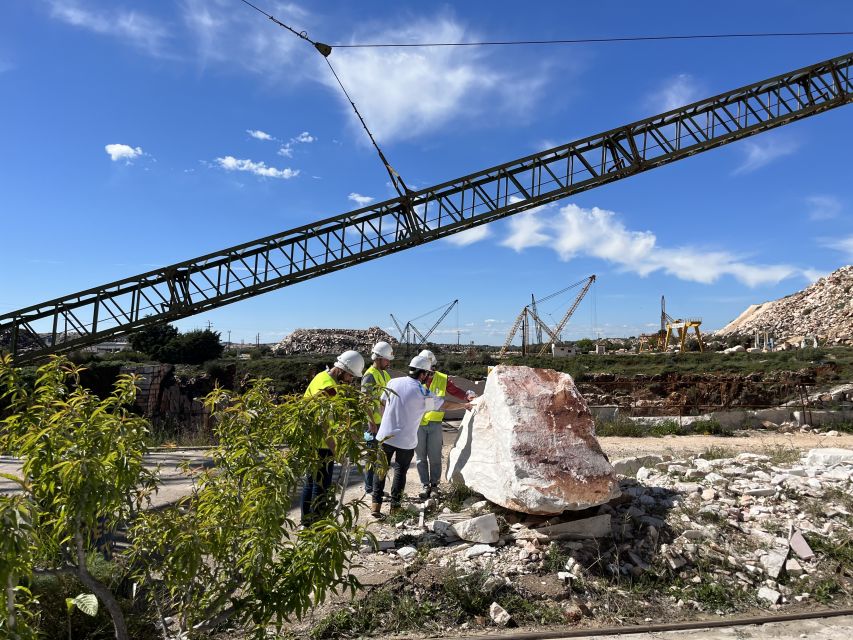
Vila Viçosa sits in Portugal’s Alentejo region, an area closely tied to marble extraction and craft. Here, marble is not just a decorative slab in a hotel lobby or a grand church. It is a local industry, a skilled trade, and a source of artistic work.
That makes this tour useful for anyone who wants more than a quick look at a pretty town. You get the practical explanation behind the stone: how it is removed, which machines are used, what can go wrong, and how rough blocks become polished surfaces or carved objects.
I also like that the experience gives equal attention to old and new methods. The traditional workshop shows the human hand and the patience needed for manual work. The industrial workshop explains speed, precision, and the machinery required to process larger quantities.
The tour has a 4.9 rating from 308 ratings, with 100 percent of respondents recommending it. That is a strong signal, especially for a specialist experience that may not appeal to everyone. If you enjoy crafts, geology, architecture, design, or local industry, you are likely to find the subject rewarding.
Other Portugal outings to consider:
- The Unvanquished Tour in Porto City Center
★ 5.0 · 26,497 reviews - Lisbon City Center Tour – The Unmissable Lisbon
★ 5.0 · 22,234 reviews - Lisbon: Sintra, Pena, Regaleira, Cabo da Roca & Cascais
★ 4.7 · 19,656 reviews
Starting at Rota do Mármore AE
The tour begins at Rota do Mármore AE, at Avenida Duques de Bragança 4, 7160-209 Vila Viçosa. This is both the starting and ending point, so you return here after the visits.
The meeting point matters because the tour does not include hotel pickup or drop-off. You also do not receive private transportation between the sites. You need your own vehicle, and that is the biggest practical point to settle before booking.
The experience is offered in English, and confirmation arrives at the time of booking. Since the tour is generally booked about 16 days ahead, I would not leave it until the last minute if your schedule in the Alentejo is fixed.
The group limit of 10 people is a good fit for a working subject like this. A small group gives you a better chance to hear explanations and ask about the machinery, stone types, and work methods without competing with a busload of people.
At the marble quarry, stone becomes a working material
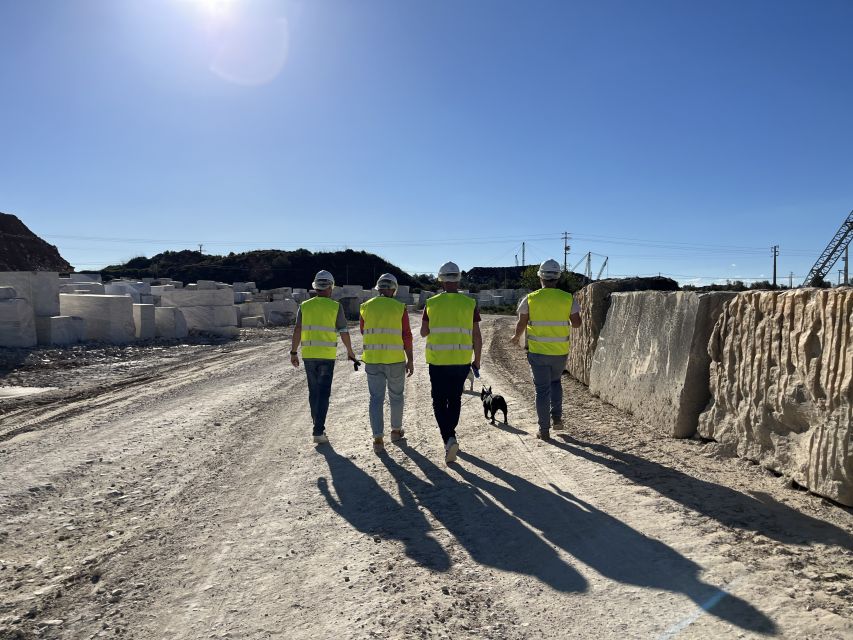
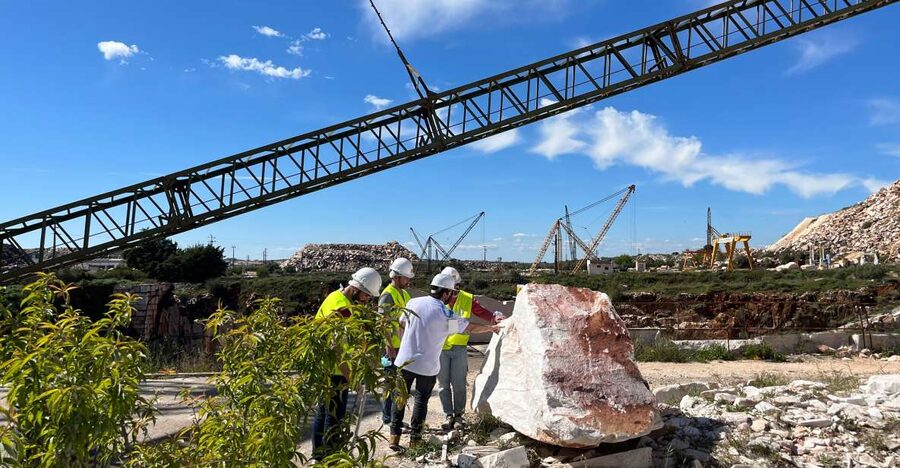
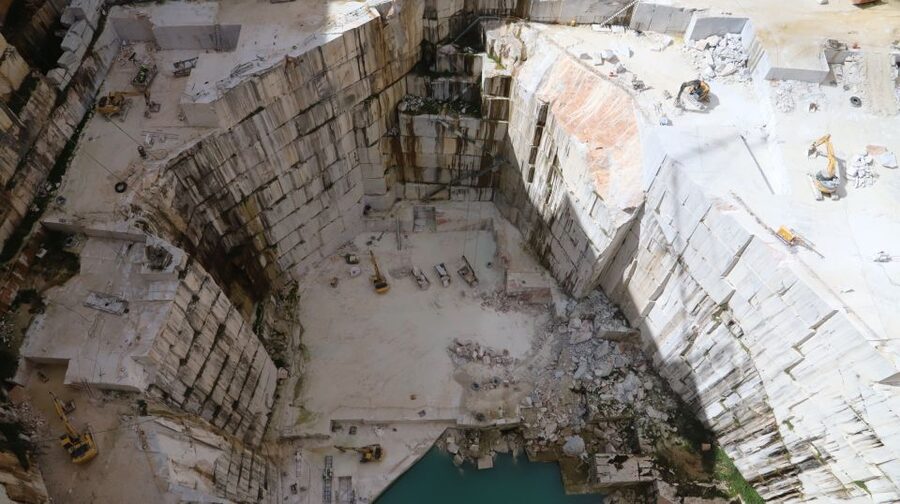
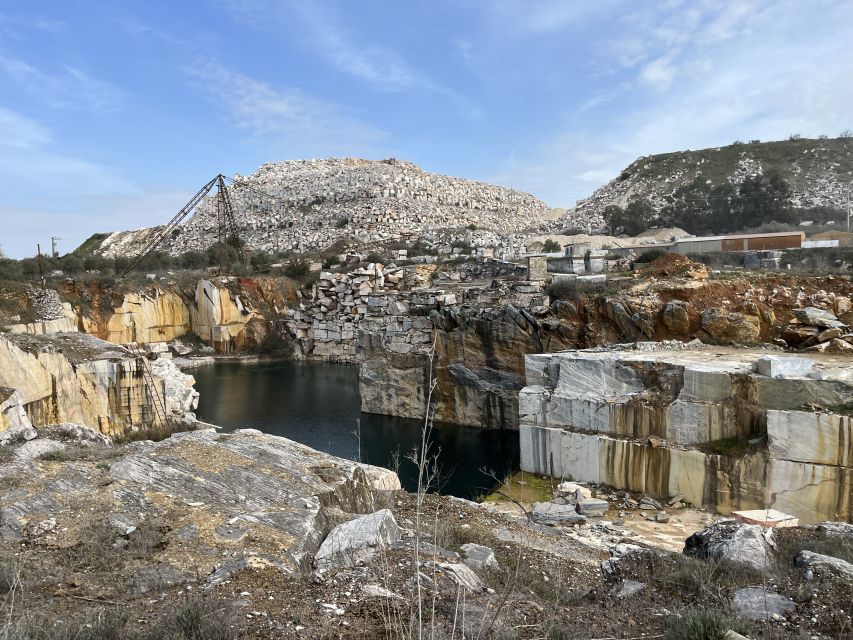
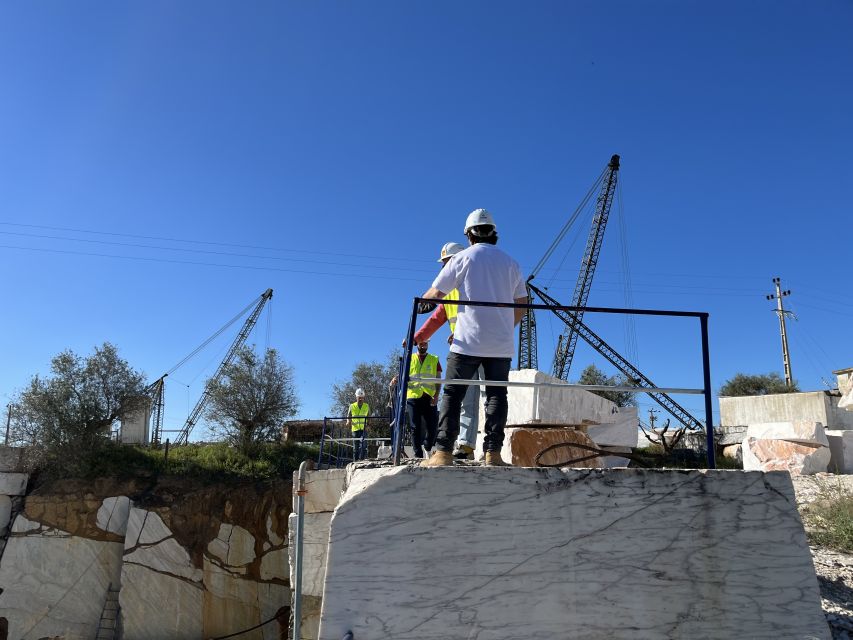
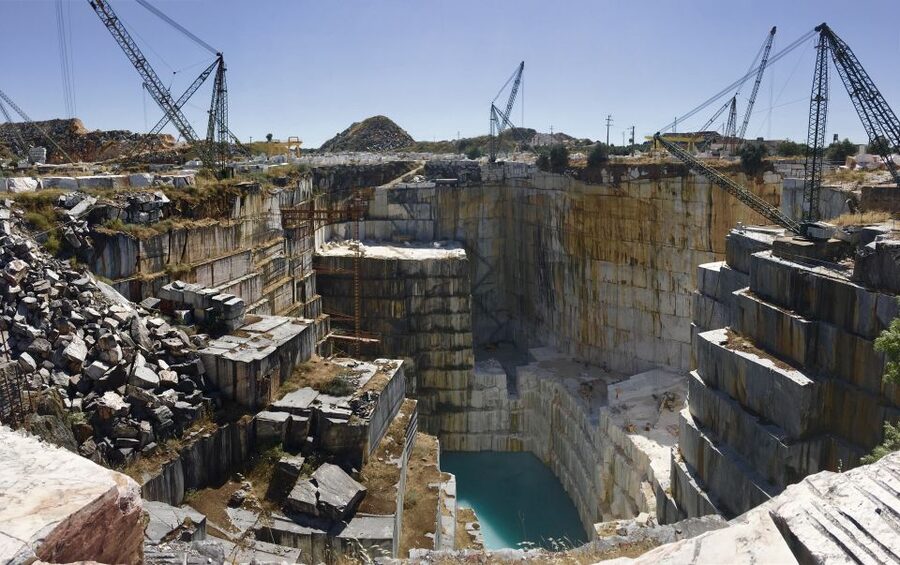
The first major part of the experience takes you to the marble quarry area, known as the Nucleus of the Marble Quarries of the region. This is where the tour moves from classroom explanation to the source itself.
You will see different stones and learn about the stages of extraction. The guide explains the machinery used to cut and remove marble, as well as the hazards that come with quarry work. That safety discussion is important. A quarry is an active industrial setting, and the tour treats it as such rather than presenting it as a simple scenic stop.
I like the way this part connects geology with daily work. You are not only looking at exposed stone. You are learning why particular blocks can be extracted, how the material is handled, and what decisions shape the final result.
The guide also covers economic and artistic aspects. That gives the quarry a wider meaning. Marble is a commercial product, but it is also chosen for visual qualities, durability, and the artistic effect it can bring to a finished piece.
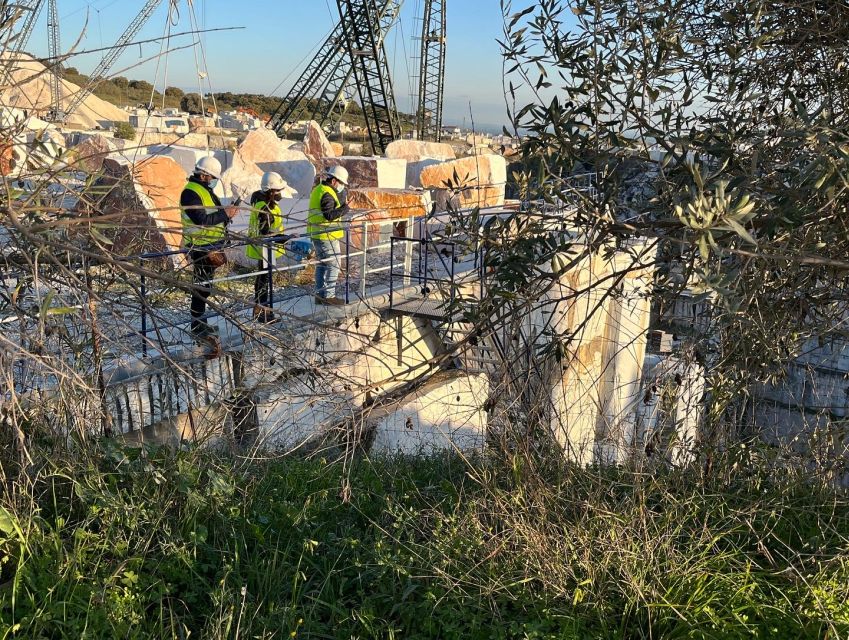
The quarry portion may be the most visually striking part of the tour, but it is not designed as a free wandering area. You should listen carefully to instructions, stay with the group, and wear closed footwear. A moderate level of physical fitness is requested, so this is not the best choice if you need an entirely effortless, seated outing.
The traditional workshop shows the human hand
The next stop is a craft workshop where marble is transformed by hand. The focus here is on manual and artistic techniques, the tools and machinery involved, and the risks faced by craftspeople.
This is where the stone becomes more personal. At the quarry, you see scale and force. In the workshop, you see patience, judgment, and repeated hand movements. A master craftsperson has to understand the material and know how much pressure it can take. One wrong move can damage the work or create a safety problem.
The tour gives attention to the final work as well as the process. That is useful because handmade marble can look simple once finished. The polished surface hides the time, skill, and care behind it.
Personal stories from the master craftsperson receive special emphasis. I consider that one of the strongest parts of the experience. Technical facts tell you how something is done, but personal accounts show why the work matters and how skills are passed along.
Juaquina has been singled out for her enthusiasm and clear explanations, including the geology of marble and the move from quarry to finished piece. João has also been praised for making the information entertaining and easy to follow. Since the quality of a small specialist tour depends heavily on the guide, those details matter.
This workshop is especially suitable for you if you enjoy traditional trades and want to understand the work behind a decorative object. It is less suited to anyone expecting a shopping stop or a formal art gallery. The emphasis is on production, technique, and the people doing the work.
Same corner of the country, a different pace:
- From Porto: Douro Valley w/ Boat Tour, Wine Tasting & Lunch
★ 4.7 · 19,061 reviews - Sintra: Pena Palace and Park Entrance Ticket
★ 4.2 · 17,410 reviews - Lisbon: Jerónimos Monastery Entrance Ticket
★ 4.1 · 14,164 reviews - Complete Douro Valley Wine Tour with Lunch, Wine Tastings and River Cruise
★ 5.0 · 12,920 reviews
Industrial processing explains scale and precision
The final setting is an industrial marble processing workshop, described as a milling or industrial processing facility. Here, the guide presents the mechanized side of the business.
You will see examples of the machines used to process marble and learn how the operation works as a whole. The discussion includes the hazards present in an industrial workshop, the different stages of mechanized processing, and examples of finished products.
This stop completes the story. The craft workshop shows what careful manual work can achieve. The industrial workshop shows how machines handle a larger operation with repeatable cuts, shaping, and finishing.
I find this contrast valuable because it prevents a romantic view of marble work. The material is beautiful, but producing it requires heavy equipment, safety procedures, physical labor, and commercial planning. The industrial stop helps you see all of those parts together.
It also gives you a better eye for marble after the tour. You may notice the difference between a raw block, a cut slab, a polished surface, and a finished object. That is a modest but lasting benefit. The next time you see marble in a church, home, hotel, or public building, you will have a clearer sense of the work behind it.
How much time should you allow?
The stated duration is about 2 to 3 hours, while the core itinerary is listed as 2 hours. I would allow the wider range when planning your day, especially because the experience includes several sites and travel between them.
The tour ends back at the meeting point. It does not include meals or drinks, so plan food separately. That is not a major drawback for a short experience, but it is worth remembering if you are building a full day around Vila Viçosa.
The timing works well as a focused morning or afternoon activity. It is long enough to explain the full process without taking over an entire day. If you are traveling through the Evora District by car, the tour can fit neatly into a wider Alentejo itinerary.
The real value of the $30.25 price
At $30.25 per person, this is not a cheap sightseeing stop, but it offers more than a short look at a quarry. You receive a professional local guide, access to three distinct working settings, explanations in English, and a clear account of the marble process from extraction to finished product.
The value comes from access and interpretation. Without a guide, you might see stone, machinery, and workshop tools without understanding how they connect. Here, the guide explains the economic, artistic, technical, and safety sides of the work.
The small group also improves the value. With no more than 10 people, you should have a better chance to hear the guide and ask questions. Group discounts may make the cost more attractive if you are traveling with family or friends.
The price does not cover transportation, food, drinks, or hotel transfers. If you are already driving, that is less of a problem. If you are relying on public transportation or hoping for a door-to-door excursion, the cost and planning become less convenient.
Who will enjoy this most?
I would recommend this experience to you if you like local industry, traditional crafts, geology, architecture, design, or unusual cultural activities. It is also a smart choice if you have already seen Portugal’s major monuments and want a closer look at how a regional trade works.
It suits curious adults and older children who can follow safety instructions and manage a moderate level of physical activity. The subject is practical and visual, so you do not need specialist knowledge to enjoy it.
The tour may not suit you if you want a relaxed sightseeing ride with no walking, no industrial setting, and no need to drive. It is also not the right choice if you only want to admire finished marble objects. Much of the appeal lies in seeing the work in progress.
English is the available language, which makes the tour a useful option for English-speaking visitors. Guide quality is clearly important here, and the praise for João and Juaquina suggests that explanations are delivered with warmth as well as technical detail.
What to wear and how to prepare
Closed footwear is mandatory. Choose sturdy shoes rather than sandals, as you will be visiting quarry and workshop environments where protection matters.
You should have a moderate level of physical fitness. The supplied information does not give a detailed accessibility breakdown, so I would contact the provider before booking if you have mobility concerns or need specific assistance.
Bring your own vehicle and plan the route between the meeting point and the sites. Private transportation is not included, and this is not a detail to discover on the day.
The activity depends on good weather. If poor conditions force cancellation, you can receive a different date or a full refund. The same applies if the minimum number of participants is not reached. For your own flexibility, free cancellation is available up to 24 hours before the start time. Cancellations made inside that window are not refunded, and late changes are not accepted.
Should you book the Vila Viçosa marble tour?
Book it if you want to understand how a famous local material moves from the ground to a finished object. The strongest feature is the complete route: quarry, hand workshop, and industrial facility. You also get a small group, English explanations, and guides such as João and Juaquina who bring energy to a technical subject.
Skip it if you do not have a vehicle, dislike working environments, or want a purely scenic activity. The need for closed shoes, moderate fitness, and travel between sites makes this more hands-on than a standard town tour.
For the right visitor, $30.25 is a fair price for a specialist experience that adds context to the Alentejo. You leave with more than photographs of marble. You gain a practical understanding of the people, machines, risks, and skills behind it.
FAQ
Where does the Marble Tour in Vila Viçosa begin?
It begins at Rota do Mármore AE, Avenida Duques de Bragança 4, 7160-209 Vila Viçosa, Portugal.
Where does the tour end?
The experience ends back at the original meeting point.
How long does the tour last?
The experience lasts approximately 2 to 3 hours. The main itinerary is listed as taking about 2 hours.
Is transportation included between the sites?
No. You need your own vehicle to travel between the meeting point and the marble sites. Hotel pickup, hotel drop-off, and private transportation are not included.
What language is the tour offered in?
The tour is offered in English.
What should I wear?
Closed footwear is mandatory. You should also have a moderate level of physical fitness because the tour takes place across quarry and workshop settings.
Can I cancel for a full refund?
Yes. You can cancel at least 24 hours before the local start time for a full refund. Cancellations made less than 24 hours before the start time are not refunded.
Recently added in Portugal
- Lisbon Cinematic Photoshoot with Top-Rated Photographer★ 5.0 · 76 reviews
- City Centre Run in Lisbon★ 5.0 · 164 reviews
- City of Neighborhoods Tour 1H 30M Private Tour by Tuk Tuk★ 5.0 · 38 reviews
- Central Lisbon E-Bike Tour★ 5.0 · 168 reviews
- Hands on Portuguese Cooking Class in Lisbon★ 5.0 · 136 reviews
- Lisbon Sailing Catamaran Public Cruise with drinks★ 5.0 · 304 reviews
- Lisbon City Tour by Tuk Tuk★ 4.5 · 137 reviews
- Romantic Private Sailboat in Lisbon for couples★ 5.0 · 38 reviews
Tours, compared.
Lisbon City Center Tour – The Unmissable Lisbon
Read our review →
Complete Douro Valley Wine Tour with Lunch, Wine Tastings and River Cruise
Read our review →
Benagil Caves Speed Boat Tour with Sunset Option
Read our review →
True 4Hour Private Tuk Tuk Tour: Discover Lisbon with a Local!
Read our review →