
REVIEW · HORSES
Lisbon: Portuguese Riding School Trainig with Lusitano Horse
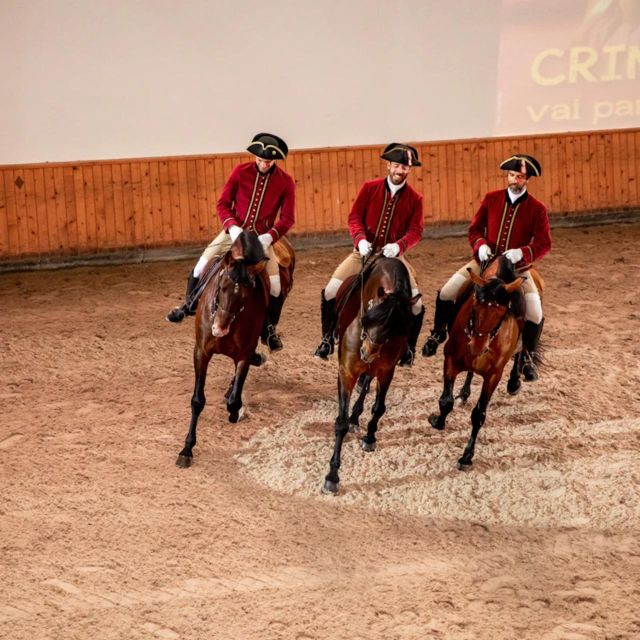
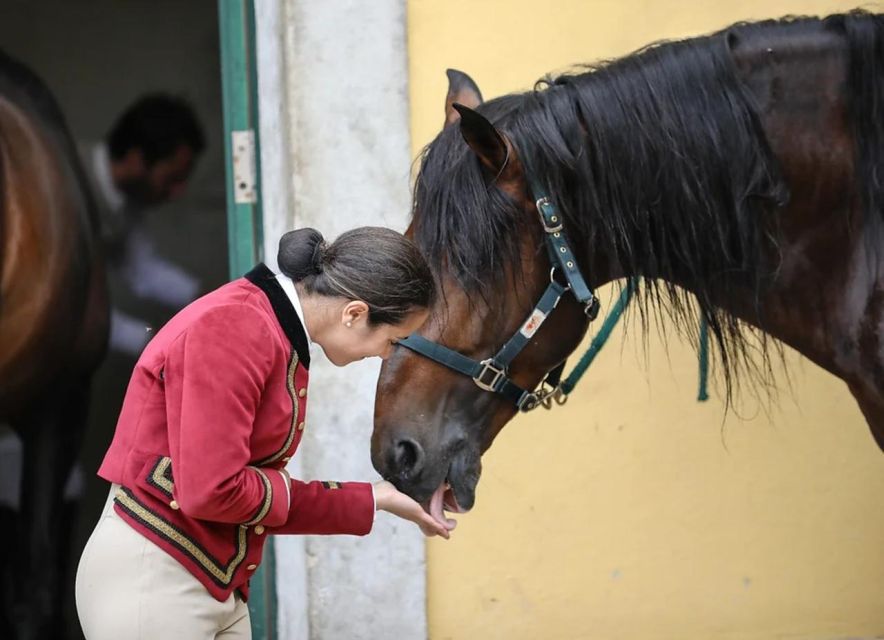
Beautiful horses, serious training, real access. This Lisbon experience gives you a close look at Lusitano horses from the Alter Real Stud Farm, first as stable animals and then as polished performers. I especially like the chance to see handlers caring for the horses at Henrique Calado Riding Ring and the period-costumed warm-up exercises, which show that the gala performance begins with patient daily work.
I also like the blend of settings. The Nora Patio recreates the graceful feel of an 18th-century court, while the riding ring lets you focus on the horses’ movement and discipline. At $17, the experience offers strong value, though the ticket instructions can be confusing, and the visit is more observation than guided tour.
In This Review
- Key points to know before you go
- Why Lusitano training matters
- Starting among the horses at Henrique Calado Riding Ring
- Watching the warm-up in period costume
- Rehearsals in the Nora Patio
- What the audio guide adds
- Timing your morning in Lisbon
- The ticket detail you should not miss
- Is $17 good value?
- Who will enjoy this experience most
- A simple plan for making the visit work
- Should you book the Lusitano training visit?
- FAQ
- How long does the experience last?
- What does the ticket include?
- Is transport included?
- Which languages are available?
- Do I need to bring headphones?
- Can I take photographs?
- Which ticket should I show at reception?
- Is the experience wheelchair accessible?
Key points to know before you go
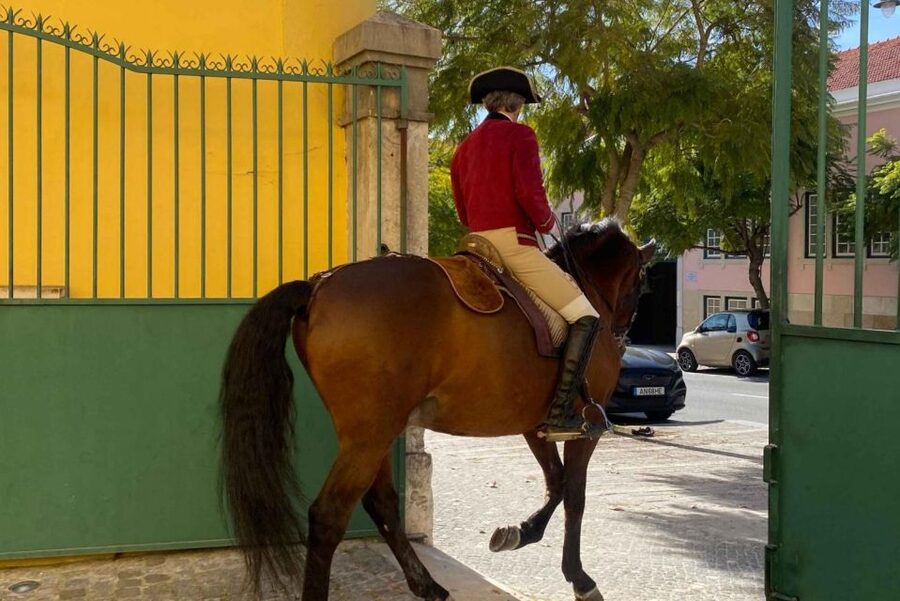
- The horses come from the Alter Real Stud Farm, a name closely tied to Portugal’s Lusitano riding tradition.
- Stable access is a major part of the visit, with time to see handlers care for the horses.
- The best viewing period is 11 a.m. to 12:30 p.m., even though the activity runs from 10 a.m. to 1 p.m.
- Riders wear period costumes, adding an elegant courtly feel to the warm-up and rehearsals.
- An audio guide explains the horses and stables, but you need to bring your own headphones.
- The ticket process needs care: use the Book N Tour ticket sent separately, not the GetYourGuide QR code or voucher.
Why Lusitano training matters
The Lusitano is Portugal’s traditional riding horse, known for its athletic movement and ability to respond closely to the rider. This experience is not simply a photo stop with pretty animals. You see the daily preparation behind a demanding equestrian performance.
That difference matters. A gala show can make advanced riding look effortless. Here, you see the warm-up, the small exercises, and the careful handling that prepare horse and rider for more complex work. The session places attention on each horse’s rhythm, health, and physical needs rather than treating the animals as stage props.
I like this approach because it gives you a better way to watch the later exercises. Once you see the horses being prepared, you can notice how much control and timing go into every movement. The training is the main attraction, not a side activity before a show.
The horses come from the Alter Real Stud Farm, which gives the visit a clear connection to Portugal’s national riding tradition. You do not need to be an expert in dressage to enjoy it. The audio guide helps explain the setting, the stables, and the different horses in a way that makes the work easier to follow.
A few more Lisbon options side by side
- From Lisbon: Horseback Riding on Comporta Beach
★ 4.7 · 167 reviews - From Lisbon: Comporta and Setúbal Trip with Horseback Riding
★ 4.3 · 90 reviews - Lisbon: Morning of Equestrian Art with Lusitano Horses
★ 4.4 · 87 reviews
Starting among the horses at Henrique Calado Riding Ring
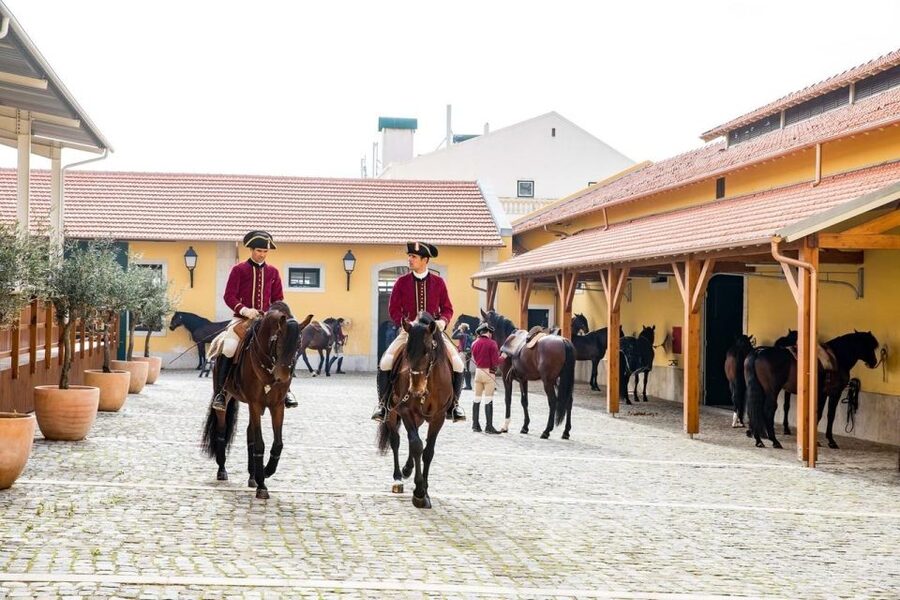
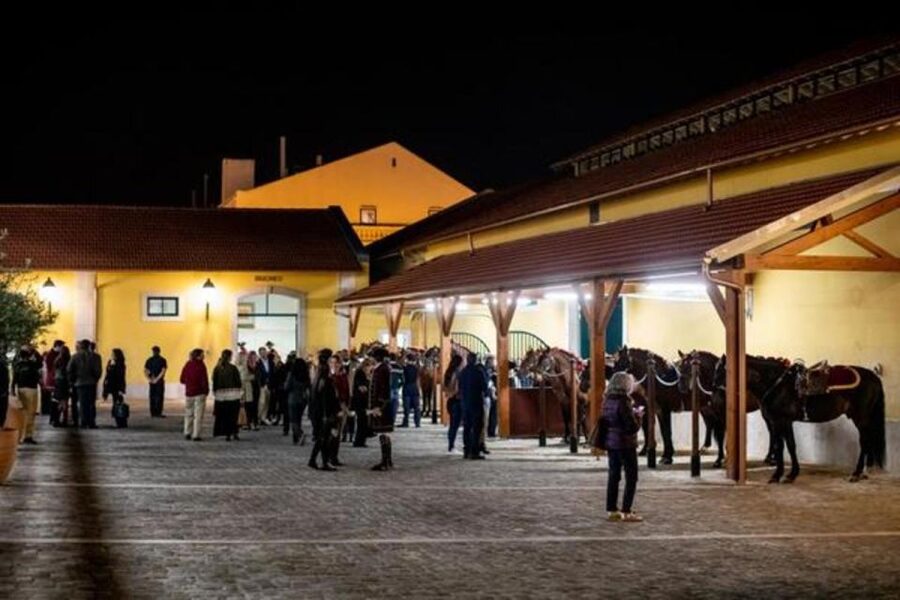
The visit includes access to the Portuguese School of Equestrian Art and time around the Henrique Calado Riding Ring. The stable portion is especially valuable because it brings you close to the practical side of the operation.
You can watch handlers care for the horses and get a sense of the routine behind the polished performances. This is where the experience feels most personal. Instead of seeing only riders in motion, you observe the animals at rest and the people responsible for their daily well-being.
Plan on roughly an hour around the stables, based on the stated timing of the experience. That is enough time to look closely, listen to the audio guide, and understand that equestrian art depends on regular care. One useful improvement would be a little more time in this area, especially for anyone who enjoys horses more than formal choreography.
The setting is also useful for families and first-time riders because the pace is easier to absorb than a fast performance. You might find that the horses themselves become the focus. Their calm behavior, physical condition, and response to the handlers tell you a great deal before the formal exercises begin.
Bring comfortable shoes. You may spend a good part of the morning standing or walking around the stable and riding areas, and this is not the place for delicate footwear.
Watching the warm-up in period costume
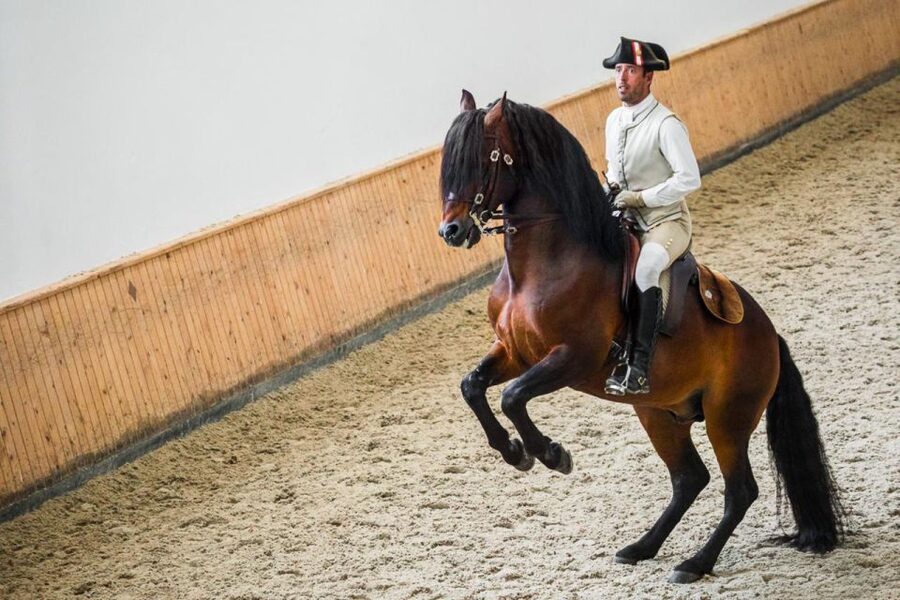
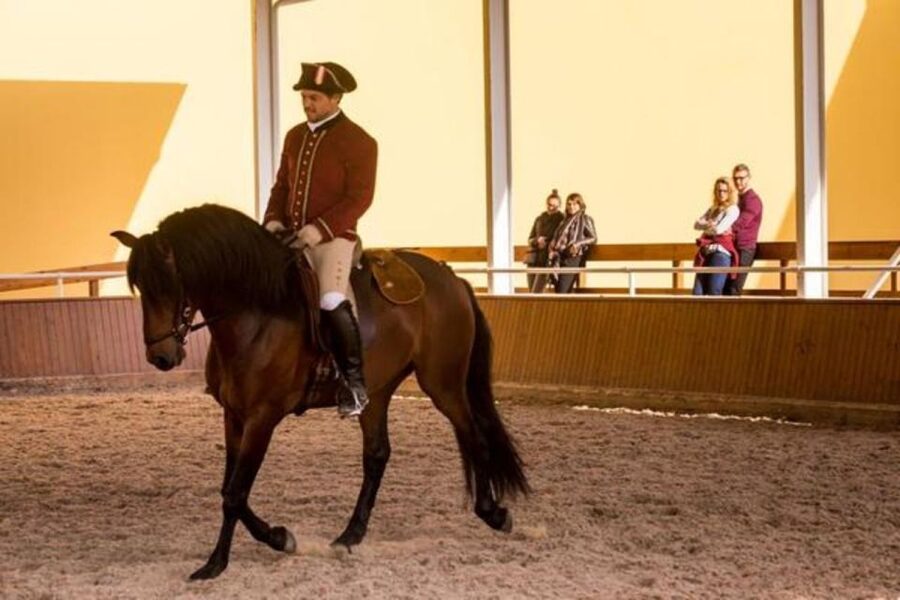
After the stable visit, you watch riders begin their training. They wear period costume, which gives the session a distinctive visual character without turning it into a costume-only attraction.
The clothing recalls the courtly setting associated with the Portuguese School of Equestrian Art. Yet the real interest is still in the horses. The riders work through warm-up and resourcefulness exercises designed around the abilities and needs of each animal.
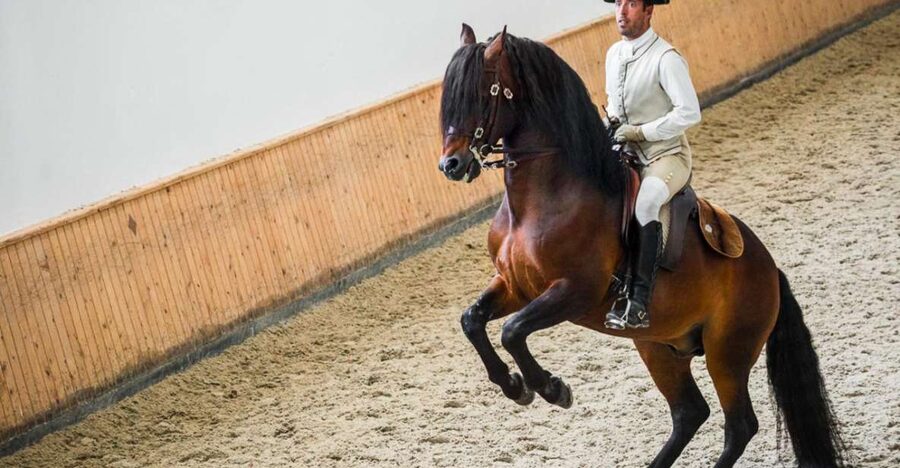
The phrase resourcefulness exercises may sound vague, but the important point is that you are seeing preparation for advanced riding. The horses are not being pushed through a single fixed routine. Their pace and physical condition matter. The work respects rhythm, health, and movement, which helps explain why the session can look controlled rather than dramatic.
I appreciate that the experience lets you see training instead of only a finished spectacle. You can watch the riders establish communication with the horses and prepare them for the more difficult elements. The exercises may not provide constant action, so anyone expecting a full gala show should set expectations correctly.
This is a training session and rehearsal. It offers a behind-the-scenes view of equestrian performance, not the complete evening production with every possible flourish.
Rehearsals in the Nora Patio
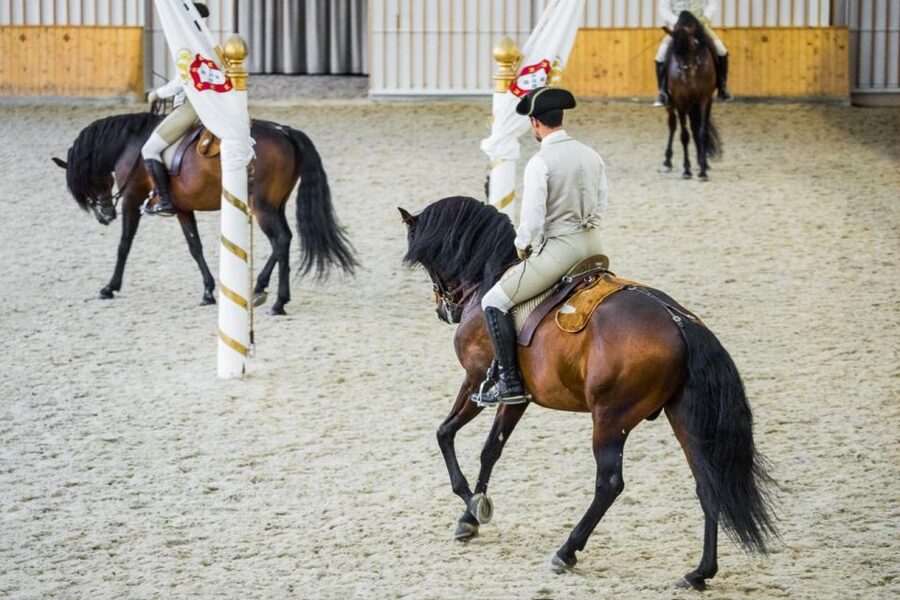
The Nora Patio provides the most theatrical setting. Here, period music accompanies the training and rehearsals, helping recreate the mood of an 18th-century court.
This part works because the setting and sound support the riding without overwhelming it. The music gives the exercises a measured rhythm, while the patio adds a sense of ceremony. You are watching a working rehearsal, but the presentation still recalls the formal world that inspired the school’s equestrian art.
The contrast with the Henrique Calado Riding Ring is useful. The ring shows the practical side of training, while the Nora Patio shows how that training becomes performance. Together, the two settings give you a fuller picture than either one alone.
Keep in mind that the atmosphere is refined and controlled, not loud or high-energy. If you enjoy horses, traditional arts, architecture, and careful demonstrations, you will likely find the pace satisfying. If you want nonstop action, the long training portions may feel quiet.
The period music also makes the audio guide worth using. You can listen to explanations about the horses and the stables while taking in the setting, though you need your own headphones.
Same corner of the country, a different pace:
- Lisbon City Center Tour – The Unmissable Lisbon
★ 5.0 · 22,234 reviews - Lisbon: Sintra, Pena, Regaleira, Cabo da Roca & Cascais
★ 4.7 · 19,656 reviews - Lisbon: Jerónimos Monastery Entrance Ticket
★ 4.1 · 14,164 reviews - Lisbon: History, Stories and Lifestyle Walking Tour
★ 4.8 · 10,902 reviews
What the audio guide adds
The audio guide is included in English, Portuguese, and French. It explains the stables and introduces the different horses, giving you useful context while you move through the experience.
That matters because the activity is not described as a continuously guided tour. A host or greeter is available in English and Portuguese, but you should not expect a guide to stand beside you and explain every movement. The audio guide carries much of the interpretation.
One practical point deserves attention: after booking, you receive a separate email with instructions for downloading the ticket and audio guide. Check your spam folder if the message does not appear. You need a charged smartphone, internet access, and headphones.
Headphones are not included. The activity information also says photography is not included, and flash photography is prohibited. To avoid confusion, follow the staff’s instructions about cameras and phones rather than assuming you can photograph freely.
The audio guide is particularly useful if you know little about equestrian traditions. It helps you understand the difference between stable care, warm-up work, and the more complex exercises used in formal rehearsals.
Timing your morning in Lisbon
The activity takes place between 10 a.m. and 1 p.m. The strongest suggested window is 11 a.m. to 12:30 p.m., so that is the period I would target when choosing a start time.
This timing gives you a practical middle ground. Arriving at 10 a.m. may offer more of the full morning schedule, but the central training and rehearsal period is better placed later. A visit at 11 a.m. also avoids making the experience feel rushed if you are fitting it into a larger Lisbon day.
The total listed duration is one day, but the actual activity window is a morning of about three hours. Read the duration in that practical sense. You are not committing an entire day to the riding school, which makes it easy to pair with other Lisbon plans.
There is no transport included. You need to make your own way to the venue in the Lisbon District, so allow extra time for arrival and finding the correct reception point. Since the ticket process has special instructions, arriving early is sensible.
The activity is wheelchair accessible, though the experience includes stable and riding-ring areas. If you have specific mobility needs, confirm the practical details with the provider before arrival.
The ticket detail you should not miss
The most important logistical warning concerns the ticket itself. The GetYourGuide paper, QR code, voucher, or ticket is not the entry document requested at reception.
You need to show the Book N Tour ticket. The instructions say that staff at reception will assist you when you present that ticket. You should also provide at least one working WhatsApp number or email so the operator can contact you.
This extra step is easy to overlook. Check your email after booking, look in the spam folder, and download the separate ticket and audio guide instructions before leaving your accommodation. A charged phone is much safer than relying on a paper printout or the first QR code you see.
The experience offers free cancellation up to 24 hours before the visit, and you can reserve now and pay later. Those terms are useful if your Lisbon schedule is still shifting, but they do not replace the need to bring the correct ticket.
Is $17 good value?
At $17 per person, I consider this a strong-value experience for anyone interested in horses or Portuguese cultural traditions.
You receive entry to the Portuguese School of Equestrian Art, access to daily Lusitano training, stable viewing, and an audio guide. Comparable sightseeing experiences often charge more for a short performance with little explanation. Here, the stable care and training add substance to the visit.
The value depends on what you want. If your goal is a complete theatrical horse show, this may feel limited because the activity centers on daily training and rehearsals. If you want to understand how a formal performance is prepared, the price is easier to justify.
The strongest part of the value is the access to the horses at close range. The experience allows you to see handlers working with them before watching riders train. That combination gives you both the quiet routine and the public-facing art.
The main weakness is that the visit may feel slightly under-explained if you expect a personal guide. The audio guide is well suited to the setting, but it does not create the same interaction as a staff-led tour. Still, at this price, the included audio guide helps fill that gap.
Who will enjoy this experience most
I would recommend it first to people who already like horses, riding, or traditional performance. You will get the most from the visit if you are happy to watch carefully and appreciate small changes in movement, posture, and timing.
It also suits anyone looking for a quieter cultural activity in Lisbon. The period costumes, courtly music, and Nora Patio offer something different from the city’s usual museums, churches, and viewpoints.
Families may enjoy the stable portion, especially if children are fascinated by horses. Keep in mind that the training is not designed as a children’s entertainment show. Younger children may find the slower stretches less exciting.
The experience works well for photography-minded visitors only if they confirm what is permitted. Photography is listed as not included, and flash photography is forbidden, so do not book it mainly for guaranteed horse portraits.
I would be more cautious if you need a fully guided, highly interactive tour. The host or greeter languages are English and Portuguese, while the main explanatory support comes through the audio guide. That format gives you freedom, but less personal conversation.
A simple plan for making the visit work
Before you leave, download the correct Book N Tour ticket and audio guide. Charge your phone, bring headphones, and make sure you have internet access.
Wear comfortable shoes and arrive with enough time to reach the reception desk. Do not rely on the GetYourGuide QR code or voucher as your entry document.
Aim for the 11 a.m. to 12:30 p.m. period if possible. Start by paying attention to the stable work, then watch how the riders’ warm-up connects to the later rehearsals.
Listen for the explanations about rhythm, health, and physical needs. Those details are the key to understanding why the riders train in a measured way.
Finally, keep your expectations realistic. You are seeing the working side of the Portuguese School of Equestrian Art, not necessarily a full gala production. That is also the reason the visit feels worthwhile: you get to see the care and preparation behind the polished display.
Should you book the Lusitano training visit?
Book it if you want close access to Lusitano horses, a calm look at stable care, and a low-cost introduction to Portuguese equestrian art. The stable visit and training session are the strongest reasons to go, and the period costumes and Nora Patio add a memorable sense of place.
Skip it if you want a full-scale horse show, a personal guide beside you throughout, or a completely simple ticket process. For most horse lovers and culture-minded visitors, though, $17 is a fair price for a thoughtful morning that shows how skill, patience, and animal care shape the final performance.
FAQ
How long does the experience last?
The activity takes place from 10 a.m. to 1 p.m. The best time to visit is listed as 11 a.m. to 12:30 p.m.
What does the ticket include?
It includes entry to the Portuguese School of Equestrian Art, daily training of Lusitano horses from the Alter Real Stud Farm, and an audio guide.
Is transport included?
No. You need to arrange your own transport to the venue.
Which languages are available?
Hosts or greeters are available in English and Portuguese. The audio guide is listed in English, Portuguese, and French.
Do I need to bring headphones?
Yes. Headphones are not included, and you should bring your own along with a charged smartphone and internet access.
Can I take photographs?
Photography is not included, and flash photography is not allowed. Follow the staff’s instructions regarding camera use.
Which ticket should I show at reception?
Show the Book N Tour ticket. The GetYourGuide QR code, voucher, paper, or ticket is not the required entry document.
Is the experience wheelchair accessible?
Yes, the activity is listed as wheelchair accessible.
Recently added in Lisbon
- Lisbon Cinematic Photoshoot with Top-Rated Photographer★ 5.0 · 76 reviews
- City Centre Run in Lisbon★ 5.0 · 164 reviews
- City of Neighborhoods Tour 1H 30M Private Tour by Tuk Tuk★ 5.0 · 38 reviews
- Central Lisbon E-Bike Tour★ 5.0 · 168 reviews
- Hands on Portuguese Cooking Class in Lisbon★ 5.0 · 136 reviews
- Lisbon Sailing Catamaran Public Cruise with drinks★ 5.0 · 304 reviews
- Lisbon City Tour by Tuk Tuk★ 4.5 · 137 reviews
- Romantic Private Sailboat in Lisbon for couples★ 5.0 · 38 reviews
Horses, compared.




Melides: Horse Riding on the Beach with Wine Tasting
Read our review →
Browse the lists this tour appears in