
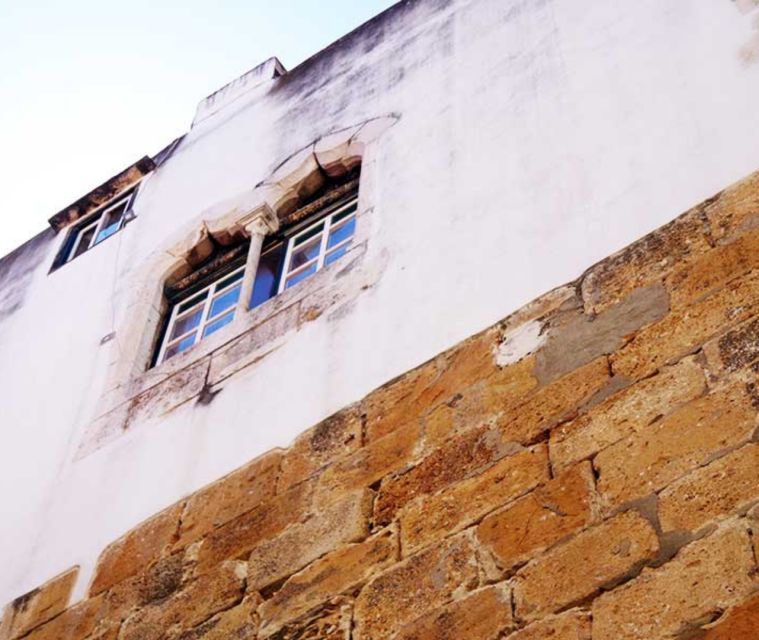
REVIEW · HISTORICAL TOURS
Lisbon: Jewish History Tour of Lisbon
Lisbon’s Jewish past is hiding in plain sight. This three-hour private walking tour connects Praça do Comércio, Alfama, Baixa, and Rossio with the medieval and modern story of Jewish life in Portugal. I like its clear route through central Lisbon, and I like that it moves beyond old stones to discuss forced conversion, the 1506 Pessah massacre, and refugees passing through Lisbon during World War II. The main drawback is important: very few physical remains of the old Jewish community survive, so much of the tour depends on explanation and storytelling.
I also like the way the tour links Lisbon to the wider Jewish diaspora, from Portugal across the Atlantic, the Mediterranean, Asia, and northern Europe. Guides such as José, Filipa, Rita, Sofia, Jorge, and Felipe have been praised for making the subject easy to follow and for answering questions. Bring good shoes, though. This is a city walk over several districts, with plenty of ground to cover.
In This Review
- Key things to know before you book
- Starting under the arch at Praça do Comércio
- Alfama and the medieval Jewish quarters
- Baixa and the painful story of forced conversion
- Rossio and the 1506 Pessah massacre
- Mouraria, the Resistance Museum, and the wider city
- From Lisbon to a worldwide diaspora
- The guides make or break the experience
- What $106 per person gets you
- Who should book this Lisbon history walk?
- FAQ
- How long does the Jewish History Tour of Lisbon last?
- Where does the tour begin?
- Which areas of Lisbon does the tour cover?
- Is the tour offered in English?
- Is this a private tour?
- Does the tour include hotel pickup?
- Are food and drinks included?
- What should I bring?
- Should you book it?
Key things to know before you book
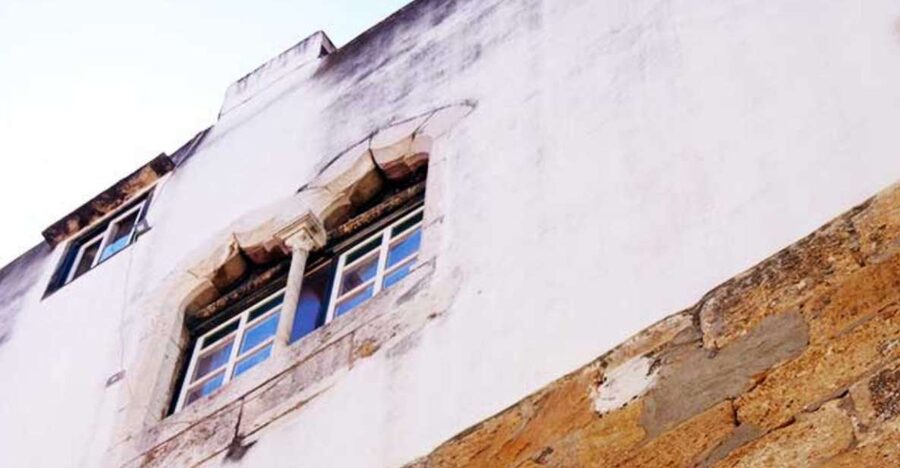
- The story begins at the riverfront: Meet under the triumph arch at Praça do Comércio, where the guide carries an orange backpack or Lisbon Walker tote bag.
- You cover several central districts: The route includes the castle hill, Alfama, Baixa, Mouraria, Praça da Figueira, and Rossio.
- The tour is mostly interpretive: Lisbon has few visible remnants of its former Jewish community, so the guide supplies much of the historical setting.
- The 1506 massacre is a major turning point: Rossio helps explain one of the darkest episodes in Lisbon’s Jewish and Christian history.
- The private format helps: Your guide can adapt the starting point and timing to your group, within the three-hour guided format.
- The subject reaches beyond medieval Lisbon: You also hear about New Christians, Portuguese culture, science, food, global diaspora, and WWII refugees.
Starting under the arch at Praça do Comércio
The meeting point is easy to identify. Look for your guide under the large triumph arch at Praça do Comércio, Lisbon’s broad riverfront square. The guide should be carrying an orange backpack or a tote bag with the large Lisbon Walker logo.
This is a useful place to begin because Praça do Comércio is tied to the tour’s opening theme, the Exodus. From here, the guide sets Lisbon’s Jewish story within a larger pattern of movement, exile, arrival, and departure. The square also gives you an immediate sense of Lisbon’s scale and geography before the walk turns into the older city.
The route then passes Praça do Município, Rua do Comércio, Casa dos Bicos, and the Ribeira area. These stops help place Jewish life within the working city, not apart from it. You are not simply visiting a single preserved quarter. You are tracing where communities lived, worked, traded, worshipped, and later faced pressure from the crown and church.
I find this opening useful for one reason: it keeps the tour from becoming a list of disconnected dates. Lisbon’s Jewish story is tied to the city’s port, commerce, political power, and international links. The riverfront gives that story a natural starting point.
More History Tours in Lisbon
- Lisbon: History, Stories and Lifestyle Walking Tour
★ 4.8 · 10,902 reviews - Lisbon: Live Fado Show with Port Wine in Historic Center
★ 4.7 · 4,166 reviews - Lisbon: Fado Show with Wine in a Historic Venue
★ 4.8 · 1,294 reviews
Alfama and the medieval Jewish quarters
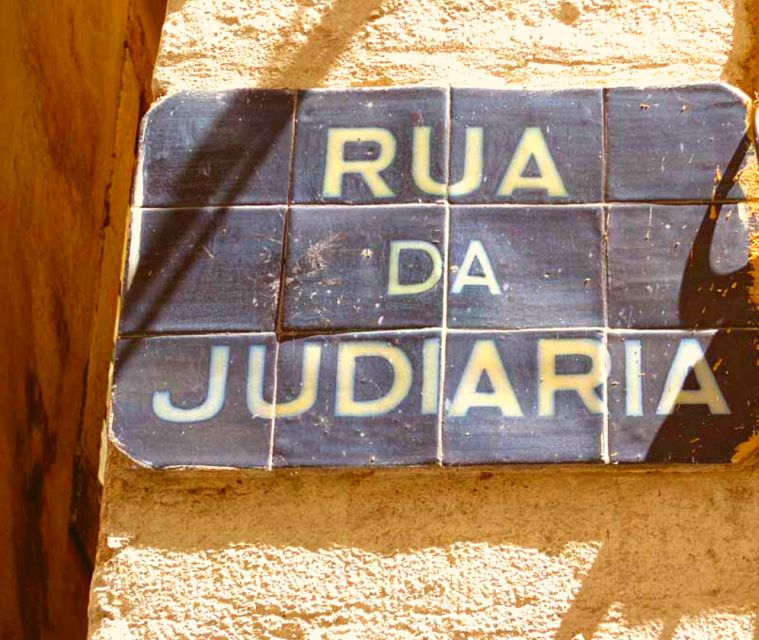
As you move toward Alfama and the castle hill, the tour turns to medieval segregation. The old Jewish quarters, known as judiarias, were areas where Jewish residents were grouped by law and custom. Walking these lanes gives you a better feel for the physical limits of medieval Lisbon than a museum display would.
You should not expect a preserved Jewish quarter with clearly marked buildings at every turn. That is the central limitation of this experience. The physical record is thin, and several past participants have found that surprising. The value comes from hearing how the neighborhoods fit into the city and from imagining the community within streets that still form part of Lisbon’s oldest core.
The Alfama section is also where the steep, irregular character of the city matters most. The walk covers historic sites on the castle hill and in Alfama, so comfortable shoes are not optional. One guide adjusted the pace for older people on a hot day, and another group found that the hill climbing was limited, but the route still requires a fair amount of walking.
Your guide may point out more than Jewish sites alone. The route can include nearby Roman remains and churches, helping explain how Lisbon changed across different periods. That added context is useful because Jewish history here cannot be separated from the city’s Roman, Christian, royal, and commercial past.
Baixa and the painful story of forced conversion
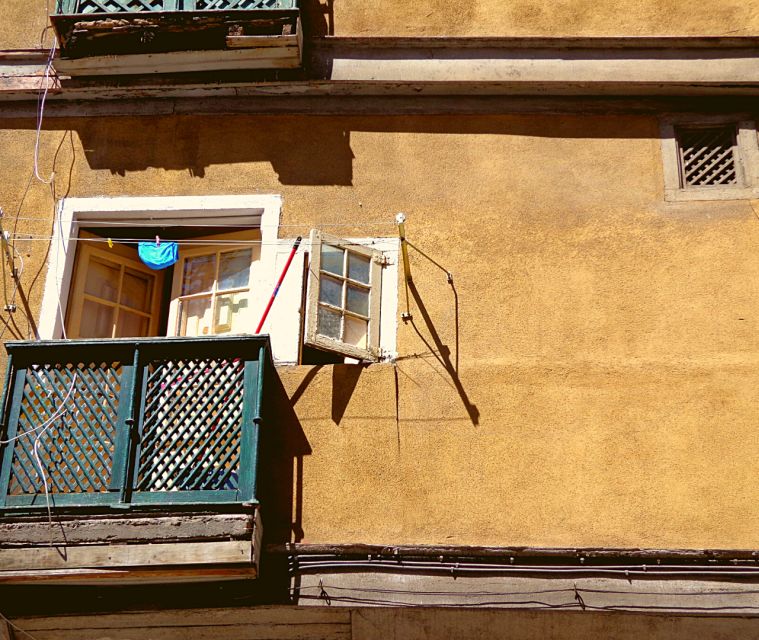
The walk continues into Baixa, the lower central district rebuilt after the 1755 earthquake. Here the focus shifts to forced conversions and the creation of the New Christian community.
This is one of the tour’s strongest subjects because it shows how official policy changed Jewish life without simply making the community disappear. Conversion could be forced, and identity became complicated. The tour follows what happened to people who were pressured to become Christian and to the families who continued Jewish customs in private or carried their heritage into later generations.
Baixa also lets you connect the past with the city you see today. The streets are broad and formal compared with Alfama, and the change in urban setting helps mark a change in political power and public life. Your guide uses the places around you as prompts for a wider story about law, religion, commerce, and social control.
I would book this tour for the historical explanation rather than for a large collection of surviving buildings. If you need original synagogues, inscriptions, or a clearly preserved medieval Jewish street, this walk may feel frustrating. If you want to understand how Jewish residents and New Christians fit into Portugal’s changing society, Baixa gives the guide plenty to work with.
Rossio and the 1506 Pessah massacre
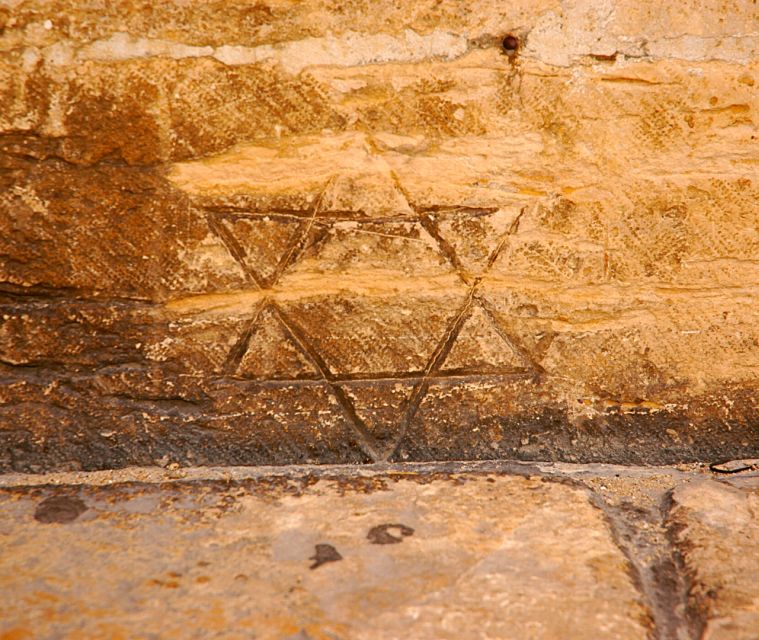
At Rossio, the tour reaches its most difficult episode: the 1506 Pessah massacre. The event is presented as part of the history of persecution and forced conversion in Lisbon, not as an isolated tragedy.
Rossio is a busy public space today, which can make the subject feel especially stark. The same sort of city square that now serves everyday Lisbon once formed part of a violent chapter in the city’s treatment of Jews and New Christians. Your guide’s narration is essential here because the physical setting does not announce what happened.
This stop gives the tour emotional weight, but it is not handled as a purely mournful visit. The guide also explains how Jewish and New Christian communities contributed to Portuguese culture, science, and gastronomy. That balance matters. You learn about persecution, but you also learn about people, work, ideas, and cultural influence.
For me, this is where the tour’s method makes sense. Lisbon has not preserved enough visible material to let the streets speak for themselves. A strong guide has to connect place and event carefully, and the guide team has been praised for clear explanations, good storytelling, and thoughtful answers to questions.
Same corner of the country, a different pace:
- Lisbon City Center Tour – The Unmissable Lisbon
★ 5.0 · 22,234 reviews - Lisbon: Sintra, Pena, Regaleira, Cabo da Roca & Cascais
★ 4.7 · 19,656 reviews - Lisbon: Jerónimos Monastery Entrance Ticket
★ 4.1 · 14,164 reviews - Lisbon: Sunset Boat Party Cruise with DJ and Open Bar
★ 4.5 · 10,378 reviews
Mouraria, the Resistance Museum, and the wider city
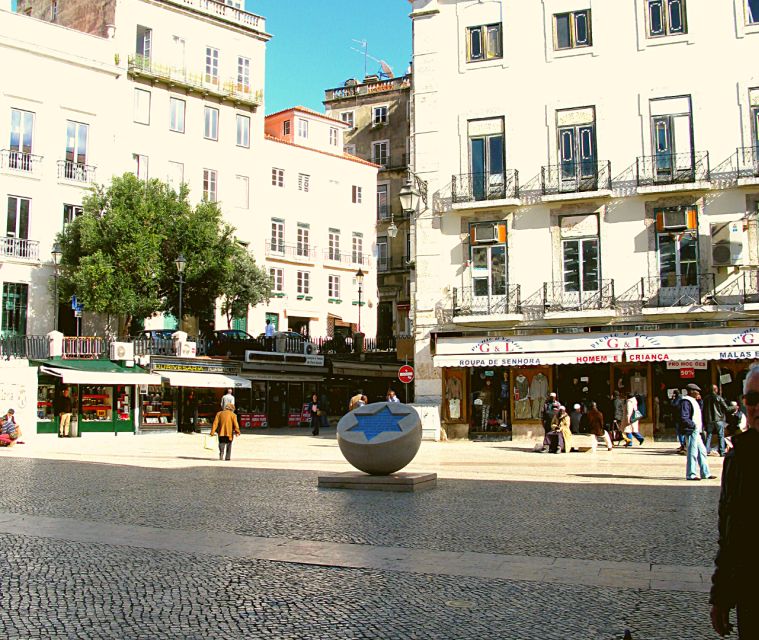
The route includes Mouraria and passes the Resistance Museum. The details of each stop can vary because the tour can be adapted to different starting points and time frames, but the overall path links the old quarters with later chapters of Lisbon’s history.
Mouraria is part of the castle-side walk and helps broaden the picture of Lisbon as a city shaped by different communities and periods. The Resistance Museum adds another modern historical reference point. It is not presented as a separate museum visit with its own ticketed program, but as part of the route and the city’s wider political memory.
This is also where the tour can move from medieval history into the contemporary Jewish presence. Lisbon’s Jewish story did not end with the Inquisition or with the disappearance of visible judiarias. The walk includes the passage of refugees through Lisbon in the 1940s during World War II, giving you a link between older persecution and the upheavals of modern Europe.
That modern section may be especially useful if you already know something about Lisbon as a wartime escape route. The tour places that movement within the story of the city’s Jewish presence rather than treating it as a separate footnote.
From Lisbon to a worldwide diaspora
One of the most worthwhile ideas on this tour is the connection between Lisbon and the wider Jewish diaspora. The story reaches across the Atlantic, toward the Mediterranean, into Asia, and north into Europe.
That broad view helps explain why Lisbon matters even when so little physical evidence remains. People, names, customs, food traditions, religious practice, and family histories traveled outward. The tour links those movements to Portuguese Jewish communities and to New Christians whose lives were changed by conversion, migration, or persecution.
The discussion of gastronomy is a welcome touch. Food can make a complicated historical subject easier to grasp, especially when the built evidence has been lost. You may also hear about figures connected to Portuguese culture and science. The point is not simply to memorize names. It is to understand the community’s place in Portuguese society and its effect far beyond Lisbon.
I would especially recommend this part for anyone researching family roots or trying to connect Portuguese history with Sephardic Jewish heritage. The tour does not promise genealogical research, but it gives you a framework for understanding how Lisbon fit into wider movements of people and ideas.
The guides make or break the experience
The guide is the main attraction here. Several guides have led the walk, including José Antunes, Filipa or Filippa, Rita, Sofia, Jorge, Felipe, and others. José has been praised for his command of Portuguese and Jewish history, while Filippa has been noted for clear English, patience, and a good pace. Other guides have been described as friendly, articulate, and willing to follow questions rather than rush through a script.
That range matters because this is a subject with few obvious landmarks. A guide who simply recites dates would leave you staring at ordinary streets. A guide who can explain the setting, answer questions, and tell a human story can make those same streets meaningful.
The tour is offered in English or Portuguese and uses a private-group format. That should make it easier to ask about a particular family, historical figure, religious issue, or period that interests you. It also allows the route to be adjusted to your group’s time frame and starting point.
The three-hour length is well judged for the subject. You get enough time to cross the main districts without turning the day into an exhausting march. Still, the walk covers a fair distance, and heat can make Lisbon’s hills harder than they look on a map. Wear comfortable shoes and tell the guide if your group needs pauses.
What $106 per person gets you
At $106 per person, this is not a bargain-priced orientation walk. You are paying for a three-hour private guided experience, rather than for admission to a museum or a series of preserved sites.
The value depends on how much you want interpretation. If you are already planning to walk Alfama, Baixa, Rossio, and the riverfront on your own, the tour adds structure, historical links, and a specialist focus. It can turn several familiar Lisbon sights into parts of one story.
The price is harder to justify if you mainly want visible Jewish monuments. There are few artifacts and few surviving landmarks from the earlier community. You should decide in advance that the guide’s explanations are the product.
For a private group with a strong interest in Jewish, Portuguese, or Sephardic history, I think the cost can be fair. You get a focused route, a live guide, and the chance to ask questions throughout. For a casual visitor who wants a quick overview of Lisbon’s main sights, a general city walk may offer more obvious sightseeing value.
Food, drinks, and hotel pickup are not included. The meeting point is central, and the tour itself lasts three hours. You can cancel up to 24 hours before the start for a full refund, and the reserve-now-pay-later option keeps your plans flexible.
Who should book this Lisbon history walk?
I would choose this tour if you want to see Lisbon through the experience of its Jewish and New Christian communities. It suits history-minded visitors, people exploring Sephardic connections, and anyone who prefers a thoughtful walk over a museum-heavy schedule.
It is also a good choice if you enjoy asking questions. The private format and adaptable route give you more room to follow your interests than a large group tour usually allows.
I would think twice if you need strong physical evidence at every stop. The old Jewish community left few visible remains, and that fact should shape your expectations. You are buying historical interpretation, not a preserved quarter.
The walk can suit older participants if the group communicates its pace and takes rests, but you should still expect a substantial city walk. Comfortable shoes are essential, and warm weather can make the route more tiring.
FAQ
How long does the Jewish History Tour of Lisbon last?
The guided tour lasts three hours. It is listed as a one-day activity, but the walking experience itself is three hours.
Where does the tour begin?
Meet the guide under the large triumph arch at Praça do Comércio. Look for an orange backpack or a Lisbon Walker tote bag with a large logo.
Which areas of Lisbon does the tour cover?
The route includes Praça do Comércio, Praça do Município, Rua do Comércio, Casa dos Bicos, Ribeira, Alfama, the castle hill, Mouraria, Baixa, Praça da Figueira, and Rossio.
Is the tour offered in English?
Yes. The tour is available in English and Portuguese.
Is this a private tour?
Yes. It is offered for a private group.
Does the tour include hotel pickup?
No. Hotel pickup and drop-off are not included.
Are food and drinks included?
No. You need to arrange your own food and drinks.
What should I bring?
Bring comfortable shoes. The route covers several Lisbon districts and requires a fair amount of walking.
Should you book it?
Book it if you want the story behind Lisbon’s streets, especially the medieval judiarias, forced conversions, the 1506 Pessah massacre, New Christian life, and WWII refugees. The strongest part is the guide’s ability to make scarce physical evidence useful through clear storytelling and historical context.
Skip it if your main goal is to photograph preserved synagogues, inscriptions, or a fully intact Jewish quarter. For everyone else, especially those with a serious interest in Portuguese or Sephardic history, this private three-hour walk offers a thoughtful and unusually focused way to understand Lisbon.
Recently added in Lisbon
- Lisbon Cinematic Photoshoot with Top-Rated Photographer★ 5.0 · 76 reviews
- City Centre Run in Lisbon★ 5.0 · 164 reviews
- City of Neighborhoods Tour 1H 30M Private Tour by Tuk Tuk★ 5.0 · 38 reviews
- Central Lisbon E-Bike Tour★ 5.0 · 168 reviews
- Hands on Portuguese Cooking Class in Lisbon★ 5.0 · 136 reviews
- Lisbon Sailing Catamaran Public Cruise with drinks★ 5.0 · 304 reviews
- Lisbon City Tour by Tuk Tuk★ 4.5 · 137 reviews
- Romantic Private Sailboat in Lisbon for couples★ 5.0 · 38 reviews
Historical Tours, compared.

Douro Valley: Historical Sites, Wine Experience, Lunch & Cruise
Read our review →
Live Fado Show with Port Wine in Historic Center
Read our review →

Browse the lists this tour appears in