
REVIEW · DOLPHIN WATCHING
Horta: University Startup Whale and Dolphin RIB Boat Trip
Whales are only half the story. Horta’s University Startup Whale and Dolphin RIB Boat Trip combines fast open-water travel with real marine research, giving you a closer look at the Azores’ whales, dolphins, turtles, birds, and smaller sea life. I like the University marine researcher on board, and I like the careful use of land-based whale spotters before the boat heads out.
The trip costs about $101 per person and lasts three hours. That is fair value if you want expert explanations and a small-group boat rather than a basic sightseeing ride. The catch is simple: a RIB can be rough, wet, and tiring, especially in unsettled weather.
In This Review
- Key points to know before booking
- Why this Horta whale-watching trip feels different
- Meeting at Horta Marina at 8:45 or 13:45
- The 16-person RIB and what the ride is like
- The briefing turns sightings into understanding
- Searching for whales, dolphins, and smaller sea life
- Land spotters and respectful whale watching
- What you may actually see in different seasons
- How the $101 price holds up
- Who should book, and who should skip it
- Is the Horta University whale trip worth booking?
- FAQ
- Where does the whale-watching trip meet?
- What time do the trips leave?
- How long does the experience last?
- How many people fit on the boat?
- Is a whale sighting guaranteed?
- Which whales can I see?
- Are waterproof clothes provided?
- Who should not take this trip?
Key points to know before booking
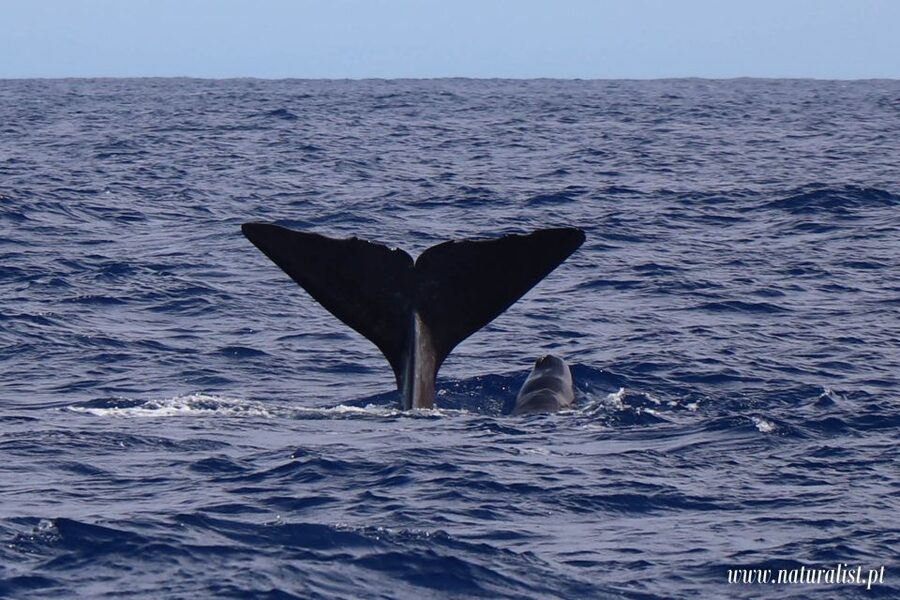
- Resident sperm whales: You have a year-round chance to see sperm whales around Faial and Pico.
- Marine science on the water: A researcher or biologist from the University of Lisbon and the University of the Azores collects data and explains what you are seeing.
- Fast, small RIB boat: The semi-rigid boat carries up to 16 people, with past departures sometimes running with around 11 or 12 guests.
- Wildlife changes by season: Blue and fin whales are most associated with spring, while sei, Bryde’s, humpback, and several dolphin species can appear at other times.
- Waterproof clothing is supplied: You receive a waterproof jacket and trousers, but quick-drying or waterproof shoes still make sense.
- Good record, not a guarantee: The activity has a 4.9 rating from 225 reviews, but one documented trip saw no whales, which is always possible in the wild.
Why this Horta whale-watching trip feels different
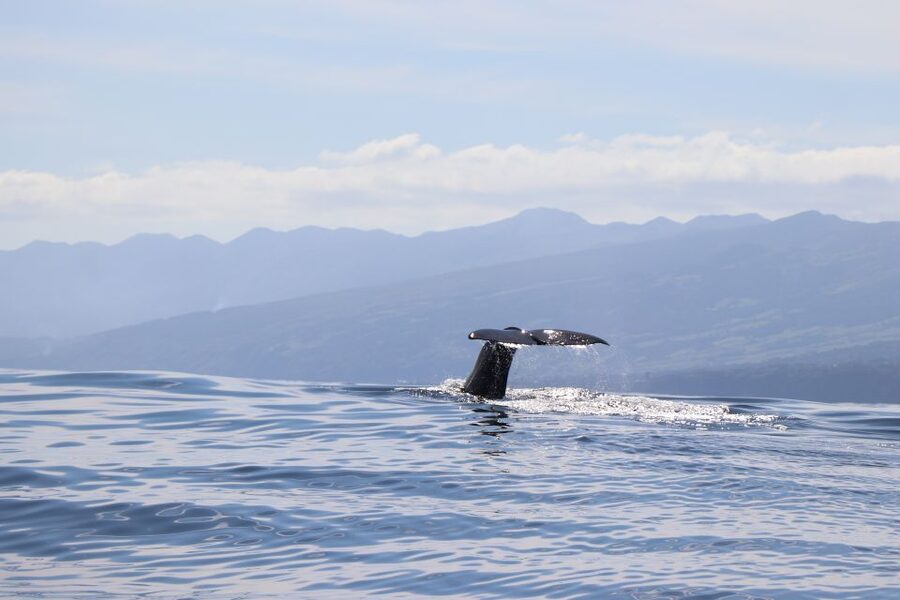
The Azores are not a place where somebody parks a boat beside a captive animal and waits for a performance. You are going out into open Atlantic water, where sightings depend on season, sea conditions, animal behavior, and plain luck.
This operator works with whale spotters on land around Faial and Pico. That matters. Instead of searching blindly for the entire three-hour period, the crew can use information from shore to decide where to head. It does not guarantee a sighting, but it gives the boat a better starting point.
The other useful difference is the scientific presence. A marine researcher or biologist travels with you, explains the animals’ behavior, and collects data. Anna received especially strong praise for her clear explanations, while Cristiana helped identify whales and dolphins on another departure. The experience is still fun and fast, but it is not just a boat ride with a few animal names thrown in.
You may see two or three cetacean species during a normal trip. That could mean sperm whales and dolphins, or a seasonal mix such as sei, Bryde’s, humpback, blue, or fin whales. Some departures have produced several whale species, hundreds of dolphins, tuna, shearwaters, loggerhead turtles, and large groups of feeding seabirds.
More Boat Tours in the Azores
- Azores Whale Watching & Islet Boat Tour
★ 4.6 · 2,146 reviews - Azores Whale Watching & Islet Boat Tour
★ 4.5 · 1,059 reviews - São Miguel: Glass Bottom Boat Tour with Snorkeling
★ 4.7 · 633 reviews
Meeting at Horta Marina at 8:45 or 13:45
The meeting point is Naturalist, Science & Tourism, Whale Watching, in the marina at Horta. Arrive 15 minutes before departure: 8:45 for the 9:00 morning trip or 13:45 for the 14:00 afternoon trip.
There is no hotel pickup, so you need to make your own way to the marina. Food and drinks are also not included. For a three-hour outing, eat beforehand and bring water if you want it available during the trip.
The schedule gives you a useful choice. The morning departure may suit you if you want the rest of the day free, while the afternoon trip can fit better after a slower start. The available wildlife and sea conditions matter more than the clock, so I would choose based on your wider Faial plans rather than assuming one departure is always better.
Before boarding, you receive a safety briefing of about 10 minutes. Expect instructions about seating, movement, clothing, and behavior around the animals. This is important on a fast RIB, where a calm sea can still mean plenty of bouncing.
The 16-person RIB and what the ride is like
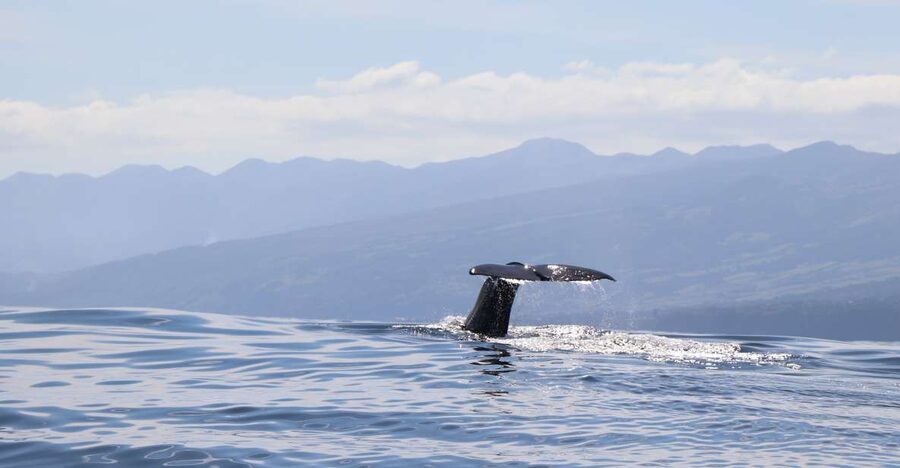
The semi-rigid boat holds up to 16 passengers. That is small enough for the biologist to speak directly to the group, and past trips have sometimes operated with only 11 or 12 tourists. A smaller group also makes it easier to look out from different sides of the boat without feeling packed into a large excursion vessel.
The RIB is fast. One person compared the ride to an amusement-park attraction, which gives you a useful idea of the mood. The speed helps the crew cover more water and reach reported sightings, but it also means the ride itself is part of the experience.
You can get wet. Waterproof jackets and trousers are supplied, and that protection has been praised repeatedly. Still, bring shoes that dry quickly or resist water. The front of the boat is likely to feel the spray and motion most strongly, so if you know you are sensitive to bouncing, ask the crew where seating may be most comfortable.
This is not a good choice if you are pregnant, have severe back problems, have had recent surgery, or are bringing a child under five. The restrictions are not minor legal wording. The boat can move sharply in Atlantic conditions, even when the weather looks manageable from shore.
The briefing turns sightings into understanding
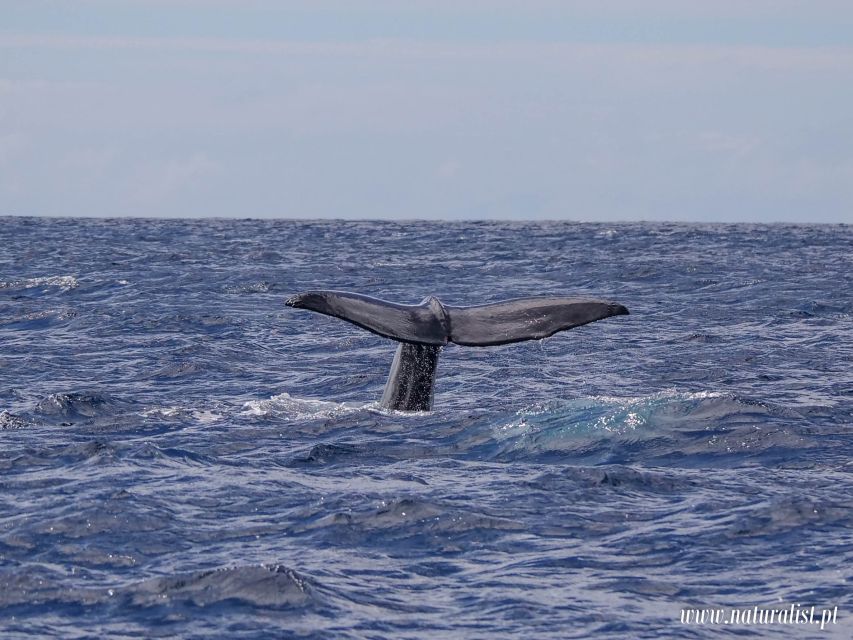
The introductory talk covers marine biodiversity and the cetaceans found in the region. That preparation makes a real difference once animals appear. You will have a better chance of understanding why a whale surfaces in a certain way, why dolphins travel in groups, or why the captain changes position rather than charging straight toward wildlife.
Sperm whales are resident around the islands throughout the year. They are one of the best reasons to choose this trip outside the peak spring whale season. A sighting can be brief, but even a blow and a disappearing back can make the trip worthwhile.
Blue and fin whales are linked mainly with spring. Sei and Bryde’s whales can also appear in summer, and humpback whales are migratory visitors. The timing is not a promise, but it helps you set sensible expectations before paying for the boat.
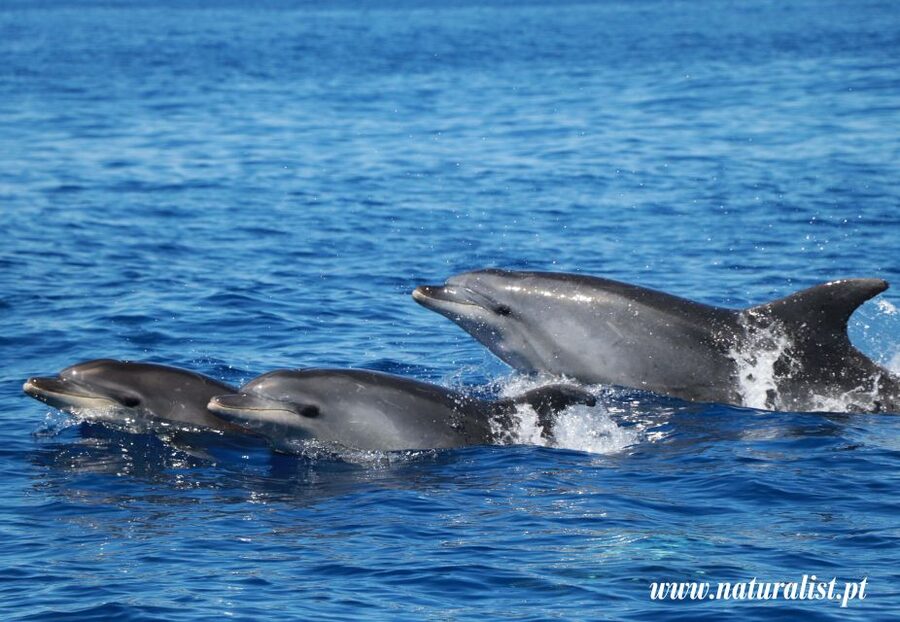
Dolphins provide another strong possibility. Bottlenose, Risso’s, and common dolphins are resident, while other species pass through. The most memorable departures have included dozens or even hundreds of dolphins moving around the RIB, sometimes alongside whales and feeding birds.
More Dolphin Watching Trips in the Azores
- From Ponta Delgada: Whale and Dolphin Watching Trip
★ 4.7 · 4,109 reviews - Pico Island: Azores Whale & Dolphin Watching on Zodiac Boat
★ 4.8 · 408 reviews - Terceira: Whale and Dolphin Watching in a Zodiac Boat
★ 4.8 · 230 reviews - São Miguel: Wild Swimming with Dolphins
★ 4.7 · 222 reviews
Searching for whales, dolphins, and smaller sea life
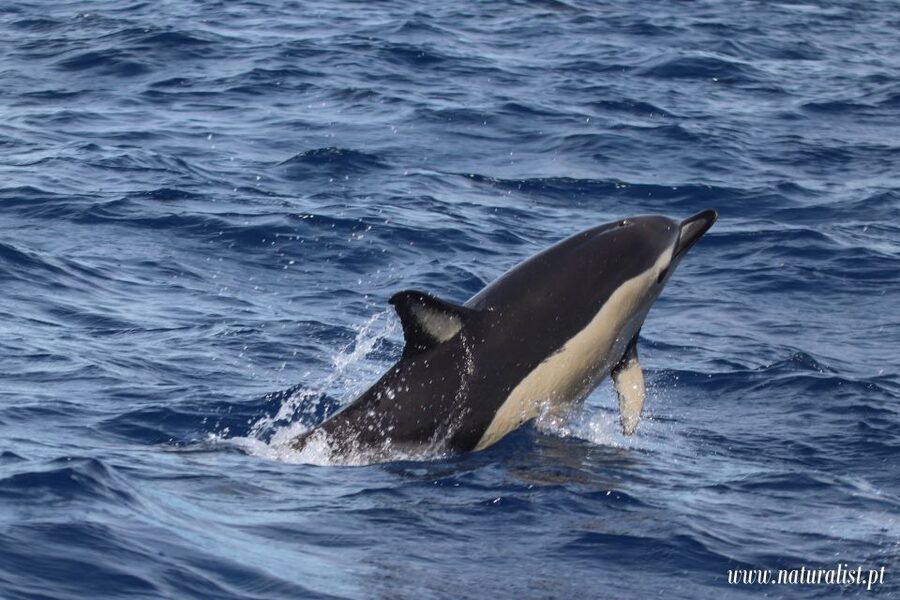
The main wildlife-viewing portion lasts around 30 minutes according to the formal schedule, though the full expedition takes about three hours. That short itinerary description should not make you think the boat stops watching after half an hour. The outing includes the ride out, searching, positioning, viewing, and the return.
The captain may wait in one area, then move when the animals shift or when a better sighting develops. One departure involved the captain changing position twice to get ahead of whales and reach the active area. That is good wildlife-watching practice: the crew works with the animals’ movements rather than expecting the animals to perform for the boat.
The species list is broad. In addition to whales and dolphins, you might find:
- Loggerhead and green turtles, with leatherback and Kemp’s ridley turtles also recorded in the region
- Flying fish, squid, octopus, tuna, and ocean sunfish
- Hammerhead and blue sharks
- Cory’s, great, and Manx shearwaters
- Common and roseate terns
You should treat this as a possibility list, not a menu. A turtle sighting can be a lovely bonus, while a group of feeding shearwaters may reveal where fish and cetaceans are active. The Azores reward attention beyond the largest animal in view.
Land spotters and respectful whale watching
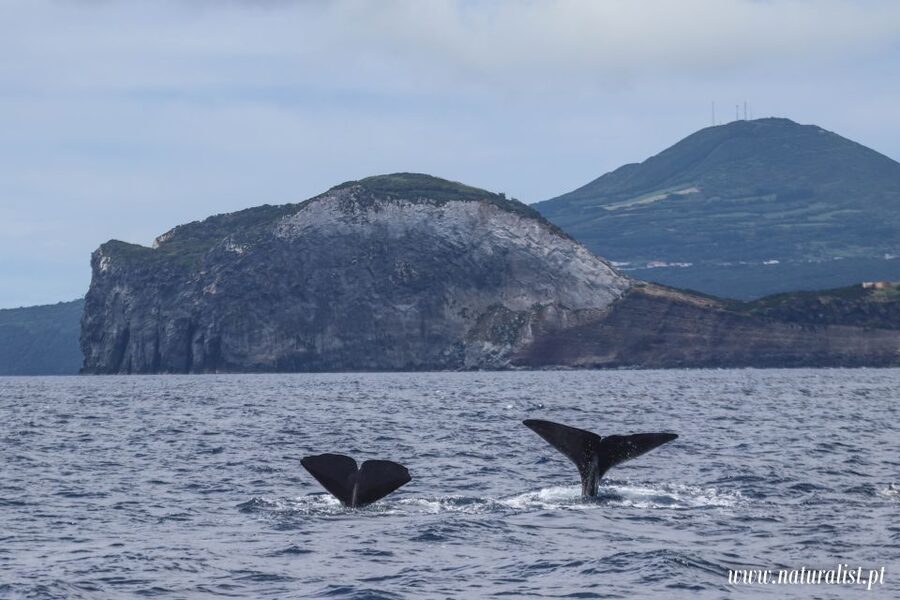
The land-based spotters are one of the strongest practical features. Faial and Pico provide high viewpoints over the sea, allowing trained observers to look for blows and movement from shore. The boat crew can then use that information to narrow the search.
Once you reach the animals, the skipper keeps a careful distance and adjusts the boat’s position. That balance matters. You want a clear view, but a responsible operator should avoid cutting across an animal’s path, crowding a group, or forcing repeated changes in behavior.
The trip also supports student research. Some of the money goes toward research, and the onboard scientist collects data during the expedition. If you want your excursion spending to support more than transport and entertainment, this adds real value to the $101 price.
The crew’s approach also helps you feel less like an intruder. You are watching wildlife in its own environment, not chasing a guaranteed photo. That means a patient captain, a calm guide, and sensible distance are better signs than a boat racing directly toward a whale.
What you may actually see in different seasons
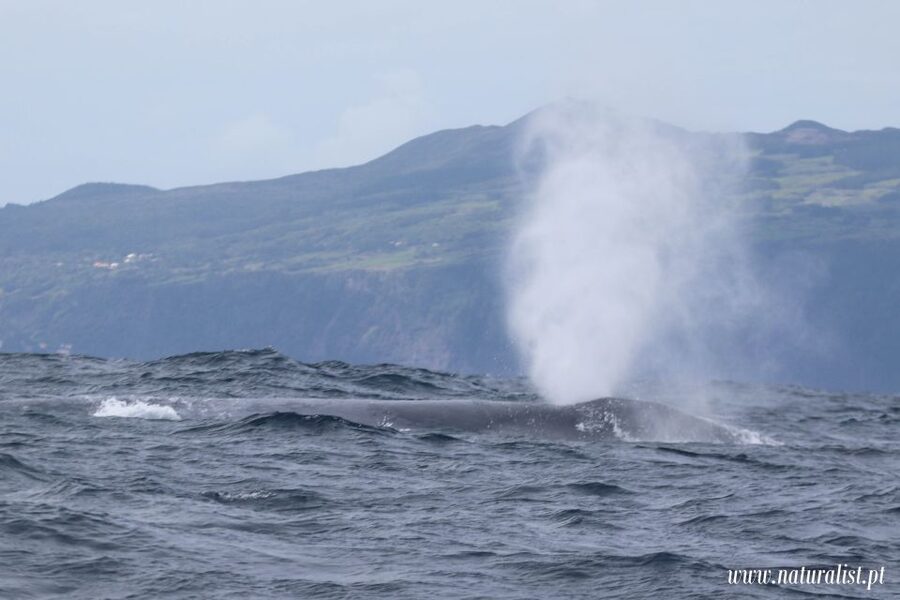
Spring offers the strongest chance of seeing large baleen whales such as blue and fin whales, while sperm whales remain present year-round. April sightings have included five sperm whales and a large group of dolphins, although spring weather can make the ride turbulent.
Summer can produce sei and Bryde’s whales, along with resident dolphins and migratory species. One August trip was praised for its strong biological explanations, while a July trip saw sperm whales and other marine life. Sea conditions can vary, so do not assume warmer weather means a calm ocean.
Early autumn has produced impressive variety. September departures have included sperm, sei, and humpback whales, hundreds of dolphins, and thousands of birds feeding together. Bryde’s whales have also appeared. October can remain rewarding, with reports of three whale species, dolphins, tuna, and shearwaters.
The right lesson is not to chase one calendar date. Choose a time that fits your visit, then ask the operator what has been seen recently before departure. The company provides information about current species presence before each trip, which helps you decide what kind of outing you are likely to have.
How the $101 price holds up
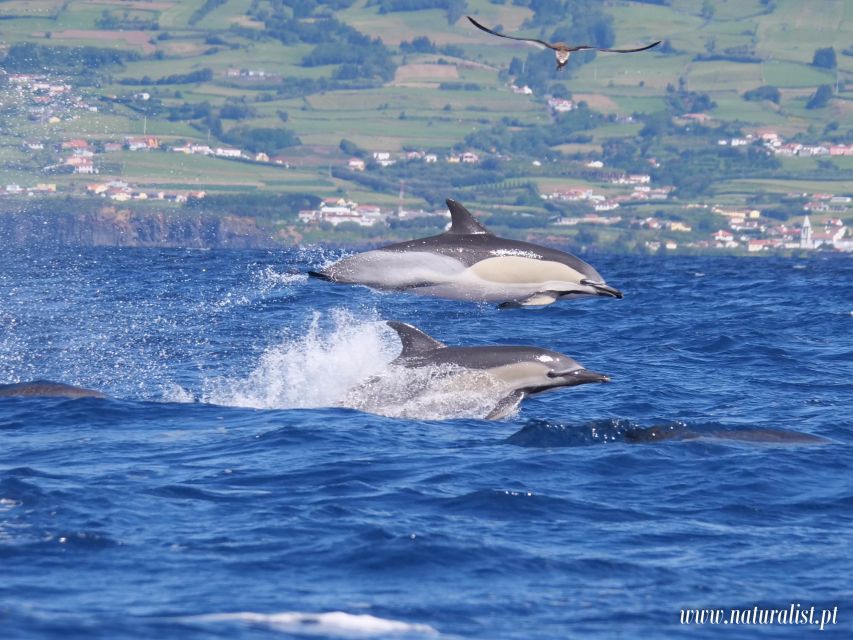
At $101 per person, this is not the cheapest way to get on the water. You are paying for a three-hour expedition, a small RIB, waterproof clothing, safety insurance, a pre-trip briefing, land-based spotting support, and a marine researcher or biologist on board.
That package gives the price a solid case. A basic whale trip may get you to the animals, but here you also receive current explanations about biology and behavior. You may also receive photographs taken by the crew after the outing. That photo service was provided free on some departures, though it should be treated as a helpful extra rather than something to count on as the main value.
The price makes less sense if you only want a quick boat ride or if you are uncomfortable with open-water motion. A wildlife trip has no guaranteed result, and one documented outing saw no whales. You could still see dolphins, birds, turtles, or other sea life, but you should not buy this as a guaranteed whale encounter.
For someone who values science, small groups, and a careful approach, the cost is reasonable. The research connection and onboard explanations are the features that separate it from a standard sightseeing ticket.
Who should book, and who should skip it
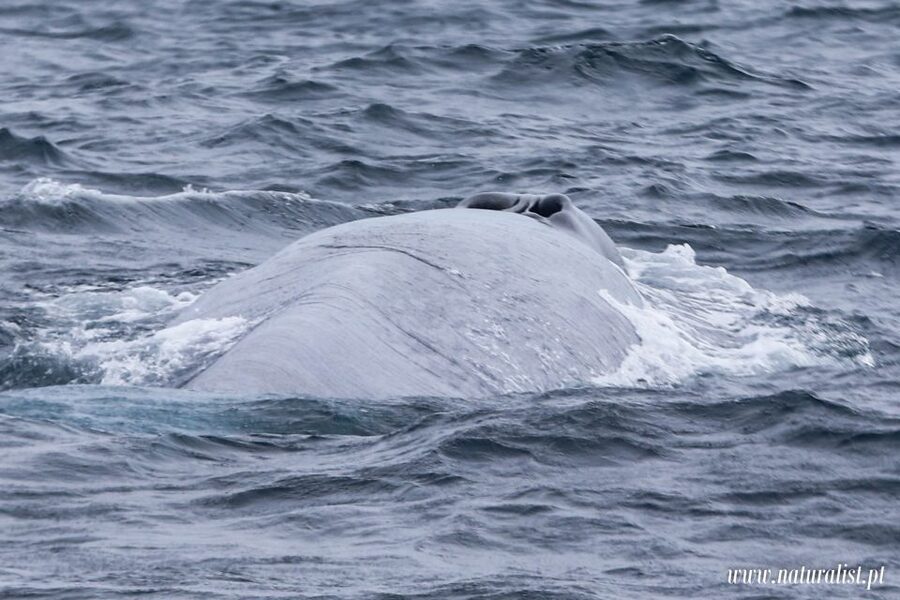
I would recommend this trip to you if you enjoy wildlife but also want context. It suits people who would rather know the difference between a sperm whale and a sei whale than simply point at a large shape on the water.
It is also a good fit for photographers, birdwatchers, families with older children, and visitors who want a focused half-day activity in Horta. The small boat gives you a strong chance to see the water from close range, though you need to protect your camera from spray.
You should think twice if you dislike speed, get motion sickness easily, or need a stable deck. The RIB moves quickly and may bounce hard. Pregnancy, severe back problems, recent surgery, and children under five are listed exclusions.
The language information needs a little care. English and Portuguese are specifically offered, and Spanish is mentioned in the expedition description. French tours need to be requested in advance and depend on availability. If language support is important, confirm it before you book.
Cancellation is flexible enough for a weather-dependent activity. You can cancel up to 24 hours before departure for a full refund, and the operator allows you to reserve and pay later. If poor weather forces a change, the trip can be rescheduled or cancelled with a full refund.
Is the Horta University whale trip worth booking?
Yes, if you accept that nature sets the timetable. The strongest reasons to book are the marine biologist, the land-based whale spotting, the small 16-person RIB, and the crew’s careful handling of wildlife.
You may see sperm whales at any time, with seasonal chances for blue, fin, sei, Bryde’s, and humpback whales. Dolphins are another strong possibility, and birds, turtles, tuna, and other sea life can turn a quiet whale search into a worthwhile marine outing.
Book it if you want a serious wildlife experience with clear explanations and research value. Skip it if you need guaranteed whales, a dry and gentle ride, or a fully accessible boat. For most active visitors who can handle Atlantic conditions, this is a well-priced, thoughtful way to meet the ocean around Faial.
FAQ
Where does the whale-watching trip meet?
Meet at Naturalist, Science & Tourism, Whale Watching, in Horta Marina. You should arrive 15 minutes before departure.
What time do the trips leave?
Morning trips leave at 9:00, with arrival requested at 8:45. Afternoon trips leave at 14:00, with arrival requested at 13:45.
How long does the experience last?
The expedition takes an average of three hours.
How many people fit on the boat?
The semi-rigid RIB carries up to 16 passengers. Some departures have operated with around 11 or 12 tourists.
Is a whale sighting guaranteed?
No. Wildlife sightings depend on weather, sea conditions, season, and animal behavior. Whales are commonly sought, but one documented trip did not see any whales.
Which whales can I see?
Sperm whales are resident year-round. Blue and fin whales are associated mainly with spring, while Bryde’s, sei, and humpback whales can also appear depending on the season.
Are waterproof clothes provided?
Yes. Waterproof jackets and trousers are included. You should still bring waterproof or quick-drying shoes.
Who should not take this trip?
The activity is not suitable for children under five, pregnant women, people with back problems, or people who have had recent surgery.
Recently added in Azores
- Full Day Tour of Faial Island★ 5.0 · 39 reviews
- Faial Island: Full Day Tour – Nature and Local Culture★ 5.0 · 213 reviews
- Full-Day Private Tour of Faial★ 5.0 · 40 reviews
- Faial Island: Half Day Tour★ 5.0 · 99 reviews
- UNDERGROUNDTOUR (Full Day Private Tour)★ 5.0 · 52 reviews
- Wines and Moonshines of Terceira★ 5.0 · 55 reviews
- Terceira Island: Full Day Tour★ 5.0 · 63 reviews
- PHOTO TOUR (Full Day Private Tour- Sunrise to sunset)★ 5.0 · 68 reviews
Dolphin Watching, compared.

Benagil Caves & Dolphin Watching Speed Boat Tour
Read our review →
Dolphins Search and Benagil Caves from Albufeira
Read our review →
Benagil Caves & Dolphins Watching with Biologist
Read our review →Browse the lists this tour appears in