
REVIEW · FOOD & DRINK
Devour Lisbon: The Ultimate Portuguese Food Tour
Lisbon tastes better one small bite at a time. Devour Lisbon’s Ultimate Portuguese Food Tour brings you through Baixa, Chiado, and Cais do Sodré while serving enough food for a full meal. I like the mix of classic Portuguese dishes and everyday neighborhood stops, plus the way guides connect each bite to Lisbon’s past. The small group, capped at 10 people, also makes it easier to hear the stories and ask questions. The main drawback is that lunch may feel less exciting than the earlier tastings for some people.
This is a practical first-day activity because it gives you a quick sense of Lisbon’s center, food customs, and useful places to return to later. Guides such as Helena, Cecilia, Merritt, Alicia, Natalia, Nina, and Anastasiia have been praised for their warmth, storytelling, and local food knowledge. Plan to walk at a moderate pace, and arrive hungry: the portions add up quickly.
In This Review
- Six reasons this Lisbon food walk earns attention
- Starting at Praça da Figueira with a taste of old Lisbon
- Manteigaria Silva and the everyday Portuguese table
- Ginjinha Sem Rival and Lisbon’s cherry liqueur
- O Trevo and the bifana sandwich
- O Gaiteiro and the main Portuguese dishes
- Coffee, pastries, and the sweet finish at Manteigaria
- Walking through Baixa, Chiado, and Cais do Sodré
- Ending at Time Out Market Lisboa
- What the $95.53 price really covers
- Guides make the difference
- Dietary needs and who should skip it
- Who will enjoy this Portuguese food tour most
- Should you book Devour Lisbon?
- FAQ
- How long does the Devour Lisbon food tour last?
- How much does the tour cost?
- What neighborhoods does the tour visit?
- Where does the tour start?
- Where does the tour end?
- How many people can join the tour?
- Is the tour offered in English?
- Is enough food included for a full meal?
- Can the tour accommodate dietary restrictions?
Six reasons this Lisbon food walk earns attention
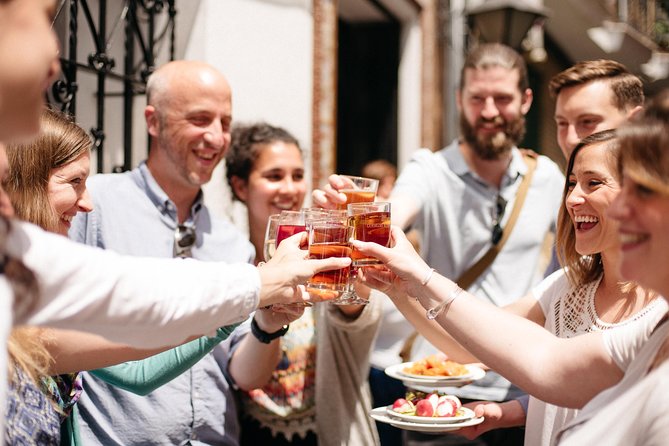
- Nine food tastings and three drinks: The schedule covers breakfast pastries, pork, fish, sausage, cod, sweets, coffee, wine, and ginjinha.
- Three central neighborhoods: You walk through Baixa, Chiado, and Cais do Sodré, with the route ending at Time Out Market.
- Seven small businesses: The stops include traditional shops, pastry counters, sandwich spots, and a sit-down Portuguese tasca.
- A full-meal amount of food: The tour begins around breakfast time and continues through lunch, so you should skip a large morning meal.
- A maximum of 10 people: A small group helps you keep up in crowded streets and gives you more time with the guide.
- Useful for later meals: You receive a Devouring Lisbon guide with recommended places to eat and drink on your own.
Starting at Praça da Figueira with a taste of old Lisbon
The tour begins by the Statue of John I at Praça da Figueira, an easy-to-find point in central Lisbon. This location puts you near Baixa’s broad streets and traditional shops, so the food walk starts in a part of town that is convenient to revisit later.
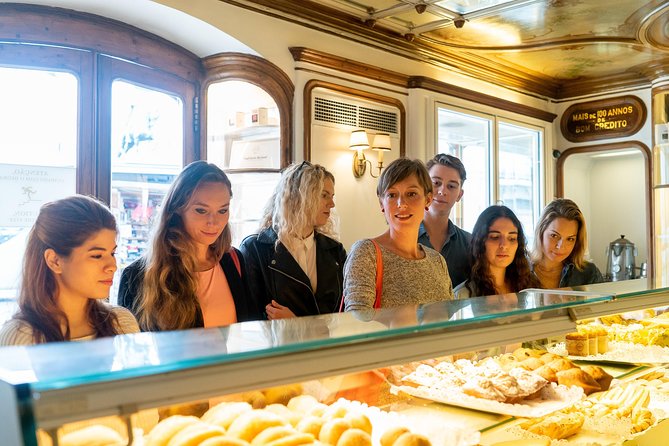
Your first stop is Confeitaria Nacional, one of Lisbon’s classic pastry houses. Here, the emphasis is on the city’s café culture and sweet tooth. A morning stop at a traditional confectionery is a smart way to begin because it shows that Portuguese food is not only about seafood and pork. Coffee and pastries are part of daily life.
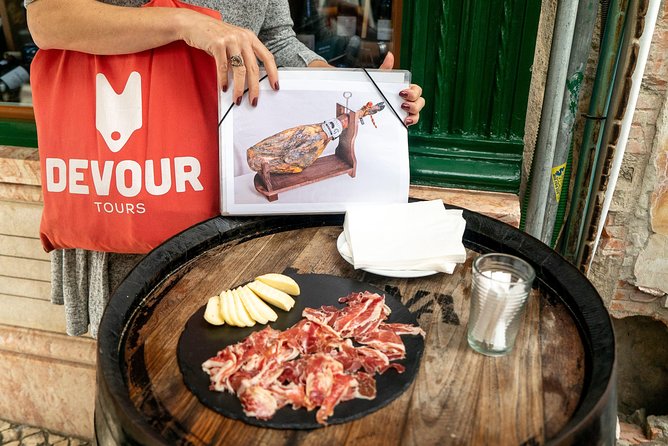
Next comes Manteigaria Silva, a long-established food shop associated with Portuguese cured meats and pantry staples. This is where the food story shifts from sweets to savory foods such as Iberian ham. You get a taste of the kind of specialty product that many visitors notice in Lisbon but may not know how to order or compare.
The pace is not simply eat, walk, eat. Your guide explains the background of the food and the places selling it. That matters in Lisbon, where a small counter, old shop, or narrow tavern can tell you more about local habits than a formal dining room.
More Food Tours in Lisbon
- Winner 2025 Undiscovered Lisbon Food & Wine Tour by Eating Europe
★ 5.0 · 6,390 reviews - Lisbon: Food and Wine Small Group Walking Tour
★ 4.9 · 4,082 reviews - Lisbon Small-Group Food Tour with 18 Tastings in Alfama District
★ 5.0 · 1,967 reviews
Manteigaria Silva and the everyday Portuguese table
The sample menu gives you a broad introduction to Portuguese flavors. Iberian ham provides a salty opening, while canned sardines show how an inexpensive pantry item became one of the country’s best-known foods.
Canned fish is especially useful for understanding Portuguese eating habits. It is easy to carry home, and it appears in attractive tins all over Lisbon. During this tour, it is not treated as a souvenir alone. You taste it as part of the country’s food tradition.
The food is generous, but the tour is still built around tasting. You are not ordering a separate full plate at every stop. Instead, small servings accumulate across the morning and early afternoon. That format lets you try more dishes without having to commit to a large portion of something unfamiliar.
If you are a serious eater, you will appreciate the range. If you prefer a light breakfast, take the warning seriously and eat only a little beforehand. The food can include ham, pork, cod, sausage, rice, pastries, and drinks before the final stop.
Ginjinha Sem Rival and Lisbon’s cherry liqueur
At Ginjinha Sem Rival, you sample ginjinha, Lisbon’s sour cherry liqueur. This is one of the city’s signature drinks and a quick, memorable stop on the route.
Ginjinha is sweet, sharp, and strongly flavored. It is a small serving, but it gives your guide a natural opening to explain local drinking customs and the role of traditional counters in Lisbon’s social life.
Alcohol is part of the standard experience, but non-alcoholic options are available. Pregnant participants can also be accommodated, though the replacement food or drink may not be identical at every stop. Tell the operator about restrictions after booking so the ingredients can be arranged in advance.
The tour includes wine tastings as well. The food pairings are not limited to one famous drink, which gives you a broader look at what people order with meals and snacks.
O Trevo and the bifana sandwich
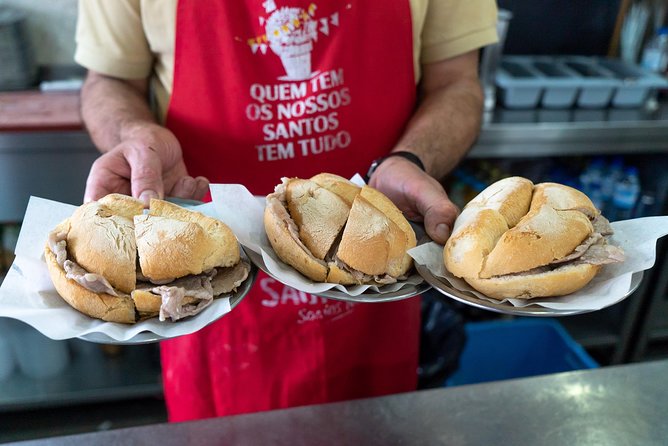
O Trevo is the stop for bifana, a traditional Portuguese pork sandwich. This is one of the most useful foods on the tour because it is simple, filling, and tied to everyday eating rather than special-occasion dining.
The sandwich is made with pork and bread, and its appeal comes from the seasoned meat and sauce. It is the sort of quick meal you can seek out later when you need something inexpensive and distinctly Portuguese.
Several guides have used the bifana as an early highlight. That placement makes sense. It gives you something savory and substantial before the tour moves toward the sit-down meal.
For me, this is also a good test of the tour’s style. You are not only stopping at polished food halls. You are visiting working food businesses where the focus is on a familiar local item. The experience is more useful if you want to understand how people actually eat in Lisbon.
A few more Lisbon options side by side
- Lisbon City Center Tour – The Unmissable Lisbon
★ 5.0 · 22,234 reviews - Lisbon: Sintra, Pena, Regaleira, Cabo da Roca & Cascais
★ 4.7 · 19,656 reviews - Lisbon: Jerónimos Monastery Entrance Ticket
★ 4.1 · 14,164 reviews - Lisbon: History, Stories and Lifestyle Walking Tour
★ 4.8 · 10,902 reviews
O Gaiteiro and the main Portuguese dishes
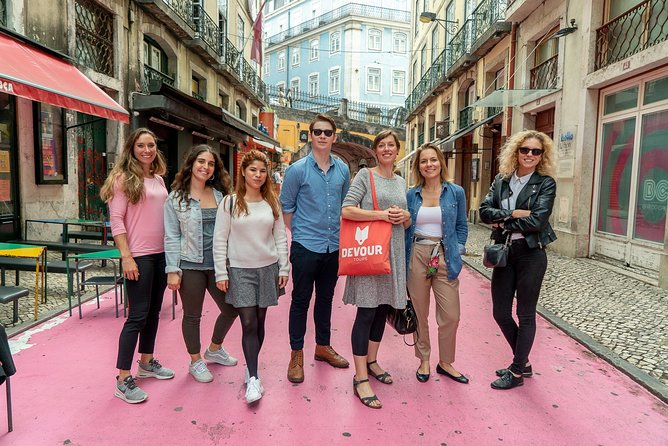
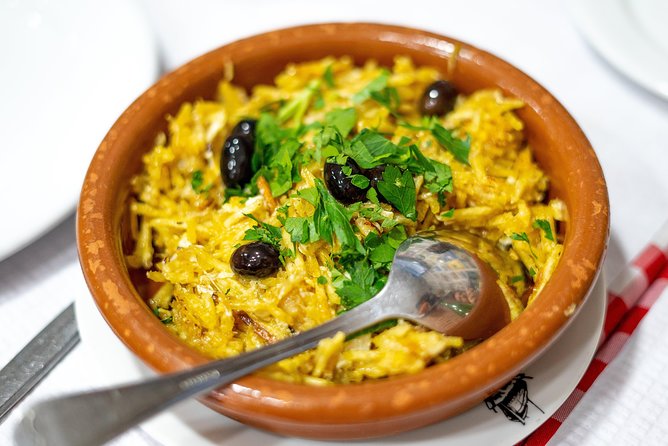
O Gaiteiro brings the tour into more traditional meal territory. The sample menu includes bacalhau à Brás, alheira, and fish rice, along with other dishes that can include a bean stew with pork.
Bacalhau à Brás is a cod preparation made with shredded salted cod, potatoes, egg, and other simple ingredients. Salted cod is central to Portuguese cooking, and this dish gives you a softer, more comforting way to try it than a plain fillet.
Alheira has an unusual background. It is traditionally linked to Jewish communities in Portugal, who developed a sausage that did not appear to contain pork. Today, it is a familiar Portuguese food, and the tour uses it to show how religion, survival, and food can shape one another.
Fish rice offers another contrast. Instead of a dry or grilled fish dish, you get seafood in a rice-based preparation with a more communal feel. These dishes are valuable because they move beyond the most familiar tourist images of pastel de nata and grilled sardines.
The sit-down meal is an important part of the tour, but it may not be the strongest course for every palate. One participant found the snack foods more impressive than lunch. That is a fair caution. The meal gives you variety and context, but individual dishes may depend on the day’s preparation and your own taste.
Coffee, pastries, and the sweet finish at Manteigaria
The final food stop is Manteigaria, known for freshly made pastéis de nata. The warm custard tart is one of Lisbon’s essential tastes, and ending with it is a sensible choice.
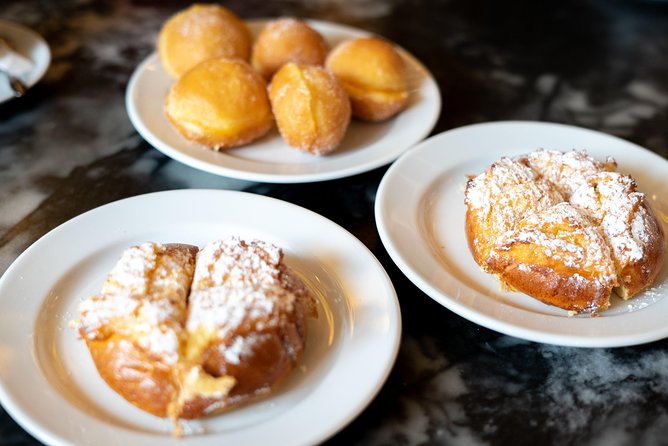
A good pastel de nata brings together crisp pastry, soft custard, and a browned top. It is small, but the flavor is rich. You may also taste pão de Deus and bola de Berlim, along with coffee.
Pão de Deus is a sweet bread with a coconut topping. Bola de Berlim is a Portuguese doughnut-style pastry. Together, these sweets show that Portuguese baking is broader than the custard tart that appears on nearly every Lisbon food guide.
The pastry stop is particularly helpful for people who want to order breakfast or an afternoon snack later. Your guide can explain what you are eating and how the foods fit into Portuguese routines. Guides such as Nina and Alicia have been praised for speaking clearly, giving travel tips, and making the food easy to understand.
Walking through Baixa, Chiado, and Cais do Sodré
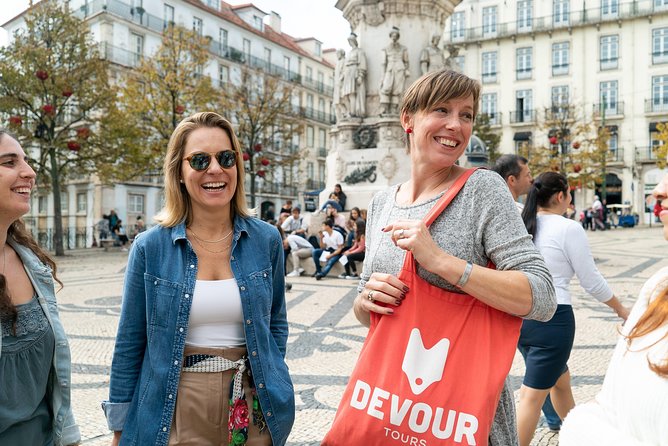
The route links three central areas rather than keeping you inside one market. Baixa gives you the grand central streets and traditional shops. Chiado adds cafés, old businesses, and a more polished city-center feel. Cais do Sodré brings the tour toward the river and the final market stop.
The walking is part of the value. You are not being driven from restaurant to restaurant. You see how the food businesses fit into the city and get a useful orientation to central Lisbon along the way.
You should be able to walk at a moderate pace without difficulty. Lisbon’s streets can be uneven and hilly in places, so comfortable shoes are a good idea. The supplied information does not promise a fully accessible route, so contact the operator before booking if mobility is a concern.
The tour lasts about three and a half hours. That is long enough to cover several neighborhoods without taking your entire day. It also leaves you at Time Out Market, where you can continue exploring or use public transportation.
Ending at Time Out Market Lisboa
The tour ends at Time Out Market Lisboa in Mercado da Ribeira on Avenida 24 de Julho. This is a practical finish because you are left in a major food hall with plenty of choices nearby.
The market is not simply a final address. It gives you a chance to compare the traditional food you have just tasted with Lisbon’s modern dining scene. You can stop for another look, meet your group for a final coffee, or head elsewhere from Cais do Sodré.
The route’s ending also makes the tour useful beyond the tour itself. Several people have appreciated that the stops are close enough together to revisit later. You receive a Devouring Lisbon guide filled with recommended places to eat and drink, which adds value if this is your first stay in the city.
What the $95.53 price really covers
At $95.53 per person, this is not a cheap way to grab lunch. It is a guided food-and-history experience that bundles nine tastes, three drinks, a sit-down meal, local guidance, and a small group.
The value is strongest if you want help choosing unfamiliar foods. You avoid ordering a full plate of something you may not like, and you get many samples in one outing. The guide also saves you time by connecting established shops and restaurants in a single route.
The price is less attractive if you already know Lisbon well or mainly want one large restaurant meal. You are paying for access, explanation, and variety, not just the calories.
The tour is often booked about 44 days ahead, so popular dates may fill early. Since the group maximum is 10, the small size is worth protecting. A group of eight or nine feels more personal than a large food crawl, and it is easier to hear stories at busy counters.
Guides make the difference
The strongest part of this experience is the guide. Helena has been praised for linking food with history and social life. Cecilia is known for an energetic, welcoming approach. Merritt has taken groups to locally operated places and made the tour engaging for families, including a 10-year-old.
Alicia has received praise for food knowledge, travel advice, and a professional style. Natalia has been singled out for explaining Portuguese history and dishes such as dried cod, sausage, beans, and ginjinha. Nina has been appreciated for clear English, steady pacing, and careful handling of vegetarian food.
Your guide will vary, so do not book based on a promise of one particular person. The useful pattern is that the guides are expected to explain the food, give local context, and maintain relationships with the businesses along the route.
One guide even gave each participant a can of sardines to take home. That is not listed as a standard inclusion, so treat it as a pleasant possibility rather than something guaranteed.
Dietary needs and who should skip it
The tour can adapt for pescatarians, vegetarians, dairy-free diets, non-alcoholic preferences, and pregnant participants. You must email the Guest Experience team after booking so they can arrange suitable ingredients.
You should not book this tour if you are vegan, gluten intolerant, or have celiac disease. Replacement items may not be available at every stop, and people with serious food allergies must sign an allergy waiver at the start.
Food is central at nearly every stage, so this is not a good place to hope that you can simply avoid problem dishes. Tell the operator clearly and early. If your needs fit the listed adaptations, the guide can make the experience easier, but you should expect that your tastings may differ from the standard menu.
Who will enjoy this Portuguese food tour most
I would choose this tour for a first or second day in Lisbon. It gives you a quick map of the center, introduces foods you may otherwise overlook, and helps you decide what to order during the rest of your stay.
It suits curious eaters, couples, small groups, and families with older children who can walk and enjoy several tastings. The mix of food, drink, and city stories also works well for a team outing.
You may want something else if you prefer a slow, formal lunch, dislike walking between stops, or have strict dietary limits. The route is active, the portions are spread across multiple businesses, and the experience depends on enjoying a range of foods rather than choosing only your favorites.
Should you book Devour Lisbon?
Book it if you want a friendly introduction to Portuguese food with enough tasting to replace breakfast and lunch. The strongest reasons are the small group, the range of dishes, the central walking route, and guides who bring food stories to life.
I would book early, wear comfortable shoes, eat only a light breakfast, and tell the operator about dietary needs immediately after booking. If you want authentic everyday tastes such as bifana, salted cod, canned sardines, alheira, ginjinha, and pastel de nata in one well-organized outing, the $95.53 price is reasonable.
Skip it if you need vegan or gluten-free food, or if your idea of a food tour is one leisurely restaurant meal. For most first-time visitors who want to get their bearings fast and eat well along the way, this is a strong start to Lisbon.
FAQ
How long does the Devour Lisbon food tour last?
The tour lasts approximately 3 hours and 30 minutes.
How much does the tour cost?
The listed price is $95.53 per person.
What neighborhoods does the tour visit?
The route goes through Baixa, Chiado, and Cais do Sodré.
Where does the tour start?
The meeting point is by the Statue of John I at Praça da Figueira, 1100-240 Lisboa, Portugal.
Where does the tour end?
The tour ends at Time Out Market Lisboa, Mercado da Ribeira, Avenida 24 de Julho, 1200-479 Lisboa, Portugal.
How many people can join the tour?
The maximum group size is 10 people.
Is the tour offered in English?
Yes. This tour is offered in English.
Is enough food included for a full meal?
Yes. The tour includes nine food tastings and three drinks, with enough food for breakfast and lunch.
Can the tour accommodate dietary restrictions?
It can adapt for pescatarians, dairy-free diets, vegetarians, non-alcoholic options, and pregnant participants. It is not suitable for vegans, people with gluten intolerance, or people with celiac disease. Serious food allergies require an allergy waiver.
Recently added in Lisbon
- Lisbon Cinematic Photoshoot with Top-Rated Photographer★ 5.0 · 76 reviews
- City Centre Run in Lisbon★ 5.0 · 164 reviews
- Central Lisbon E-Bike Tour★ 5.0 · 168 reviews
- Hands on Portuguese Cooking Class in Lisbon★ 5.0 · 136 reviews
- City of Neighborhoods Tour 1H 30M Private Tour by Tuk Tuk★ 5.0 · 38 reviews
- Lisbon Sailing Catamaran Public Cruise with drinks★ 5.0 · 304 reviews
- Lisbon City Tour by Tuk Tuk★ 4.5 · 137 reviews
- Romantic Private Sailboat in Lisbon for couples★ 5.0 · 38 reviews
Food & Drink, compared.
Winner 2025 Undiscovered Lisbon Food & Wine Tour by Eating Europe
Read our review →

Douro Valley Small-Group Tour with Wine Tasting, Lunch and Boat
Read our review →

Douro Valley Tour with Wine Tasting, Cruise and Lunch
Read our review →
Douro Valley Tour: Wine Tasting, Cruise and Lunch from Porto
Read our review →
Porto Food & Wine Tasting Tour with Lunch or Dinner Option
Read our review →Browse the lists this tour appears in