
REVIEW · TICKETS
CCVAlgarve Individual Ticket
Science here comes with a splash. I like the Ria Formosa aquarium, which connects the displays to the coastal lagoon outside, and I like the touch pool, where you can get close to animals from the intertidal zone. The $5 price also makes this an easy add-on to a day in the Algarve.
The main consideration is size. This is a compact museum, not an all-day science complex, so you may finish the exhibits in a few hours. Still, the building is air-conditioned, the activities suit children well, and the mix of animals and hands-on experiments gives the visit more punch than the low price suggests.
In This Review
- Key things to know before you go
- A small museum with a local purpose
- Finding the entrance by the castle walls
- Two aquariums, two very different settings
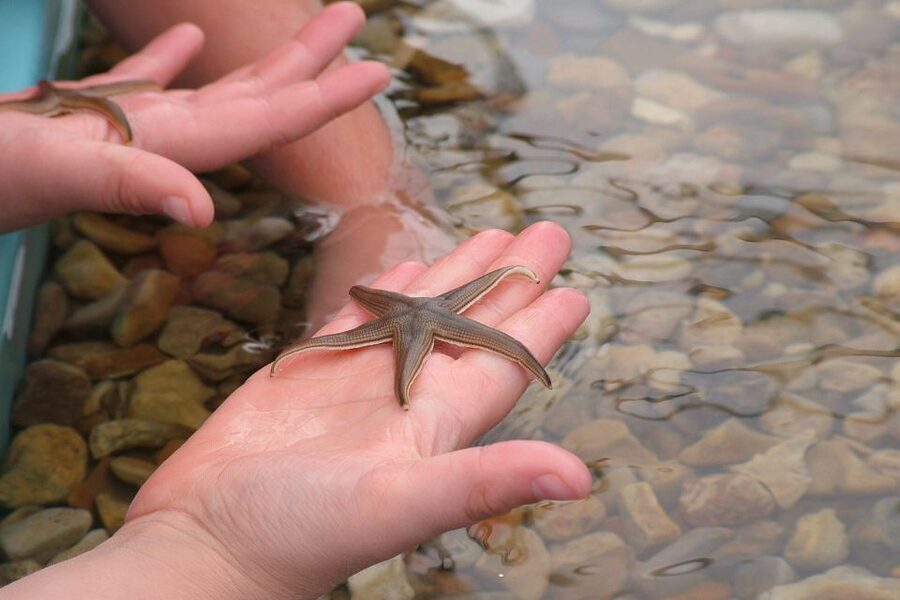
- The touch pool and the Ria Formosa tidal zone
- Earthquakes, tornadoes, and other physical surprises
- The pizza calorie challenge
- A 3-D printer and hands-on learning
- How long should you plan to stay?
- Is the $5 price good value?
- Who will enjoy this most?
- Planning your visit without overcomplicating it
- Should you book the Algarve Life Sciences Centre?
- FAQ
- Where do I enter the Algarve Life Sciences Centre?
- How much does the individual ticket cost?
- How long is the ticket valid?
- Is the centre wheelchair accessible?
- Are pets allowed inside?
- Can I cancel the booking for a refund?
Key things to know before you go
- Two aquariums tell different stories: One shows tropical sea life, while the other represents the nearby Ria Formosa coastal lagoon.
- The touch pool is the family favorite: You can interact with animals commonly found in the lagoon’s shallow intertidal zone.
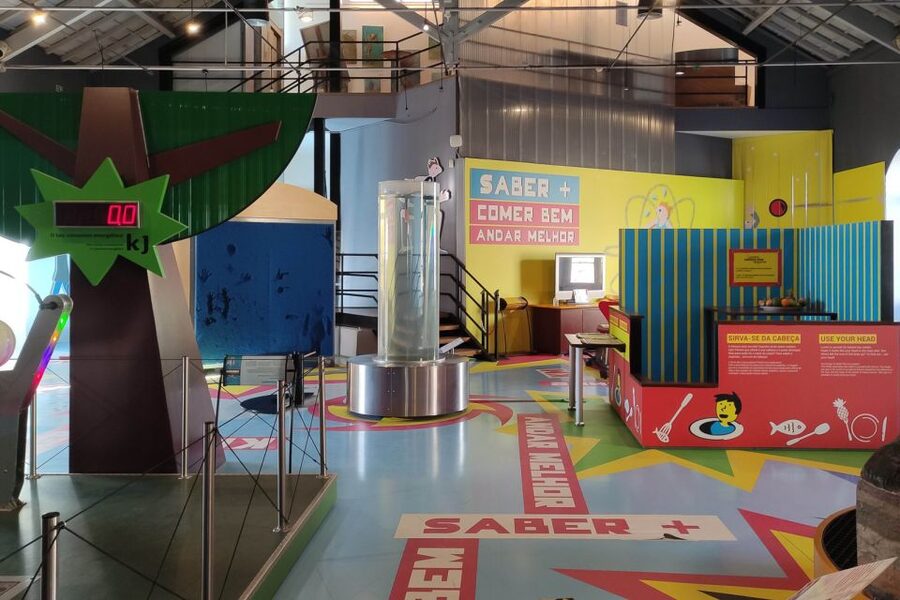
- Science gets physical here: Feel an earthquake, watch a live tornado, and check your weight on other planets.
- The seahorses are a local highlight: These delicate animals come from the Ria Formosa environment.
- The museum is small but well focused: You can see a lot without committing to a full day indoors.
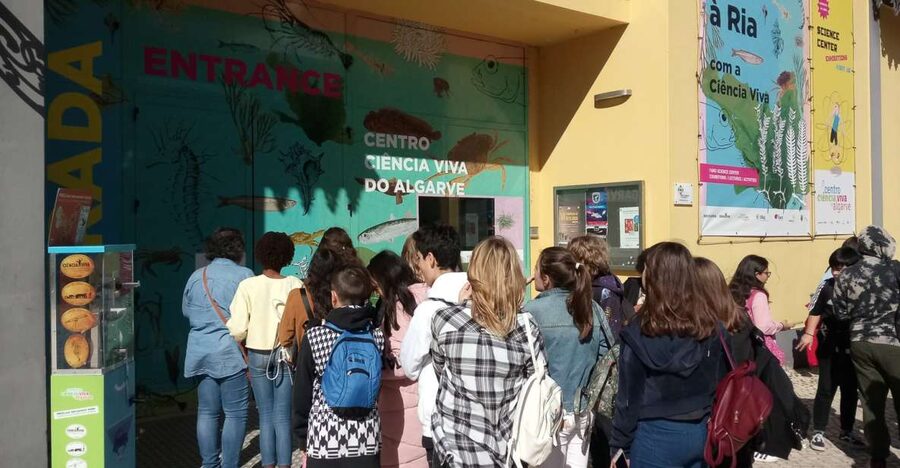
- The ticket is easy to use: Enter the big yellow Algarve Life Science Centre and show your ticket at reception.
A small museum with a local purpose
The Algarve Life Sciences Centre Museum is not trying to be a grand national institution. Its strength is more direct: it uses familiar, hands-on experiments and local wildlife to make science easy to grasp.
I like that the museum gives the Ria Formosa a central role. This coastal lagoon is not treated as a distant topic on a wall panel. You see its animals in an aquarium, learn how they live, and connect them to the tidal zone where land and water meet.
That local focus matters. You can find science museums built around impressive machines, but this one also helps you understand a specific place in the Algarve. If you plan to visit the lagoon or have already seen its channels and mudflats, the displays give those surroundings more meaning.
The museum also works well for families who need a break from hot weather. The building is air-conditioned, and the exhibits offer plenty of activity without requiring long periods of reading. I would plan on a few hours rather than a full day, especially if you are visiting with older children who move quickly through displays.
A few more Algarve options side by side
- Albufeira: 2.5-Hour Benagil Caves & Dolphin Watching
★ 4.6 · 10,710 reviews - Portimão: Benagil Caves Speed Boat Tour with Sunset Option
★ 4.8 · 9,329 reviews - Portimão: Benagil Sea Caves Speedboat Adventure Tour
★ 4.8 · 6,546 reviews
Finding the entrance by the castle walls
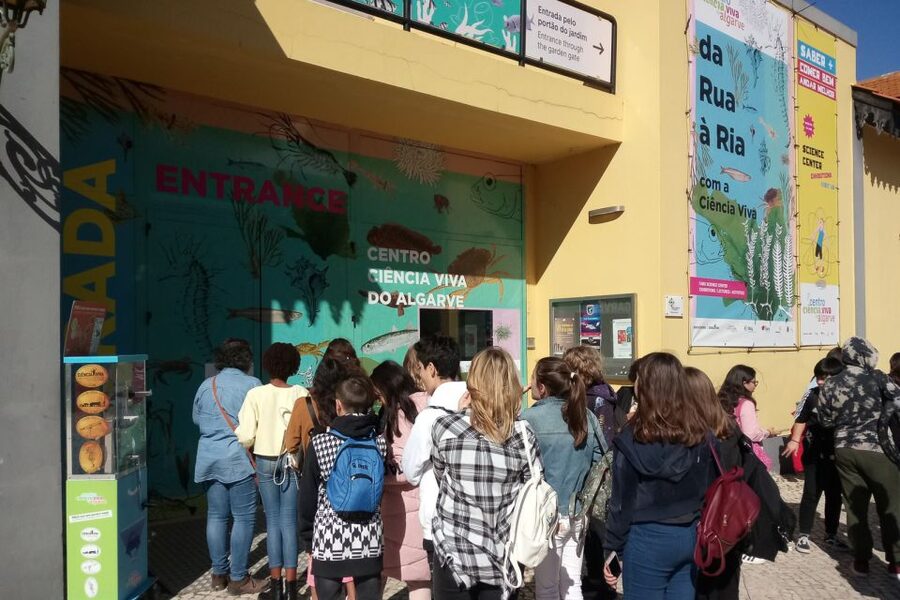
You must enter the Algarve Life Science Centre itself and show your ticket at the reception counter. The Centre is in a large yellow building, with the entrance in the middle, directly in front of the Castle walls.
That location makes the museum easy to pair with other sightseeing in the area. You do not need to arrange a separate excursion or transportation package. This is an individual admission ticket, so you can fit it around your day instead of following a fixed group schedule.
The ticket is valid for one day. Starting times depend on availability, so check the available time before booking. Since the museum is compact, you can use it as a planned stop between outdoor activities, particularly during the hottest part of the day.
Two aquariums, two very different settings
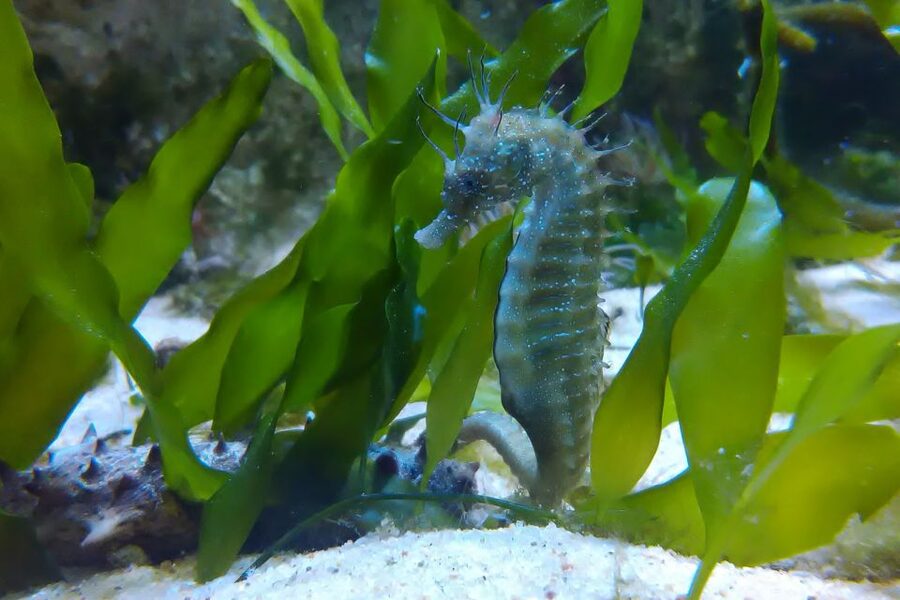
The aquarium section gives you the clearest sense of the museum’s range. One aquarium is tropical, offering a look at a warmer marine environment. The second represents the subtidal environment of the Ria Formosa coastal lagoon.
The contrast is useful because it keeps the displays from becoming a general collection of fish tanks. You can compare a tropical setting with an ecosystem tied to the Algarve. The Ria Formosa aquarium brings the museum’s central subject close to home.
The local tank includes seahorses from the Ria Formosa. These are sensitive animals, and their presence adds a quiet, delicate moment to the visit. They are not the sort of creatures you simply rush past. I would take time to watch them and then look at the nearby information about their life cycle and connection to the lagoon.
The aquarium area is also likely to be the main draw for younger children. A family review described the aquarium and the chance to touch certain aquatic animals as the favorite part of the museum. That makes sense: looking at a fish through glass is one thing, but a supervised hands-on encounter gives children a clearer idea of what lives in shallow coastal waters.
The touch pool and the Ria Formosa tidal zone
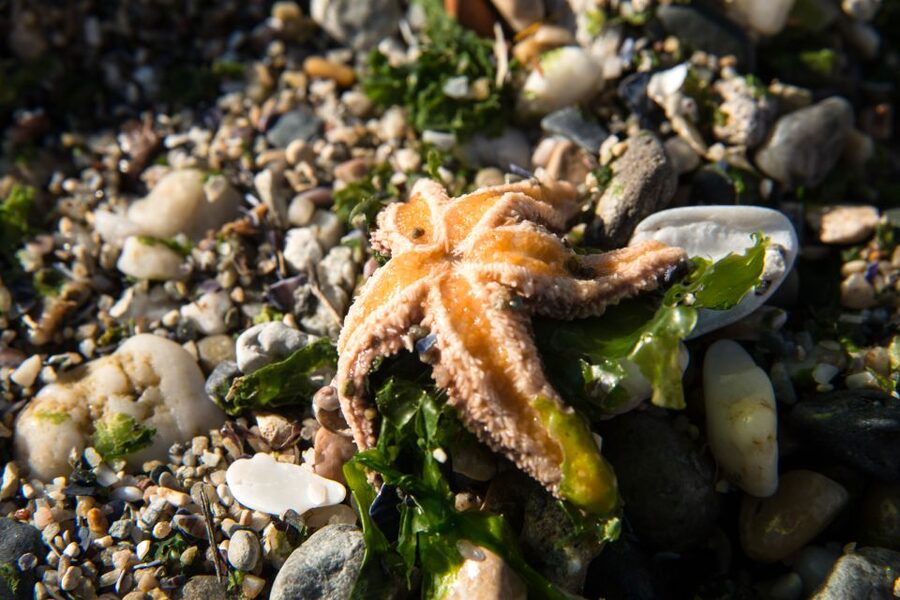
The touch pool focuses on animals commonly found in the Ria Formosa intertidal zone. This is the part of the shoreline affected by the rise and fall of the tide, where animals must cope with changing water levels and exposure.
The pool is not just an activity for its own sake. It helps explain how animals fit into the ecosystem. You can learn about their life cycles and how they relate to the surrounding environment, then connect that information to what you have seen in the aquarium.
I like this approach because it keeps the experience respectful and educational. The animals are not presented as isolated curiosities. They are part of a working coastal system, and the displays help you understand that relationship.
If you visit with children, this is the area to allow extra time for. The touch pool may be the busiest part of the museum, and children often want a second look after they have finished the other exhibits. You should also expect the experience to be more interesting for children who enjoy doing rather than simply reading.
Same corner of the country, a different pace:
- Albufeira: Benagil Caves & Dolphin Watching Speed Boat Tour
★ 4.6 · 6,316 reviews - Albufeira: Dolphin Watching and Benagil Cave
★ 4.7 · 5,658 reviews - Albufeira: Coastline and Benagil Caves Tour by Catamaran
★ 4.7 · 4,077 reviews - Portimão: Benagil Caves & Dolphins Watching with Biologist
★ 4.8 · 3,795 reviews
Earthquakes, tornadoes, and other physical surprises
After the marine exhibits, the museum shifts to physics, geology, food, meteorology, and volcanoes. This change keeps the visit moving. You are not spending the entire time in front of aquariums.
The earthquake exhibit lets you experience the sensation of shaking. It turns an abstract geological event into something physical and memorable. You may understand the basic idea of tectonic movement from a panel, but feeling the floor move gives children a much sharper impression.
You can also see a live tornado. The wording points to a working display rather than a film or static model, which gives the weather section an immediate appeal. I would expect this to be another strong stop for younger visitors, particularly those fascinated by storms.
The museum also lets you find out your weight on other planets. This is a simple idea, but it makes gravity easy to understand. You can compare how your weight would change elsewhere without needing a science lesson first.
The volcano section adds another natural force to the mix. With geology, weather, and space-related gravity all in the same area, the museum gives you several ways to think about how the natural world behaves.
The pizza calorie challenge
The food display asks you to guess how many calories are in a pizza. It sounds playful, but it serves a useful purpose. Food labels and calorie totals can be hard to judge in real life, and pizza is an easy example because most people have a rough idea of its size and ingredients.
I like exhibits that use ordinary objects to explain science. A pizza question is more inviting than a technical nutrition chart, and the guessing element gives children a reason to stop and think.
This section also helps break up the natural science material. You move from animals and weather to something you recognize from daily life. The result is a visit that feels varied, even though the museum itself is not large.
A 3-D printer and hands-on learning
The museum includes a 3-D printer, adding a modern technology element to the visit. The available information does not specify exactly what you will print or how long a demonstration lasts, so I would treat it as one of several displays rather than a guaranteed workshop.
Its value is in showing that science is not only about observing nature. It also involves designing, building, and producing objects. For children, the printer can provide a useful link between a screen-based idea and something physical.
The centre’s interactive modules follow the same principle. You are encouraged to test, touch, compare, and make guesses. That makes the museum a good choice for a family afternoon, especially if you want an educational stop that does not feel like a formal classroom.
How long should you plan to stay?
The ticket is valid for one day, but that does not mean you need to spend an entire day inside. The museum is described as not very large, and I would plan for a few hours, depending on how long you spend at the aquariums and interactive stations.
A quick visit could cover the main displays at a brisk pace. A family with children may stay longer because of the touch pool, earthquake exhibit, tornado, and planet-weight activity. Children often return to the displays they like best, so allow extra time if you want the visit to feel relaxed.
The compact size is both an advantage and a limitation. You can see the main attractions without museum fatigue, and you can combine the visit with other plans. On the other hand, anyone expecting a huge collection or a full-day science adventure may find the experience short.
The air-conditioning adds practical value during the Algarve’s hotter periods. It gives you a cool indoor pause without asking you to give up local content.
Is the $5 price good value?
At $5 per person, this is one of the easier Algarve activities to justify. You get entrance to the museum, both aquariums, the Ria Formosa exhibits, the touch pool, and the interactive science displays without paying for a guided excursion or a long transport day.
I see the strongest value for families. Two adults and children can spend several useful hours learning about local wildlife and trying the experiments for a modest total cost. The price also lowers the risk of disappointment: if your family moves quickly through the museum, you have not spent a large part of the day’s budget.
The value is more limited if you want a major aquarium, a large collection, or a detailed scientific institution. This is a small centre with a clear educational aim. Its appeal comes from interaction and local relevance, not scale.
The 4.4 rating from 99 reviews fits that picture. The most praised features are the educational content, the helpful staff, the aquarium, and the chance to touch aquatic animals. The strongest response comes from families with children, including one family whose 10-year-old triplets were especially enthusiastic.
Who will enjoy this most?
I would recommend the museum first to families with children, particularly children who like animals, weather, space, or experiments. The touch pool gives the visit a memorable centrepiece, while the earthquake and tornado displays add movement and humor.
It also suits adults who want a short introduction to the Ria Formosa. You will not receive a full field study of the lagoon, but you will get a clear look at its animals and the basic relationships within the ecosystem.
The museum is a sensible choice on a very hot day because it is air-conditioned. It can also work as a low-cost indoor stop when you want something more active than sitting in a café.
I would be less likely to recommend it to someone seeking a large aquarium or an extensive museum collection. The displays are focused and approachable, but the visit may feel brief if you prefer long, detailed exhibitions.
The centre is wheelchair accessible, which makes it a practical option for visitors who need an accessible indoor attraction. Pets are not allowed, although assistance dogs are permitted.
Planning your visit without overcomplicating it
You do not need to book a tour group or plan a complicated route. Go to the big yellow building, use the central entrance facing the Castle walls, and present your ticket at reception.
Since the activity is an individual ticket, you can keep your day flexible. The reserve-now-and-pay-later option may help if your Algarve schedule is still changing, and free cancellation is available up to 24 hours in advance for a full refund.
The ticket is for one day, but you should check the available starting times before making plans. The supplied information does not give fixed opening hours, so I would not assume you can arrive at any time without checking.
Alcohol and drugs are not allowed, and pets must stay outside unless they are assistance dogs. Those rules are simple, but they matter if you are planning a family day with a dog.
Should you book the Algarve Life Sciences Centre?
Book it if you want an affordable, family-friendly stop with real local content. The Ria Formosa aquarium, sensitive seahorses, and touch pool give the visit a strong Algarve connection, while the earthquake, tornado, planet-weight, volcano, food, and 3-D printer displays keep the experience lively.
I would especially choose it for children between outdoor activities, or for a hot afternoon when you want air-conditioning and something educational. At $5 per person, the risk is low, and the chance to interact with aquatic animals gives it more value than a simple collection of displays.
Skip it if you expect a huge aquarium or a full-day museum. This is a compact centre, but it uses its space well. For a short, hands-on look at the Ria Formosa and basic science, it is an easy recommendation.
FAQ
Where do I enter the Algarve Life Sciences Centre?
Enter the large yellow building with the entrance in the middle, in front of the Castle walls. Show your ticket at the reception counter.
How much does the individual ticket cost?
The listed price is $5 per person.
How long is the ticket valid?
The ticket is valid for one day.
Is the centre wheelchair accessible?
Yes, the Algarve Life Sciences Centre is wheelchair accessible.
Are pets allowed inside?
Pets are not allowed. Assistance dogs are allowed.
Can I cancel the booking for a refund?
Yes. You can cancel up to 24 hours in advance for a full refund.
Recently added in Algarve
- Kayak Algarve tour BENAGIL by Diamond tours★ 4.0 · 45 reviews
- Dolphins & Benagil Caves with Biologist guide★ 5.0 · 130 reviews
- Kayak Experience with a Local★ 5.0 · 51 reviews
- Benagil, Marinha & Albandeira – Kayak w/ Local Guide★ 5.0 · 87 reviews
- Benagil: Guided tour through the caves and Praia da Marinha★ 5.0 · 83 reviews
- Ride through Paradise: Faro Island Electric 2×2 bike Tour★ 5.0 · 53 reviews
- Sagres: Praia Da Ingrina Caves Guided Kayaking Tour★ 4.5 · 50 reviews
- Welcome to Carrapateira Horse Riding Tour★ 5.0 · 124 reviews
Tickets, compared.



Quinta da Regaleira Skip-the-Ticket-Line Entry & Audioguide
Read our review →
Luz Stadium Tour & SL Benfica Museum Ticket w/Scarf
Read our review →
Browse the lists this tour appears in