
REVIEW · AZORES TOURS
ARCHEOLOGY TOUR (Full Day Private Tour)
Terceira keeps its oldest stories underfoot. I like the access to obscure sites such as the Grota do Medo megalithic complex and the Roman-style columbarium, and I like that guide Juca personally discovered one of the places you visit. The main consideration is that some interpretations are debated, and several sites require short hikes over uneven, muddy ground.
This is a private, full-day outing from Angra do Heroísmo, with pickup at your hotel, rental, or airport. You get a private air-conditioned minivan, a professional guide, and a photographer guide in one package. That makes the $242.17 per-person price easier to justify for couples, families, or small groups, though food, drinks, taxes, and admission to Algar do Carvão and Gruta do Natal are not included.
The tour suits curious visitors who want more than Terceira’s standard viewpoints and churches. It is also a good fit for families, since the guide can adjust the pace and route, but you should be ready for woods, slopes, walls, and modest physical effort.
In This Review
- Key points to know before you book
- Why Terceira’s pre-colonial questions make this tour unusual
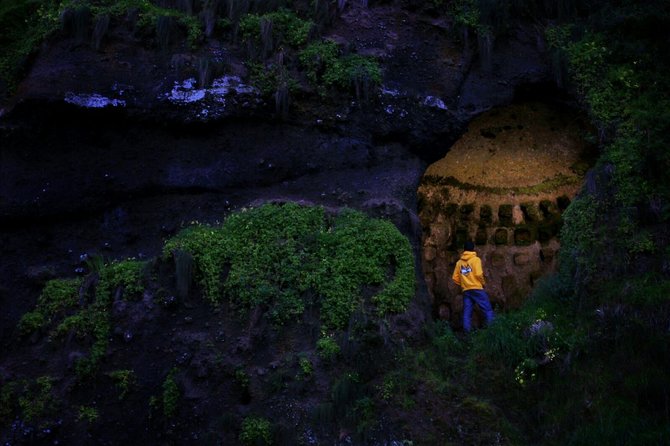
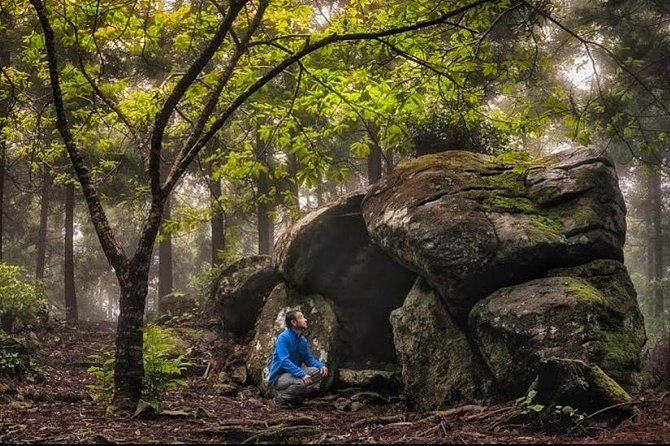
- Grota do Medo: stonework, shelters, and open questions
- The columbarium found by the guide
- Passagem das Bestas and the Relheiras do Cabrito
- A private day, not a fixed group script
- Juca’s guiding style and the value of a photographer
- Transport, timing, and what to bring
- Is $242.17 per person a fair price?
- Who should book this Terceira archaeology tour?
- Booking details worth checking first
- Should you book it?
- FAQ
- How long does the archaeology tour last?
- Is hotel pickup included?
- Can I be picked up at the airport?
- Is this a private tour?
- Is food included?
- Are Algar do Carvão and Gruta do Natal included?
- Is the tour suitable for children?
Key points to know before you book
- Juca brings personal field experience: The guide discovered the columbarium site and discusses both evidence and uncertainty rather than pretending every theory is settled.
- The Grota do Medo complex is the main event: Expect stone structures, carvings, caves, and questions about who used them before Portuguese settlement.
- Relheiras do Cabrito add a different puzzle: The Passagem das Bestas features old wheel ruts cut into stone, with their purpose and date open to interpretation.
- Private transport saves the day: Hotel, local accommodation, and airport pickup are available, so you do not need to arrange a car for remote stops.
- The walking is short but real: Mud, steep inclines, woodland paths, and some wall climbing can appear along the route.
- Photography is part of the experience: Juca takes pictures during the day, a useful extra for anyone who wants more than phone snapshots.
Why Terceira’s pre-colonial questions make this tour unusual
Most first-time visits to Terceira focus on Angra do Heroísmo, volcanic caves, viewpoints, and food. Those are all worthwhile. This tour takes a less settled path, asking what may have happened on the island before the Portuguese arrived.
That question matters because the evidence is not presented as a neat, finished story. Juca is described as an archaeologist and geologist who works with a university, and he has brought outside specialists to examine material from the columbarium site. He points out what he can support, then tells you where the evidence becomes uncertain.
I find that approach far more useful than a guide who gives every rock a dramatic date. You can look at carvings, shelters, caves, water-gathering features, or ceremonial spaces and decide what seems convincing to you. The tour connects these places to wider questions about the Mediterranean and northern and central Europe, but it does not turn speculation into established fact.
That distinction is important. One negative experience centered on the concern that the sites were not sufficiently dated or studied. You should book this day if you enjoy archaeological puzzles and incomplete answers, not if you need every site to have a universally accepted label and publication behind it.
A few more Azores options side by side
- From Ponta Delgada: Whale and Dolphin Watching Trip
★ 4.7 · 4,109 reviews - Azores Whale Watching & Islet Boat Tour
★ 4.6 · 2,146 reviews - São Miguel West: Full-Day Van Tour with Lunch
★ 4.9 · 1,948 reviews
Grota do Medo: stonework, shelters, and open questions
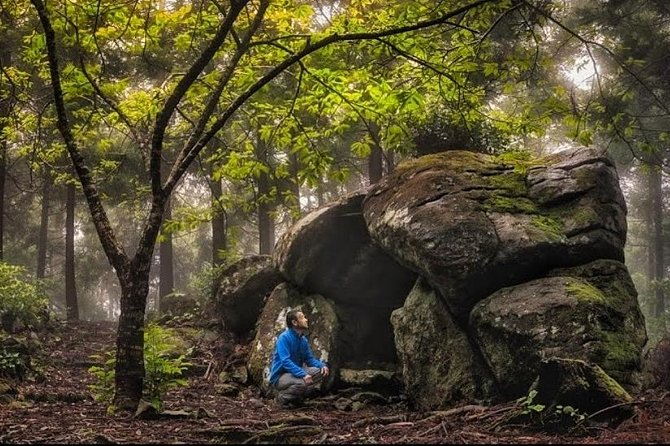
The Complexo Megalítico da Grota do Medo is the core stop. The name suggests a megalithic setting, but the experience is not a quick walk up to one famous monument with a plaque and a tidy explanation.
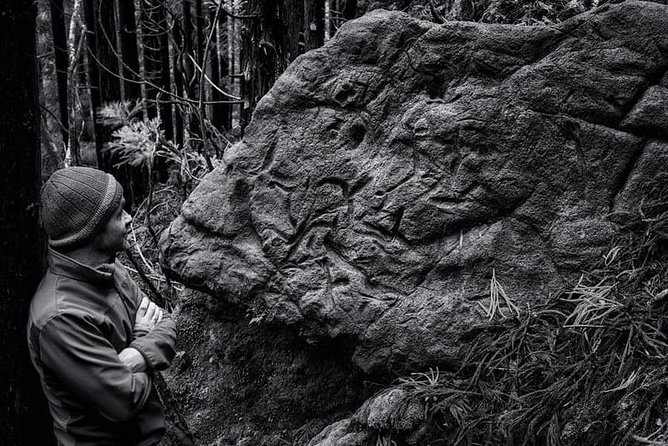
You may encounter stone shelters, carved surfaces, caves, ritual-looking arrangements, and signs of water collection. The appeal is partly visual, but the real value comes from having someone explain how the shapes, placement, and construction methods might fit together.
The site also requires you to pay attention to your footing. Small hikes lead away from regular tourist paths, and one account describes steep, muddy inclines and climbing over walls. That makes sturdy shoes and clothing suited to changing weather more important than stylish sightseeing clothes.
Families can manage the outing. Children aged 15 and 7 kept pace on one visit, and a family with children aged 10, 7, and 1 found that the guide adjusted the day around the youngest child. Still, the one-year-old example should not lead you to assume every part is stroller-friendly. The route can change with your group’s abilities.
What I like most here is the chance to see places without the usual tourist infrastructure. There may be no large interpretive signs telling you exactly what to think. That is exciting for some people and frustrating for others.
The columbarium found by the guide
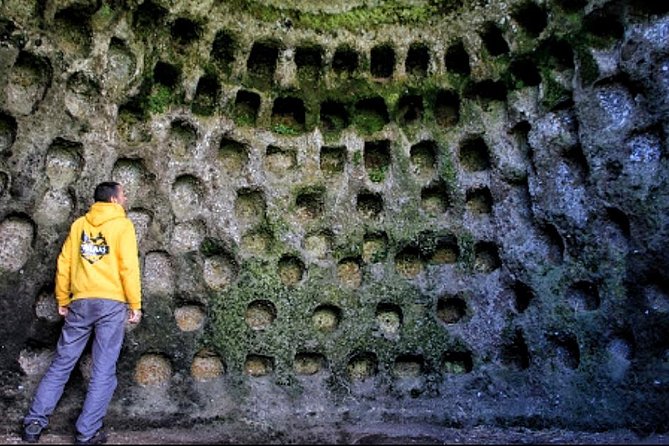
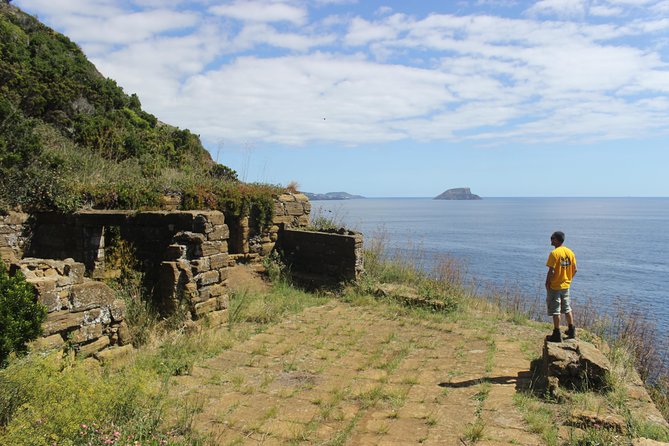
The columbarium is one of the most distinctive parts of the day. A columbarium is a structure associated with the placement of cremated remains, and this site has been described as looking like an ancient place for ashes.
Juca personally discovered it, which gives the discussion a direct, field-based quality. He has also brought specialists into the investigation and used soil samples as part of the examination. That does not make every conclusion final, but it does give you a better sense of how archaeological claims are tested.
This is where the tour’s careful tone matters. The guide reportedly separates what he knows from what he suspects. He can show you physical details and explain why they may indicate human activity before Portuguese settlement, while still acknowledging that the full picture needs more research.
If you are expecting a formal museum visit, adjust your expectations. The value is in seeing the place in situ, then discussing its possible use on the spot. There is no guarantee that the academic debate has been resolved, and that uncertainty is part of the experience.
For me, this is the sort of stop that makes a private guide worthwhile. Without local access and background, you might walk past the structure and see only weathered stone. With context, you have a question to examine.
Passagem das Bestas and the Relheiras do Cabrito
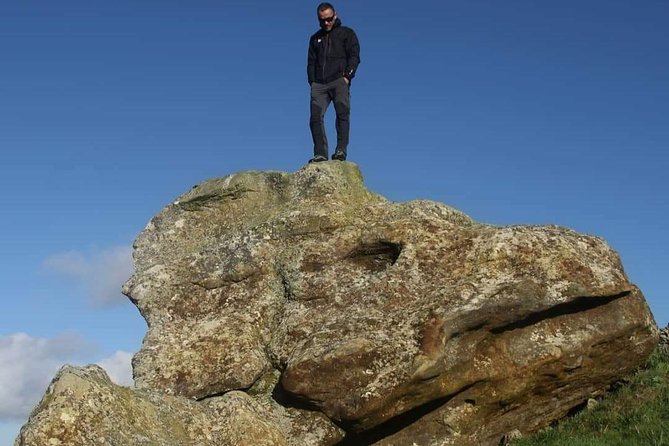
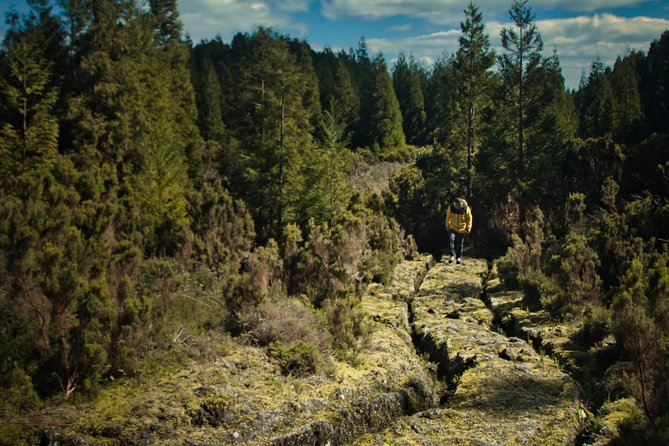
The third named archaeological stop is Passagem das Bestas, also called Relheiras do Cabrito. The feature is associated with old wheel ruts, or tracks cut into the stone by repeated passage.
These ruts raise a basic but interesting question: who made them, when, and for what kind of movement? They may look simple at first, yet their shape and location invite a closer look at transport, route use, and the ways people altered volcanic ground.
This stop also shows why the tour is not a standard history excursion. You are not simply collecting dates. You are reading marks in rock and listening to competing explanations. If you enjoy asking how do we know that?, you will probably get a lot from this part of the day.
The itinerary information gives only about 20 minutes for the listed stop, so do not assume you will spend hours at each feature. The full outing lasts roughly six to nine hours, and the guide may shape the timing around weather, walking ability, interests, and other points around Terceira.
Same corner of the country, a different pace:
- São Miguel West Full Day Tour with Setes Cidades Including Lunch
★ 5.0 · 1,391 reviews - São Miguel East Van Tour with Lunch: Furnas & Nordeste
★ 5.0 · 1,210 reviews - São Miguel East: Full-Day Van Tour with Lunch
★ 4.9 · 1,124 reviews - Azores Whale Watching & Islet Boat Tour
★ 4.5 · 1,059 reviews
A private day, not a fixed group script
The private format is a major advantage. Only your group participates, and the route can be adapted to your pace and interests. That matters when one person wants more archaeological detail, another wants photographs, or someone in the group cannot manage every incline.
A full-day private tour also gives you room for useful side stops. Previous outings have included scenic viewpoints such as Serra do Cume, Biscoitos, Furnas do Enxofre, and Algar do Carvão. However, do not assume every one of these is guaranteed on every booking.
The supplied tour details specifically say that admission to Algar do Carvão and Gruta do Natal is not included. That means you should confirm the day’s plan and entrance costs before setting your expectations. Some past itineraries included Algar do Carvão as an added stop, while the stated inclusions exclude its admission fee.
This is a good example of why a private day can be both flexible and slightly vague. The flexibility lets the guide respond to conditions and your interests. The tradeoff is that you may not receive a rigid list of every stop until the route is confirmed.
Juca’s guiding style and the value of a photographer
The guide is the heart of this experience. Juca is repeatedly praised for his storytelling, patience, friendliness, timing, and local recommendations. His style has been compared to watching a documentary while being able to interrupt the director with questions.
That is a useful description. Archaeology can become dry when you are given dates without a story, or sensational when a guide claims too much. Juca’s strength appears to be the middle ground: he makes the sites engaging while admitting when an idea remains uncertain.
He also works as a photographer guide. Expect him to take photos during the day, and possibly to offer informal photography advice. One solo participant who could not manage every site received an adjusted afternoon with scenic places and an impromptu photo session in the woods.
The photography is not the reason to book the tour, but it adds real value. If you are traveling as a couple or family, you may return home with pictures of everyone together rather than another collection of one person standing behind the camera.
Do keep your priorities clear. This is an archaeology day with photography included, not a dedicated professional photo shoot with a promised number of edited images.
Transport, timing, and what to bring
The standard start is 9:00 a.m. Pickup is offered from hotels, local accommodation, and the airport. For a rental or private address, you need to provide the location through a Google link. Airport pickup requires your flight number and arrival time.
The air-conditioned minivan is useful because the sites are spread around Terceira and some are not places you would easily find by yourself. You also avoid the stress of navigating unfamiliar roads, locating rough access points, and deciding which unmarked track is the right one.
The day lasts approximately six to nine hours. That is a broad range, but it makes sense for a private route with small hikes and possible adjustments. Plan for a full day rather than a quick morning activity.
The tour runs in all weather. Bring clothing that works in rain and wind, plus shoes with good grip. The walking is described as moderate, not extreme, but steep or muddy sections can change the feel of the day quickly.
Children must be accompanied by an adult. The experience is not advertised as requiring athletic ability, but a moderate fitness level is expected. Ask about route adjustments when booking if anyone in your group has trouble with slopes, uneven surfaces, or wall crossings.
Food and drinks are not included. One full-day outing included a memorable lunch of alcatra at Restaurant Caneta, but you should not treat that as part of the formal package. Confirm how lunch will work, and budget separately.
Is $242.17 per person a fair price?
At $242.17 per person, this is not a bargain-priced sightseeing loop. The value depends heavily on the size of your group and how much you care about specialist guiding.
For one person, the cost is harder to swallow, especially since food, taxes, and certain cave admissions are extra. For two or more people, the private transport, hotel pickup, flexible route, guide, and photography make the price more defensible. Group discounts may also be available.
You are paying for access, interpretation, and time saved. A standard island tour may show you more famous attractions, but it is unlikely to take you to obscure archaeological features or explain a site discovered by the guide himself.
The tour is also good value if you planned to rent a car solely to find lesser-known places. You avoid navigation and can use the day to ask questions rather than study directions. On the other hand, if your main goal is Algar do Carvão, Gruta do Natal, and scenic viewpoints, compare this price with a general Terceira island tour and check admission costs.
The experience has a 4.8 rating from 51 reviews, with 96 percent recommending it. Those figures suggest strong satisfaction, but they do not erase the central caveat: archaeology here includes active debate.
Who should book this Terceira archaeology tour?
I would recommend it to:
- People fascinated by prehistoric or pre-colonial questions
- Visitors who prefer small, private outings to bus tours
- Families whose children enjoy stories, clues, and unusual places
- Couples who want a full day with private photos
- Repeat visitors looking for a side of Terceira beyond the main sights
- Anyone comfortable with theories that may not yet be fully proven
I would be more cautious if you need paved paths, formal museum displays, or a settled academic account at every stop. The route can include mud, slopes, woods, and off-path walking, and the age or purpose of some features is contested.
The tour also works best when you ask questions. You do not need an archaeology degree. You simply need curiosity and a willingness to look closely at rocks, cuts, shelters, and carvings.
Booking details worth checking first
Confirmation is sent within 48 hours of booking, subject to availability. Free cancellation is allowed up to 24 hours before the local start time, but cancellations or changes inside that window are not refunded or accepted.
Before paying, confirm your pickup address, the likely route, lunch arrangements, and whether any cave admissions are planned. If your group includes young children or anyone with limited mobility, explain that in advance so the itinerary can be shaped sensibly.
The tour is offered in English. Since the guide’s explanations are central to the experience, make sure everyone in your group is comfortable following a detailed conversation in English.
Should you book it?
Book this tour if you want Terceira’s less familiar side and enjoy evidence, questions, and a good story. Juca’s field connection, flexible private format, and photography make it more personal than a standard island circuit.
Skip it if you want only officially dated monuments, easy paths, or a predictable schedule of famous attractions. For the right person, this is one of Terceira’s most memorable days. For the wrong person, a muddy slope leading to a debated stone feature may feel like a lot of money for not enough certainty.
FAQ
How long does the archaeology tour last?
The tour lasts approximately six to nine hours, with a scheduled start at 9:00 a.m.
Is hotel pickup included?
Yes. Pickup and drop-off are included for hotels and local accommodation. You need to provide a Google link for a local address.
Can I be picked up at the airport?
Yes. Airport pickup is offered, but you must provide your flight number and arrival time.
Is this a private tour?
Yes. Only your group participates, and transportation is provided in a private, air-conditioned minivan.
Is food included?
No. Food and drinks are not included. Lunch may be arranged or suggested during the day, but it is not part of the stated inclusions.
Are Algar do Carvão and Gruta do Natal included?
No. Admission to Algar do Carvão and Gruta do Natal is specifically excluded. Confirm with the provider if either site is planned for your private itinerary.
Is the tour suitable for children?
Children must be accompanied by an adult. Families with children aged 1, 7, 10, and 15 have taken the tour, but you should expect small hikes and a moderate fitness requirement. Dress for all weather and uneven ground.
Recently added in Azores
- Full Day Tour of Faial Island★ 5.0 · 39 reviews
- Faial Island: Full Day Tour – Nature and Local Culture★ 5.0 · 213 reviews
- Full-Day Private Tour of Faial★ 5.0 · 40 reviews
- Faial Island: Half Day Tour★ 5.0 · 99 reviews
- UNDERGROUNDTOUR (Full Day Private Tour)★ 5.0 · 52 reviews
- Wines and Moonshines of Terceira★ 5.0 · 55 reviews
- Terceira Island: Full Day Tour★ 5.0 · 63 reviews
- PHOTO TOUR (Full Day Private Tour- Sunrise to sunset)★ 5.0 · 68 reviews
Azores Tours, compared.
São Miguel West: Full-Day Van Tour with Lunch
Read our review →
São Miguel West Full Day Tour with Setes Cidades Including Lunch
Read our review →
São Miguel East Van Tour with Lunch: Furnas & Nordeste
Read our review →
São Miguel East: Full-Day Van Tour with Lunch
Read our review →
São Miguel Azores: Half-Day Whale Watching Trip
Read our review →Browse the lists this tour appears in