
REVIEW · FATIMA TOURS
Tomar: Convent of Christ and Templar Castle Tour Ticket
History comes alive on Tomar’s hilltop. This visit combines the Templar Castle with the Convent of Christ, giving you seven centuries of Portuguese architecture in one powerful complex. I especially like the rare round Charola temple and the chance to compare five cloisters, from Gothic to Mannerist. The $17 price is fair for entry to such an important monument.
I also like that the experience is valid for one day, so you do not have to rush through every chapel, corridor, and courtyard. The main point to check is the format: this is clearly sold as an entry ticket, but some descriptions and comments suggest that a guide may be involved. Mark and Anna received warm praise for their explanations, yet you should confirm whether your selected option includes guiding or only admission.
In This Review
- Key things to know before you go
- Why Tomar’s Convent of Christ deserves your time
- Starting at the Templar Castle
- The Charola, a round temple unlike most Portuguese churches
- Moving into the Order of Christ convent
- Five cloisters, five different moods
- The Pegões Aqueduct and the final stretch
- Ticket, guided visit, or something in between?
- What $17 gets you
- Who will enjoy this experience most?
- Practical advice for a smoother visit
- Should you book the Tomar Convent of Christ ticket?
- FAQ
- Where does the experience start?
- Where does the activity end?
- How long is the ticket valid?
- What is included in the price?
- Are meals and drinks included?
- Is the Convent of Christ wheelchair accessible?
- Can I take photographs inside?
- What should I bring?
- Do I need to arrive early?
Key things to know before you go
- The Charola is the visit’s great surprise: This unusual round temple was inspired by Jerusalem’s Holy Sepulchre.
- Five cloisters show changing styles: You move from Gothic forms to Renaissance and Mannerist work within the same convent.
- The Chapter Window rewards a close look: Its carved details connect the building to Portugal’s age of maritime expansion.
- The castle comes first in the story: The medieval fortifications explain why Tomar mattered to the Templars.
- The Pegões Aqueduct adds an engineering highlight: Its scale gives the visit a strong finish, though the ticket details list only convent entry.
- Wear practical shoes: The site includes extensive walking, outdoor sections, stone surfaces, and open areas exposed to sun.
Why Tomar’s Convent of Christ deserves your time
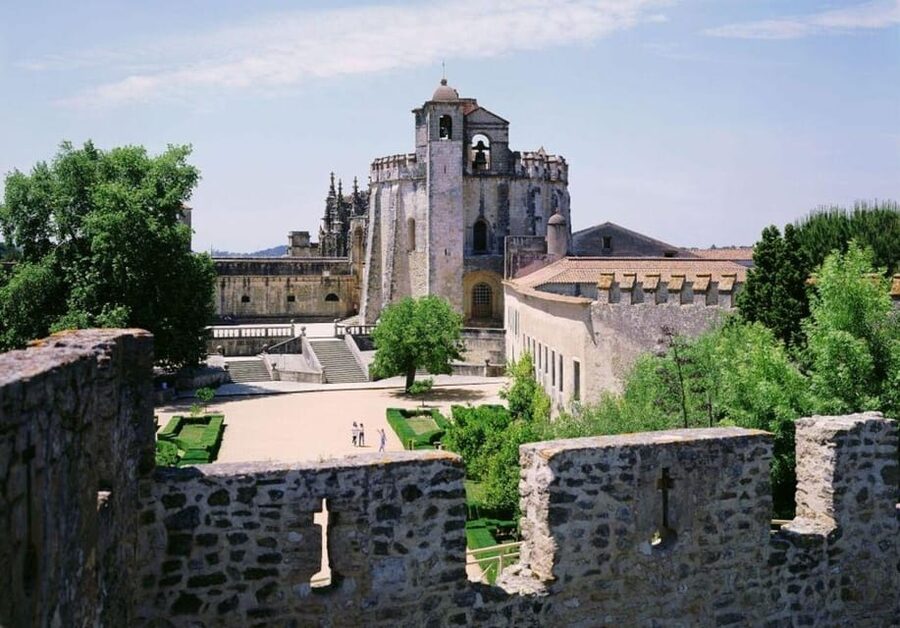
The Convent of Christ is not a single church with a few side rooms. It is a large historic complex where military architecture, religious life, royal ambition, and Portuguese design meet. UNESCO added it to the World Heritage List in 1983, and the designation makes sense once you see how many periods are packed into the site.
I find the place most rewarding when you treat it as a sequence rather than one grand photo stop. You begin with a fortress built by the Templars in 1160, then move into the later convent of the Order of Christ. The building changes mood as you go. Thick defensive walls give way to carved windows, cloisters, chapels, and carefully planned courtyards.
That progression is the real value of the visit. For $17, you are not simply paying to enter one room. You are gaining access to a major Portuguese monument with enough detail to fill several hours at a comfortable pace, though the exact amount of time you spend is up to you.
The site is also useful for visitors who want architecture without having to choose between military and religious monuments. You get both here, along with a clear connection to Portugal’s maritime past.
A few more Portugal options side by side
- From Lisbon: Fatima, Batalha, Nazare, Obidos – Small Group
★ 4.8 · 2,031 reviews - Batalha Monastery Entrance Ticket
★ 4.3 · 140 reviews - Lisbon: Fátima & The Shepherd Children Home Self-Guided Tour
★ 4.4 · 101 reviews
Starting at the Templar Castle
Your visit begins at the main entrance of the Convent of Christ. Arrive 15 minutes early for check-in, even though the ticket is valid for one day. That small buffer matters at a large monument, where you will want to begin calmly rather than arrive already trying to catch up.
The Templar Castle was founded in 1160, when the Knights Templar were an important military and religious force in Portugal. The fortifications tell you to think about defense first. This was not designed as a delicate palace. Its walls and elevated position point to a period when control of territory required strong stone defenses.
I like beginning here because the castle gives the rest of the visit a clear foundation. Once you have seen the military side, the later convent feels less like an unrelated collection of fine rooms. You can follow the site’s transformation from a fortified religious base into a grander complex shaped by later rulers and church leaders.
Expect plenty of stone underfoot and outdoor walking. Comfortable shoes are a must. A hat and sunscreen are also sensible because the visit includes exposed areas, and there is no reason to turn a fine historic outing into a contest with the midday sun.
The Charola, a round temple unlike most Portuguese churches
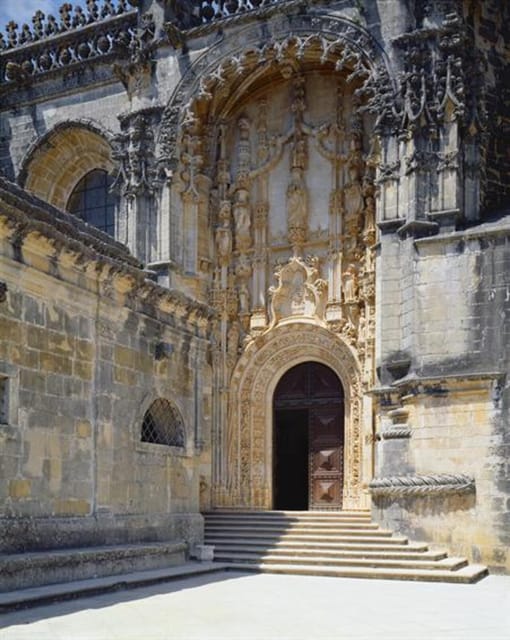
The Charola is one of the most memorable parts of the complex. Its round shape is unusual, and its design was inspired by the Holy Sepulchre in Jerusalem. That circular plan immediately separates it from the long rectangular churches you may have seen elsewhere in Portugal.
The room’s shape is not a minor architectural quirk. It reflects the Templars’ connection to the Holy Land and their interest in creating a sacred space linked to Jerusalem. Even without a guide, the building communicates something through its form. You understand that this was meant to be a special center within the castle.
Give yourself time here before moving on. Look upward, study the arrangement of the space, and notice how different it feels from the later Manueline areas. A guided explanation can make the Charola even more meaningful, but the round plan remains easy to appreciate on your own.
This is also one place where the possible difference between a guided tour and a ticket-only visit matters. Mark was praised for putting the history together clearly and covering the main points before leaving visitors at the convent. Anna was also praised for explaining difficult ideas in an interesting way. If your booking includes one of these guides or another guide, the Charola is likely to benefit most from that added context.
Moving into the Order of Christ convent
After the castle and Charola, the setting shifts toward the Renaissance convent of the Order of Christ. The change is striking. Military strength gives way to ceremonial design, religious organization, and intricate decoration.
The Manueline nave is one of the key interiors to see. Manueline architecture is strongly associated with Portugal’s period of overseas expansion, and it often uses elaborate carved forms. Here, the nave helps show how religious buildings could also express national confidence and royal wealth.
The High Choir adds another important stop. From its elevated position, you get a different sense of the church’s scale and planning. I recommend resisting the urge to rush from one famous feature to the next. The value of the convent is in the way these spaces connect, not just in a checklist of grand names.
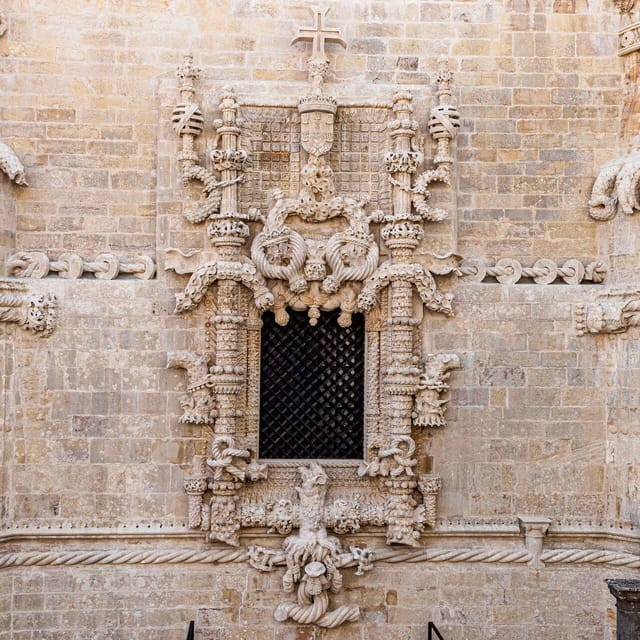
The Chapter Window deserves special attention. Its carved detail is linked to Portugal’s maritime expansion, making it more than a decorative feature. It connects the convent to the wider story of voyages, royal power, religious orders, and the wealth that reached Portugal during the great age of navigation.
You do not need to be an architecture expert to appreciate it. Just compare the window’s detail with the fortress walls you saw earlier. The contrast is the point: Tomar’s complex records changing priorities in stone.
Same corner of the country, a different pace:
- The Unvanquished Tour in Porto City Center
★ 5.0 · 26,497 reviews - Lisbon City Center Tour – The Unmissable Lisbon
★ 5.0 · 22,234 reviews - Lisbon: Sintra, Pena, Regaleira, Cabo da Roca & Cascais
★ 4.7 · 19,656 reviews - From Porto: Douro Valley w/ Boat Tour, Wine Tasting & Lunch
★ 4.7 · 19,061 reviews
Five cloisters, five different moods
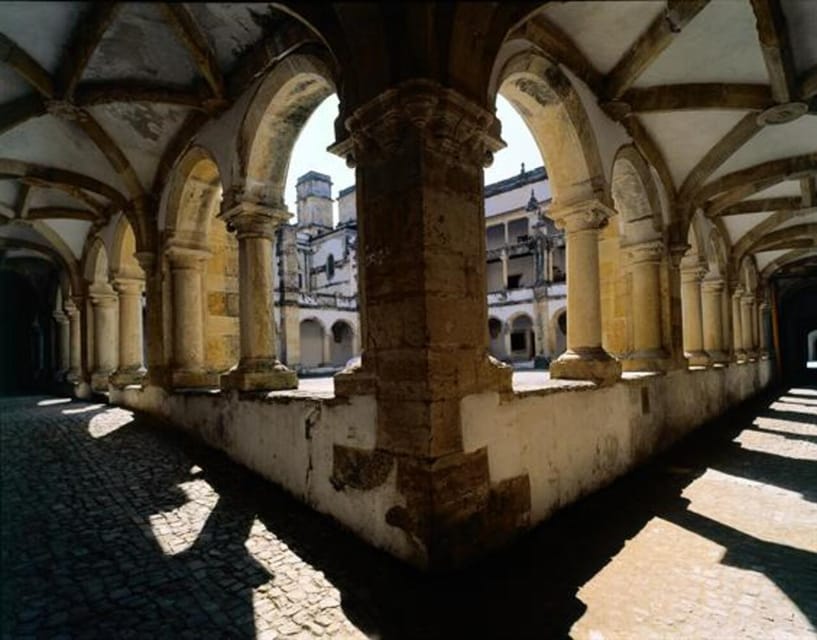
The convent’s five cloisters are a major reason to allow enough time for this visit. They are not identical courtyards repeated five times. Each reflects a different stage or style, ranging from Gothic to Mannerist.
A cloister can look simple at first glance. Walk through it slowly and the details begin to separate themselves: arches, proportions, columns, carved decoration, and the way light enters the open center. Since the five cloisters belong to different design traditions, they give you a compact lesson in architectural change.
I like this part of the complex because it rewards patience rather than specialist knowledge. You can compare one courtyard with the next and see that the convent was built and reshaped over time. The variety also keeps the visit from feeling like a long procession of similar rooms.
The five cloisters are especially useful for anyone interested in photography, but remember that flash photography is not allowed. Natural light and careful observation are the better approach here. If you are using a phone or camera, be considerate in enclosed spaces and follow the site rules.
The cloisters also provide visual pauses between more formal interiors. After the intensity of the Charola or the detail of the Chapter Window, an open courtyard gives you room to reset and decide where to focus next.
The Pegões Aqueduct and the final stretch
The Pegões Aqueduct is described as the final major feature of the experience. Built during the period of Spanish King Filipe, it is an impressive piece of engineering and a useful reminder that the Convent of Christ was not only about worship and decoration.
Aqueducts are practical structures, but their scale can be dramatic. The Pegões Aqueduct shows the work needed to supply water to a major religious complex. It adds an engineering angle to a visit otherwise dominated by castles, chapels, windows, and cloisters.
There is one point to clarify before you book. The activity description presents the aqueduct as part of the route, while the included section specifies entry to the Convent of Christ only. It does not spell out a separate aqueduct entrance, transport arrangement, or guided walk. I would treat the aqueduct as a feature you are directed toward or shown during the experience, rather than assume that every possible access point is covered by the ticket.
The activity ends back at the meeting point, described as a central location in Tomar for further exploring the town. Do not expect meals, drinks, or personal expenses to be covered. Plan those separately if you intend to make a full day of your visit.
Ticket, guided visit, or something in between?
This is the most important practical question. The included service is an entry ticket to the Convent of Christ. That wording suggests a self-guided visit, yet the experience is sometimes understood as a tour, and comments about Mark and Anna describe strong guiding.
The safest approach is to read the exact option you select and check the starting time. The activity is valid for one day, but availability determines the scheduled start. If the option includes a guide, names such as Mark and Anna matter because both were praised for making complex material easy to follow. Mark was especially appreciated for covering the key points and leaving visitors at the convent, while Anna was praised for explaining difficult ideas in an engaging way.
If your option is admission only, you can still have a rewarding visit. The castle, Charola, nave, cloisters, and Chapter Window provide plenty to see. You will simply need to supply the structure yourself by reading signs, using any available official information, or taking your time with each section.
I would not book on the assumption of a full guided tour unless the booking details say so plainly. The one criticism attached to this experience was that it could be mistaken for a guided tour when it was basically an entry ticket. That is a fair warning, not a reason to reject the visit.
What $17 gets you
At $17 per person, the ticket offers good value if you care about architecture, Portuguese history, religious buildings, or medieval fortifications. The complex is large, UNESCO-listed, and unusually varied. You can see a Templar castle, a round sacred temple, a Manueline church, five cloisters, and an aqueduct connected with the convent’s development.
The value is weaker if you want a tightly managed, fully guided excursion with transport and meals. None of those extras are included. The price covers entry, while food, beverages, personal purchases, and any separate arrangements remain yours.
I also like the one-day validity. It gives you flexibility to explore at a steady pace instead of racing through the monument to meet a short tour limit. Since the end point is back at the meeting location, you can continue exploring Tomar afterward, although the ticket itself does not include additional town activities.
A useful way to judge the price is to ask what kind of visit you want. For a major monument that can occupy a substantial part of your day, $17 is reasonable. For someone expecting a detailed guided itinerary from the moment of arrival, the price and description require closer checking.
Who will enjoy this experience most?
I would recommend it most strongly to you if you enjoy historic buildings where the architecture carries the story. The mix of military walls, sacred spaces, Manueline carving, cloisters, and engineering makes the complex more varied than a standard church visit.
It also suits independent visitors who like to set their own pace. The one-day validity means you have room to pause, take photographs without flash, and return your attention to details you missed earlier.
Families with older children may find the castle and round Charola easier to appreciate than a long sequence of formal galleries. The site is wheelchair accessible, which is useful, though the size and historic construction still mean you should allow time and avoid rushing.
I would be more cautious if you dislike large monuments, uneven walking, or architecture that rewards close attention. The attraction is not a quick photo stop. Its best features are spread through a substantial complex, and the experience depends on looking carefully.
Practical advice for a smoother visit
Wear comfortable shoes. This is the single most useful preparation because you will move through castle areas, convent spaces, cloisters, and outdoor sections.
Bring a hat and sunscreen. The site includes exposed areas, and the Portuguese sun can be strong even when the air feels pleasant.
Arrive 15 minutes before your scheduled check-in. The meeting point is the main entrance of the Convent of Christ, and arriving early gives you time to find the entrance without pressure.
Photography is allowed, but flash is forbidden. The rule protects the interiors and makes your visit more pleasant for everyone nearby.
Do not bring alcohol, drugs, explosive substances, or go barefoot. These rules are simple, but they are worth knowing before you arrive.
Finally, check the precise booking language. Confirm the starting time, admission details, and whether a guide is included. That one check addresses the only real source of confusion attached to this experience.
Should you book the Tomar Convent of Christ ticket?
Yes, if you want a strong architectural and historical visit at a reasonable price. The Templar Castle and Charola give you an unusual beginning, the Manueline church and Chapter Window add national history, and the five cloisters keep the convent varied. The Pegões Aqueduct provides a fine engineering counterpoint.
Book it with one qualification: confirm whether you are buying a ticket only or a guided option. If you want independence, the $17 admission is a sensible choice. If you want a guide, look carefully for that wording and consider an option that clearly includes one. With the right expectation, this is one of Tomar’s most rewarding stops.
FAQ
Where does the experience start?
It starts at the main entrance of the Convent of Christ.
Where does the activity end?
The activity ends back at the meeting point.
How long is the ticket valid?
The ticket is valid for one day. You should check availability for the starting times offered.
What is included in the price?
Entry to the Convent of Christ is included.
Are meals and drinks included?
No. Meals and beverages are not included.
Is the Convent of Christ wheelchair accessible?
Yes, the activity is listed as wheelchair accessible.
Can I take photographs inside?
Yes, photography is allowed, but flash photography is not permitted.
What should I bring?
Bring comfortable shoes, a hat, and sunscreen.
Do I need to arrive early?
Yes. You should arrive 15 minutes early for check-in at the main entrance.
Recently added in Portugal
- Lisbon Cinematic Photoshoot with Top-Rated Photographer★ 5.0 · 76 reviews
- City Centre Run in Lisbon★ 5.0 · 164 reviews
- City of Neighborhoods Tour 1H 30M Private Tour by Tuk Tuk★ 5.0 · 38 reviews
- Central Lisbon E-Bike Tour★ 5.0 · 168 reviews
- Hands on Portuguese Cooking Class in Lisbon★ 5.0 · 136 reviews
- Lisbon Sailing Catamaran Public Cruise with drinks★ 5.0 · 304 reviews
- Lisbon City Tour by Tuk Tuk★ 4.5 · 137 reviews
- Lisbon – Private Vintage Tuk Tour with Hotel Pickup★ 5.0 · 78 reviews
Fatima Tours, compared.

Fatima, Batalha, Nazare, Obidos – Small Group
Read our review →

Fátima & The Shepherd Children Home Self-Guided Tour
Read our review →
From Fatima: Private Fatima Tour with a Local Guide
Read our review →
Fátima Private Tour: Shrine| Sacred Path |Shepherds House
Read our review →
Fátima, Batalha, Alcobaça, Nazaré and Óbidos Private Tour
Read our review →
Fátima: Sanctuary and Aljustrel Village, Private Guided Tour
Read our review →
Browse the lists this tour appears in