
REVIEW · PORTO TOURS
Porto: Tile Painting and Cocktails in Downtown Porto
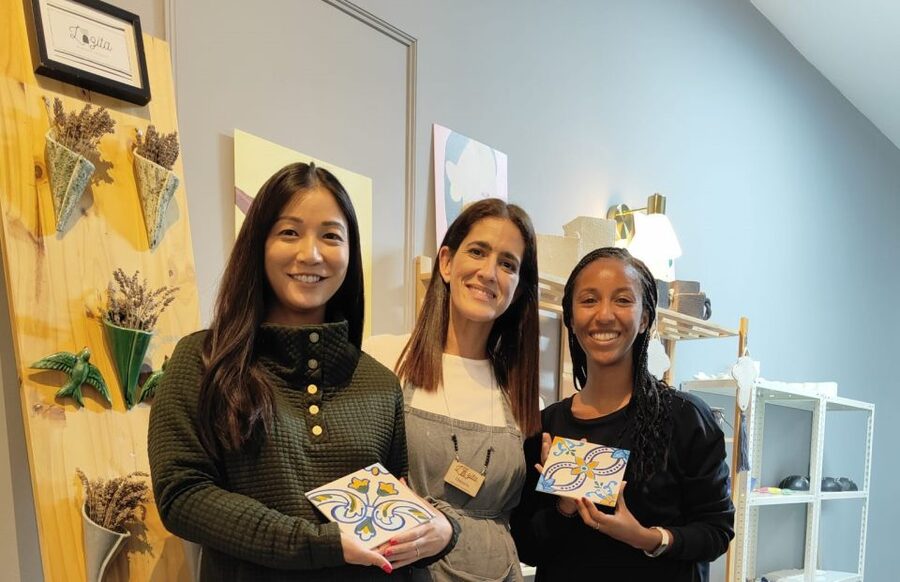
Porto’s prettiest souvenir starts with a blank tile. At Boiler Studio, you learn how Portuguese azulejos became part of the country’s identity, then paint one of your own while music plays and a cocktail keeps the mood easy. I especially like the clear guidance from hosts such as Daniella and Emmanuel, plus the chance to choose a prepared design or bring an image for a custom pattern. The main consideration is drying time: your tile may be ready within an hour, but an afternoon session could mean returning later or the next day.
I also like the location on Rua Chã, a typical street directly opposite Porto Cathedral. São Bento Station, the Luís I Bridge, Time Out Market, and the cathedral are all close, so this fits neatly into a day of sightseeing. It is a strong rainy-day plan and a good pause from Porto’s hills, though children under 10 are not considered suitable for the activity and anyone wanting advanced ceramic instruction may find the workshop fairly introductory.
In This Review
- Key points at a glance
- Why Porto’s tiles deserve more than a quick photograph
- Arriving at Boiler Studio opposite Porto Cathedral
- The first part: a short lesson on azulejos
- Choosing a pattern without artistic panic
- Painting with acrylics, brushes, and steady guidance
- The cocktail and the calm side of the class
- How the two hours usually fit together
- Is $41 a fair price?
- Best times to book this activity
- Who will enjoy it most
- Should you book the Boiler Studio tile workshop?
- FAQ
- Where does the tile painting workshop take place?
- How long does the activity last?
- What is included in the price?
- Can I take my painted tile home?
- Is the workshop suitable for children?
- Which languages are available?
Key points at a glance
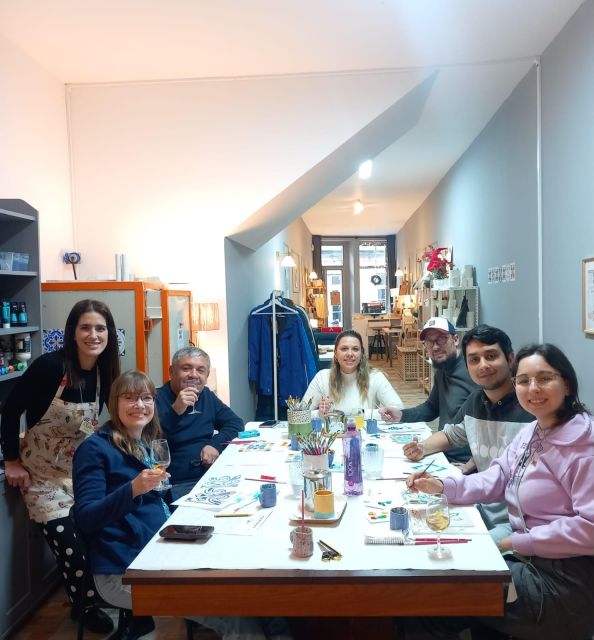
- Paint a real ceramic tile: You receive a tile, paints, brushes, and packaging, then take your finished piece with you.
- Learn before you paint: The introduction covers Arabic influence, Portuguese tile traditions, colors, patterns, and use in different cities.
- Choose your design: You can use one of the supplied patterns or ask the studio to print an image for you.
- Enjoy a local-style drink: The included cocktail may be a Porto Tonic or a white port wine and tonic.
- A central two-hour break: Boiler Studio sits opposite the cathedral, near several of Porto’s main sights.
- Friendly help for beginners: Daniella, Emmanuel, Diogo, and other staff are praised for patient, hands-on instruction.
Why Porto’s tiles deserve more than a quick photograph
Porto is full of tiled walls, church facades, railway interiors, and ordinary city buildings dressed in blue and white. It is easy to admire the patterns without understanding how they became such a visible part of Portuguese life.
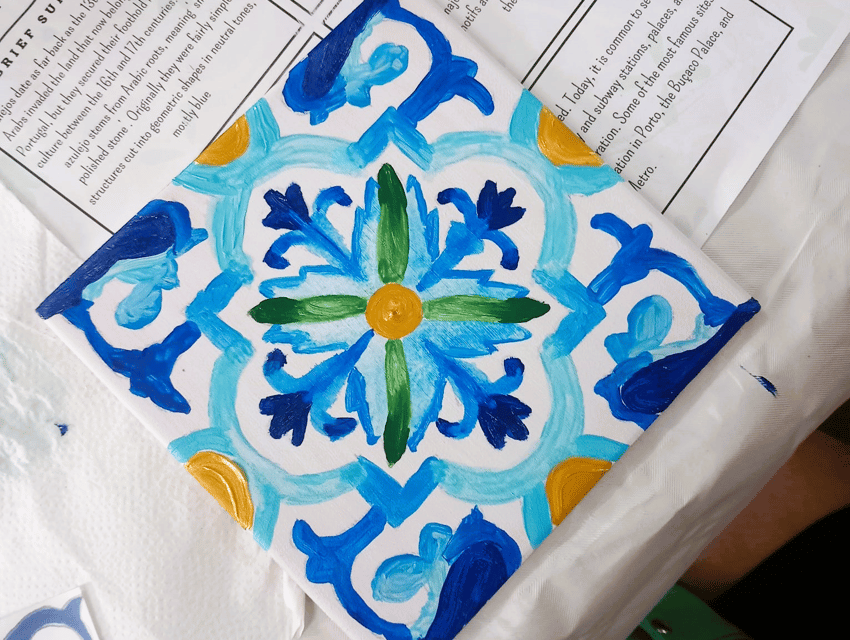
The workshop begins with that background. You hear how azulejos date to the 13th century, when Arab influence reached the lands that are now Spain and Portugal. Tiles gained a firm place in Portuguese culture during the 16th and 17th centuries. The word azulejo comes from Arabic roots connected with a small polished stone.
The early forms were fairly simple, often cut into geometric shapes and made in restrained colors. Blue became especially familiar, but the session also looks at changing colors, designs, uses, seasons, and different Portuguese cities.
I find this short talk important because it gives your painting a clear setting. You are not just decorating a souvenir. You are working with a small object linked to architecture, religion, trade, outside influence, and everyday Portuguese streets.
Do not expect a full academic lecture. The history section is designed to prepare you for the practical work, not replace a museum visit. That balance suits a two-hour activity: enough context to make the craft meaningful, without leaving you sitting through a long presentation.
A few more Porto options side by side
- The Unvanquished Tour in Porto City Center
★ 5.0 · 26,497 reviews - From Porto: Douro Valley w/ Boat Tour, Wine Tasting & Lunch
★ 4.7 · 19,061 reviews - Complete Douro Valley Wine Tour with Lunch, Wine Tastings and River Cruise
★ 5.0 · 12,920 reviews
Arriving at Boiler Studio opposite Porto Cathedral
Boiler Studio is at Rua Chã 77, directly in front of Porto Cathedral. The setting is useful for sightseeing because you can pair the class with a walk around the cathedral area, São Bento Train Station, the Luís I Bridge, or the route toward Time Out Market.
The street itself is described as typical of Porto, which adds a little local atmosphere before you even pick up a paintbrush. You are not heading to an isolated craft center outside town. The studio is part workshop and part shop, with handmade products from local artists on display.
That shop is worth remembering if you want to browse after class. It also means the room has a creative, handmade feel rather than the plain setup of a standard classroom. One review even mentions a friendly studio dog, although you should treat that as an occasional bonus rather than a guaranteed part of the visit.
Because the activity is in the historic center, plan to arrive with the address saved and a little time to find the entrance. The meeting point is specific, but Porto’s old streets can still slow you down when you are walking uphill or stopping for photographs.
The first part: a short lesson on azulejos
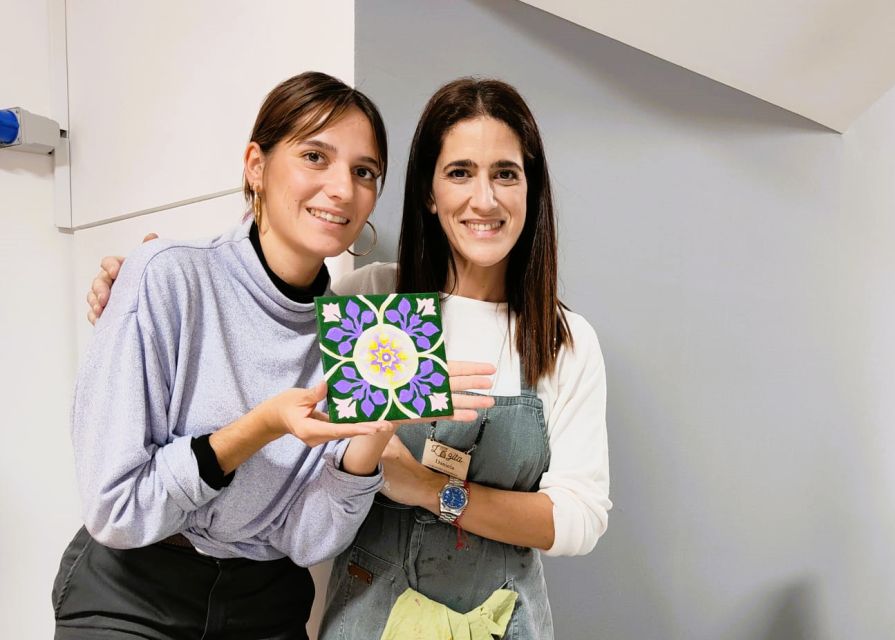
Once the group settles in, the instructor explains the story of Portuguese tiles and how they are used today. The talk covers who brought tile traditions to the Iberian Peninsula, the cultural influences behind them, and the colors and patterns linked with different places.
This introduction is one of the strongest parts of the experience for me. It helps you notice details later in your Porto walks. After the class, a tiled facade is no longer just a pretty blue wall. You have a better sense of how repeated shapes, borders, color choices, and larger scenes work together.
The instructors use English and Portuguese. English-speaking visitors have repeatedly praised Daniella, Emmanuel, and Diogo for explaining the process clearly and adjusting their help to different skill levels.
That last point matters. You do not need an art background. The class is built for people who think they are not artistic, as well as for people who already draw, paint, or work with clay. The instructor can demonstrate techniques, answer questions, and help you correct small mistakes before they ruin the design.
A pottery background may make the historical and design side especially interesting, but you do not need technical ceramic experience. This is a guided painting session, not a course in making or firing tiles from raw clay.
Choosing a pattern without artistic panic
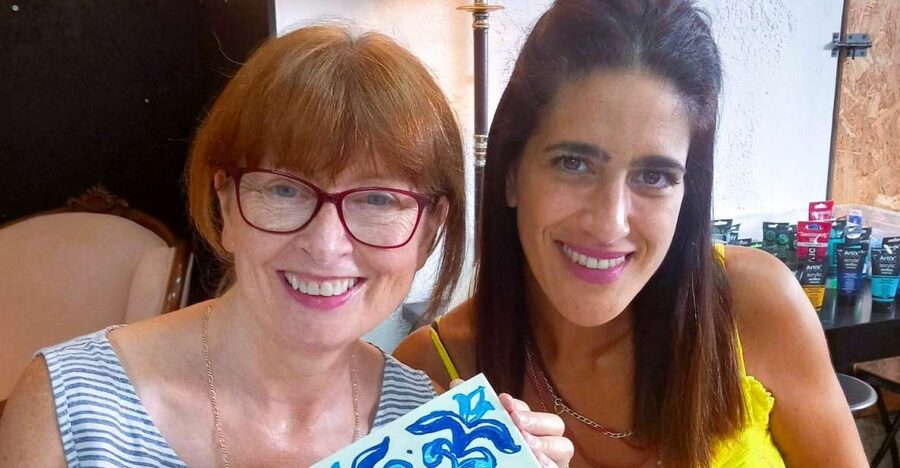
After the introduction, you receive a ceramic tile and begin planning your design. The studio offers prepared patterns and stencils, giving you a clear route if you would rather follow a design than invent one from scratch.
That choice makes the workshop approachable. You can spend your energy selecting colors and learning the brushwork instead of staring at a blank square in alarm. The supplied patterns also make it easier to produce something that feels recognizably Portuguese.
You may also be able to use a personal image. Several participants had the studio print a chosen design so it could be transferred or followed on the tile. If you have a photograph, symbol, or simple drawing in mind, ask the staff about it at the start. The available reviews show that the team has printed custom designs, but you should not assume every image or last-minute request will work equally well.
The design stage is also where the group’s different personalities show. Some people carefully copy a traditional pattern. Others make a family keepsake or a personal image. That mix gives the class a social feel without forcing you to perform for the room.
Same corner of the country, a different pace:
- Porto: Six Bridges Cruise
★ 4.2 · 11,680 reviews - Porto: Live Fado Show with Glass of Port Wine
★ 4.8 · 6,498 reviews - Porto: 6 Bridges Douro River Cruise
★ 4.3 · 6,472 reviews - Porto: Torre dos Clerigos Entrance Ticket
★ 4.6 · 6,395 reviews
Painting with acrylics, brushes, and steady guidance
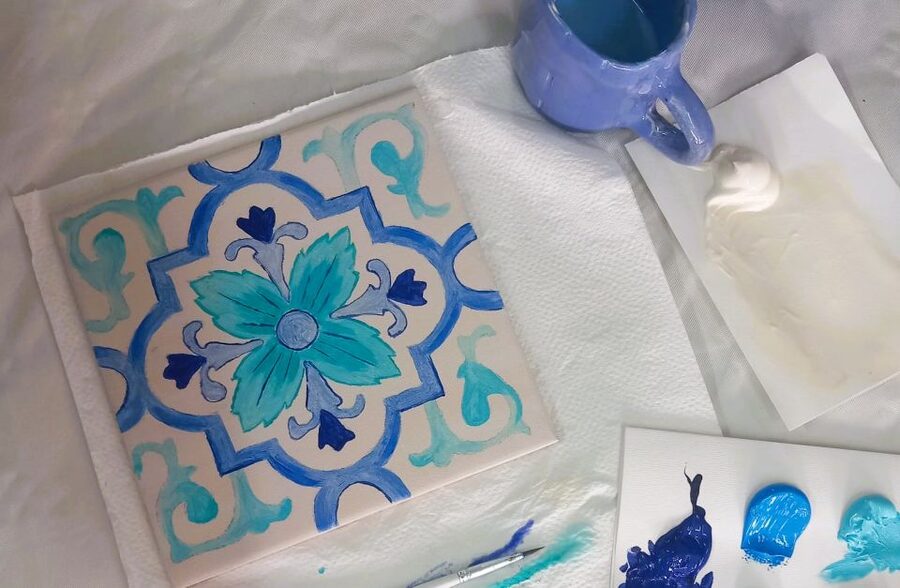
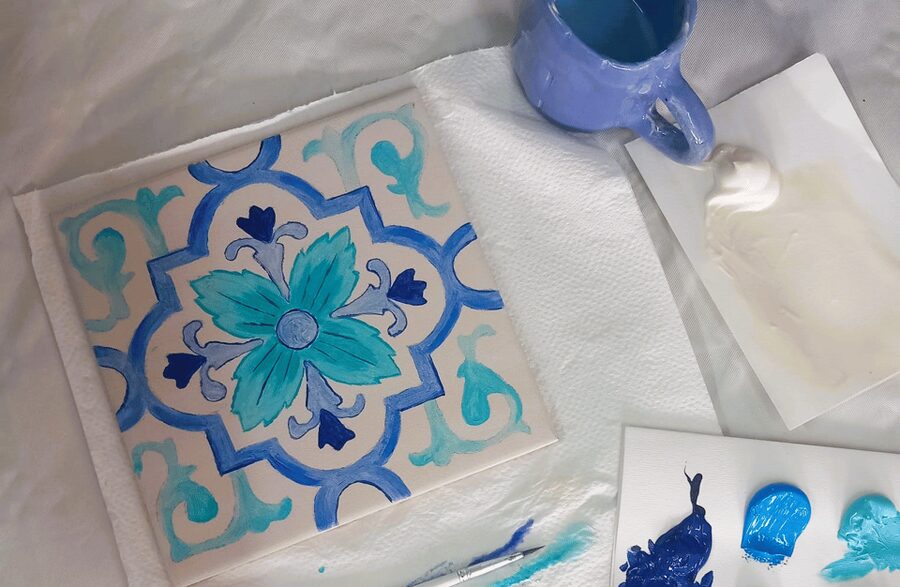
All materials are included: the ceramic tile, acrylic paints, painting tools, and paper packaging for carrying the finished piece. You do not need to bring specialist equipment.
The practical lesson is hands-on. You learn how to place the design, apply the paint, and work through the pattern with help nearby. The staff are praised for being patient and attentive, especially when someone is unsure how to proceed or makes a small slip with a brush.
I would describe the pace as relaxed rather than rushed. The advertised duration is two hours, but several people were allowed extra time to finish. That flexibility is useful if you are painting a detailed design or working with children old enough to take part.
Still, you should leave room in your Porto schedule. A workshop can run longer than the stated two hours if you take your time, and tile drying is a separate issue. Some participants collected their tile about an hour later, while others needed to return the next day after an afternoon class.
Ask the staff when your tile will be ready and keep the paper packaging for the journey. The available information confirms that you take the tile with you, but it does not describe a kiln-firing stage. Think of this as a painted ceramic keepsake, not a full pottery production experience.
The cocktail and the calm side of the class
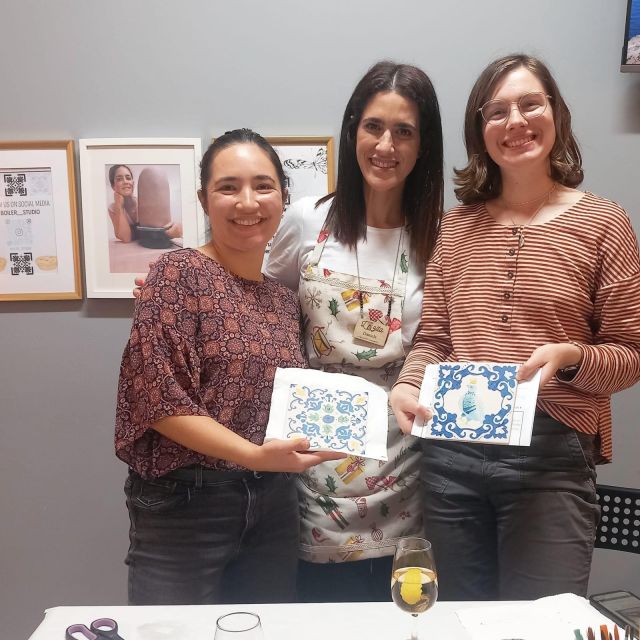
The activity includes a cocktail, and the drink is more than a minor extra. The class is designed as a painting and sipping session, with calm music and a chance to slow down.
The drink has been described as a Porto Tonic or a white port wine and tonic. Since the exact serving may vary, ask the host what is being poured on your date. Coffee has also been available during some sessions, but only the cocktail is specifically included in the activity details.
This works best as a pause between sightseeing stops. Porto asks plenty of your legs, especially around the cathedral, riverfront, and bridge. Sitting down, listening to music, and concentrating on a small pattern can reset your pace.
The cocktail also gives the group an easy way to talk. You may meet other people visiting Porto, and the shared task makes conversation less awkward than it can be on a standard walking tour. The social side is present, but you can still focus quietly on your tile if that is your preference.
One practical note: this is an activity for people aged 10 and up. If you are traveling with a younger child, you will need another plan, even though one family account describes a nine-year-old enjoying the session. The stated age guidance is the safer rule to follow when booking.
How the two hours usually fit together
The exact timing can vary, but the experience has a clear shape:
- You arrive at Boiler Studio and meet the instructor.
- You hear the short presentation on Portuguese tile history and cultural influence.
- You choose a supplied pattern or discuss a personal design.
- You paint your ceramic tile with the provided materials.
- You receive the included cocktail while working.
- You package the piece and either take it with you or arrange a later collection if it needs more drying time.
The two-hour format is long enough to create a substantial piece, but short enough to fit into a city break. It is particularly useful on a wet afternoon, when an outdoor plan around Porto becomes less pleasant.
The activity is wheelchair accessible, which is a helpful feature in a historic city where streets and slopes can be difficult. The information provided does not describe the route from every transport stop or the exact interior layout, so contact the studio directly if you need details beyond general wheelchair access.
Smoking, fireworks, and explosive substances are not allowed. In ordinary terms, this is a calm art workshop, so those rules are unlikely to affect most people.
Is $41 a fair price?
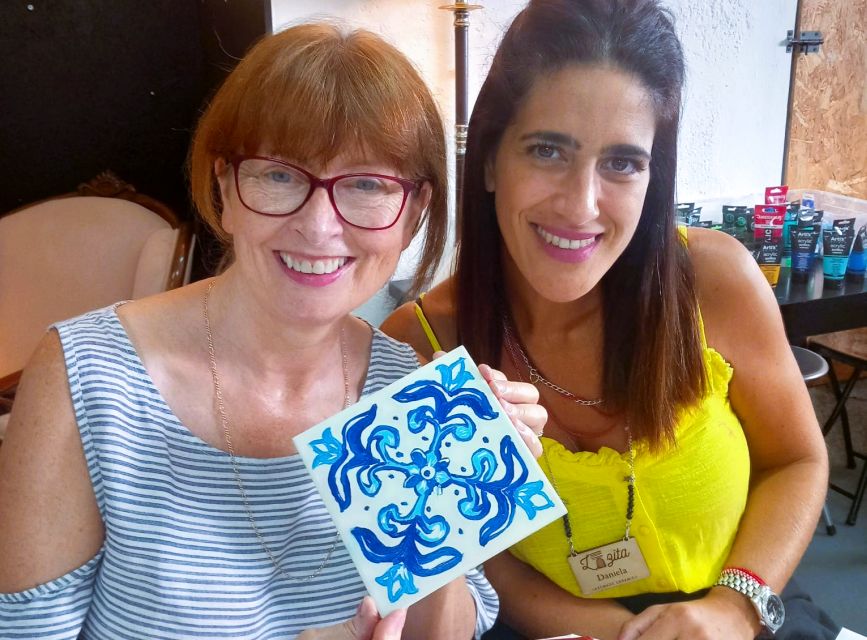
At $41 per person, the price is reasonable if you value both the activity and the finished souvenir. You are paying for a two-hour hosted session, the cultural introduction, a ceramic tile, paints, tools, packaging, and a cocktail.
The value improves if you would otherwise spend money on a mass-produced tile in a gift shop. Your design may not be perfectly symmetrical, but it carries the memory of sitting in Porto and making it yourself. That personal element is the real point.
The price may feel less attractive if you only want a quick craft stop or already plan to buy several inexpensive souvenirs. It is also not the right choice if you want advanced instruction in ceramic glazing, tile cutting, or kiln work. The session focuses on accessible painting with guidance.
For couples and families with older children, the shared activity can be worth more than a passive attraction. You leave with something physical, and the class gives you a story to attach to it. A tile painted by someone who expected to dislike art can become a surprisingly good family keepsake.
Best times to book this activity
I would place this workshop in the middle of a sightseeing day rather than at the end of a packed schedule. The central address makes it easy to visit the cathedral or São Bento Station before class, then continue toward the bridge or market afterward.
A rainy afternoon is an obvious choice. You get indoors without losing the connection to Porto’s culture, and the calm pace feels welcome after wet streets and crowded viewpoints.
Morning sessions may be simpler if you want to collect a tile later the same day. With an afternoon session, ask about the drying schedule before you leave. If collection is required the next day, make sure you are staying nearby or have enough time in Porto to return.
Book ahead if the timing matters. The experience has a 4.9 rating from 484 reviews, and the repeated praise for the staff suggests that the human guidance is a major part of its appeal. Flexible booking is available, with free cancellation up to 24 hours in advance and a reserve-now, pay-later option.
Who will enjoy it most
I would recommend this for:
- First-time visitors who want context for Porto’s tiled buildings
- Couples looking for a low-key shared activity
- Families with children aged 10 and older
- Solo visitors who like meeting people through a simple creative task
- Anyone seeking a useful rainy-day plan
- Art lovers who want a personal souvenir rather than a shop-bought object
It is also good for people who claim they cannot draw. The patterns, stencils, and close help remove much of the pressure.
You may want to skip it if you dislike sitting through an introduction, prefer active outdoor tours, or expect a professional ceramics class. The workshop is friendly and practical, but it is not built around high-level technical training.
Should you book the Boiler Studio tile workshop?
I would book it if you want a slower, more personal way to understand Porto. The best features are the central location, clear historical context, patient instructors, included drink, and the tile you carry away afterward.
Before reserving, check two things: the age rule and the collection timing. Children under 10 are not considered suitable, and an afternoon painting may need extra drying time. If those details fit your plans, $41 buys more than a craft session. It gives you a short lesson in Portuguese culture, a relaxed social break, and a handmade reminder of Porto that you had a part in creating.
FAQ
Where does the tile painting workshop take place?
It takes place at Boiler Studio, Rua Chã 77, on a typical street directly opposite Porto Cathedral in central Porto.
How long does the activity last?
The scheduled duration is two hours. Some people have been allowed extra time when they needed longer to finish their tiles.
What is included in the price?
The price includes the workshop information about Portuguese tiles, one ceramic tile, acrylic paints, all materials, paper packaging, and a cocktail.
Can I take my painted tile home?
Yes. You take the tile with you, though drying time can vary. Some participants collected their tile about an hour later, while an afternoon session may require collection the next day.
Is the workshop suitable for children?
The activity is not suitable for children under 10. The stated age guidance is for children aged 10 and older.
Which languages are available?
The instructors provide the activity in English and Portuguese.
Recently added in Porto
- Porto: Tuk tuk Tours with Port Wine Tasting★ 4.5 · 65 reviews
- The Beautiful Story of Porto: Guided Tour with Entry Tickets★ 4.8 · 111 reviews
- Porto: Royal Oporto Tour na Real Companhia Velha★ 4.8 · 395 reviews
- Porto: Entry Ticket at WOW – The Wine Experience Museum★ 4.7 · 356 reviews
- Porto: WOW Daily Ticket★ 4.7 · 42 reviews
- Porto: Luxury Yacht Tour of the 6 Bridges and Douro Estuary★ 4.9 · 521 reviews
- Porto Wine Tasting Experience with Portuguese Tapas Plate★ 4.7 · 356 reviews
- Porto: 6 Bridges Port Wine River Cruise with 4 Tastings★ 4.8 · 182 reviews
Porto Tours, compared.
Complete Douro Valley Wine Tour with Lunch, Wine Tastings and River Cruise
Read our review →
Douro Valley: Wine Tour with Lunch, Tastings & River Cruise
Read our review →
Guided Tour by Tuk-Tuk & Optional Douro River Cruise
Read our review →Browse the lists this tour appears in