
REVIEW · TUK TUK TOURS
Porto Guided Tour to the Historical Center on a Tuk Tuk
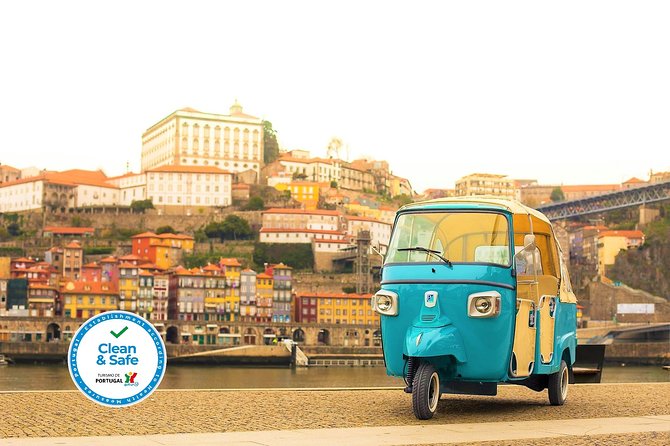
Porto fits a lot into a small space. This nearly two-hour tuk tuk tour gives you a quick, lively introduction to the old city, with steep lanes, grand churches, river views, and a taste of Port wine along the way. I especially like the efficient route and the way a tuk tuk can reach narrow cobbled streets that are tiring to tackle on foot. The Serra do Pilar viewpoint is another strong point, offering one of Porto’s best city views.
The tour works best early in your stay, when you need to understand Porto’s layout before choosing which sights deserve more time. Guides such as Ana, Anna, Victor, Bernardo, Natalia, and Gonçalo have earned praise for their warmth, local tips, and good humor. The main drawback is that commentary can be hard to hear while the vehicle is moving, and a few passengers found the guiding too thin or the traffic frustrating.
In This Review
- Key points to know before booking
- Why a tuk tuk makes sense in Porto
- Starting near the Porto Cathedral
- São Bento Station and Porto’s tiled storytelling
- Churches, gardens, and the Clérigos skyline
- From the Bolsa to the city’s grand interiors
- Mercado Ferreira Borges and the old river quarter
- São Francisco and the Alfândega waterfront
- The Serra do Pilar viewpoint is the payoff
- Two bridges and a glass of Port wine
- Comfort, group size, weather, and sound
- Who should book this Porto tuk tuk tour?
- Should you book it?
- FAQ
- How long is the Porto tuk tuk tour?
- What is the price?
- Is the tour private?
- How many people fit in one tuk tuk?
- What happens if my group is larger than four adults?
- Is Port wine included?
- Are monument entrance fees included?
- Where does the tour start and finish?
- Is the tour offered in English?
- Can I cancel for a full refund?
Key points to know before booking
- A fast introduction to Porto: In about 1 hour and 50 minutes, you see major monuments in Porto’s historic center and across the river in Vila Nova de Gaia.
- The Serra do Pilar viewpoint is a highlight: You get a wide view of Porto, Gaia, the Douro, the Dom Luís I Bridge, and the historic center.
- Small private groups: Your booking is private, with each tuk tuk carrying two, three, or four adults of average height and up to 75 kilograms each.
- Several stops are brief: The Cathedral, São Bento Station, the Clérigos Tower area, and Serra do Pilar receive timed stops, but many other sights are viewed from the vehicle.
- Port wine is included: A glass gives the tour a fitting local touch without requiring a separate tasting visit.
- Weather and traffic matter: Bring a raincoat, and remember that Porto’s roadworks or street closures can affect the route.
Why a tuk tuk makes sense in Porto
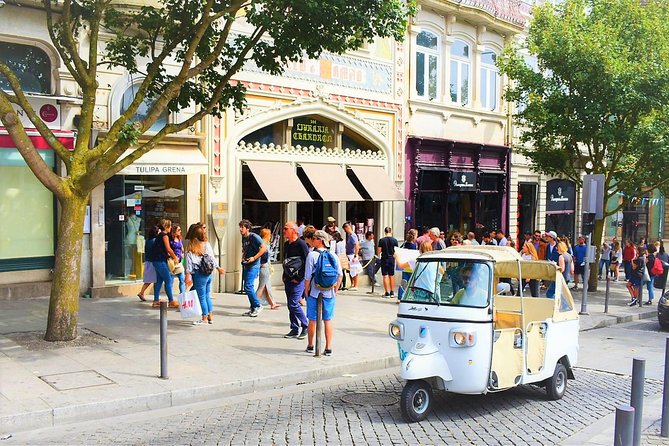
Porto is not difficult to explore, but it is rarely flat. The historic center rises and falls in sharp streets, with polished stone underfoot and narrow lanes that can slow you down. A tuk tuk removes much of that uphill work while still keeping you close to the city.
I like this format for a first morning or afternoon. You get a rough mental map of the Cathedral, São Bento, Clérigos, the Bolsa, the riverfront, and Gaia. Then you can return on foot to the places that catch your interest.
The vehicle also has a practical advantage over a standard sightseeing bus. It can pass through tighter streets and reach viewpoints that larger vehicles cannot. That said, you should not expect a full guided visit inside every monument. The tour is mainly an outside introduction, with short stops and explanations.
The price is about $42.33 per person. For a private experience lasting close to two hours, that is reasonable if your group values convenience and personal attention. It is less compelling if you are happy to walk, read signs, and use Porto’s public transport. The value depends heavily on the guide. Ana, Anna, Victor, and several others have been praised for making the history entertaining, while weaker guides have left passengers with little more than a drive-by tour.
More History Tours in Porto
- Douro Valley: Historical Sites, Wine Experience, Lunch & Cruise
★ 5.0 · 5,133 reviews - Porto: Historic City Center Walking Tour
★ 4.7 · 1,172 reviews - Porto: An Intimate Fado Show in a Historical Tavern
★ 4.8 · 1,093 reviews
Starting near the Porto Cathedral
The meeting point is at R. de Augusto Rosa 180, close to the Cathedral. This is a useful place to begin because Porto’s upper historic center gathers several important sights within a small area.
The Cathedral, or Sé do Porto, dates back to the 12th and 13th centuries. Its Romanesque core has been altered many times, and its present form reflects later repairs and a 20th-century effort to present an idealized medieval appearance. You have about 10 minutes here, with admission not included.
That short stop is enough to see the exterior and get oriented, but not enough for a careful visit inside. If you want the cloisters or a longer look at the cathedral, plan to return independently.
Nearby, the stone Pelourinho is a 1945 reproduction based on a 1797 drawing. It occupies a paved terrace created after buildings around the Cathedral were demolished in 1940 under the Estado Novo government. The brief stop helps explain how Porto’s historic center has been reshaped, sometimes in ways that removed older buildings rather than preserved them.
The Episcopal Palace is another quick stop. Its origins may reach back to the 13th century, while the grand façade reflects an 18th-century remodeling associated with Nicolau Nasoni. Admission is not included, so you will mainly take in the exterior and its formal Baroque details.
São Bento Station and Porto’s tiled storytelling
São Bento Railway Station is one of Porto’s essential sights, even if you are not catching a train. Its early 20th-century entrance hall is covered with about 20,000 narrative tiles by Jorge Colaço.
The tiles show scenes from Portuguese history and daily life, and they reward a slower look than the scheduled 10-minute stop allows. I suggest using the tour to see the station and learn why it matters, then returning later when you can stand beneath the glass and iron roof without watching the clock.
The route then passes through central squares, including areas shaped in the 18th century as Porto expanded beyond its medieval walls. You may also see Carlos Alberto Square, once associated with blacksmiths and later named for the exiled Sardinian king who stayed at the Balsemão Palace. A monument in the garden recalls Portuguese soldiers who died in the First World War.
At Fonte dos Leões, the Fountain of the Lions, you get a quick look at a 19th-century French-made fountain. It was produced by the Val d’Osne foundry and is largely modeled on a fountain in Leicester’s Town Hall Square. It is a small detail, but it shows how Porto’s public spaces absorbed ideas and objects from beyond Portugal.
Churches, gardens, and the Clérigos skyline
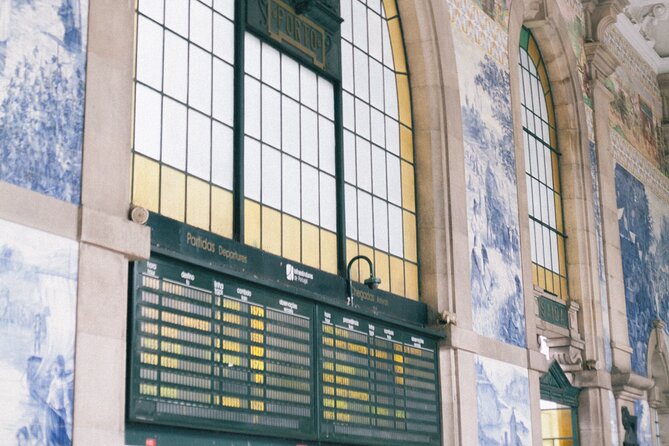
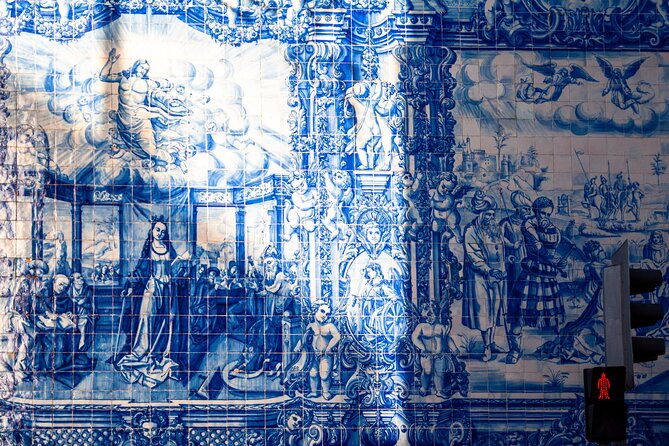
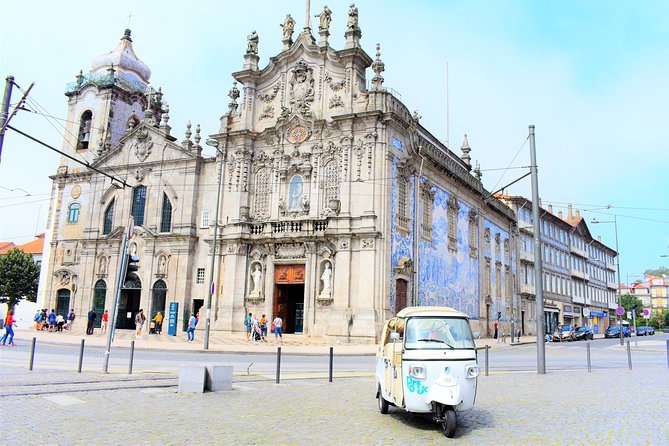
The route includes several churches and religious buildings, most likely as exterior views or short photo opportunities. One 17th-century church has a classical façade from the 1850s and a notable Porto Rococo altarpiece associated with Nicolau Nasoni. Another 18th-century church is known for ornate carvings and side façades covered with figurative tiles in 1912.
These details matter because Porto’s identity is not only granite and river views. The city’s churches often combine sober stone exteriors with highly decorated interiors. Since monument entrances are not included, you should treat this part of the tour as a preview.
The Cordoaria Garden, officially João Chagas Garden since 1924, offers a change of pace. Its name comes from rope makers who worked here for roughly two centuries. The public garden was created in the 19th century from a project by German landscaper Emile David.
You may see statues of Portuguese writers Ramalho Ortigão and António Nobre, along with modern sculptures by Juan Muñoz. The garden was remodeled as part of Porto’s 2001 European Capital of Culture program.
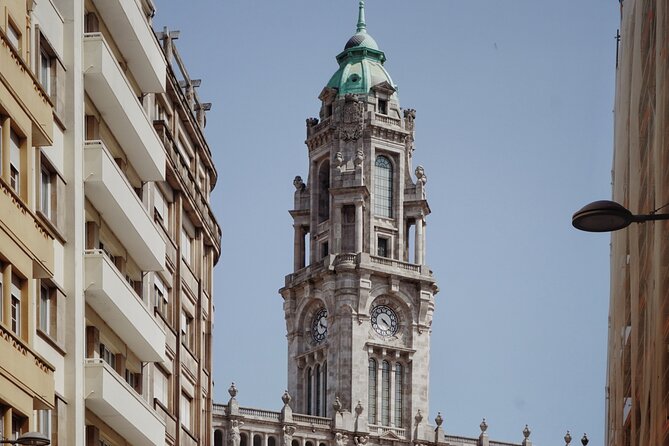
The Clérigos Tower is one of Porto’s clearest landmarks. Its Baroque church and tall bell tower can be seen from many parts of the city. The scheduled stop is only about five minutes, and entrance is not included, so do not expect to climb the tower during this tour.
Still, the guide can help you place it within Porto’s street plan. If you want the famous views from the top, return separately and allow more time.
More Tuk Tuk Tours in Porto
- Porto: Guided Tour by Tuk-Tuk & Optional Douro River Cruise
★ 4.5 · 5,980 reviews - Discover Porto’s Highlights on a 2-Hour Private Electric Tuk Tuk
★ 4.5 · 1,860 reviews - Historic Porto by Private Electric Tuk Tuk to Top Landmarks
★ 4.5 · 735 reviews - Porto: Private Sightseeing Tour by Electric Tuk Tuk
★ 4.8 · 305 reviews
From the Bolsa to the city’s grand interiors
The route continues toward the former São Bento da Vitória Monastery, the Palácio da Bolsa, and the monument to King Pedro IV.
The monastery dates from the late 16th century and has served several purposes over time, including use by Benedictine monks, the Porto National Orchestra, archives, and the National Theatre São João. Its history reflects Porto’s habit of adapting old religious buildings to new civic and cultural uses.
The Palácio da Bolsa is a National Monument and the headquarters of Porto’s Commercial Association. Built in a Neoclassical style from 1842, it is famous for the Arabian Room. The building is one of the city’s most visited monuments, but entrance is not included here. You will need a separate visit if you want to see its grand interiors.
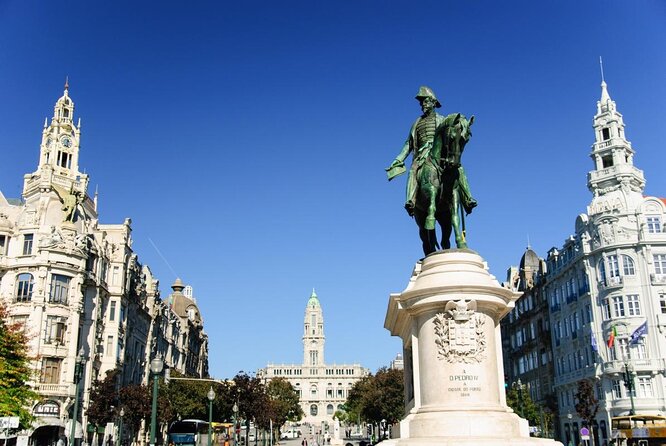
The monument to Pedro IV recalls the king’s constitutional role and his connection with Porto. One side of the pedestal shows the donation of his heart to the city’s representatives, while the other refers to his arrival in Mindelo.
The route may also take you past the famous Lello Library. Its Art Nouveau façade includes Neo-Gothic details, while the interior is known for painted plasterwork, a red staircase, and a large stained-glass skylight carrying the motto Decus in Labore. It is a spectacular building, but this tour does not include admission, and the visit is best planned separately if it is high on your list.
Mercado Ferreira Borges and the old river quarter
Mercado Ferreira Borges was built in 1885 to replace the earlier Ribeira Market. It operated as a market for only a short time before serving other purposes. Its iron structure is now associated with the Hard Club entertainment venue.
The market sits near the Palácio da Bolsa and Praça Infante Dom Henrique. The square includes a small garden and a monument honoring Prince Henry the Navigator. The monument’s construction began in 1894 and finished in 1900, presenting Portuguese navigation as a union of faith and national ambition.
This section helps connect Porto’s commercial past with the Douro River. It is also a good reminder that the city’s grand maritime story was tied to trade, warehouses, shipping, and everyday work, not only royal monuments.
São Francisco and the Alfândega waterfront
The Church of São Francisco is Porto’s great Gothic church, with an interior covered in lavish gilded woodwork from the 17th and 18th centuries. The decoration was so extensive that the church became known as the Church of Gold.
The Tree of Jesse and the catacombs are major points of interest. São Francisco has been a National Monument since 1910 and part of Porto’s UNESCO-listed historic center since 1996. Again, entrance is not part of the tuk tuk price, so return later if you want to see the interior properly.
The former Alfândega Nova customs house presents a different side of Porto. Built in the 19th century in a Neoclassical style, it uses iron with stone, brick, and wood in ways suited to different parts of the building. It now houses the Museum of Transport and Communications and a congress center.
From the tuk tuk, this can be a quick but useful look at the Douro waterfront and the buildings that supported Porto’s trade.
The Serra do Pilar viewpoint is the payoff
The most memorable stop is often the Mosteiro da Serra do Pilar, across the river in Vila Nova de Gaia. The monastery began in 1538 and was completed around 1670. Its circular church and circular cloister are unusual, with the cloister supported by 36 Ionic columns.
The monastery also played a military role during Portugal’s Civil War from 1832 to 1834, when the liberal army used it as a base. Its elevated terrace gives you a broad view across Porto and Gaia, including the Cathedral, the Dom Luís I Bridge, the riverfront, the Arrábida Bridge, Fontainhas, and the São João Bridge.
You get about 15 minutes here. That is enough for photographs and a good sense of Porto’s geography, though you may wish for longer on a clear day. Several guides have made this viewpoint the high point of the outing, and I can see why. It turns a collection of streets and monuments into a coherent city.
Two bridges and a glass of Port wine
The tour also passes the Dom Luís I Bridge, designed by Teófilo Seyrig, a disciple of Gustave Eiffel. Opened in 1886, it has two overlapping iron decks and a 395-meter length. The upper deck now carries Porto’s metro, linking the Cathedral area with Gaia.
The Infante Bridge opened in 2003 to replace the road traffic function once served by the upper deck of Dom Luís I Bridge. Its high arch and clean form provide a contrast to the older iron bridge nearby.
A glass of Port wine is included. It is a fitting local touch and gives the ride a small tasting moment without turning the whole experience into a winery visit. If you want a detailed explanation of Port production or a cellar tour, you will need a separate activity in Gaia.
Comfort, group size, weather, and sound
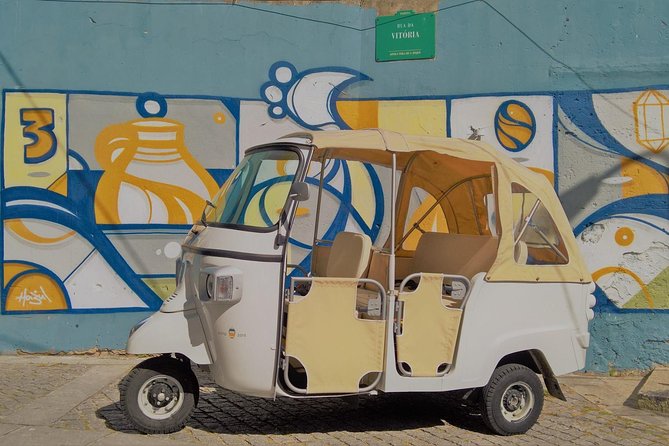
Each tuk tuk carries two, three, or four adults of average height, with a stated weight limit of up to 75 kilograms per person. Larger groups use more than one vehicle but travel together and stop at the same places.
Ask about seating and safety arrangements when booking for a larger party. One group of six found its vehicle better suited to four and was concerned about seatbelts. That may not reflect every vehicle, but it is a sensible point to clarify.
The open-sided design is part of the fun, but it also exposes you to Porto’s weather. Bring a raincoat, especially because poor weather can lead to a rescheduled tour or full refund. A rainy day does not automatically ruin the experience, but wind and wet roads make the ride less comfortable.
Sound is the other practical issue. Some passengers had trouble hearing the guide while the tuk tuk was moving. Sit close to the guide if possible, ask questions at stops, and do not hesitate to request a pause if an explanation gets lost in traffic noise.
The tour is offered in English, includes a driver-guide and local guide, and allows service animals. Children must be accompanied by an adult. Most people can participate, but the vehicle is not a substitute for a full walking tour inside the monuments.
Who should book this Porto tuk tuk tour?
I would choose it for a first day in Porto, a short stay, or anyone who wants a city overview without spending two hours on steep streets. It also suits families, older visitors, and small private groups that want the flexibility of a dedicated vehicle.
It is less suitable if you want long museum visits, detailed architectural lectures, or plenty of time inside churches. The route covers a lot, but the tradeoff is brief stops. Traffic can also take time away from sightseeing, and guide quality appears to vary.
Book at least 24 hours ahead if you may need to cancel, since changes or cancellations inside that window are not refundable. The tour is often reserved several weeks in advance, so early planning is wise during busy periods.
Should you book it?
Book this tour if you want a friendly, time-saving orientation to Porto, especially with a private group. The Serra do Pilar viewpoint, narrow streets, major landmarks, and Port wine make it a pleasant introduction, and strong guides can add useful local advice.
Skip it if you prefer exploring slowly on foot or want to enter every major monument. For the best result, take it near the start of your visit, listen closely at the stops, wear weatherproof clothing, and use the route to decide where to return for deeper visits.
FAQ
How long is the Porto tuk tuk tour?
The tour lasts approximately 1 hour and 50 minutes.
What is the price?
The listed price is $42.33 per person.
Is the tour private?
Yes. Only your group participates in the activity.
How many people fit in one tuk tuk?
Each tuk tuk has capacity for two, three, or four adults of average height, with a stated limit of up to 75 kilograms per person.
What happens if my group is larger than four adults?
Multiple tuk tuks are used. The vehicles travel together and make the same stops at the same time.
Is Port wine included?
Yes. A Port wine glass is included in the experience.
Are monument entrance fees included?
No. Entrance fees are not included, so visits inside places such as Porto Cathedral, the Episcopal Palace, Clérigos Tower, Palácio da Bolsa, and São Francisco Church require separate arrangements.
Where does the tour start and finish?
It starts at R. de Augusto Rosa 180, 4000-528 Porto, Portugal, and returns to the same meeting point.
Is the tour offered in English?
Yes. English is the listed language.
Can I cancel for a full refund?
Yes, if you cancel at least 24 hours before the experience begins. Cancellations made less than 24 hours ahead are not refunded. If poor weather causes the operator to cancel, you are offered another date or a full refund.
Recently added in Porto
- Porto: Tuk tuk Tours with Port Wine Tasting★ 4.5 · 65 reviews
- The Beautiful Story of Porto: Guided Tour with Entry Tickets★ 4.8 · 111 reviews
- Porto: Royal Oporto Tour na Real Companhia Velha★ 4.8 · 395 reviews
- Porto: Entry Ticket at WOW – The Wine Experience Museum★ 4.7 · 356 reviews
- Porto: Luxury Yacht Tour of the 6 Bridges and Douro Estuary★ 4.9 · 521 reviews
- Porto: WOW Daily Ticket★ 4.7 · 42 reviews
- Porto: 6 Bridges Port Wine River Cruise with 4 Tastings★ 4.8 · 182 reviews
- Porto Wine Tasting Experience with Portuguese Tapas Plate★ 4.7 · 356 reviews
Tuk Tuk Tours, compared.
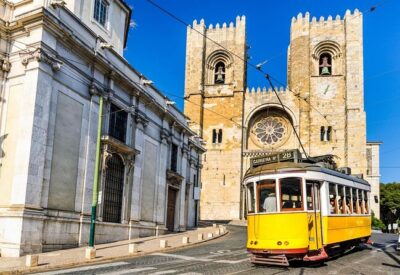
True 4Hour Private Tuk Tuk Tour: Discover Lisbon with a Local!
Read our review →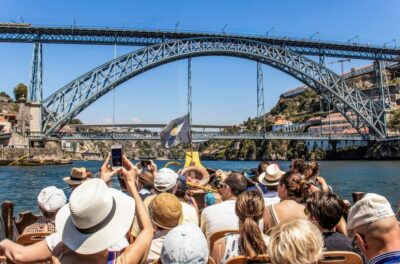
Guided Tour by Tuk-Tuk & Optional Douro River Cruise
Read our review →
Private Guided Tuk-Tuk Tour with Hotel Pickup
Read our review →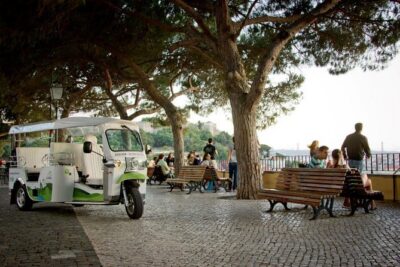
Private Lisbon Sightseeing Tuk-Tuk Tour: Alfama, Belém & More
Read our review →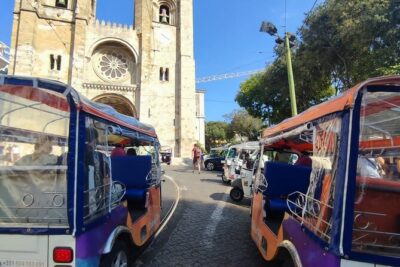
Lisbon Highlights: Private Tuk Tuk Tour Adventure Sightseeing
Read our review →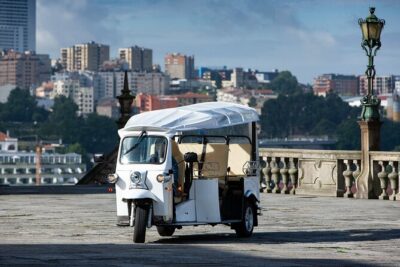
Discover Porto’s Highlights on a 2-Hour Private Electric Tuk Tuk
Read our review →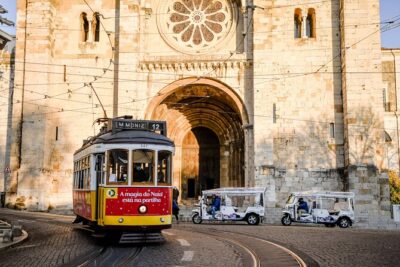
Welcome Lisbon Tour with Local Guide in Private Eco Tuk Tuk
Read our review →
Browse the lists this tour appears in