
REVIEW · WINE TOURS
Port Wine class with 3 or 5 Port tasting and pairings
Port wine makes more sense after one good tasting. This small class places you in central Porto, across from the grand Palácio da Bolsa, where an English-speaking host explains how Port began and guides you through three or five styles with Portuguese snacks. I especially like the small groups of up to 10 and the useful mix of history, production details, and tasting. The food pairings also make each glass easier to understand.
The main thing to know is that this is held in a shop room, not in a traditional wine cellar. That gives you a central, air-conditioned setting and keeps the price down, but you will not get underground cellars, barrels, or a tour through a producer’s facilities. At about $23 per person, it is a strong value for a first lesson in Port, especially if your Porto schedule is tight.
In This Review
- Key points at a glance
- A Port lesson across from Palácio da Bolsa
- How the 45 to 75 minute class unfolds
- Understanding the five Port styles
- White Port
- Tawny Port
- Ruby Reserve Port
- Late Bottled Vintage Port
- Portuguese snacks are part of the lesson
- Why the small group matters
- More than a standard tasting
- Value at $23 per person
- Who should book this Port class?
- Practical details before you go
- Should you book it?
- FAQ
- Where does the Port wine class take place?
- Is the class held in a Port wine cellar?
- How many Ports do you taste?
- What food is included with the tasting?
- How long does the experience last?
- What language is the class offered in?
- How large is the group?
- Is the activity wheelchair accessible?
Key points at a glance
- Five styles in the longer option: The full tasting includes two White Ports, Tawny, Ruby Reserve, and Late Bottled Vintage Port.
- Pairings make the differences clear: Olives, fruit, chocolate, cheese, and brownie are served with the wines.
- A central Porto location: The room is across from Palácio da Bolsa, close to the city’s main sights.
- A genuinely small setting: Groups are limited to 10, though some sessions may be much smaller.
- Hosts bring personality: Rui, Ruan, João, and other hosts have been praised for clear explanations, humor, music, and warm conversation.
- Two useful booking choices: Pick the shorter three-Port session, around 45 minutes, or allow about 75 minutes for five Ports.
A Port lesson across from Palácio da Bolsa
Porto is full of places offering a quick sip of fortified wine. This class aims to do more than hand you a glass and point toward the river. You sit down for an organized introduction that explains where Port came from, why it was developed, and how the drink changed over time.
That context matters. Port is not simply sweet red wine. It is fortified, which means a spirit is added during production, and it comes in several styles with different colors, ages, textures, and levels of sweetness. A short explanation before tasting helps you notice those differences instead of treating every glass as the same.
The address is one of the easiest parts of the experience. The shop is in front of the Palácio da Bolsa, one of Porto’s best-known buildings, so you can fit the tasting between sightseeing stops. You check in at the tourist office in the same building, then go to the room used for the class.
This arrangement is practical, but it can cause a small moment of confusion. The class does not necessarily look like a separate wine school from the street, and one person found the storefront name less obvious than expected. Look for the tourist office and the shop in the building opposite the Bolsa Palace, rather than searching for a large cellar entrance.
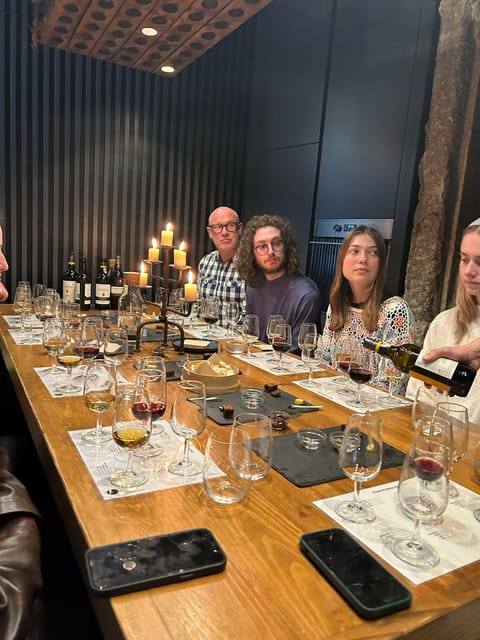
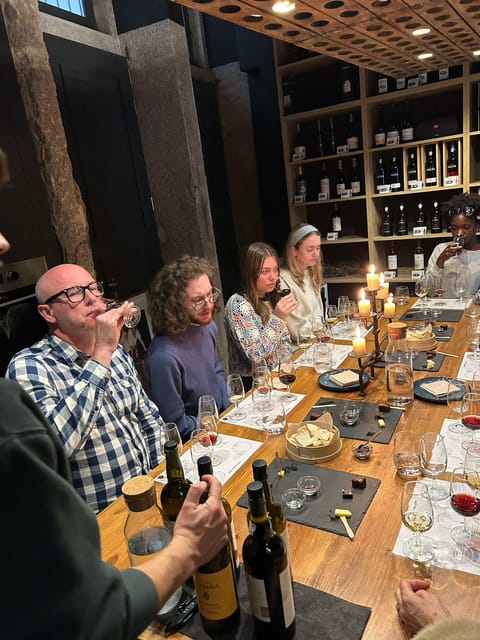
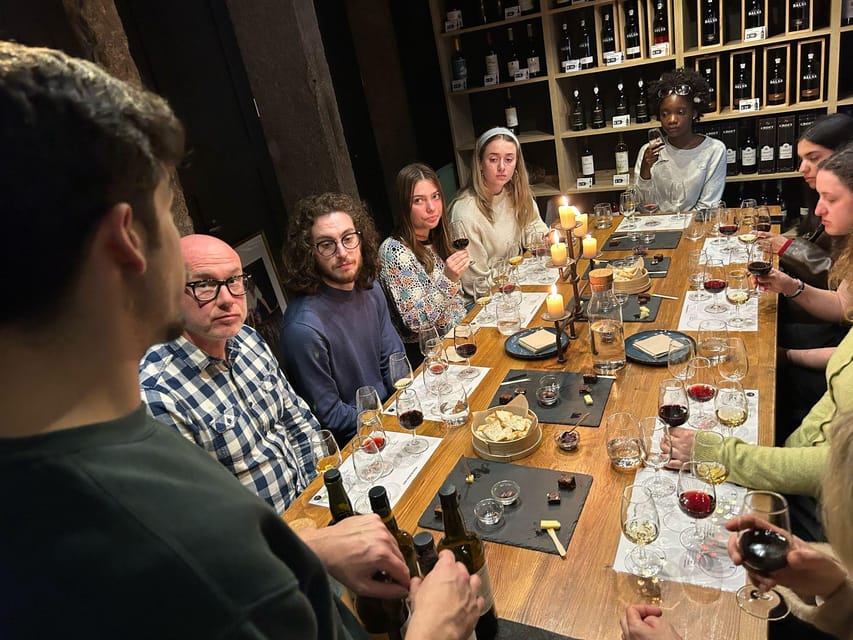
The room is intimate and prepared for the tasting. One account describes long benches on either side of a laid table. Benches save space and suit a small class, though chairs would be more comfortable for some people. The setting is clean and air-conditioned, a welcome break on a hot Porto afternoon.
More Food Tours in Porto
- From Porto: Douro Valley w/ Boat Tour, Wine Tasting & Lunch
★ 4.7 · 19,061 reviews - Porto: Cálem Cellar Tour, Interactive Museum & Wine Tasting
★ 4.5 · 4,113 reviews - Douro Valley Small-Group Tour with Wine Tasting, Lunch and Boat
★ 5.0 · 3,642 reviews
How the 45 to 75 minute class unfolds
The class begins with Port’s background. Your host explains how the wine was invented, why it became linked with Porto, and how Port production developed into the styles you taste today. The talk is designed for beginners, but it also gives experienced wine drinkers a useful way to compare the glasses in front of them.
The hosts are a major part of the experience. Rui and João are repeatedly praised for clear explanations, warmth, and humor, while Ruan is described as especially entertaining and able to keep the whole table involved. The tone is not stiff or academic. You can ask questions, join the conversation, and learn at a relaxed pace.
That matters in a tasting class. Port can sound technical when you first hear terms such as Ruby, Tawny, Reserve, or LBV. A good host turns those labels into something you can use when ordering or buying a bottle later. The explanations also cover how grapes are grown, how Port is made, and why different types taste different.
The three-Port option takes about 45 minutes. That is enough time for a basic introduction and a useful comparison, and it works well if you have a packed sightseeing day. The five-Port option runs about 75 minutes, though questions and conversation can stretch the session toward 90 minutes.
I would choose the five-Port option if you have room in your schedule. One person who selected three wished they had booked five, and that is easy to understand: the extra glasses give you a clearer sense of Port’s range. The three-glass version still makes sense for a quick orientation or for anyone who prefers to keep alcohol consumption modest.
Understanding the five Port styles
The full option includes five different expressions of Port. Each has a role in the tasting, and the order gives you a chance to compare pale, nutty, fruity, and more structured styles.
White Port
Two White Ports are included in the five-glass selection. This is a useful choice because many first-time visitors associate Port only with dark red wine. White Port shows that the category can be lighter in color and different in flavor while still carrying Port’s characteristic sweetness and strength.
Tasting two White Ports side by side gives you more than a single example. You can compare them directly and pay attention to differences in sweetness, freshness, body, and finish. The host explains what you are drinking and suggests how the accompanying snacks work with it.
More Wine Tastings in Porto
- Complete Douro Valley Wine Tour with Lunch, Wine Tastings and River Cruise
★ 5.0 · 12,920 reviews - Porto: Live Fado Show with Glass of Port Wine
★ 4.8 · 6,498 reviews - Douro Valley: Wine Tour with Lunch, Tastings & River Cruise
★ 4.6 · 6,081 reviews - Authentic Small Group Douro Wine Tour with Lunch & River Cruise
★ 5.0 · 4,775 reviews
Tawny Port
Tawny Port brings another change in color and style. It is usually associated with time spent aging in wood, and its character can be quite different from young, fruit-driven Ruby Port. In this class, the Tawny gives you a bridge between the lighter White Ports and the darker red styles.
This is the point where the pairings become especially useful. A small bite of cheese, fruit, or chocolate can change how sweet or nutty the wine seems. You do not need a trained palate. Taste the Port alone, try the snack, and take another sip.
Ruby Reserve Port
Ruby Reserve represents a fuller, more fruit-focused style. It is a good contrast with Tawny because the color and fruit character are more pronounced. The word Reserve can sound like a guarantee of luxury, but the useful lesson here is how this style fits into the wider Port family.
You will likely get a clearer sense of what you personally prefer. Some people enjoy the fresh fruit and weight of a Ruby style, while others prefer the softer, more developed character of Tawny. The class lets you make that choice based on your own taste rather than on a label.
Late Bottled Vintage Port
The final selection is LBV, short for Late Bottled Vintage Port. The supplied information spells the category as Late Bottle Vintage in one place, but LBV is the familiar abbreviation you will see on bottles. Its inclusion gives the five-Port class a more advanced point of comparison and adds another red style to the lineup.
The host explains the wines as you go, so you are not left to decode the names by yourself. For anyone planning a visit to the Douro Valley or hoping to buy Port in Porto, this part of the class gives you a useful foundation.
Portuguese snacks are part of the lesson
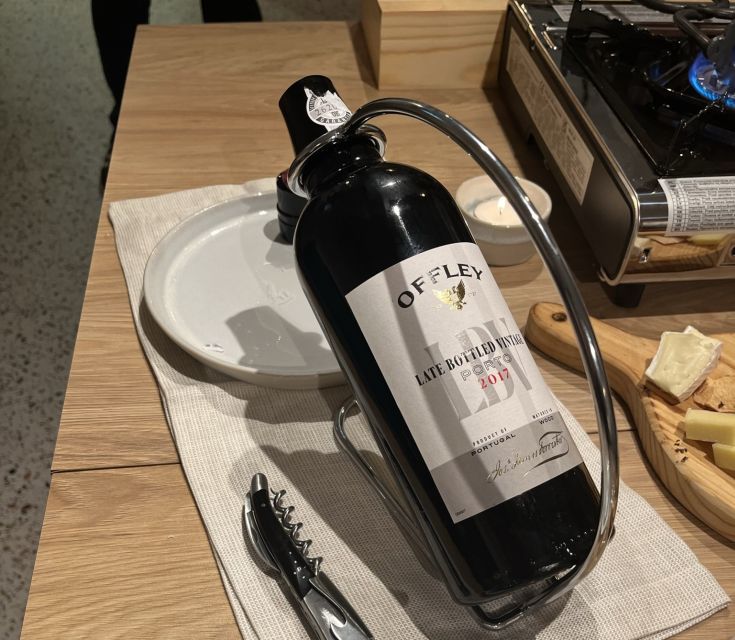
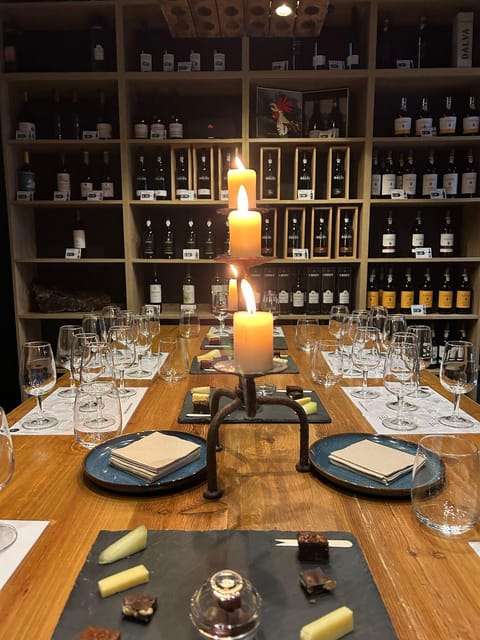
The food is not a token bowl of crackers. The pairing selection includes olives, fruit, chocolate, cheese, and brownie. That range lets you see how the same wine changes when you eat something salty, creamy, fresh, or sweet.
I like this format because Port is often served with food, not just sipped on its own. A sweet Port with chocolate or brownie can feel very different from the same wine with an olive or a piece of cheese. The host explains why certain combinations work, which turns the snacks into part of the teaching rather than an afterthought.
The portions have been described as generous, and several people found the food fresh and well presented. Do not book this expecting a full lunch or dinner, though. It is a tasting with small food pairings, not a meal replacement.
The selection also helps you if you are new to Port. You can focus on simple questions: Do you prefer the wine alone or with food? Does cheese soften the sweetness? Does chocolate make the wine taste fruitier? That is a more useful lesson than trying to memorize tasting notes.
Why the small group matters
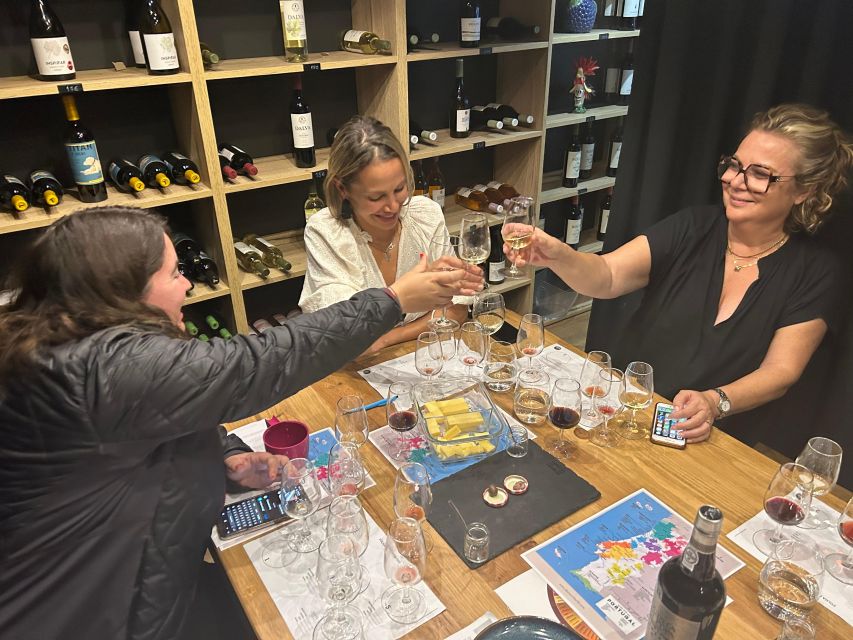
The maximum group size is 10, but the actual class may be much smaller. Some sessions have had only a few people, and one booking became an almost private experience for two participants. Other classes have included around six people or a mix of solo visitors and couples.
A small group gives the host time to answer questions. It also keeps the tasting social without making it feel like a lecture delivered to a crowd. Solo visitors should feel comfortable booking. The format encourages conversation, and one solo participant ended up joining the group for drinks afterward.
The international mix can add to the fun. People from the United Kingdom, United States, Norway, Japan, Italy, Portugal, Sweden, Canada, Spain, and other countries have shared the table at different sessions. You may find yourself comparing drinking habits and favorite styles with people you would not otherwise meet in Porto.
The social side depends partly on the group and partly on the host. The strongest sessions seem to gain energy from a host who draws everyone into the discussion. Rui, Ruan, and João are often singled out for making the room friendly and relaxed.
More than a standard tasting
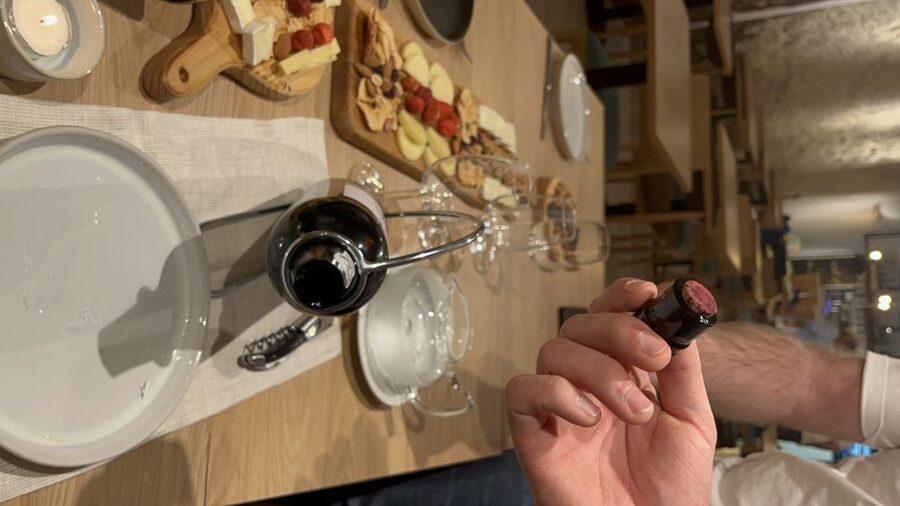
The class can include an unexpected performance at the end. Several accounts describe a host playing guitar and singing, with references to flamenco and fado. One person called the music an excellent surprise, while another mentioned a surprise ending but kept the details secret.
That extra entertainment is not the core reason to book. It may vary by host and session, so you should treat it as a possible bonus rather than a guaranteed part of the program. Still, it helps explain why the class can feel more personal than a simple lineup of samples.
The hosts are not presented as silent servers. They talk about Porto as well as Port, answer questions, and bring humor into the hour. One host even used a playful Scottish name for himself during the session. That kind of light touch can make technical information easier to remember.
If you want a formal sommelier lecture with printed tasting sheets and a quiet room, this may feel casual. If you want an informative introduction with conversation and personality, the approach works well.
Value at $23 per person
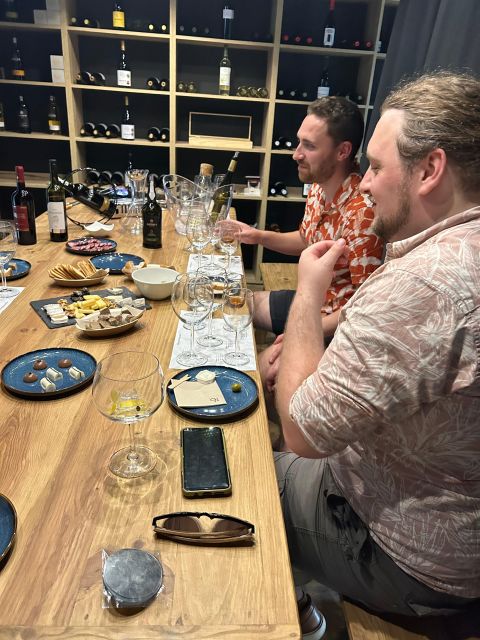
At $23, the price is reasonable for a central Porto activity lasting roughly one hour to 90 minutes. The value is strongest with the five-Port option, since you get a broad comparison, several snacks, and more time with the host.
The cost also covers convenience. You do not need transport to the Douro Valley, and you do not have to spend half a day crossing the river to visit several cellars. You can attend near the Bolsa Palace, then continue on foot to other sights in central Porto.
That convenience comes with a clear trade-off. You are paying for education and tasting, not for a cellar visit. You will not see barrels, vineyards, pressing equipment, or a working Port lodge as part of this activity. If the physical setting matters most to you, spend more time visiting wine producers in Vila Nova de Gaia or the Douro Valley.
For a first taste of Port, the class can help you decide if a longer wine outing is worth your time. Several people left interested in visiting the Douro Valley or taking a larger wine tour. That is one sign of good value: the class gives you enough information to plan your next step.
Booking is flexible. You can reserve now and pay later, and cancellation is free up to 24 hours before the scheduled start for a full refund. Check the available start times before committing, since the exact schedule is not fixed in the basic activity details.
Who should book this Port class?
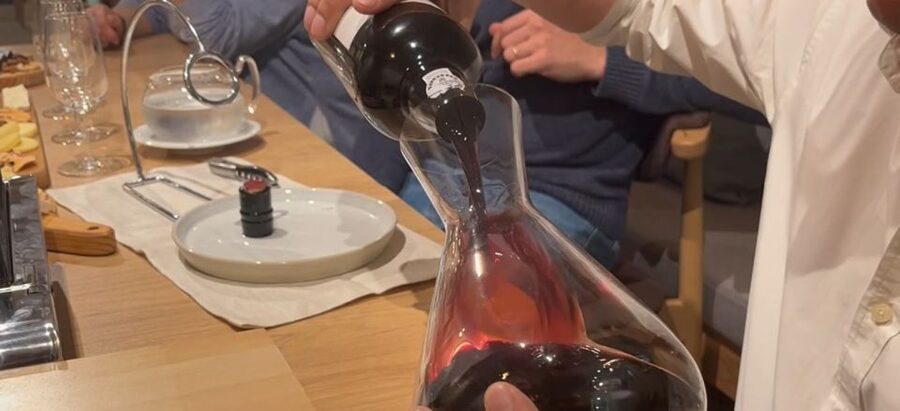
I would recommend it most strongly to people who are new to Port, short on time, or unsure which style they like. The five-glass session gives you a practical vocabulary and a much better basis for ordering Port in restaurants or choosing a bottle from a shop.
It also suits solo visitors, couples, and small friend groups. The limited capacity makes it easier to speak with the host, and the shared table can turn into a pleasant social hour. You do not need prior wine knowledge.
This is a good rainy-day or hot-afternoon plan because the room is indoors and air-conditioned. It also fits neatly before or after a visit to Palácio da Bolsa, since the meeting point is directly across the street.
You may want something else if you have already toured several Port producers or want a full winery visit. The shop setting is simple, the benches may not suit everyone, and the tasting does not include transport or a trip into the Douro wine area.
Practical details before you go
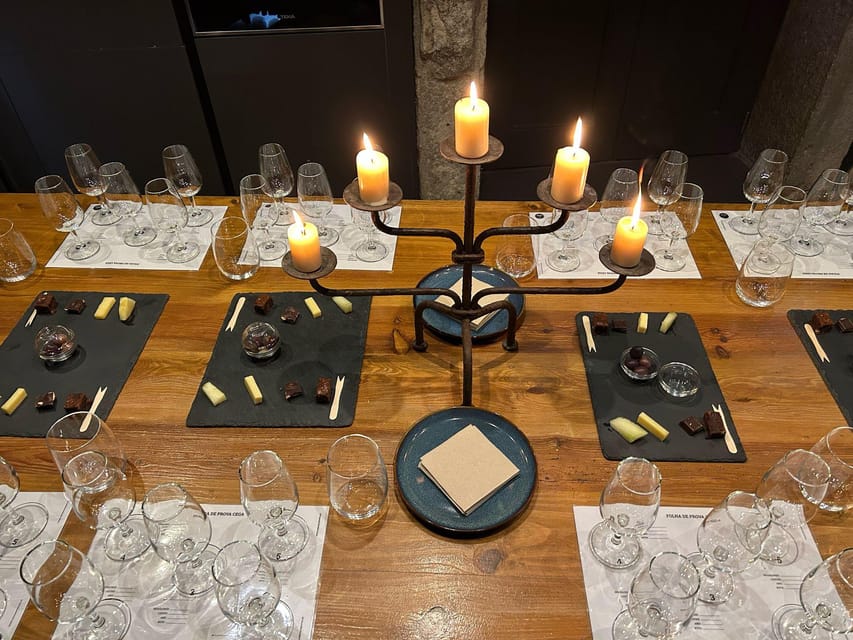
The activity is held in Porto’s city center, in the shop opposite Palácio da Bolsa. Check in at the tourist office in the same building, since the tasting room is located there rather than in a separate cellar.
The session is offered in English, and the host or greeter speaks English. The activity is wheelchair accessible. Groups are capped at 10 people.
You can choose three or five Port samples. The shorter version lasts about 45 minutes, while the longer option generally takes around 75 minutes and may reach 90 minutes if questions continue.
If you enjoy Port and can spare the extra time, I would pick five. The three-glass choice is sensible when you want a quick introduction, but the full sequence gives you a more useful picture of White, Tawny, Ruby Reserve, and LBV styles.
Should you book it?
Book this class if you want a friendly, central, low-cost introduction to Port with real explanations and food pairings. The hosts bring humor and warmth, and the small groups make it easy to ask questions. The five-Port option is the better buy for most people.
Skip it if you specifically want to tour historic cellars, see production equipment, or visit vineyards. For everyone else, this is an efficient way to understand Porto’s signature drink before you order another glass. Just allow a little time to find the shop entrance, and choose the five-sample session if your schedule permits.
FAQ
Where does the Port wine class take place?
It takes place in a shop room in Porto’s city center, directly across from Palácio da Bolsa. Check in at the tourist office in the same building.
Is the class held in a Port wine cellar?
No. The experience takes place in an intimate room inside the shop, not in a traditional cellar.
How many Ports do you taste?
You can choose an option with three Ports or an option with five Ports. The five-Port selection includes two White Ports, one Tawny, one Ruby Reserve, and one LBV Port.
What food is included with the tasting?
The Ports are paired with olives, fruit, chocolate, cheese, and brownie.
How long does the experience last?
The three-Port option takes about 45 minutes. The five-Port option takes around 75 minutes, and the full experience may last up to 90 minutes depending on questions.
What language is the class offered in?
The activity is offered in English, with an English-speaking host or greeter.
How large is the group?
The class is limited to a maximum of 10 participants. Some sessions may have fewer people.
Is the activity wheelchair accessible?
Yes, the activity is listed as wheelchair accessible.
Recently added in Porto
- Porto: Tuk tuk Tours with Port Wine Tasting★ 4.5 · 65 reviews
- The Beautiful Story of Porto: Guided Tour with Entry Tickets★ 4.8 · 111 reviews
- Porto: Royal Oporto Tour na Real Companhia Velha★ 4.8 · 395 reviews
- Porto: Entry Ticket at WOW – The Wine Experience Museum★ 4.7 · 356 reviews
- Porto: WOW Daily Ticket★ 4.7 · 42 reviews
- Porto: Luxury Yacht Tour of the 6 Bridges and Douro Estuary★ 4.9 · 521 reviews
- Porto Wine Tasting Experience with Portuguese Tapas Plate★ 4.7 · 356 reviews
- Porto: 6 Bridges Port Wine River Cruise with 4 Tastings★ 4.8 · 182 reviews
Wine Tours, compared.
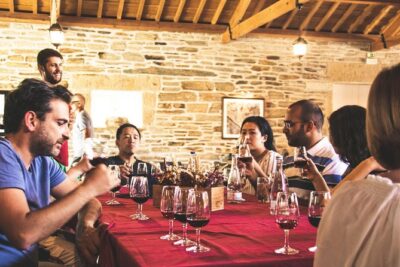
Complete Douro Valley Wine Tour with Lunch, Wine Tastings and River Cruise
Read our review →
Winner 2025 Undiscovered Lisbon Food & Wine Tour by Eating Europe
Read our review →
Douro Valley: Wine Tour with Lunch, Tastings & River Cruise
Read our review →
Authentic Small Group Douro Wine Tour with Lunch & River Cruise
Read our review →
Live Fado Show with Port Wine in Historic Center
Read our review →
Douro Valley Small-Group Tour with Wine Tasting, Lunch and Boat
Read our review →
Douro Valley Tour: 2 Vineyard Visits, River Cruise, Winery Lunch
Read our review →Browse the lists this tour appears in