
REVIEW · ALGARVE TOURS
Cork Factory Tour
Cork is far more than a bottle stopper. This 50-minute Algarve factory tour shows how the bark of Portugal’s cork oak becomes everything from wine closures to handbags, with a video, guide-led walk, and working factory floor. I like the clear explanations and the chance to watch an artisan shape cork by hand. The main catch is that you need to reach the rural factory yourself, and it can be tricky to find.
I also like the small shop at the end, where cork turns up in surprisingly smart fashion accessories. Guides such as Irina, Angelina, Belinda, and Angela have been praised for answering questions patiently and explaining quality differences. If you visit outside harvest season, though, some parts of the process are shown on video rather than witnessed in the forest.
In This Review
- Key points at a glance
- Why Algarve cork is worth understanding
- Starting at the Eco-Cork Factory
- The opening video explains the forest work
- Inside a factory where the work is still manual
- Quality control makes the price differences clearer
- The cork shop shows the material’s modern side
- Is $20 good value for 50 minutes?
- Practical details that affect your visit
- Who should book this cork tour?
- Should you book the Eco-Cork Factory Tour?
- FAQ
- How long does the cork factory tour last?
- How much does the experience cost?
- Where does the tour meet?
- Is transportation included?
- What languages are available?
- Is the factory wheelchair accessible?
- Can I cancel the booking?
Key points at a glance
- A working factory, not just a museum: You see cork being prepared, checked, and handled inside an active production site.
- The opening video fills in the forest work: Harvesting and tree care are explained even when no outdoor cork trees are part of your visit.
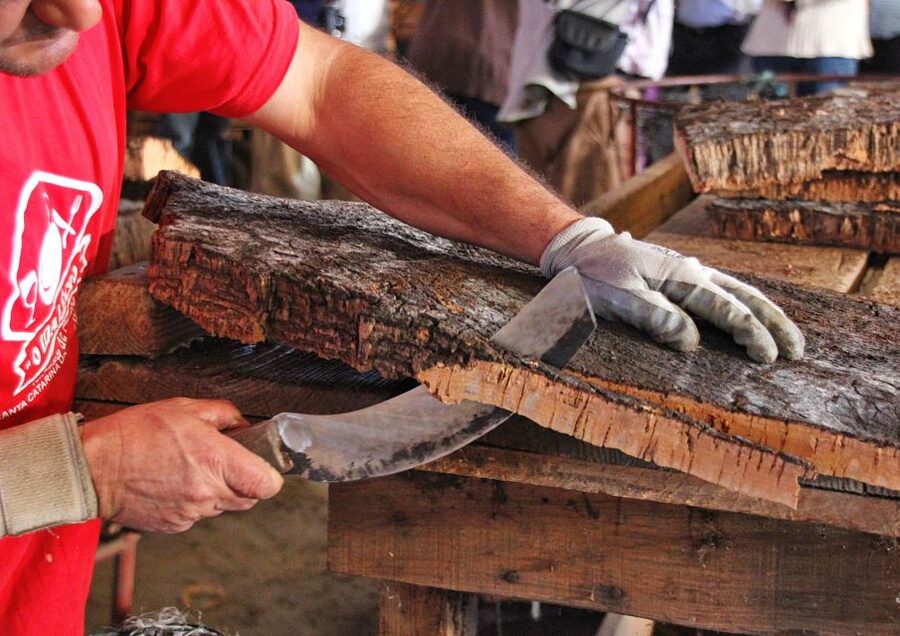
- Handwork remains central: The factory is less automated than many people expect, and you may watch an artisan shape pieces of bark.
- Quality affects price: Samples help you understand why some cork products cost more than others.
- The final shop is part of the experience: Browse cork fabric bags, accessories, and other useful goods after the factory walk.
- Plan your arrival carefully: The meeting point is outside São Brás de Alportel, and having a car is the simplest option.
Why Algarve cork is worth understanding
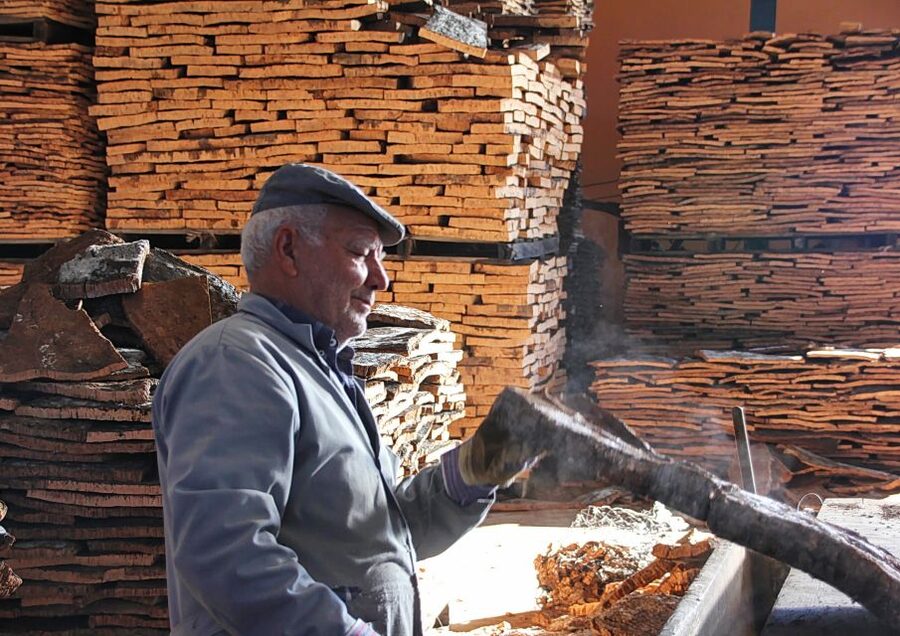
Portugal is one of the world’s great cork-producing countries. More than 720,000 hectares of Portuguese land are covered by cork forests, and the industry supports a long chain of work, from caring for trees to sorting, processing, packing, and turning cork into finished products.
That context makes this short tour more useful than a quick look at a shelf of wine stoppers. You begin to see cork as a natural material with its own grades, textures, and practical limits. A plain stopper may look simple, but the factory shows how much selection and preparation goes into producing it.
Cork is the bark of the cork oak. The tree itself remains standing while the outer bark is removed, then grows a new layer over time. The tour explains this basic idea along with the wider importance of cork in Portugal, so you leave with a better sense of why the material matters culturally and economically.
I especially like that the experience does not treat cork as a novelty alone. It connects the forest, the factory, the workers, and the shop products. That makes the visit useful even if you are not planning to buy a handbag or bring home a box of stoppers.
A few more Algarve options side by side
- Albufeira: 2.5-Hour Benagil Caves & Dolphin Watching
★ 4.6 · 10,710 reviews - Portimão: Benagil Caves Speed Boat Tour with Sunset Option
★ 4.8 · 9,329 reviews - Portimão: Benagil Sea Caves Speedboat Adventure Tour
★ 4.8 · 6,546 reviews
Starting at the Eco-Cork Factory
The meeting point is the Eco-Cork Factory in Mesquita Baixa, at 8150-048 São Brás de Alportel. The listed coordinates are 37.140003, -7.855236, which are worth saving before you leave your accommodation.
This is not a central Faro attraction with an obvious entrance on a busy square. Several people have found that driving is the easiest way to get there, while an Uber from Faro has also worked. Public transportation options from Faro are limited, so check your route before booking rather than assuming you can simply turn up by bus.
Give yourself more than the suggested five minutes before the start. The site can be hard to identify, and the reception area may feel confusing when a large group arrives at the same time. A little extra time lets you find the entrance, settle in, and avoid beginning the tour while still trying to work out where you belong.
Transportation is listed as included, but the practical information supplied for this experience and the direct meeting point suggest that you should plan your own journey to the factory. Confirm the arrangements when booking if you need a transfer rather than simply directions to the site.
The opening video explains the forest work
The tour begins with an introductory video that brings you up to speed on cork growing and harvesting. This is particularly useful outside the harvest season, when the tour may not include a live look at the cork oak trees or the removal of bark in the forest.
That seasonal point matters. One person expected to see a cork tree but did not, while another visited outside harvest time and saw much of that work on video. The factory portion still offers plenty to look at, but you should not book this expecting a full woodland walk.
The video gives the rest of the visit a clear framework. Once you see how cork is taken from the tree, you can follow what happens to the rough bark inside the factory. Without that introduction, the piles, surfaces, and tools might seem less meaningful.
The material is presented in English or Portuguese. Some sessions use a live guide, and the format can also include audio-guided information. English-speaking visitors have generally found the explanations easy to follow, although one person noted that a large, open factory made the guide difficult to hear at times. Staying close to the guide is sensible.
Inside a factory where the work is still manual
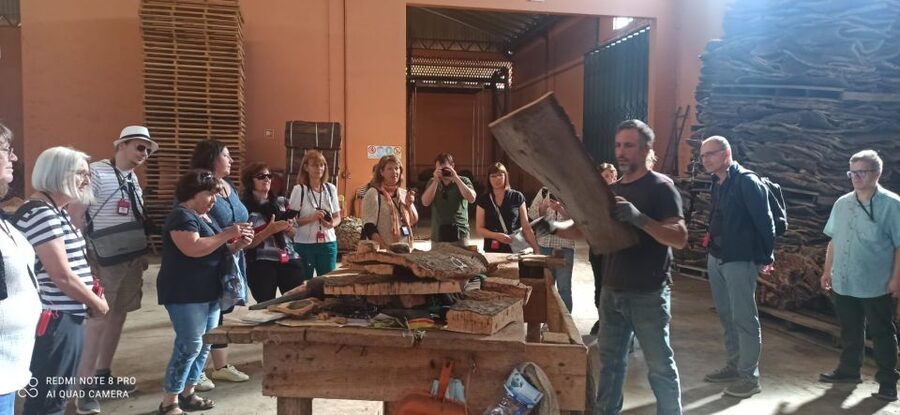
The factory walk is the heart of the experience. You see how cork is prepared and packed, with the guide explaining the different stages and showing examples along the way.
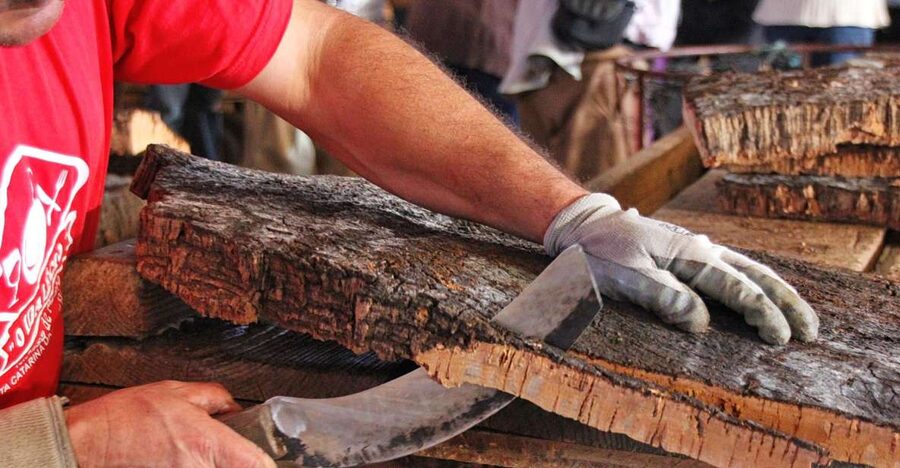
Do not expect a huge industrial plant filled with machines running at high speed. The work is notably hands-on, and one of the more interesting details is how much manual skill remains in the process. You may watch an artisan work pieces of bark in front of the group, which gives the visit a human scale that a fully automated plant would lack.
That live demonstration is important because cork can look deceptively plain before it is shaped. Seeing a worker handle it helps you understand its flexibility, texture, and natural variation. It also shows why the material cannot simply be treated like a uniform sheet of plastic or fabric.
The guide explains the main phases from harvesting through preparation and packing. You learn that the factory’s job is not just to cut cork into a convenient shape. The material must be assessed, processed, and sorted according to quality and intended use.
The working environment may feel basic. One description of the factory noted that only a small number of employees handle much of the work, and the operation is less automated than expected. That is not a flaw if you want to see traditional production, but it does mean the tour is about close observation and explanation rather than dramatic machinery.
Same corner of the country, a different pace:
- Albufeira: Benagil Caves & Dolphin Watching Speed Boat Tour
★ 4.6 · 6,316 reviews - Albufeira: Dolphin Watching and Benagil Cave
★ 4.7 · 5,658 reviews - Albufeira: Coastline and Benagil Caves Tour by Catamaran
★ 4.7 · 4,077 reviews - Portimão: Benagil Caves & Dolphins Watching with Biologist
★ 4.8 · 3,795 reviews
Quality control makes the price differences clearer
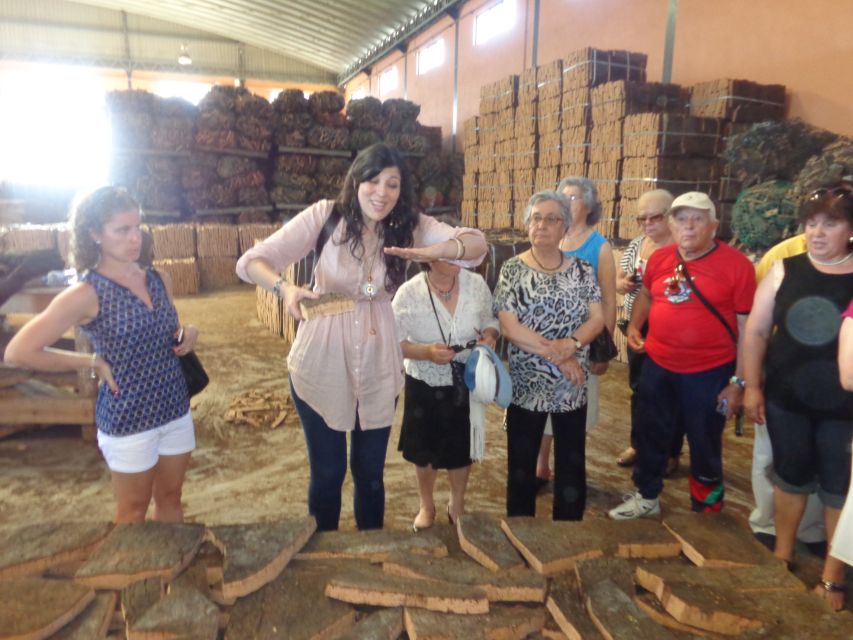
One of the strongest parts of the visit is the explanation of quality. Cork products can look similar at first glance, yet the material, finish, and construction can vary considerably.
The factory uses visual examples to show how quality affects the final product. This is helpful when you reach the shop, because you can examine a bag, wallet, or accessory with a better understanding of what you are seeing.
You also learn why prices vary. A low-cost souvenir and a carefully finished cork fashion item are not necessarily made from the same grade or handled in the same way. The tour gives you a basis for comparing products instead of treating every cork item as interchangeable.
The guide-led format allows questions, and this is where guides such as Irina, Angelina, Belinda, and Angela have made a strong impression. Their role is not simply to recite a script. They explain the business, respond to questions, and connect the technical steps to the products on display.
The experience is suitable for curious adults and families because the subject is easy to grasp but has enough detail to keep it interesting. Even a reluctant companion may find the hands-on work more engaging than expected, especially because the tour moves from raw bark to finished goods in a short period.
The cork shop shows the material’s modern side
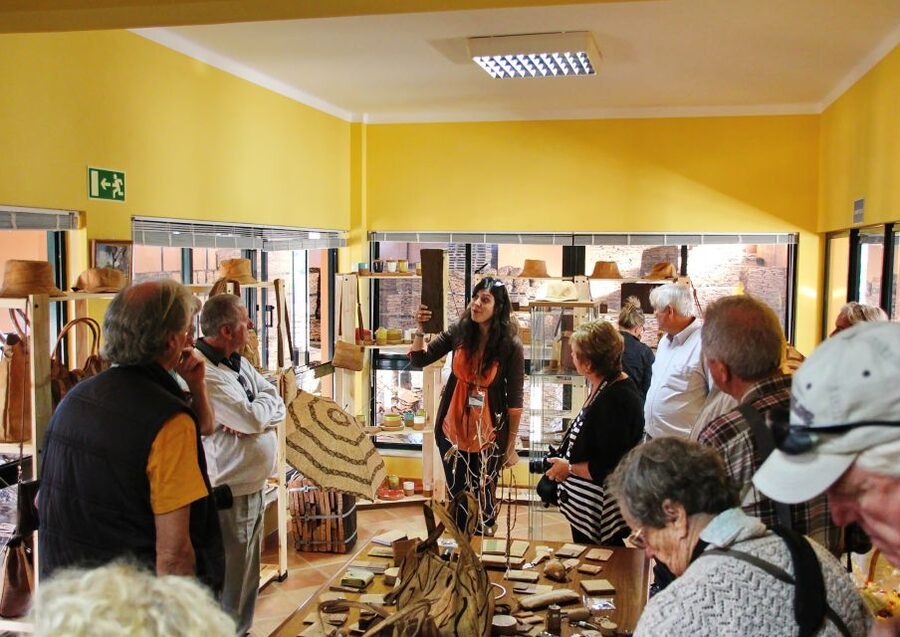
After the factory, you visit the cork shop. This is where the tour shifts from production to design, with cork fabric used for fashion accessories and other finished products.
The shop helps correct the idea that cork belongs only around a wine bottle. You may see bags, wallets, jewelry, shoes, or other accessories made with cork fabric, depending on the available stock. The information supplied confirms a selection of cork products, but it does not guarantee any particular item or brand on the day.
I like this final stop because it gives the material a practical conclusion. You have just watched workers handle the raw product, and now you can feel how it has been transformed into something light, patterned, and suitable for daily use.
Prices and quality vary, so take your time rather than buying the first item you see. The factory explanations give you useful questions to ask yourself: How is the cork finished? Does the item feel well made? Is it a simple souvenir or a more carefully produced accessory?
An optional cork bracelet workshop has also been available for an additional fee, but it is not listed as part of the standard tour. If making something yourself appeals to you, ask about workshop availability before arrival and do not assume it can be added on the spot.
Is $20 good value for 50 minutes?
At $20 per person, this is a reasonably priced short cultural stop. The visit lasts about 50 minutes, and that is enough time to watch the introductory material, walk through the factory, ask questions, and browse the shop without taking half a day from your Algarve plans.
The value is strongest if you are already driving through the São Brás de Alportel area or have a particular interest in Portuguese products, wine, design, sustainability, or traditional industry. In that situation, the tour gives you a useful look behind the finished object for a modest fee.
The calculation changes if you are staying in Faro and must arrange an expensive private ride only for this stop. Transport options are limited, and the rural location adds time and planning. An Uber has worked for some visitors, but availability and cost can vary, so check the return journey as carefully as the trip out.
One person felt the factory was fairly small and that the price was a little high for what was on view. That is a fair caution. You are not paying for a long museum visit, a forest excursion, or a large-scale industrial spectacle. You are paying for a compact explanation inside a real factory.
For many people, the combination of access, instruction, and a shop makes $20 worthwhile. The tour is especially good value when the guide is able to demonstrate the work and answer questions. It is less compelling if you only want to see cork trees in the open air.
Practical details that affect your visit
The experience is offered in English and Portuguese. English-language sessions have generally been clear, though the open factory can make sound travel poorly, particularly with a large group. Keep near the guide, and ask for a repeat if a point gets lost among the machinery and open space.
Group size can affect the experience. A small group makes it easier to hear, see the demonstration, and ask questions. A bus-sized arrival can create confusion at reception and make the factory walk feel less personal, so arriving early is worthwhile.
The factory is wheelchair accessible. Since the tour takes place in a working industrial setting, you may still want to confirm the exact route and conditions if you have specific mobility needs, but accessibility is included in the activity details.
The standard booking allows free cancellation up to 24 hours before the start for a full refund. You can also reserve now and pay later, which is useful when your Algarve schedule depends on weather, rental-car plans, or changing day trips.
The experience provider is Picturesque Journey, also known as Algarve Rotas. The tour itself is not a broad sightseeing excursion around the Algarve. It is a focused visit to one cork factory, so set your expectations accordingly.
Who should book this cork tour?
I would recommend it to you if you want a short, specific experience with a clear connection to Portugal. It works well for anyone curious about how everyday products are made, and it adds substance to a visit to the Algarve’s cork-producing region.
It also suits shoppers who want to buy cork goods with more understanding of their construction. The shop is more useful after the factory explanation, since you can compare products with quality and workmanship in mind.
Families may appreciate the straightforward subject and the short duration. The tour does not require a full day, and the sight of workers shaping cork gives children something real to watch rather than just another display behind glass.
I would think twice if you want a nature tour. You may not see a living cork oak or an active harvest, especially outside the appropriate season. The video covers those parts, but it is not the same as standing among the trees.
I would also think twice if you dislike small industrial sites or guided explanations. The factory is not enormous, and much of the value comes from listening closely. For me, that trade-off is worthwhile because the guide turns an ordinary-looking material into a story about work, quality, and Portuguese industry.
Should you book the Eco-Cork Factory Tour?
Book it if you can reach the factory easily and want a well-priced introduction to Portugal’s cork industry. The best parts are the clear explanation from harvest to finished product, the chance to see manual work in progress, and the shop’s modern take on cork fashion.
Skip it if your priority is a cork forest walk, a large automated plant, or a long half-day attraction. Otherwise, this is a compact and educational stop that can change how you look at the next cork stopper, handbag, or wallet you encounter.
FAQ
How long does the cork factory tour last?
The tour lasts approximately 50 minutes. Starting times vary, so check availability for the date you want.
How much does the experience cost?
The listed price is $20 per person.
Where does the tour meet?
It meets at the Eco-Cork Factory in Mesquita Baixa, 8150-048 São Brás de Alportel. The listed coordinates are 37.140003, -7.855236.
Is transportation included?
Transportation is listed among the inclusions. However, the practical meeting point is the factory, and transport from Faro is limited. A vehicle is the simplest option, while Uber has worked for some people.
What languages are available?
The experience is available in English and Portuguese. The activity details list both live tour guides and audio-guided information.
Is the factory wheelchair accessible?
Yes. The activity is listed as wheelchair accessible.
Can I cancel the booking?
Yes. You can cancel up to 24 hours in advance for a full refund. Reserve now and pay later is also available.
Recently added in Algarve
- Kayak Algarve tour BENAGIL by Diamond tours★ 4.0 · 45 reviews
- Dolphins & Benagil Caves with Biologist guide★ 5.0 · 130 reviews
- Kayak Experience with a Local★ 5.0 · 51 reviews
- Benagil, Marinha & Albandeira – Kayak w/ Local Guide★ 5.0 · 87 reviews
- Benagil: Guided tour through the caves and Praia da Marinha★ 5.0 · 83 reviews
- Ride through Paradise: Faro Island Electric 2×2 bike Tour★ 5.0 · 53 reviews
- Sagres: Praia Da Ingrina Caves Guided Kayaking Tour★ 4.5 · 50 reviews
- Welcome to Carrapateira Horse Riding Tour★ 5.0 · 124 reviews
Algarve Tours, compared.

Benagil Caves Speed Boat Tour with Sunset Option
Read our review →

Benagil Caves & Dolphin Watching Speed Boat Tour
Read our review →

Coastline and Benagil Caves Tour by Catamaran
Read our review →
Benagil Caves & Dolphins Watching with Biologist
Read our review →
Browse the lists this tour appears in