
REVIEW · FARO TOURS
Cork Factory Tour & Cork Shop
Cork has more uses than you think. This one-hour visit to the Eco-Cork factory near Faro gives you a clear look at how bark becomes wine stoppers, household goods, and fashion accessories. I like the live cutting and grading demonstration, and I like that you have time to ask questions instead of being hurried from one station to the next. The main drawback is location: there is no public transportation to the factory, so you need a car or arranged ride.
The tour costs $21.17 per person and runs at 11:30 a.m., with the full visit lasting about 1 hour and 10 minutes. It is conducted in English and ends at the same place where it begins. I would choose it for families, curious shoppers, and anyone who wants a useful cultural stop near Faro, but I would not book it expecting a walk through cork woods or a full harvest demonstration.
In This Review
- Key points to know before you book
- Why cork makes this Faro outing worth your time
- Arriving at Eco-Cork outside Faro
- The opening explanation and cork’s long journey
- Watching the bark being trimmed and graded
- Boiling vats, flattening, and the factory process
- The Cork Shop: small, useful, and easy to browse
- What the $21.17 price delivers
- Who will enjoy this factory visit most
- Timing, sound, and other practical details
- Should you book the Eco-Cork factory tour?
- FAQ
- Where does the cork factory tour begin?
- What time does the tour start?
- How long does the experience last?
- Is the tour conducted in English?
- Does the tour include a visit to cork trees or a cork field?
- Is transportation from my hotel included?
- Is public transportation available to the factory?
- Are food and drinks included?
- Can children take part?
- Can I cancel for a full refund?
Key points to know before you book
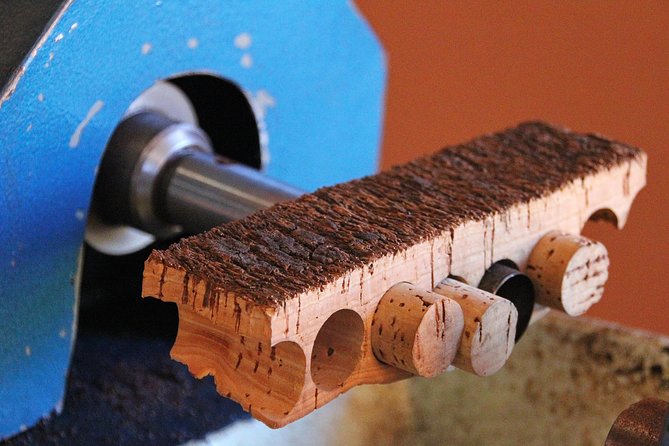
- See cork handled by hand: Watch workers trim, cut, grade, and shape pieces of bark.
- Learn the full factory process: The explanation covers harvesting, boiling, flattening, sorting, and production.
- Try cutting cork yourself: Some sessions allow participants, including children, to handle the material under supervision.
- Expect an indoor visit: The factory tour does not take you into a cork grove, though the presentation explains how trees are harvested.
- Allow time for the shop: The small Cork Shop sells useful and decorative products, with prices described as better than many local shops.
- Plan your ride carefully: The factory is outside Faro, and public transportation is not available.
Why cork makes this Faro outing worth your time
Portugal is closely linked with cork, yet many people know only its most familiar use: the stopper in a wine bottle. This tour helps you see the work behind that simple object. Cork bark must be removed, assessed, cut, treated, and sorted before it becomes a finished product.
I like the fact that the experience is practical rather than purely decorative. You do not just hear that cork is a natural material. You see large pieces of bark being trimmed and graded, then learn how different qualities are sent toward different uses.
The tour also gives you a better sense of the labor involved. One demonstration includes skilled knife work and sharpening, while another may show a craftsperson shaping a cork bowl. The work is careful and physical. That makes the finished items in the shop feel less like ordinary souvenirs.
The setting is not polished in the manner of a modern museum. Some visitors found the premises plain, and the factory can feel functional rather than scenic. That is part of the appeal for me, but it is worth knowing before you arrive. You are seeing a working production space, not a designed attraction with a café and elaborate displays.
A few more Faro options side by side
- 4 Stops | 3 Islands & Ria Formosa Natural Park – From Faro
★ 5.0 · 3,080 reviews - From Faro: Benagil Cave, Marinha Beach, Algar Seco & More
★ 4.7 · 2,027 reviews - Ria Formosa – Boat trip to the 3 Islands: Armona | Culatra Island | Lighthouse
★ 5.0 · 1,872 reviews
Arriving at Eco-Cork outside Faro
The meeting point is the Eco-Cork Factory, also called Eco-Fábrica de Cortiça, at Francisco Carrusca, Sítio da Mesquita Baixa, 8150-048, Portugal. The activity begins at 11:30 a.m. and returns to this same location.
The drive is described as easy and pleasant, but the lack of public transportation is a real planning issue. If you are staying in Faro without a car, arrange your transport in advance. Do not assume that a local bus or train will bring you to the factory door.
The mobile ticket makes admission simple. Confirmation is provided when you book, and the group can include up to 30 people. That maximum is not enormous, but it is large enough to affect the sound level during demonstrations. One complaint concerned a crowded presentation where the guide did not use a microphone.
I would arrive ready to stand and move around a working factory floor. The tour is short, so arriving late could mean missing the opening explanation or video.
The opening explanation and cork’s long journey
The visit begins with an explanation of where cork comes from and how it is collected. You learn about the bark, the markings placed on trees, and the different stages before the material reaches the factory.
The factory does not take you into a cork field. If you want to see the trees themselves, you need a separate countryside experience. This is an important distinction because the word factory is doing the work here: the focus is processing, not forestry.
A short video may be used at the beginning, followed by spoken explanations from the guide. The English presentation has been praised for being clear and easy to follow. Guide Elena, in particular, is described as personable and precise in her explanation of the manufacturing process.
The opening portion is useful even if you already know a little about cork. It connects the natural material to Portugal’s economy and shows why careful grading matters. You begin to understand that not every piece of bark is suitable for a wine stopper, and that lower or different grades can still have many other uses.
Watching the bark being trimmed and graded
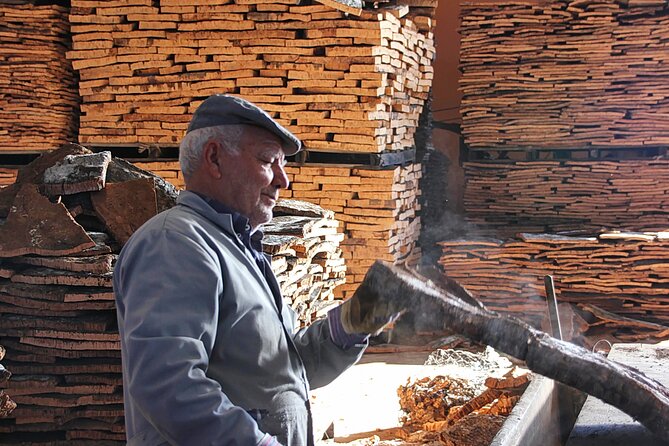
The most interesting part of the factory visit is often the live demonstration. A worker handles large and small sections of cork bark, trimming away unwanted material and assessing quality.
This is where the tour becomes more than a video lesson. You can watch the knife work up close, see how the bark is shaped, and ask questions as the process unfolds. Some sessions give participants the chance to cut a piece of cork themselves. That small hands-on moment is especially useful for children because it turns an abstract explanation into something they can feel and try.
The demonstrations also show that cork production depends heavily on skilled labor. A machine may help with certain steps, but the careful eye of the assessor still matters. One particularly memorable demonstration includes impressive knife sharpening, while another shows a handmade cork bowl taking shape.
You should not expect a long craft workshop. The opportunity to cut cork is brief and depends on how the session is organized. Still, it is one of the details that gives this experience character.
Same corner of the country, a different pace:
- Ria Formosa Natural Park and Islands Boat Cruise from Faro
★ 5.0 · 1,314 reviews - 2 Stop | 2 Islands & Ria Formosa Natural Park – From Faro
★ 5.0 · 1,045 reviews - Faro: Deserta Island and Farol Island Catamaran Boat Trip
★ 4.6 · 955 reviews - From Faro: Benagil, Algar Seco, 7 Hanging Valleys, & Marinha
★ 4.9 · 890 reviews
Boiling vats, flattening, and the factory process
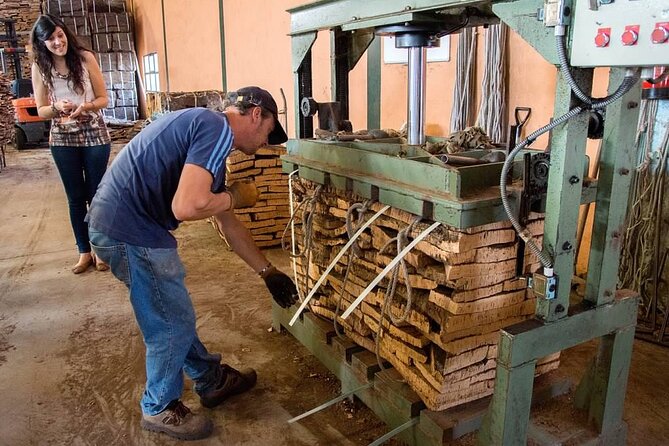
Large water vats are used to boil cork. The heat helps prepare the bark for flattening and later use. Seeing these vats gives you a better idea of the physical scale of the operation, especially after hearing about the work required before the material even enters the factory.
The bark is flattened and sorted for sale or further manufacture. The guide explains the grades and the purpose of each type. Wine stoppers receive much of the attention, but the tour also covers cork used for household goods, accessories, and other products.
I appreciate this part because cork is easy to misunderstand. It looks simple in a shop, but the factory process involves several decisions about quality, thickness, shape, and end use. The explanation helps you recognize why one cork item costs more than another.
The emphasis on stoppers may feel too narrow for some people. One disappointing visit was described as focusing mostly on stopper production. If you are hoping for an equal look at every cork product, keep your expectations modest. The tour does explain many uses, but the wine industry remains a central theme.
The Cork Shop: small, useful, and easy to browse
The final stop is the Cork Shop at the factory. It is small, but it carries a range of cork items, including cute gifts and practical products. The shop has been praised for its quality, and some prices are described as lower than those in local shops.
This is a good place to buy something connected directly to what you have just seen. Instead of picking up a generic souvenir in a city center, you can choose an item after learning how cork is selected and shaped.
Do not expect a large department store or a wide retail complex. The shop may be too limited for someone who wants a huge range of designs. Still, its size makes it easy to browse within a few minutes, and the purchases support a small, eco-focused family business.
I would save part of your budget for the shop if you enjoy useful souvenirs. Cork goods are light and easy to pack, which is handy near the end of a Portugal trip.
What the $21.17 price delivers
At $21.17 per person, this is a reasonably priced short activity. The visit lasts about 70 minutes, includes admission to the factory, and gives you access to live demonstrations and the shop.
The value depends on what you want from a tour. If you enjoy working industries, local materials, and hands-on demonstrations, the price feels fair. You receive a direct explanation of harvesting and processing, a look at equipment such as the boiling vats, and time for questions.
The value is weaker if you expect a full-day cork experience. Hotel transport, food, drinks, and a visit to the cork trees are not included. You are paying for the factory and shop, not a countryside excursion.
One person wished the experience ended with a drink in a more comfortable room. That is a fair criticism. There is no included food or beverage, and the factory setting can feel basic. I would treat this as an educational stop rather than a polished hospitality experience.
Who will enjoy this factory visit most
I would recommend the tour to families because the process is easy to understand and children may get a chance to cut cork. The demonstrations give young visitors something concrete to watch, rather than asking them to listen to a long talk.
It also suits anyone interested in Portuguese products, sustainable materials, wine, design, or traditional manufacturing. If you have already visited a cork farm, this factory tour makes a useful second step because it shows what happens after the bark leaves the tree.
You may want to skip it if your main goal is outdoor scenery. The visit is indoors, and it does not include a cork grove. It may also disappoint if you dislike short presentations or working industrial spaces.
Most people can take part. Service animals are allowed, and child seats can be provided if you request them when booking. The group limit is 30, though a smaller group would make it easier to hear every word and watch the demonstrations.
Timing, sound, and other practical details
The 11:30 a.m. start gives you a clear midmorning plan. Since the activity ends back at the factory, you can combine it with other stops in the Faro area, but you need to arrange the rest of your day around your own transportation.
Weather can affect the experience even though the tour itself is indoors. Heavy rain on the factory roof may make it hard to hear the guide. If the forecast calls for severe rain, ask whether the presentation can be moved or repeated clearly, since there is no mention of a microphone or alternate room.
English is the offered language. The guides have been praised for clear explanations, and the question period is one of the better features. Ask about cork grades, the markings on trees, how bark is handled, and which products use different types of material.
The tour is not designed around food or drink. Bring your own plans for refreshments before or after the visit. There is no hotel pickup or drop-off, so this is best for people comfortable arranging an independent ride.
You can cancel for a full refund up to 24 hours before the local start time. Changes or cancellations made inside that window are not accepted for a refund.
Should you book the Eco-Cork factory tour?
Book it if you want a short, affordable look at an important Portuguese industry. The best parts are the clear English explanations, the live cutting and grading, the chance to ask questions, and the glimpse of skilled handwork that usually stays behind the finished product.
I would especially recommend it if you are curious about how cork moves from tree bark to wine stopper or shop item. The factory shows the labor and sorting involved, and the shop gives you a practical ending.
Skip it if you expect a cork forest, a long outdoor visit, or a refined museum setting. You also need to solve the transportation problem before booking. For the right audience, though, this is a worthwhile Faro-area stop that leaves you looking at cork with new respect.
FAQ
Where does the cork factory tour begin?
It begins at the Eco-Cork Factory, also called Eco-Fábrica de Cortiça, at Francisco Carrusca, Sítio da Mesquita Baixa, 8150-048, Portugal.
What time does the tour start?
The scheduled start time is 11:30 a.m.
How long does the experience last?
The experience lasts approximately 1 hour and 10 minutes.
Is the tour conducted in English?
Yes. English is the offered tour language.
Does the tour include a visit to cork trees or a cork field?
No. The included visit is to the Eco-Cork factory and Cork Shop. The factory explains harvesting, but the activity does not include a cork field visit.
Is transportation from my hotel included?
No. Hotel pickup and drop-off are not included.
Is public transportation available to the factory?
The factory does not have public transportation access, so you need to arrange your own transportation.
Are food and drinks included?
No. Food and drinks are not included in the tour price.
Can children take part?
Most people can participate, and the experience is considered suitable for families. Child seats are available if requested when booking.
Can I cancel for a full refund?
Yes. You can cancel at least 24 hours before the local start time for a full refund. Cancellations or changes made less than 24 hours before the start are not accepted for a refund.
Recently added in Faro
- Tuk tuk Tour Tavira Total – 2h00 – Includes Tuna Museum and Fishing Village★ 5.0 · 71 reviews
- From Faro: Benagil Hiking Cliffs and the 4 Treasure Experience★ 5.0 · 424 reviews
- Highlights & Hidden Gems of Faro Private Tour★ 5.0 · 78 reviews
- Algarve Buggy Tours★ 5.0 · 429 reviews
- Tavira City Tuk Tuk Tour – 1h Tavira City Tour★ 5.0 · 100 reviews
- Tavira Tuk Tuk Tour – Chocolate Tour – Tavira City & Chocolate★ 5.0 · 63 reviews
- Group Surf Lessons★ 5.0 · 73 reviews
- Tavira Olive Experience Factory Tour and Tasting★ 5.0 · 190 reviews
Faro Tours, compared.
4 Stops | 3 Islands & Ria Formosa Natural Park – From Faro
Read our review →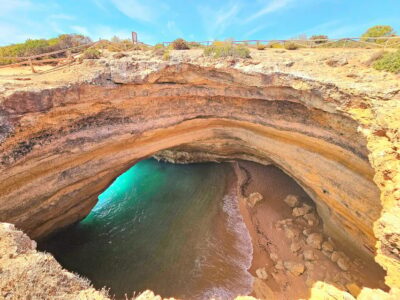
Benagil Cave, Marinha Beach, Algar Seco & More
Read our review →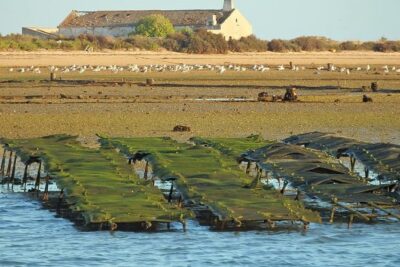
Ria Formosa – Boat trip to the 3 Islands: Armona | Culatra Island | Lighthouse
Read our review →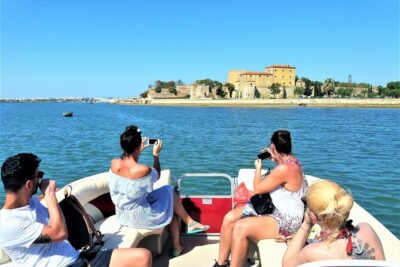
Ria Formosa Natural Park and Islands Boat Cruise from Faro
Read our review →
2 Stop | 2 Islands & Ria Formosa Natural Park – From Faro
Read our review →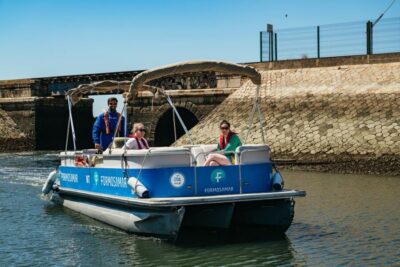
Deserta Island and Farol Island Catamaran Boat Trip
Read our review →
Benagil, Algar Seco, 7 Hanging Valleys, & Marinha
Read our review →
Benagil Cave, Marinha & Carvoeiro Full-Day Tour
Read our review →Browse the lists this tour appears in